|
|
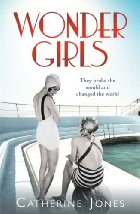 Determined to defy expectations, 16-year-old Ida Gaze sets out to be the first person to swim the Bristol Channel in 1928. Beside her, always encouraging her, is her best friend Freda Voyle, and in her mind, her idol, Amelia Earhart. Many years later, Cecily Stirling, an old woman, is comforted by the presence of a young, vivacious girl Sarah, who points towards a photo of a woman in bathing costume that Cecily’s partner Freda left behind after her death. This isn’t just a book about Ida’s goal; it’s a book about finding yourself, achieving your dreams, and discovering who and what really matters to you. Determined to defy expectations, 16-year-old Ida Gaze sets out to be the first person to swim the Bristol Channel in 1928. Beside her, always encouraging her, is her best friend Freda Voyle, and in her mind, her idol, Amelia Earhart. Many years later, Cecily Stirling, an old woman, is comforted by the presence of a young, vivacious girl Sarah, who points towards a photo of a woman in bathing costume that Cecily’s partner Freda left behind after her death. This isn’t just a book about Ida’s goal; it’s a book about finding yourself, achieving your dreams, and discovering who and what really matters to you.
I received Wonder Girls unsolicited for review, but I was so immediately drawn into the idea of the story that I couldn’t help but pick it up almost right away. This is a book that is almost entirely about women, what drives them, and even how much things have changed (and not) over the years that the book spans. During Ida’s youth, women are making strides, campaigning for freedom, determining the course of the future for themselves. Her swim, while fictional, reflects the real-life goal setting of two women around the same time period across the Bristol Channel and is thus perfectly true to life. At the same time, when she’s finished, her drive to go to London and make something of herself, which she persuades her friend Freda to do as well, is similarly characteristic of her drive.
But then the big city happens to both of the girls in different ways, and it’s only through Cecily’s story that we discover where they ended up after the dust settled, though Cecily herself has also been affected by their journeys.
I liked the way this book explored all of the relationships within it; Ida and Freda’s close friendship, Cecily and Freda’s years-long romance as well as their relationship with a character who enters into the story later, and Cecily’s budding friendship with young Sarah. I liked that Jones treated the relationships between women, romantic or friendship, as normal love, just as valid as any other kind, and just as moving. I was swept up in these characters’ lives and grew to care for each of them in their own way.
We also see how much people change when their circumstances do. Ida, for instance, is blindsided when she moves to London, intoxicated by her effect on men, but losing sight of who she truly is and what her goals in life are in the swirl of rather frivolous consumerism that her new position grants her. The book, to a large extent, shines a huge spotlight on how shallow our lives can turn when we get too distracted by possessions and positions and forget to focus on what we love.
But truly, Wonder Girls is a fascinating book, set in different eras of change for women, with fantastic characters that will keep you turning the pages. Great first effort from Catherine Jones.
All external book links are affiliate links. I received this book for free for review.
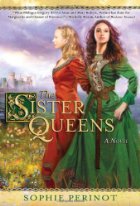 Marguerite and Eleanor of Provence, close friends as well as sisters, are separated when their husbands are chosen. Marguerite is destined to marry the French King, Louis IX, while Eleanor is sent to England to wed Henry III. At first, quiet and malleable Marguerite seems the luckiest sister, for her husband is handsome and with him she finds what she believes to be love. Eleanor’s husband, Henry, is older and shorter than she is, but she soon gets to know him and falls in love herself, while Marguerite realises that her husband is ruled by his mother and his piety. These two women from the powerful family of Savoy never forget one another, and their bond changes medieval Europe as they begin to wield the only power available to women of their day. Marguerite and Eleanor of Provence, close friends as well as sisters, are separated when their husbands are chosen. Marguerite is destined to marry the French King, Louis IX, while Eleanor is sent to England to wed Henry III. At first, quiet and malleable Marguerite seems the luckiest sister, for her husband is handsome and with him she finds what she believes to be love. Eleanor’s husband, Henry, is older and shorter than she is, but she soon gets to know him and falls in love herself, while Marguerite realises that her husband is ruled by his mother and his piety. These two women from the powerful family of Savoy never forget one another, and their bond changes medieval Europe as they begin to wield the only power available to women of their day.
The Sister Queens is precisely the kind of historical fiction I love, and which swiftly absorbed me within its pages. Marguerite and Eleanor haven’t been written to death already; in fact, Henry III and Louis IX are fairly absent from the historical fiction scene themselves, even though massive changes are taking place in both countries through the narrative, laying the ground for history to come which does have more conventional attention. The medieval atmosphere is very appealing, with plenty of smaller details sprinkled throughout the narrative.
Plenty happens, too; the sisters’ husbands go to war, sometimes with the sisters alongside them. Marguerite in particular spends years on Crusade with her husband, at one point making a stand of her own against the enemy with very little on her side at all. Henry III struggles, famously, with his barons, as his poor political judgement leads to problem after problem in the ruling of his kingdom. There are the inevitable lulls as both women have multiple children and time must pass by fairly quickly to excuse their pregnancies, but I found it very easy to carry on reading without feeling like the story bogged down at all.
It’s in part the relationships between the sisters, though, that makes this an excellent book. Yes, they have their children and their husbands, but they also always have one another, and it’s the sort of heartwarming female relationship that doesn’t always dominate mainstream fiction in quite the way it should. The mere fact that it was true, that these sisters really did bring about a peace between their two countries that lasted until Edward III shook things up again, added authenticity to the relationship and made the entire book more absorbing. This truly was a fascinating period in history (although if you listen to me I seem to think all of the Middle Ages is fascinating) and Perinot does it great justice here.
Finally, I must confess that I absolutely love that Perinot used Jean de Joinville’s chronicle as the basis of certain happenings around Marguerite’s court. I immediately had a strong desire to read de Joinville’s work for myself, and it’s an amazing way to fill in the historical blanks without stepping on the toes of what’s already been established.
In short, an excellent work of historical fiction that makes me think again about not remaining in love with the genre. Certainly the best I’ve read this year set in the Middle Ages. Highly recommended.
 Tancred a Dinant has followed his liege lord, Robert de Commines, since the tender age of fourteen. Now that King William the Conqueror has taken England, Tancred finds himself in the north defending against the Anglo-Saxons who would prefer not to bow to the Norman lord. After a disastrous battle, Tancred barely escapes with his life; one of the men lost is his lord. Anchorless, Tancred ends up in the service of another Frenchman, Malet, heading to London to protect Malet’s wife and daughter in the face of overwhelming odds. But on the way, he must escort an English priest to a nunnery, where he discovers a curious plot that indicates treachery from within Malet’s household. Tancred a Dinant has followed his liege lord, Robert de Commines, since the tender age of fourteen. Now that King William the Conqueror has taken England, Tancred finds himself in the north defending against the Anglo-Saxons who would prefer not to bow to the Norman lord. After a disastrous battle, Tancred barely escapes with his life; one of the men lost is his lord. Anchorless, Tancred ends up in the service of another Frenchman, Malet, heading to London to protect Malet’s wife and daughter in the face of overwhelming odds. But on the way, he must escort an English priest to a nunnery, where he discovers a curious plot that indicates treachery from within Malet’s household.
Sworn Sword promises to be the first in a new series of historical fiction focusing on England just after the conquest. Starting out in January 1069, this series is going to focus on the difficulty that William the Conqueror had in keeping his throne through the eyes of Tancred. It’s a book very much in the vein of Bernard Cornwell, though; battle-focused fiction with a slight element of suspense and mystery.
The opening has a fair share of Tancred’s grief; he’s injured and he’s lost two important people in his life, his lord and his “woman”. In the latter case, he was just beginning to develop feelings for her, and he spends a lot of time beating himself up mentally for not protecting her, for trusting that she’d be safe. He outright mourns his lord, who he respected and cared for, and particularly now that he’s without someone to fight for. When he’s gravely injured and can barely raise his head, the situation is much worse.
Fortunately for Tancred, and for those reading this book, he quickly recovers and is on his way, and that’s when the book starts to get a little bit more interesting. A mystery unfolds in between a number of battles, and there is a fledgling romance slipped in at the same time. It’s a solid read, if you enjoy this sort of book, and I enjoyed the atmosphere. Aitcheson has done enough research to make most of his choice fit smoothly into the historical world, and a lengthy author’s note at the end explains what did and didn’t happen in the real timeline. That’s one part of a historical novel I always appreciate; I like to know where the author has drawn from the historical record and where they’ve filled in with their imagination.
Sworn Sword is a solid read, well worth it for fans who like their historical fiction somewhat bloody and atmospheric, particularly those who have already developed a taste for it via Bernard Cornwell or Ben Kane.
All external book links are affiliate links. I received this book for free for review.
 Justin de Quincey has received an excellent education for 12th century England, despite the fact that he’s never known either of his parents. Finally at an age to set off on his own, Justin discovers that his father is actually the benefactor he’d already been familiar with, Aubrey de Quincey, nothing less than the Bishop of Coventry. When leaving, his thoughts clouded with anger and betrayal, he stumbles upon a murder scene, and receives a letter meant for Queen Eleanor of Aquitaine. The Angevin Empire is in a bad place, as King Richard has gone missing on his return from the Crusades. Justin’s successful delivery of the letter to the queen leads to his assignment – discovering who had this man killed, why, and who might know what’s happened to King Richard. Justin de Quincey has received an excellent education for 12th century England, despite the fact that he’s never known either of his parents. Finally at an age to set off on his own, Justin discovers that his father is actually the benefactor he’d already been familiar with, Aubrey de Quincey, nothing less than the Bishop of Coventry. When leaving, his thoughts clouded with anger and betrayal, he stumbles upon a murder scene, and receives a letter meant for Queen Eleanor of Aquitaine. The Angevin Empire is in a bad place, as King Richard has gone missing on his return from the Crusades. Justin’s successful delivery of the letter to the queen leads to his assignment – discovering who had this man killed, why, and who might know what’s happened to King Richard.
Despite having read and adored most of Sharon Kay Penman’s books, I’d never actually read any of her medieval mysteries before this one. I bought all four – because, of course, I knew I would probably enjoy them once I read them – but I’ve had this one sitting on the shelf for almost four years. Historical mysteries have been keeping my interest in the overall historical fiction genre keen, so I decided at long last to see what one of my favourite authors had in store.
The Queen’s Man combines Penman’s exceptional talent for evoking the medieval atmosphere with a mystery that was satisfactory. While I’d never really put this on par with one of her epics, not least for the fact that it doesn’t contain the huge range of pure human emotion and historical detail as those do, her skills are still very obvious in this shorter, faster paced format. The main character, Justin, is sometimes a little bit too obtuse, even for a reader that is as bad at guessing mysteries as I am. He’s obviously inexperienced, but he doesn’t always draw conclusions as quickly as I felt he should. The mystery itself isn’t really one that had my heart racing, but it was interesting enough to keep me reading.
I suppose that “satisfactory” really is the best word for the book; it was a nice way to spend the afternoon, a quick read that sent me back to medieval England which is something I always enjoy. If I’d started here with Penman’s works, I’m not sure I’d have fallen in love with her writing as much as I did with The Sunne in Splendour or Here Be Dragons, but as a fan already, I can tell you that I’ll finish the next three, and I expect I will like them as much as I liked this book. Don’t go in expecting another breathtaking historical epic and you’ll enjoy The Queen’s Man - although it looks like the only place you can currently buy the book is used or on Kindle in the US.
 Tamar, princess of Georgia, can’t imagine her big, intimidating father ever losing a battle. But when an army attacks her country’s capital, Tamar is sent away to relative safety. Rebellious as she is, Tamar doesn’t stay hidden for long, and returns to the capital only to receive her father’s blessing as his heir, leaving her a female queen of Georgia when he dies. But in the countryside, Tamar met a boy that she can’t forget, even when she is forced to make a diplomatic match for her country’s strength. When the choice comes between the boy she loves and the country she would die for, which will Tamar choose? Tamar, princess of Georgia, can’t imagine her big, intimidating father ever losing a battle. But when an army attacks her country’s capital, Tamar is sent away to relative safety. Rebellious as she is, Tamar doesn’t stay hidden for long, and returns to the capital only to receive her father’s blessing as his heir, leaving her a female queen of Georgia when he dies. But in the countryside, Tamar met a boy that she can’t forget, even when she is forced to make a diplomatic match for her country’s strength. When the choice comes between the boy she loves and the country she would die for, which will Tamar choose?
I’d never read much about Georgia; to be honest, the only reason I even knew there was a country called Georgia is because it was part of the former Soviet Union, which I learned about when I studied Russian in school. But this book immediately took my interest; it’s set during the Middle Ages, and it’s about a woman who struggles with power. Queen Tamar genuinely existed and is a legend for current Georgians, with some buildings associated with her still standing. But from reading this book about the early part of her youth and her eventual reign, it’s obvious that a long and peaceful rule was by no means guaranteed, or even likely.
Told alternately between Tamar and her second husband, Lord Soslan, the book explores her struggles as the kingdom adapted to a woman on the throne. Tamar often demonstrates her intelligence, wilfulness, and determination to retain her throne and do her job properly. There are, as expected, a few uncertain first steps for her, particularly with a difficult aunt who comes to “advise” her on how to become a powerful queen, but her journey is an inspiring and compelling one. It’s really a coming of age tale, but that coming of age is one that an entire kingdom relies on.
I was completely fascinated by the history of this country I’d never read about before; the author includes touches of other parts of the world, particularly the Byzantine Empire, as Tamar’s sister goes to marry there and finds herself embroiled in, as usual, a succession crisis. This provides some essential context for the time period, but overall I loved reading about somewhere completely different. With deft touches, she shapes great characters in the space of a relatively short novel, making for a very pleasurable read over the course of an afternoon.
The Girl King is definitely recommended for other readers of historical fiction; if you’ve had enough of the Tudors and the Plantagenets, why not let Tamar take you back to 12th century Georgia?
All external book links are affiliate links. I received this book for free for review.
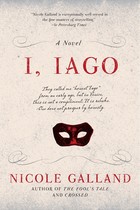
Growing up moderately wealthy in Venice, Iago has always been something of a disappointment to his father. Fifth son and a clever mischief maker, Iago ropes his friend Roderigo into misdeeds while using his clever words to escape blame. His life changes dramatically when he goes to join the Artillery and develops a well-deserved name and reputation for himself, even as his father continues to use him to achieve political success. Iago’s forthrightness and history gain him an unexpected position with the new General, Othello, and the love of his beautiful wife, Emilia. But Iago’s jealousy is a banked ember just waiting to burst into flame, with deadly consequences for all who hold him dear.
I read Othello back in high school, and I thought I’d forgotten most of it, but a book focused purely on Iago and just how he got to the point where he became obsessed with twisting the truth and destroying people’s lives was something that immediately appealed to me. I knew he was a great villain, and having read Galland’s previous books, I knew I was in for a treat. This book fulfilled all of my expectations, providing a fascinating view into the psyche of a man who is compelled to lie, to twist the truth, to plant insinuations, all because he is jealous and insecure in himself.
I can’t remember whether anything was specifically mentioned in regard to Iago’s past in Othello, but Galland imagines his insecurities traced back to his childhood, where his father simply refuses to believe in him and forces him to do the family’s bidding even at the potential expense of Iago’s career. Moving forward, he has difficulty believing in himself and seeks sole appreciation; his jealousy leaps out whenever his wife talks to another man, and the constant hints that his wife is actually Othello’s mistress lay the groundwork for all that is to come. The characters are the star of this show, particularly Iago as he spends plenty of time inside his own head. We can see when he is jealous and when he restrains himself, which happens increasingly over the course of the novel.
For me it was fairly clear when Galland was required to take on Shakespeare’s mantle and tell his story through her eyes; everything speeds up and becomes dramatic, and events begin to happen outside of Iago’s own head, most of them in the space of a single day. His own insinuations begin to spark Othello’s own insecurities and the denouement of the play comes to a rapid conclusion, resulting in a very speedy and tense read for the end of the novel. I knew what was going to happen, vaguely, but I can imagine the events being as surprising for a first time reader as they would be for someone who had seen the play. It is a Shakespearean tragedy, and I found myself dreading the ending as the characters became ever more familiar to me and Iago’s deception became clearer and more defined.
With well-defined characters and believable motivations for one of Shakespeare’s greatest villains, I, Iago is a fantastic read.
All external links are affiliate links. I received this book for free for review.
 Seven portraits of women reading, seven stories imagined by the author, Katie Ward, about the history of each painting. This brief, beautiful book captures the universal emotions of women throughout history, at all different stages in their lives, all centered around that one activity which many of us love above all others. The stories range in date from the fourteenth century to the imagined future, where the author cleverly ties together all of the paintings and their stories. Each chapter, focused on the imagined history of one painting, is a kind of short story, and can easily stand alone as well as part of the wider collection that is concluded to some degree at the end. Seven portraits of women reading, seven stories imagined by the author, Katie Ward, about the history of each painting. This brief, beautiful book captures the universal emotions of women throughout history, at all different stages in their lives, all centered around that one activity which many of us love above all others. The stories range in date from the fourteenth century to the imagined future, where the author cleverly ties together all of the paintings and their stories. Each chapter, focused on the imagined history of one painting, is a kind of short story, and can easily stand alone as well as part of the wider collection that is concluded to some degree at the end.
The writing in this book is beautiful and I just adored the way it was structured. I had a good look at the source behind each of the stories – both the real paintings and the inspirations for those which don’t exist or are conglomerates – and thoroughly enjoyed the connections and the differences in style as the novel progressed. Each chapter does feel like its own little story, with its own world and characters. The ending ties them up neatly, but so does the universal female emotion that pervades each. For me, each story highlighted how much we all exist in our own worlds, but how we are all tied together by our very existence. For example, in one of the stories, a teenage girl obsesses over an older painter, imagining herself in love, her feelings so reminiscent of my own immature years that I was completely taken aback. In another, a mourning aristocratic lady asks her artist friend to finish a painting of her female lover, who has recently passed on, and the grief and the emotion contained within just that one story was incredibly moving.
Several reviews of this book have highlighted the fact that it doesn’t contain quotes for speech, and that this makes it difficult to follow; I did not have this problem at all, and I actually enjoyed the flow of the writing. It’s worth noting, though, if that is something about a book that will bother you, but I didn’t even think of it as a complaint until I’d looked at other reviews. All of it was breathtaking, I thought, and Ward’s narrative voice was gorgeous enough to keep me pinned to the pages. It’s as though Ward gave me a window into the minds of the women in each of the paintings, and those thoughts were simply stunning.
I really can’t praise this book enough – Girl Reading is perfect for women who love to read, who love history, who are looking for a book that reminds them of our experiences throughout history. Very, very highly recommended.
I received this book for free for review.
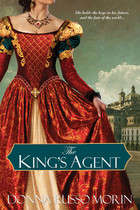 Battista della Paglia is an art collector, a thief, and a secret agent for François, the king of France. His mission is to find the most valuable artifacts, paintings, and sculptures for the king’s growing art collection. When Battista is instructed to find a mysterious sculpture, his quest brings him into contact with a woman with a secret. This is the Lady Aurelia, who accompanies Battista on his quest to find the sculpture. Aurelia has been living under the watchful eye of the Marquess of Mantua, her guardian, and has never felt anything like the freedom and emotions she experiences with Battista. But Aurelia’s secret could put all that they’ve built together in jeopardy, should she reveal it to Battista and the world. Battista della Paglia is an art collector, a thief, and a secret agent for François, the king of France. His mission is to find the most valuable artifacts, paintings, and sculptures for the king’s growing art collection. When Battista is instructed to find a mysterious sculpture, his quest brings him into contact with a woman with a secret. This is the Lady Aurelia, who accompanies Battista on his quest to find the sculpture. Aurelia has been living under the watchful eye of the Marquess of Mantua, her guardian, and has never felt anything like the freedom and emotions she experiences with Battista. But Aurelia’s secret could put all that they’ve built together in jeopardy, should she reveal it to Battista and the world.
I was very much intrigued by this book when I first heard of it; having read and enjoyed one of Donna Russo Morin’s earlier books, I was looking forward to reading another of them. Morin’s most recent effort is not a disappointment, but is quite a creative take on Dante’s Inferno. Combined with some of the adventure from one of the author’s favorite video games, The Legend of Zelda, the book finds our two heroes thrown into some serious, death-defying situations, which may not entirely reflect real life, but which provide a lot of entertainment for the historical fiction reader. Tied in with this is a romance between our two main characters, who naturally feel themselves drawn to one another after the harrowing experiences they’ve had searching for these objects. Mainly, the book is a lot of fun, very much a historical romp, which requires the reader to let go a little bit and simply enjoy the ride.
While I did enjoy the book, I found the author’s prose a little bit hard to get into at times. It’s not necessarily a book that you can just pick up and put down again; some immersion into her world is definitely required. The main character, Battista, was a real person, and an art thief at that. One of my favorite Renaissance artists, Michelangelo, also makes a substantial appearance, as do a few of his pieces. I’m always happy to see known historical characters appear in the books I’m reading and I was pleased to see him depicted. He definitely added to the overall atmosphere. I also enjoyed Battista’s band of fellow thieves; there’s an air of male camaraderie amongst them that means we – and Aurelia – immediately fall in love with a few of them.
All in all, The King’s Agent was an enjoyable read, and a pleasurable immersion into the world of early sixteenth century Florence. Recommended for historical fiction fans who are able and willing to suspend disbelief to enjoy a fun book set in a fascinating historical world.
I read this book as part of a tour with Historical Fiction Virtual Book Tours. For more information and the full tour schedule, please go here. To read more about the author, visit her website.
All external book links are affiliate links. I received this book for free for review as part of the tour.
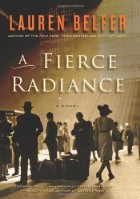 Claire Shipley, a divorced single mother, is a photographer for Life magazine. With the United States on the cusp of, and then deep into, World War II, she has plenty to photograph, but one story captures her devoted attention. It’s the development of penicillin, the miracle antibiotic which has the potential to save lives. After losing her daughter to septicaemia at the age of 3, Claire knows all too well what a difference this drug could make in people’s lives, but it’s incredibly difficult to manufacture and impossible to synthesize – moreover, the government has mandated that penicillin be affordable and patent-free. That means the drug companies are dangerously eager to research more profitable alternatives, and they’re not afraid to hurt the people Claire loves to get their hands on that potential. Can she balance telling the story with keeping her family safe? Claire Shipley, a divorced single mother, is a photographer for Life magazine. With the United States on the cusp of, and then deep into, World War II, she has plenty to photograph, but one story captures her devoted attention. It’s the development of penicillin, the miracle antibiotic which has the potential to save lives. After losing her daughter to septicaemia at the age of 3, Claire knows all too well what a difference this drug could make in people’s lives, but it’s incredibly difficult to manufacture and impossible to synthesize – moreover, the government has mandated that penicillin be affordable and patent-free. That means the drug companies are dangerously eager to research more profitable alternatives, and they’re not afraid to hurt the people Claire loves to get their hands on that potential. Can she balance telling the story with keeping her family safe?
This was a fascinating book. I knew that penicillin, and the other antibiotics we have today, was a game-changer for human life as it stood, but I’d never thought about it from this perspective. The idea that a scratch or a blister could end up killing a person is completely foreign to most of us now. I’ve never had an infection from anything; we even have antibiotic bandages and soaps. Viewing the world from Claire’s perspective, with her full knowledge that this could indeed save lives, was breathtaking and added a layer of intensity to a story that, for me, was already compelling.
That’s because Claire’s emotions don’t remain detached from the story for long. She falls in love with a handsome doctor in charge of the initial tests after photographing him at his work. This makes the hunt for antibiotics personal and close to home; moreover, Claire’s own father, absent from nearly all of her life, begins to make more of an impact on her, leaving her to make tough decisions that affect both her life and that of her son Charlie.
I found all of the characters in the book to be interesting, really; I enjoyed a turn in each of their minds. The book occasionally shifts perspective strangely, because it’s written completely in third person, but it doesn’t happen often enough to be a problem. It’s certainly worth considering everything from each of their perspectives, as in some ways the book is a deeper look at what motivates people to commit certain acts that are either condemned or praised. Life is not black and white, and it certainly isn’t here.
Written thoughtfully, with sympathetic and deep characters, against a truly fascinating backdrop, A Fierce Radiance is one for the historical fiction fans amongst us. And it’s still relevant; after all, with the over-prescription of antibiotics, we may well return to a world where each and every scratch could be a death sentence. Recommended.
All external book links are affiliate links. I received this book as a gift from Kathy. Thanks again, Kathy!
 Lucy Morgan’s position in Elizabethan society is awkward, to say the least. Part of a troupe of singing girls who entertain the queen and court, Lucy is often hidden away in the back due to her African heritage, even though she has one of the most beautiful voices in the group. That’s until one of the soloists becomes ill, and the queen takes a liking to her. On the famous royal visit to Kenilworth, often viewed as the occasion during which Robert Dudley aimed to win the queen’s hand in marriage, Lucy becomes favored by the queen, and is asked to spy on Dudley and his mistress Lettice Knollys for Elizabeth. But she’s not the only one spying – or plotting – in the court, and an assassination plot that Lucy uncovers could have deadly consequences for all involved. Lucy Morgan’s position in Elizabethan society is awkward, to say the least. Part of a troupe of singing girls who entertain the queen and court, Lucy is often hidden away in the back due to her African heritage, even though she has one of the most beautiful voices in the group. That’s until one of the soloists becomes ill, and the queen takes a liking to her. On the famous royal visit to Kenilworth, often viewed as the occasion during which Robert Dudley aimed to win the queen’s hand in marriage, Lucy becomes favored by the queen, and is asked to spy on Dudley and his mistress Lettice Knollys for Elizabeth. But she’s not the only one spying – or plotting – in the court, and an assassination plot that Lucy uncovers could have deadly consequences for all involved.
It’s been a few months since I read a novel set in Elizabethan England, and I think the break did me good as I found myself thoroughly enjoying this novel. Told in alternating viewpoints, with Lucy, her guardian and spy Goodluck, Lettice Knollys, and the queen herself narrating, I was quickly swept up in this exploration of the history surrounding that single event, a visit to Kenilworth Castle. For me, this worked much better than another book covering some large part of Elizabeth’s reign. Instead, we witness all those tensions over the course of a summer, when many things appear to come to a head.
For one thing, the author chooses to depict this as the moment at which Elizabeth firmly rejects her lifetime love, Robert Dudley, for practical reasons in part; she chooses to speculate something about the queen which I won’t reveal. The real origin of this is disclosed in the author’s notes, as with all the historical fiction I like best. But there is also Elizabeth’s anger at Dudley’s relationship with Lettice Knollys, her younger cousin who still retains much of Elizabeth’s youthful, now vanished beauty.
All of this creates quite a bit of emotional drama at the court, and Lucy is mixed up in all of it. She is chosen by Leicester and by the queen to carry out individual tasks, plus she is becoming aware of herself as an attractive person thanks to the fact that she meets a stableboy, Tom, who shares the color of her skin, and who is very attracted to her. But this isn’t a romance novel, and Tom isn’t her primary concern; the queen, her guardian, and Leicester are. She’s under a lot of pressure to reveal secrets, only to discover that there might be even more afoot. There are consequences to the prestige that Lucy’s always wanted, and she certainly discovers them in spades here.
I also really liked Lucy as a character; I could easily imagine a young black woman being shoved to the back of a procession not very long ago, much less in the Tudor period, and I found her reactions to be honest and authentic for the most part. The author does a very good job setting the scene at Kenilworth, too; I’ve been there, and I could picture some of the events taking place in a more complete castle. It added a nice bit of realism to the whole book.
A very enjoyable read for those of us who are still looking for more Elizabethan historical fiction; if you haven’t been reading any for a while, you may find yourself pleasantly surprised by The Queen’s Secret. Recommended.
All external book links are affiliate links. I received this book for free for review.
|
|



Recent Comments