|
|
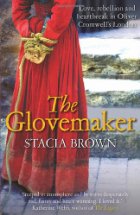 In the seventeenth century, after the Puritans have taken over England, life is very difficult for women, especially those without a husband’s protection. When Rachel Lockyer gets pregnant and her married lover William Walwyn is in the Tower, she has no recourse to defend herself. She instead hides her pregnancy from her employer and, when the baby is born, she conceals its death and buries it in the woods. But she’s suspected, spotted, and brought to trial; her own personal tragedy overshadowed by the law’s complete inconsideration for women. In the seventeenth century, after the Puritans have taken over England, life is very difficult for women, especially those without a husband’s protection. When Rachel Lockyer gets pregnant and her married lover William Walwyn is in the Tower, she has no recourse to defend herself. She instead hides her pregnancy from her employer and, when the baby is born, she conceals its death and buries it in the woods. But she’s suspected, spotted, and brought to trial; her own personal tragedy overshadowed by the law’s complete inconsideration for women.
The Glovemaker was a clever, thoughtful work of historical fiction that I really enjoyed. We don’t really get much set in Puritan England; I think I’ve read one other book set in this period recently that I loved, which was Lady of the Butterflies, and is slightly later. This is after the Civil War, when rule has become really strict, and of course, it’s targeted against our main character, Rachel.
Even though Rachel is sleeping with a married man, which leads to all of her woes, it’s still impossible not to feel for her as she slowly unravels her story. Her love affair with Walwyn manages to be so real and so genuine that I wasn’t sure I liked his wife, even though I could see her point of view, too; it’s a brief book but it packs a massive punch. There are more twists than you’d expect from the description and it’s worth experiencing them for yourself. Rachel was, for me, a great character, with a surprising amount of depth and a woman who could invoke sympathy in me, too.
It’s kind of a shame this book probably won’t be read by many men, because I think it’s actually a very valuable, heartbreaking story about life and women’s rights. It’s partly about the impact that laws can have when they are written by men with no consideration for the women they’re hurting and what that can do. A stillborn or miscarried child is a heartbreaking event in a woman’s life – but these laws were designed to ignore what a woman had to say, to ignore her pain and punish her for circumstances beyond her control. It’s an unfair burden to women, and stories that are about the seventeenth century have plenty of validity for our current lives as well. Shouldn’t women’s voices be heard in issues that are about their lives and bodies?
A worthy read – for those who like historical fiction, for those who like a plot that slowly unravels, for those who are concerned about women’s rights. Recommended.
On a related note, this book is known as Accidents of Providence in the United States.
All external book links are product links. I received this book for free for review from the publisher.
 After falling in love with Jack Hampton during the course of The Tory Widow, Anne Merrick has fully devoted herself to the Patriot cause – but because she’s still known as a Tory, she’s infiltrated their camp with her loyal maid, Sally. Anne and Sally have the dangerous job of not only discovering information, but passing it on to the men without being spotted. Naturally, this means tensions are constantly running high, but never higher than when the Patriots and Redcoats clash in battle, and Anne and Sally fear for all of their lives as they try to win the day for their cause. After falling in love with Jack Hampton during the course of The Tory Widow, Anne Merrick has fully devoted herself to the Patriot cause – but because she’s still known as a Tory, she’s infiltrated their camp with her loyal maid, Sally. Anne and Sally have the dangerous job of not only discovering information, but passing it on to the men without being spotted. Naturally, this means tensions are constantly running high, but never higher than when the Patriots and Redcoats clash in battle, and Anne and Sally fear for all of their lives as they try to win the day for their cause.
I’ve enjoyed all of Christine Blevins’s books so far, and this one isn’t an exception. It takes a slightly different approach than the first two; because it isn’t a romance at all really, since Jack and Anne are together at the start and remain in love throughout the book. It’s a direct continuation of the first book. In all, the sole thing that confused me was the title – Anne already turned, and I didn’t really see her going back to the Tory cause after falling in love with Jack. I’ll forgive the book that, though, as I quite enjoyed the story as it progressed onwards.
Like in the last book, Anne is a strong, independent woman with a taste for the world. She and Sally are very successful in what they do; the book demonstrates this effectively by opening with the two of them accidentally killing a massive snake. They’ve made themselves indispensable to the Tories, but all that means is that Anne can see both sides of the war. She firmly believes in independence, but that doesn’t mean she doesn’t find herself befriending various other people in the camp and witnessing the horrors of war for herself. Since she’s not directly in battle, these don’t come about too often, but Jack’s often in the thick of things himself.
I also enjoyed the atmosphere that permeates the book. There’s a real sense of desperation, hope, and upheaval among the patriots. Blevins has set the book right at the turning point of the war, as she explains in her author’s note, which makes for an exciting read. Having those little trinkets that she sent really helped, too – as soon as a character mentioned a bayberry candle, I knew what it was going to smell like, and I could fall a little bit deeper into the world she created. This is a great book to read with a cup of tea by your side anyway, not only to help with the atmosphere – we’re still right in the midst of the American Revolution, after all, and the characters are often drinking tea when they can.
I would definitely recommend these books to historical fiction fans – The Turning of Anne Merrick has less romance than the previous two, so if that was putting you off, don’t let it stop you here. I would however recommend you read The Tory Widow first; the backstory becomes more valuable as the novel progresses. I’m looking forward to seeing what Christine Blevins writes next!
This review is part of the Historical Fiction Virtual Book Tour – here’s the full schedule and information for more reviews!

All external book links are affiliate links. I received this book for free for review as part of the tour.
 As a result of an unfortunate accident with another boy, young Prince Patroclus is exiled from his homeland and sent to grow up in a foreign land with a set of strangers. In Phithia, his new home, he is merely one of many boys growing up under the shadow of the king and his half-god son, Achilles. Almost immediately, Achilles takes Patroclus under his wing and draws him into a new, mythical world, where Achilles is destined to become the world’s greatest warrior and Patroclus his steadfast, fervent lover. As a result of an unfortunate accident with another boy, young Prince Patroclus is exiled from his homeland and sent to grow up in a foreign land with a set of strangers. In Phithia, his new home, he is merely one of many boys growing up under the shadow of the king and his half-god son, Achilles. Almost immediately, Achilles takes Patroclus under his wing and draws him into a new, mythical world, where Achilles is destined to become the world’s greatest warrior and Patroclus his steadfast, fervent lover.
I can’t do justice to this book with my review. It is simply incredible – moving, emotional, mythical, and simultaneously epic and close in scope at the exact same time. If I had to say one thing to you about it, I would say, please read it, it is incredible.
Let’s start with the setting. The Trojan War is relatively familiar for people versed in mythology and literature; if not, I’m sure you’ve heard of the Trojan horse and the face that launched a thousand ships. This takes place around that war, primarily because it is there that Achilles will become a legend. This is The Iliad, but personal, close, and loving; for the first time I felt like I could understand Achilles and Patroclus’s relationship and just how they got to that final, brutal, excruciating point of both their lives.
This is truly a fantastic retelling, one that manages to be both timeless and relevant. Achilles and Patroclus have existed for thousands of years in readers’ minds, but in our society today, many people wish that a relationship like theirs would not exist – a travesty, if you ask me – but a book like this demonstrates just how beautiful that relationship can be, and moreover, how appropriate. It’s partly a romance, writ large on the world stage as these two players tangle with gods and the most powerful of men.
Speaking of gods, there are plenty here, and they walk the world right alongside the characters. Patroclus and Achilles encounter figures of their own legend, like those who trained Hercules, and Achilles’s mother Thetis is a goddess. Their power is appropriately terrifying, especially for Patroclus, who has the dubious role of keeping Achilles from fathering further children, and thus earns his mother’s wrath.
For anyone who may have the slightest interest in a literary, romantic take on The Iliad – The Song of Achilles is a book for you. Very highly recommended.
All external book links are affiliate links. I received this book for free for review.
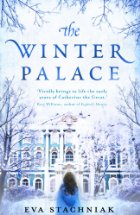 Barbara is a young Polish orphan when she enters the Russian royal palace seeking the assistance of Empress Elizabeth, who once vowed to help her. Barbara, called Varvara by the Russians, is taken on as a spy, trained by the Chancellor in hearing careless remarks, sneaking down passages, deciphering facial expressions, and making love. When young Sophie comes to court as a bride for the Empress’s heir, Varvara is placed near her, urged to watch her every move. Sophie is not merely a docile bride for the future Tsar; she is the future Catherine the Great, and every disappointment she endures as a young woman is merely fuel for the great reign she will have over Russia. Barbara is a young Polish orphan when she enters the Russian royal palace seeking the assistance of Empress Elizabeth, who once vowed to help her. Barbara, called Varvara by the Russians, is taken on as a spy, trained by the Chancellor in hearing careless remarks, sneaking down passages, deciphering facial expressions, and making love. When young Sophie comes to court as a bride for the Empress’s heir, Varvara is placed near her, urged to watch her every move. Sophie is not merely a docile bride for the future Tsar; she is the future Catherine the Great, and every disappointment she endures as a young woman is merely fuel for the great reign she will have over Russia.
Russia has always enchanted me, and lately it seems that it has enchanted many readers, too; after the popularity of Robert K. Massie’s newly released biography of Catherine the Great, The Winter Palace has arrived as an excellent fictional retelling of Catherine the Great’s life, capturing another tier of readers with the enthralling story of this Empress of All the Russias. This is the first of two halves, covering the period from Catherine’s arrival to the Russian court as Sophie, an obscure German princess, to her triumph as Empress Catherine the second.
Stachniak’s approach, showing us Catherine through the eyes of a woman who was her friend, is a very clever one, because it not only introduces us to a character we can care about, who is aware of all of the secrets in all aspects of Russian courtly life, but it also lets us view Catherine’s development through another pair of eyes. Varvara could have become a mute vehicle for Catherine, but instead she is a fully fleshed out character in her own right, with her own mistakes, successes, and loves outside of Catherine’s sphere. Her position makes her vulnerable and powerful simultaneously; as a bookbinder’s daughter with access to the most powerful people in Russia, she suffers from this odd dichotomy more than once. It’s easy to feel for her, especially when she uses the agency she has to make the wrong decisions, the repercussions of which she only comes to understand later on.
Of course, it’s probably Catherine who should be considered the star of the show here; from a young girl studying relentlessly in her room to understand Russian language and culture to a woman conscious of her power, she undergoes radical change in the course of this book. But because Varvara is close to her, it’s never hard to understand how that change has happened. We can almost witness her hardening, her learning, her ferocity growing as the politics begin to change and warp her innocence. The end of the book confirms that, perhaps, it happens sooner than we’d like to think, but it is a fascinating journey nonetheless.
All of this excellent character development is wrapped up in the gorgeous settings of the Russian court, beautiful trappings for a scheming court. It’s easy to get lost in Stachniak’s writing and her evocative descriptions. The story is smoothly crafted, too; there were a few moments towards the middle of the book where I got impatient, mainly because I knew what was going to happen and I didn’t like waiting, but looking back, I think everything was necessary for the plot to wrap up completely. My mood matched that of the characters.
An excellent choice for historical fiction readers, especially those who are eager to learn about Russia or Catherine the Great. Highly recommended.
All external book links are affiliate links. I received this book free for review from Amazon Vine.
Today I’m thrilled to welcome Eva Stachniak, the author of The Winter Palace, to Medieval Bookworm, on the little things that make history come alive for novelists.
Once in a while one comes across a sentence that makes history alive in ways one hasn’t anticipated. As a writer, I find such instances priceless, for they allow me to imagine aspects of my characters’ lives in ways I might have overlooked.
In her Memoirs, which she attempted to write a few times, thus giving the posterity several versions of her early life, Catherine the Great describes a palace fire she witnessed from the safety of her carriage when she was still the Grand Duchess of Russia. The description is quite conventional at first: the burning balustrade, the furniture being hastily carried out, the servants’ desperate attempts to salvage as much as possible, the heat of the burning building becoming more and more impossible to bear. But for me the whole scene becomes truly alive at the moment Catherine writes: “Then I saw a singular thing. It was the astonishing number of rats and mice that descended the staircase in a line, without even really hurrying.”
The image of rodents in single file leaving the burning palace made me think of life in these mice-infested dwellings. What would I see if I were there? Droppings everywhere? Mice scurrying along the walls? Hiding in shoes? Among fire logs? Rats drowning in jugs of cream? I started researching ways people tried to protect themselves from vermin: placing dried rosemary sprigs in their linen drawers, covering food in the pantry with heavy lids, placing bed legs in basins of water.
After a little bit of such digging, I was not surprised to find out that the Winter Palace was a home to over a hundred of palace cats. Catherine’s predecessor, Empress Elizabeth Petrovna, I discovered, loved cats and encouraged them to settle in the palace. Some travelers report seeing Elizabeth’s cats dressed in velvet suits, lolling about on her bed. Others complain that the imperial felines were so well-fed that they didn’t even try to catch mice. Soon I collected enough references to the palace cats to begin imagining their traces. There must have been hair on the furniture, smudges left by their whiskers on the window panes. There must have been endearing antics in their favourite spots: by the fireplaces, in the laundry room where fresh linen was kept. They must have claimed their spots on Elizabeth Petrovna’s shoes, or on her bed.
The cats made the Winter Palace vivid in my mind.
 A little more about the author: Eva Stachniak was born in Wroclaw, Poland, and came to Canada in 1981. She has been a radio broadcaster and college English and Humanities lecturer. Her debut novel, Necessary Lies, won the Amazon.com/Books in Canada First Novel Award, and her second novel, Garden of Venus, has been translated into seven languages. Her third novel, The Winter Palace, has been published in Canada (Doubleday), US (Bantam) and the UK (Transworld). She lives in Toronto, where she is working on her second historical novel about Catherine the Great, The Empire of the Night. A little more about the author: Eva Stachniak was born in Wroclaw, Poland, and came to Canada in 1981. She has been a radio broadcaster and college English and Humanities lecturer. Her debut novel, Necessary Lies, won the Amazon.com/Books in Canada First Novel Award, and her second novel, Garden of Venus, has been translated into seven languages. Her third novel, The Winter Palace, has been published in Canada (Doubleday), US (Bantam) and the UK (Transworld). She lives in Toronto, where she is working on her second historical novel about Catherine the Great, The Empire of the Night.
Don’t forget to come back tomorrow for my review of the book!
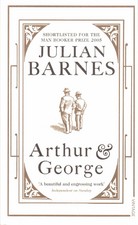 Arthur and George are born in Great Britain in the mid-19th century, but their lives couldn’t be any more different. Arthur grows up in Edinburgh, in a shabby but intellectual and loving family, becoming an eye doctor and then a world-famous author. George grows up in rural Shropshire, tortured by farmboys due to his dark Indian skin, but nevertheless persevering to become a published solicitor in Birmingham. George is one of many; Arthur is one in a million. But when George’s life begins to unravel completely, it is Arthur who must come to his rescue, in this deep exploration of race, prejudice, circumstance, and deeply-held beliefs. Arthur and George are born in Great Britain in the mid-19th century, but their lives couldn’t be any more different. Arthur grows up in Edinburgh, in a shabby but intellectual and loving family, becoming an eye doctor and then a world-famous author. George grows up in rural Shropshire, tortured by farmboys due to his dark Indian skin, but nevertheless persevering to become a published solicitor in Birmingham. George is one of many; Arthur is one in a million. But when George’s life begins to unravel completely, it is Arthur who must come to his rescue, in this deep exploration of race, prejudice, circumstance, and deeply-held beliefs.
Julian Barnes recently won the Booker Prize for The Sense of an Ending, which I immediately wanted to read, but since I had Arthur and George on my shelf, I decided it had to come first. To be honest with you, that was a brilliant decision, because I loved this book. It made me think on so many levels, while at the same time providing a cleverly told story set in a fascinating part of history.
The short description I wrote about probably makes it obvious that the Arthur is question is Sir Arthur Conan Doyle, ridiculously famous for creating Sherlock Holmes, a figure who resonates with us still so strongly that he’s having films and revival novels made about him. He’s less famous for his efforts to reform the law and grant justice to the wrongly accused. One of those cases was that of George Edalji, who is naturally the George in this book. Wrongly convicted of a series of horse murders and threatening letters, even though the letters threatened his own family and the mutilations continued when he couldn’t have committed them, George winds up in prison, and sends a letter to the author of the famous detective stories for help. Luckily for us – and Julian Barnes – Arthur came to help.
Knowing that this was a true story gave it particular resonance for me. The letters quoted within are real letters, including the threatening ones sent to George’s family. What was recorded has been included. Barnes has instead stepped into the minds of the characters and explored what these people might have been thinking and feeling.
In particular, this is a deep exploration of the injustice that was once inherent in the criminal system, but which invites us to work out our own prejudices in the process. We may not condemn George for his half-Indian heritage now, as these Englishmen did, but who do we accuse in his place? I’ll let you read the book to consider this for yourself, as Arthur must when he studies the suspects, but it’s the sort of book to place a reader just slightly on edge, fervently aware of how much and how little has changed.
It’s also an incredibly fascinating case study of two completely different men, who might have grown up in two different worlds, but for the cozy feel of England that seems to steep the book in tradition while carefully probing at these stereotypes that we’re still working to smash. I was kept reading, eager to learn more, and I found both halves of the narrative equally consuming, even before the central characters finally meet. It’s completely engrossing, beautifully written, and convincingly fleshed out. Very highly recommended – thank you, Julian Barnes, for getting my 2012 reading year off to a fantastic start.
All external book links are affiliate links. I purchased this book.
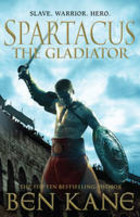 Spartacus is famed as a warrior, a Thracian who led a band of rebellious gladiators against the might of the Roman republic. Ben Kane has taken this story, only the bare bones of which exist in historical record, and crafted a duology of fiction novels around those bones. This, the first, covers the story of Spartacus’s rise from a trapped and betrayed gladiator to the leader of an army capable of striking fear into the heart of the experienced Roman legions. Spartacus is famed as a warrior, a Thracian who led a band of rebellious gladiators against the might of the Roman republic. Ben Kane has taken this story, only the bare bones of which exist in historical record, and crafted a duology of fiction novels around those bones. This, the first, covers the story of Spartacus’s rise from a trapped and betrayed gladiator to the leader of an army capable of striking fear into the heart of the experienced Roman legions.
Spartacus: The Gladiator isn’t the first book Ben Kane has written about Rome, but it is the first of his that I’ve read so far. In the tradition of Bernard Cornwell and Simon Scarrow, this is a book about the darker side of historical fiction, full of battles, rough men, and treachery. Amongst all this is Spartacus, a man who clearly stands apart due to his natural sense of leadership and his stringent moral code, which extends completely outside the battlefield.
Like many choosing to read a book like this, I was seeking an active and exciting plot, and in this respect, Spartacus: The Gladiator delivers handily. Even though we know the lead character must survive – how else would there be a second book about him? – that doesn’t mean everyone else will. Several of the other characters have viewpoints, namely Ariadne, Spartacus’s wife, and Carbo, a Roman who becomes a gladiator after falling deeply into debt. We also sometimes witness events from the other side, usually through the eyes of Roman consuls and generals who are about to get massacred by Spartacus’s ever-growing army.
I liked both Ariadne and Carbo; each served a different purpose for seeing Spartacus through other eyes, albeit adoring ones. The great warrior wins their loyalties differently, by treating Ariadne with respect she’s never received from other men, and by believing in Carbo despite his Roman origins. In this way, we can see just why Spartacus was a natural leader, and start to believe why his rebellion started to meet with success.
This is not a book for those who actively dislike battle scenes. It may also contain triggers because there is more than one rape scene – I wouldn’t call any of them gratuitous, as each furthers the plot and causes significant reactions in different characters – but I could easily imagine them becoming upsetting. This is the Roman world, however, and when you’re reading a book about a war fought by deprived and vengeful men, it’s unfortunately to be expected.
I’m not particularly familiar with the legend of Spartacus, but Kane fills us in with a handy endnote, explaining what exists and what he extrapolated from the evidence. It’s fantastic when authors do this. Naturally, some of the characters are fictional, and no one is even sure Spartacus actually came from Thrace, because he might have been assigned that once he’d become a gladiator. But his battles and his comrades are recorded enough that the story follows the timeline as it happened.
If you’re seeking more historical fiction set in Rome in the days of the Republic, from the viewpoint of the oppressed, Spartacus: The Gladiator is a good choice.
All external book links are affiliate links. I received this book for free for review from the publisher.
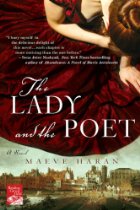 Many of the most famous love poems were inspired by a real life love story. This is certainly the case with John Donne, whose romance with Lady Ann More led to some of the most beautiful, and sometimes risque, poetry in the English language. Though living in relatively stringent Elizabethan England, where societal rules and status were carefully enforced, the relatively high-born Ann falls deeply in love with John, a man who could not properly support a wife at the time. Free-spirited, devoted Ann isn’t willing to let that stand in the way; this is a story of courtship, of frustration, and of literary genius. Many of the most famous love poems were inspired by a real life love story. This is certainly the case with John Donne, whose romance with Lady Ann More led to some of the most beautiful, and sometimes risque, poetry in the English language. Though living in relatively stringent Elizabethan England, where societal rules and status were carefully enforced, the relatively high-born Ann falls deeply in love with John, a man who could not properly support a wife at the time. Free-spirited, devoted Ann isn’t willing to let that stand in the way; this is a story of courtship, of frustration, and of literary genius.
I can’t remember where I got this book; I think it got sent to me for review a while ago, and ultimately that was the reason I finally gave in and picked it up. I haven’t been properly in the mood for historical fiction for some time now, but The Lady and the Poet is such a beautiful, deep, provoking book that it held and indeed rewarded my attention once I finally began reading it.
First of all, let me say that this particular book truly feels historic. It doesn’t just throw relatively modern characters into a setting with fancy dresses, but instead has characters who fit seamlessly into their environment and give us a thorough idea of what an Elizabethan couple might have had to deal with. Ann and John’s love story is actually documented, and the sacrifices they made for one another are firmly rooted in history, which makes this book all the more enchanting, at least for someone like me. I loved the re-imagining of the lives of these two people. The Lady and the Poet reminded me why I enjoy historical fiction so much in the first place.
Secondly, the literary appeal can’t be overstated. Donne wrote a lot of poetry; I even managed to study some of it during my English major days. Haran doesn’t let all that richness fall to the wayside, instead incorporating Donne’s work into the plot, into the love story, and strengthening the story as a whole by using what probably was inspired by Ann in the first place within the book. Much of his work rings true, and knowing that it was written by the man himself adds that extra layer of authenticity and emotion to the book which just doesn’t exist otherwise.
Finally, the book is both gorgeously written and seamlessly plotted, stringing the reader’s attention along the years and the struggles, providing details and descriptions enough but never overwhelming the reader with useless historical detail (although I’ll be the first to admit that I would be happy with more than most). We feel as though we’re in Tudor England, but we’re in the expert hands of a guide we can trust.
The Lady and the Poet is a quiet book, a love story, but one that will worm its way into your mind and heart and refuse to leave. An exceptional choice for those who love historical fiction.
 When her best friend Kitty decides to leave to be a nurse on Bora Bora at the start of World War II, Anne throws her entire life to the side – temporarily of course – to join her. After all, her previous existence was a little bit mundane and uninspiring, including her engagement to her fiance, and nothing says excitement like a nursing post in the South Pacific. But Anne isn’t entirely prepared for what Bora Bora will bring to her; a murder mystery, a forbidden love affair, and secrets that may tear her from her best friend forever. When her best friend Kitty decides to leave to be a nurse on Bora Bora at the start of World War II, Anne throws her entire life to the side – temporarily of course – to join her. After all, her previous existence was a little bit mundane and uninspiring, including her engagement to her fiance, and nothing says excitement like a nursing post in the South Pacific. But Anne isn’t entirely prepared for what Bora Bora will bring to her; a murder mystery, a forbidden love affair, and secrets that may tear her from her best friend forever.
I’d heard a lot of praise for Sarah Jio’s first novel, The Violets of March, so when she gave me a chance to review The Bungalow, I leapt at it, and I’ve been looking forward to the book ever since. I wasn’t disappointed; this is a solid love story and all-around good read. It’s a short one, so perfect for zipping through over the course of an afternoon or evening while you can get fully wrapped up in the book.
The book’s setting, on a lush tropical island in the midst of World War II, seems absolutely designed for romance – especially since I have done work with a travel company in the midst of my old job, and I’m very familiar with the idea of Bora Bora even if I haven’t been there myself. It’s an inspired setting, creating the urgency of war while still allowing a couple to fall in love outside the actual warzone. That threat of danger is always hanging over their heads.
The plot was also an incredibly compelling aspect of the book for me and kept the pages turning (or me clicking the button on the Kindle). The characters, particularly Westry, weren’t as well defined as I think I’d like in a proper romance, but because so much else was going on in a relatively short period of space, I could understand the relative shadowy dimensions and enjoy the rest of the story as it happened. And I really related to Anne, the star of the show, who has so much going on in her life that she can’t contain it all and ends up torn before she decides what she really wants. I found myself captivated and swept into her world.
As a result, I found The Bungalow to be a fast, very enjoyable read; with its evocative setting, I actually think it would be an excellent choice for a beach read with a little bit more depth. A fantastic book for historical fiction and romance fans alike. Recommended.
This book was provided to me for free by the author for review.
Historical fiction is incredibly hot right now. If you ask me, history has always been fascinating, but historical fiction gives us the ability to imagine ourselves into a time and place that no longer exists, and never will again. Even those who don’t think they like history – probably because they associate it with memorizing endless lists of names and dates – will find that they enjoy an excellent historical novel just as much as those of us who know we’re obsessed with it!
So, here are a few of my favorite historical fiction books of the year that I think would work exceptionally well as gifts:
Russian Winter, Daphne Kalotay
This fascinating book about a Russian ballerina, both in her prime and in her old age, completely captivated me when I read it. I didn’t hesitate in my praise for the book when I reviewed it either – it’s the perfect choice for a winter read as well.

Lady of the English, Elizabeth Chadwick
Those of us who love historical fiction set in medieval England are intimately familiar with Chadwick’s work, but why not give someone else the gift of discovery? This is a fantastic place to start.
Madame Tussaud, Michelle Moran
Perfect for anyone who has ever visited the famous wax museum, especially the one in London, and wondered about the woman who started it all. Also excellent for those interested in the French Revolution, and an all-around wonderful historical novel.
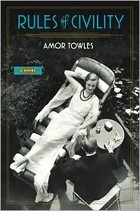
Rules of Civility, Amor Towles
For the friend or family member who loves New York City, or at least the idea of it, Rules of Civility is just the ticket, capturing a culture alongside a smart, beautifully written story.
22 Britannia Road, Amanda Hodgkinson
A beautiful book that deals with the trials of immigration after World War II, this would be an amazing choice for a family member studying psychology with its peek into the brain of a child and their adaptation skills. Its relatively common immigration story has what was in my opinion an excellent twist.
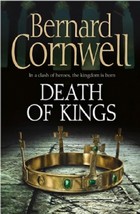
Death of Kings, Bernard Cornwell
While the latest in a series, this one is ideal for anyone who doesn’t mind getting down and dirty with history. Pair with Praetorian by Simon Scarrow and you have two great new books. Alternatively, start them out fresh with The Last Kingdom and Under the Eagle.
The Autobiography of Mrs Tom Thumb, Melanie Benjamin
For anyone who has ever enjoyed the circus, this glimpse into the life of Miss Lavinia Warren Bump is guaranteed to please. This fascinating, contradictory, stubborn women will captivate all those who encounter her.
Which historical fiction would you or have you chosen as a gift this year?
Some of these books were sent to me for free for review.
|
|



Recent Comments