Anne Neville has always known that her future isn’t really hers to choose. But she trusts her father, the earl of Warwick, to provide a good husband for her, and her childhood is generally happy even if she does occasionally fight with her sister Isabel. When Richard, duke of Gloucester, is brought to her home of Middleham to be fostered, Anne immediately develops an interest in him, and they become friends. When her father arranges their marriage, Anne is at first uncertain and then pleased. But politics in England are uncooperative and soon a rift grows between Anne’s father and King Edward IV. Anne is forced to flee to France, where she ends up in a loveless marriage and spends days wondering when she will escape her cruel life and get back to the man she loves.
Anne O’Brien chose to write this novel about Anne Neville because few people actually give the focus to her when writing a novel set during the Wars of the Roses. And she’s right, because I’m not sure I’ve read one which does actually have her as the narrator. As a result, there were some new sections here, particularly the exile in France. I’ve not read a fictional account of Anne’s marriage to the Edward of Lancaster, even though most books mention it. So, O’Brien succeeded in bringing some new material to a story that’s been told many times, which I appreciated.
I also liked that O’Brien chose to cast the novel as a romance between Anne and Richard over an extended period of time. While there’s no evidence that there was actually a romance, and Richard had plenty of greedy motives for marrying Anne, as the author says, there isn’t any evidence that it didn’t happen. And the romance was quite sweet and well-written; I like how both the characters, especially Richard, changed over the period of the novel and the couple acknowledged one another’s faults and flaws when they decided to be together in the end.
Unfortunately, a few things prevented the book from being truly excellent, though it was enjoyable. For one thing, I really feel like the Wars of the Roses are massively overdone in historical fiction, only surpassed by the truly ridiculous saturation of Tudors. Knowing the details of everything that is going to happen in a novel just kills it, IMO – which is why I appreciated how O’Brien did some things differently. I did find some things a little strange, like the fact that Anne referred to her parents as the Earl and Countess even in her own head, but Margaret of Anjou was never really the Queen and Richard was always Richard. While children in the Middle Ages would have been very aware of their parents’ titles, I’m pretty sure they still called their mothers “Mother”, especially when they’re depicted as having a close relationship – Anne’s mother doesn’t seem to be a particularly distant figure to her and she loves and trusts her parents. It added a bit of distance that I don’t think the novel needed.
Lastly, I thought the addition of an incestuous relationship between two of the characters was a little unnecessary; they had already been villainized enough throughout the rest of the novel. It just kind of squicked me out.
Virgin Widow is a good addition to the current offering of historical fiction covering the Wars of the Roses and I definitely recommend it for its different perspective on events.
I am an Amazon Associate. I received this book for free from the publisher for review.
When her boyfriend not only dumps her but becomes famous, shoving his betrayal in her face at every turn, Anna realizes that she has to get away from her American life. So she takes a cue from her French side and goes to live in her aunt’s Paris apartment for free. She stumbles upon a job translating an erotic novel from French to English, and as she writes more and gets involved in a French romance, she starts to wonder if the characters in the book are real.
I’m sad to say I didn’t particularly like this book. For one thing, there was just too much emphasis on sex. I didn’t realize she was translating an erotic novel! I don’t read the backs of books and sometimes that does lead to nasty surprises like this one. The novel wasn’t particularly nice either – I will admit that after the first one, I skimmed all the rest of the excerpts of the erotic novel.
Still, I persevered in reading the rest of the book, hoping Anna would learn something from her French life to apply back to her American life. I was disappointed in that too. It seemed to me that she just constantly moped in her apartment, lamenting the unfortunate state of her life, except when she went to hang out with her trendy French friends who all had their own issues and subsequently complained about them. The mystery of the erotic novel didn’t pan out either as I wasn’t interested in the book enough to actually remember the characters’ names. Bad, I know – but by the end, I was genuinely skimming the entire book and skimmed huge sections just to get to the end.
Just about the only thing I did like about the book was the wordplay and the rumination on the nature of language. Because Anna is a translator, she ends up thinking a lot about how concepts work in different languages and how some phrases just don’t work outside of their native tongue. I have studied four languages, five if you count Middle English, and although I don’t know any of them particularly well, this is a concept I’ve run into quite a bit. I definitely wanted to learn French.
Don’t take my word for it, though, as you might feel differently; Jennifer at Literate Housewife loved this book and named it one of her top 10 of 2009. I wish I’d felt the same way as she did! Foreign Tonguewas definitely not the book for me.
I am an Amazon Associate. To be honest, I’m not sure why I have this book or where it came from, but I know it was sent to me for free.
When this book was very kindly sent to me for review, I knew my mom would love it. When I didn’t have a chance to review it for the blog tour myself, she generously stepped in to write a review for me.
Saving CeeCee Honeycutt is a novel about a twelve year old girl who goes to live with her great Aunt Tootie Caldwell when her mother dies. After a terrible start to her childhood, Ceecee definitely needs saving. Is her aunt up to the task?
Most of all, this book reminded me of The Secret Life of Bees, which was also a book about a troubled girl who goes to live with middle aged women in the south. The beginning of the book when CeeCee is living with her mentally ill mother and her father was very troubling to me because of how negative her home life was. Instead of CeeCee’s father trying to help the situation, he chooses to spend most of his time out of the house at work. His work included traveling, so he was not home very often. Rather than helping his daughter he leaves her to take care of herself and her mentally ill mother. As a mother myself I was so angry at her father. How could he not want to protect his daughter? I wanted to jump in the book and try to help CeeCee.
After CeeCee’s mother is killed, CeeCee goes to live with her great Aunt Tootie in Savannah. I was glad that now CeeCee might be able to have a normal life. Aunt CeeCee is a wealthy middle aged woman with a housekeeper, Oletta. CeeCee meets other women in the neighborhood, Miz Hobbs and Miz Goodpepper. This is a very different life for CeeCee instead of having to take care of herself, she has someone to take care of her. I really liked the eccentricity of the women in the book. I think it added a lot to the story.
The part in the book about discrimination I thought was very important. This was part of life at that time and I am glad it was included since it’s something we must never forget.
Overall, I enjoyed this book and would recommend it. It is an emotional and touching story. My only criticism of this book was the predictability of the story; the plot could have done with some twists. Still, I think Saving CeeCee Honeycuttwould appeal to women of all ages; I think we would all be able to relate to this story.
I am an Amazon Associate. This book was sent to us by the publisher for free.
Lucy Waltham has been in love with her brother’s friend Toby for eight years. When suddenly everyone declares that his engagement to a Miss Sophia Hathaway is guaranteed, Lucy decides she has to do something about it, and sets out to seduce Toby. First, though, she practices on Jeremy Trescott, the Earl of Kendall, who unbeknownst to her has begun to see her as a woman, not the foolish little girl she once was. When she kisses Jeremy, she gets a lot more than she bargained for.
While I liked this, it definitely had faults. Tessa Dare’s writing was surprisingly strong and carried me through the book without any trouble, and for the most part I liked Lucy and Jeremy. The falling in love was great, right up until the couple was about to get married (roughly halfway through the book). Then they decided that they couldn’t talk to one another and spent the rest of the book agonizing over stupid misunderstandings that could have easily been fixed. It’s like a lesson on how not to communicate in a relationship. Still, it was sweet, and my affection for the characters kept me going through to the end.
Sophia Hathaway longs to escape her stifling existence in England. So she flees her home and her fiancé to buy passage on the Aphrodite, a former pirating ship with a domineering ex-captain, Benedict “Gray” Grayson. Sophia wants nothing more to be her own person, posing as a governess called Jane on her escape. Instead she finds a person that she suspects will complete her, but how will they get past all the lies?
I’m a little wavery on this one. I liked it for the most part, but what bothered me were the constant lies. I couldn’t really imagine that anyone could base a relationship off total dishonesty, yet here these two are managing it. I kept wanting to shake Sophia and get her to tell at least Gray the truth, before it was too late. But it all wrapped up quite nicely (as these books are prone to do) and I did enjoy reading it.
Isabel Grayson has known that passion is dangerous from a very young age. Instead of seeking a love match like her brothers urge her to do, Isabel decides to marry a peer with influence so she can change the world. But then she meets Sir Tobias Aldridge, her brother’s wife’s jilted fiancé. Toby not only thinks Sophia is absolutely gorgeous, he thinks marrying her is a perfect way to get back at Sophia. The difficult part? Falling in love with his wife while her only love is charity cases.
This was a very sweet last installment in the trilogy. My only issue with it was Isabel’s reluctance to embrace her actual personality. She is so determined to suppress her own emotions that she is actually quite boring at times, but at least she had a good reason behind it. I really liked Toby and I could completely understand his frustration and attitude. And I was glad that rather than using Isabel, he genuinely liked her and enjoyed her company throughout the book – there was never anything as coldhearted as the summary implies.
I have to admit, though, the best part of this book was the sub-romance between Isabel’s brother and her doctor friend. He’s black and she’s white and I wanted to cheer that Tessa put that romance there. It’s not perfect; they’re both depicted as “flawed” people (his is because he’s a widower, hers because she is a female doctor in a time when women weren’t even allowed to be doctors) but considering the total absence of normal colored people in mainstream romance novels, I was very very pleased.
All in all, this was a really nice debut trilogy. Tessa Dare is releasing a new trilogy this summer and I just love the trailer she’s done for it. It just shows how creative you can be with a camera, a laptop, and children’s toys!
Bee Rowlatt is a BBC journalist looking for an Iraqi woman to interview. She’s married to a journalist, has two little girls, and leads a fairly normal life in London. May Witwit is an English professor living in Iraq, teaching things like freedom and democracy to female students who have never had those privileges. When Bee gets into contact with May, they start emailing each other and soon develop an incredibly close relationship. As the danger to May escalates, Bee’s worry overcomes her and the friends hatch a plan to get May and her husband out of Baghdad for good.
I loved this book in so many different ways. It was eye-opening, poignant, and just flat out amazing. I’m not even sure I can effectively review it – I kind of just want everyone to read it right this minute.
The book is not really a memoir, it’s just a record of every email sent between Bee and May over the course of two years, during which they meet, grow close enough to call one another sisters, and desperately try to get May out of her life-threatening situation. It’s also not at all about Jane Austen, but I didn’t particularly care. May is an English professor and that’s about as far as it goes – but the title isn’t what is important here.
At first it was the differences between their lives that struck me – both are intelligent women with incredibly vivid personalities, but location has its effects. Bee’s biggest problems are that her girls frustrate her and she has fights with her husband occasionally, especially when he goes on work trips for weeks. She has laundry to do, meals to cook, and works part-time. Her life was so familiar to me, which put it in even more vivid contrast with May’s life.
May is at risk every single day. Bombs drop next door to her house, her friends and colleagues are killed, and her life is personally threatened. She could die at any moment and Bee often expresses the worry that she might just never hear from May again. Because her husband is a Sunni and their marriage has ostracized them from their families, she has to support them both. In times of danger, he simply can’t leave the house. The obstacles that prevent them from even emigrating to a neighboring country are absolutely immense and often ridiculous. May actually laments that things were more organized when Saddam was in control, which I just couldn’t believe.
There was some political comment in the book, of course – May hates the Americans’ presence and feels they’ve made her life worse, which made me so sad, but I could unfortunately see her point. I think anyone would hate the people who brought danger and war to their doorstep, no matter how well-meaning. The asylum issue was mentioned again and as usual the women establish that it’s virtually impossible to attain asylum in the UK, especially because you have to get there to do it and they won’t let you in if you’re actually claiming asylum. They go the academia route instead and try to get May out with a student visa so she can do her PhD.
I just loved the relationship that developed between the two women – it felt so real to me. They also sometimes talk on the phone or send text messages, which left unfortunate little gaps in the narrative. I was greedy for all of their contact, really. It was incredible to read about two women with entirely different life experiences just connecting. I feel like this sort of story can go a long way towards reminding us that we’re all people, no matter what religion or skin color – it genuinely doesn’t matter, and I wish that it didn’t in reality to so many.
I think what I can’t sum up so easily is that Talking About Jane Austen in Baghdad moved me incredibly. I was cheering for May the whole way and at times I could easily have broken into tears. Their story was just amazing and I hope that more people read it and learn that the differences between us aren’t really so immense after all.
I am an Amazon Associate. I borrowed this book from my local library.
It’s a lazy Sunday afternoon around here, but before I get into what I’m reading, I’d like to direct you over to Love Romance Passion, one of my favorite romance novel blogs. Keira has an interview with me up!
I have just finished Lonesome Dove by Larry McMurtry and I’m feeling surprisingly triumphant about it. Heidenkind and I are reading it this month together, and I thought I’d have the whole month to work leisurely through this 950 page book. Unfortunately that wasn’t the case – someone else requested it almost the minute I took it out of the library, so I only had until this Tuesday. I decided to read it last week, but it went incredibly slowly up to the 300 page mark. I definitely despaired of finishing it this weekend, but when I finally had a chance to read it steadily I found it flew by. Expect a joint review towards the end of month – I’m glad my half won’t be negative at all!
I’m discovering that I’m even more of a money hoarder than I am a book hoarder. At present I have an Amazon cart all set up with 10 books in it, but I think I like the money in my bank account more than I like the books in my hands! I’m not sure if it’s just because I’m not used to working, so it hasn’t hit me that I will earn more, if I’m guilty about the books I haven’t read yet, or if I’m just cheap. Only time will tell – but most of the books in there are preorders anyway, so I’m sure I’ll loosen my fist when they’re released and everyone else starts buying and reading them.
For the moment, though, I’ve been enjoying my local library. All four books I read last week were library books. I have one review copy that I should get read this month and my mom has sent me a box of review copies, but otherwise I’m indulging in choosing whatever I feel like reading. Now that Lonesome Dove is out of the way, I’m planning on racing through at least one book later this afternoon, Kitty’s House of Horrors by Carrie Vaughn. I read through the entirety of the series last summer in a couple of days, so I’m anticipating that this one will be just as quick and enjoyable. I have some work to do but I’m hoping that won’t take too long.
I had a genuine bookish question that I wanted to ask this week in my Salon post, but I’ve forgotten it between Friday and today – I’ve been letting the weekend stupor take over my mind! So I’ll just leave you with an ordinary question – what are you reading today?
Vanilla is one of the world’s most delicious flavors. It also happens to be one of the most complex and difficult to harvest. The vanilla orchid not only requires manual fertilization outside of its native swathe of Mexico but also has a long and complex drying process that lasts months. As a result, the vanilla bean is an incredibly expensive and desired substance. Tim Ecott journeys to all the places where vanilla is grown, interviewing farmers, buyers, and connoseuirs alongside his telling of the history of this intriguing flavor that is anything but boring.
Vanilla is actually one of my favorite flavors and I’ve been curious about it for a few months now. Last August I visited the Eden Project in Cornwall where they have a vanilla vine and a short description of the intensive process that is required just to get the flowers to bear fruit, then to cure and dry them for general consumption. This book definitely satisfied my curiosity and provided a totally readable and full account of everything I’d ever wanted to know about vanilla.
Tim Ecott’s background is in journalism; he worked for the BBC and his job took him to many of the places he wrote about in the book. It’s something of a travelogue as many of the world’s vacation hotspots are also great climates for the vanilla plant. He visits Mauritius, Reunion, Madagascar, Tahiti, and Mexico in his search for the background of this plant. I could tell straightaway he was a journalist because his interviews read like exactly that; he doesn’t excel quite so much at the narrative non-fiction. I think I was spoiled by The Immortal Life of Henrietta Lacks. But regardless, the story he has to tell is vastly interesting and I was fascinated by the surprisingly complex politics that happen around vanilla growing, curing, and selling.
He doesn’t spare on the history; we learn all about how the Mexicans first used vanilla, how it made its way to Europe, and finally how Europeans transplanted it to their warmer island possessions. Ecott reveals the story of the first person to learn how to manually fertilize vanilla and the background on all the different varieties, plus the competition between genuine vanilla and artificial vanillin, which isn’t as good but is what you’ll find in cheaper vanilla-flavored products. Also, I never knew that Coca Cola had vanilla in it, but it seems that most cola soft drinks do. Just one interesting fact I’ll be taking away from this book.
One warning though, you’ll be intensely wanting vanilla ice cream throughout the book! Overall, I was thrilled that Tim Ecott made the provenance and current status of my favorite flavor into a great book. He’s proved that vanilla isn’t as boring as people claim, but actually has a rich history and complex chemistry that rivals any artificial taste out there. Vanillawould be a perfect read for anyone interested in food, especially desserts.
Weekend Cooking is hosted by Beth Fish Reads. From her blog:
Weekend Cooking is open to anyone who has any kind of food-related post to share: Book (novel, nonfiction) reviews, cookbook reviews, movie reviews, recipes, random thoughts, gadgets, fabulous quotations, photographs. If your post is even vaguely foodie, feel free to grab the button and link up anytime over the weekend. Please link to your specific post, not your blog’s home page. For more information, see the welcome post.
While this book didn’t have any recipes in it, it was about a food!
I am an Amazon Associate. I borrowed this book from my local library.
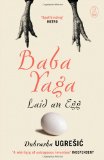
This is a novel in three parts, all about women. The first part is the story of a woman and her elderly mother, whose faculties are starting to flee in the face of age. The second delves into the lives of three older women on a once-in-a-lifetime trip to a spa in a totally different country. The last section embarks on a fictional literary analysis of the first two stories and ties them in with the traditional Baba Yaga myth.
This book was really difficult to get into. I have never actually read any of the Canongate Myths series despite intending to for a good long time now. This was to be my introduction, and unfortunately the fact that the first two segments had almost nothing to do with Baba Yaga put me off to a certain extent. They were all about older women and while I could see how they tied into the myth slightly, it was often frustrated to feel like I just didn’t know enough to “get” the book the way I wanted to get it.
I’ve said before that I’m not a short story fan and that hindered my appreciation of the book as well. Just when I got interested in the first story, it switched over, and the second story was a bit peculiar. I actually found the literary analysis section quite interesting because while I knew a little about the myth from learning Russian, I didn’t know anywhere near what the book told me. It was all really fascinating. And then to my surprise, I found the last five pages amazingly powerful. The end is almost brutally about women’s rights – about how wrong it is that women are so often the witches and the subjects while men who wear fancy hats decide our lives for us – and I almost wanted to stand up and cheer for Ugresic.
The last section also cast the book in a whole new light. I’d almost like to read it again just to pick up what I knew I was missing the first time, but the analysis was so good I’m not sure I need to – I was reminded of literature classes, but in a good way. It was a bit slower going but it really made the whole book an intriguing intellectual exercise that I felt was rewarding despite the initial frustration.
In short, if you enjoy the idea of myths and literary analysis, I think Baba Yaga Laid an Egg will work for you. It also would be a fantastic choice for feminists, just for those five pages alone.
Anyone out there have a suggestion for another Canongate Myth for me to try? I have a PDF of The Good Man Jesus and the Scoundrel Christ, I just need to figure out how to get it on my phone for easy reading.
I am an Amazon Associate. I received this book for free from the publisher for review.
Kevin Khatchadourian, famously known as “KK”, killed nine people in his high school gym, in the process earning a long jail sentence and infamy – for him and his mother Eva. In a series of letters to her husband, Eva lays out the fabric of their lives from the beginning of their love story to Kevin’s fateful day in the gymnasium. Confronting difficult questions, such as who is to blame for a child’s violence, Eva lays her heart out for her husband and the reader.
I have heard so very much about this book since its publication date. It’s easy to know what it’s about; it’s revealed on the first few pages. Even then, though, it’s absolutely devastating as it continues to its inexorable end. It’s only as the book goes on do we realize how much Eva’s life changes because of an act her son committed. He’s gone to jail, but she’s lost her company, her house, her social life. She’s gone from traveling the world to write guidebooks for her highly successful company to staying in mostly to avoid acts of revenge.
The most important question the novel asks is whether or not a child’s crime can be the parents’ fault. Much as she tried, Eva struggled to love Kevin. She felt that he was malevolent when he was a baby and almost everything he did encouraged her suspicions. But Eva is wrong a time or two, which causes us to question just how evil Kevin really was, and what really drove him to kill like that. I think the saddest part is that even early on we realize that Eva does love Kevin even if she resented him from the start. She had him mainly to keep the husband she loved so desperately happy, which is always a mistake, but I thought she recognized more of herself in him than she ever wanted to admit.
As for my own experience, I recognized almost too much of my own self in Eva (how horrible is that?). She often comments on how she’s really too selfish to be a mother, she still wants to have her own life and somewhat resents her children for becoming more important than she is. I think every mother must have selfish moments – otherwise she wouldn’t be human – but I have to say it made me worry. And, of course, the fact that your kid could turn out to be a murderer is scary, but it happens to millions of mothers.
Despite its often difficult subject matter, I had a hard time putting We Need To Talk About Kevin down. I found myself thinking about it when I wasn’t reading and talking about it to everyone who had an ear to listen. It truly was fascinating and I found it completely deserving of its Orange Prize.
I am an Amazon Associate. I received this book for free from the publisher for review, but I already had a copy. Expect a giveaway soon!
Isabel and her sister Ruth have been slaves their entire lives. On the eve of the American Revolution, their owner dies and sets them free in her will. But because of the turmoil, no one bothers to find the lawyer or read the will, so Isabel and Ruth are inherited and sold to a cruel Tory family who lives in New York. There Isabel tries her hardest to free herself and her sister just as her country tries to free itself from British rule. After all, if a country can be free, why can’t two little girls?
Slavery during the American Revolution isn’t something we always think about. There is so much going on in the period that I think we tend to get excited about Americans winning our independence from Britain and completely ignore the fact that we chose to keep thousands of people enslaved at the same time simply because of the color of their skin. Laurie Halse Anderson rightly points out how utterly wrong this was by writing this compelling tale of two sisters who are legally free but trapped because white people simply don’t care and don’t want to bother finding out the truth.
Anderson is a master at creating characters’ voices and I just adored Isabel’s, who is the narrator of this story. I felt for her the whole way through the book and I really, really wanted her to win freedom for herself and her sister. Her every failure broke my heart, especially when it wasn’t her fault. She’s just a child and that really becomes clear – it’s horrible how she’s treated. Somehow, though, this book is more readable than many books about slavery. Even though Isabel suffers, she doesn’t get beaten down. She has a fantastic spirit and I think it enlivens the whole book because hope remains in the darkest times for her.
It also speaks to Anderson’s talent that she took an era in which I have relatively little interest, for whatever reason, and make it the background for an utterly compelling book. I had never known that the British promised freedom to the slaves to get them on their side, for example. I’ve only ever read one book set in New York City at this time, The Tory Widow by Christine Blevins, and I was intrigued by the parallels and differences told by each author.
I thought Chainswas a fantastic work of YA historical fiction. It’s compelling, readable, and haunting. I can’t wait for the sequel, Forge, and just wish it was out now!
I am an Amazon Associate. I borrowed this book from my local library.


 Anne Neville has always known that her future isn’t really hers to choose. But she trusts her father, the earl of Warwick, to provide a good husband for her, and her childhood is generally happy even if she does occasionally fight with her sister Isabel. When Richard, duke of Gloucester, is brought to her home of Middleham to be fostered, Anne immediately develops an interest in him, and they become friends. When her father arranges their marriage, Anne is at first uncertain and then pleased. But politics in England are uncooperative and soon a rift grows between Anne’s father and King Edward IV. Anne is forced to flee to France, where she ends up in a loveless marriage and spends days wondering when she will escape her cruel life and get back to the man she loves.







Recent Comments