|
|
 After the collapse of the Soviet Union, many Russians struggled with identity and with their ever-changing nation. Susan Richards has been to Russia before and goes back just to see how the people she knows are doing, hoping to see what’s happened in modern day Russia. Over the course of 16 years, she visits a variety of towns and cities around Russia, catching up with friends and investigating cults and other Russian legends. After the collapse of the Soviet Union, many Russians struggled with identity and with their ever-changing nation. Susan Richards has been to Russia before and goes back just to see how the people she knows are doing, hoping to see what’s happened in modern day Russia. Over the course of 16 years, she visits a variety of towns and cities around Russia, catching up with friends and investigating cults and other Russian legends.
I really wanted to like this book. Really, really wanted to like it. I’m fascinated by Russia (and Russians) – I spent five years learning Russian, picking up plenty of Russian history through both the language and various classes, and only by a sad quirk of fate haven’t visited yet. It’s still a goal. So, this book seemed like it would be perfect. Unfortunately, it really wasn’t, and largely because it didn’t really tell me all that much about modern day Russia. There were a few interesting segments, such as when Susan visits Orthodox communities hidden deep within the Siberian forest, but for the most part, she spends the entire book doing just one thing: visiting her Russian friends.
At the start of the book, it is her mission to travel to one town, Marx, and throughout the book she keeps on returning. She makes friends with people there and spends quite a bit of the book visiting them and getting updates on their progress (or setbacks). In doing so, she does take a peek into modern Russian society – exposing Russians to be just as uncertain as Westerners, ever-uneasy in a world without regulations. Regulations, when they return, are sometimes embraced and sometimes detested. What’s certain is that the levels of freedom have been restricted and the Russian lifestyle is still very volatile. It’s clear to them that anything could happen with their government and they act accordingly.
The problem for me was that I wasn’t necessarily interested in the lives of the same people, over and over again. It was useful for contrast, but I never came to care about any of the people Susan befriended. I found some of their lives much more interesting than others. By far the best parts were when she ventured out of Marx and saw how things were in other parts of Russia; though we can see the changes in Russia through the eyes of those people in Marx, the country is immense. Different perspectives were, for me, very important and helped to round out the overall picture.
What really made me more or less dislike the book was the way it ended. The author doesn’t really sum up her experiences or her thoughts. It just ends. I can see the point of this – after all, life goes on, and these lives are doing just that – but I can’t help but feel I’d have preferred an actual end of some sort. It’s as though she’s going back to visit tomorrow, but this time, we won’t be along with her, seeing things through her eyes.
I’ve read a few varying opinions on Lost and Found in Russia, but while it left me with some lingering things to think about, I overall felt disappointed. I couldn’t recommend it unless you’re very interested in post-Soviet Russia.
I am an Amazon Associate. I received this book for free for review from Netgalley.
 Gypsy Rose Lee is America’s best known burlesque dancer. What’s less known about her is the life of Rose Louise, the reasons she was driven to burlesque, and how she really thought about herself and her life. This is as much due to her own cultivation of her personal myth as anything else; taking her sister’s legacy in vaudeville and making it her own, Gypsy became a legend even in her own time, the master of the strip tease. Karen Abbott has done research into Gypsy’s early life, while she was still Rose Louise, and attempted to work out the true story of the woman behind the myth. Gypsy Rose Lee is America’s best known burlesque dancer. What’s less known about her is the life of Rose Louise, the reasons she was driven to burlesque, and how she really thought about herself and her life. This is as much due to her own cultivation of her personal myth as anything else; taking her sister’s legacy in vaudeville and making it her own, Gypsy became a legend even in her own time, the master of the strip tease. Karen Abbott has done research into Gypsy’s early life, while she was still Rose Louise, and attempted to work out the true story of the woman behind the myth.
Gypsy Rose Lee was certainly a fascinating woman. I didn’t know much about her before reading this book, just her name and that she was a famous burlesque dancer. The story within this book was, for me, fascinating. I took a class in American musical theatre back in college and it was easily one of the more interesting courses outside of my majors. Of course, it started right at the beginning, with the origins of vaudeville and burlesque – both of which feature largely here.
As a child, Gypsy was in vaudeville, and hugely successful, with her sister June as the lead performer. An awkward child, Gypsy, then known as Rose Louise, could often be mistaken for one of the boys, while her ethereal baby sister stole the show. It was only when June ran off at the age of fifteen that Rose transformed herself into Gypsy Rose Lee, joining burlesque shows out of desperation and eventually becoming a true master of the racy performances. Behind the scenes was a difficult mother and some very difficult family relationships, all of which made for compelling reading. At times it was hard to believe that Gypsy and her family actually lived these lives – they are so outside the norm. I was simultaneously fascinating and drawn to pity Gypsy and June for completely missing out on normal childhoods – they didn’t go to school, they didn’t make friends, and they lived just to make their mother more money.
Despite the incredibly compelling life of Gypsy, I didn’t really feel that the book lived up to its full potential. That’s because it switches around quite drastically in time. This could have been a useful device for contrasting the older Gypsy with the child Rose Louise, but in the end it flipped around too much for my liking. I wouldn’t have minded Gypsy’s biography alternated with interviews and the author’s research (presuming the latter took a secondary role) but switching through multiple time periods was just distracting. I wound up feeling the book would have been better as a straightforward biography, told in chronological order. Gypsy’s story doesn’t need these devices to be captivating.
Bar the flaw of alternating periods of history, American Rose was an incredibly addictive, compelling read. I was drawn to read more and more of Gypsy’s life, reading this non-fiction book as easily as I would read any novel. If you don’t mind the switching around, I’d highly recommend this book.
I am an Amazon Associate. I received this book for free for review from Amazon Vine.
 Honestly, I had a really great idea for what to write about in this week’s Sunday Salon; unfortunately, I’ve completely forgotten it in the midst of a busy week. Stress at work generally means that when I get home, I just want to sit around and vegetate. You can even tell by my reading yesterday. I sat down and just read Some Girls Are by Courtney Summers and Love in the Afternoon by Lisa Kleypas, having my own mini-read-a-thon in the midst of a Saturday afternoon! Honestly, I had a really great idea for what to write about in this week’s Sunday Salon; unfortunately, I’ve completely forgotten it in the midst of a busy week. Stress at work generally means that when I get home, I just want to sit around and vegetate. You can even tell by my reading yesterday. I sat down and just read Some Girls Are by Courtney Summers and Love in the Afternoon by Lisa Kleypas, having my own mini-read-a-thon in the midst of a Saturday afternoon!
It doesn’t help that I’ve been on a bad reading streak. I’ve abandoned two library books and forced myself to finish two review copies in just two weeks. Looking back at my reading, there was a fifth book I didn’t like in the week before those as well. I can’t even remember the last time this has happened to me. I’ve gotten so spoiled by knowing what I like so well that it genuinely throws me off when I start to read a book which sounded great when I requested it or checked it out, but turns out to be really terrible. Even my husband noticed that I was dissatisfied with everything I was reading. Hence my reading spree yesterday – I knew I would love both those books, and it was an absolute relief to find out I was correct! Now I’m comfortably ensconced in Icons of England, a collection edited by Bill Bryson of all the things others love about England and, more specifically, the English countryside. Unfortunately I’m now wary of all the other books on my shelf – what if I don’t like another one of them?
So, the plan for this Sunday is more comfort reading, and more Assassin’s Creed II, my latest gaming obsession, before heading back to work tomorrow. Hopefully I’ll also manage a few reviews – I have six to write. This brings up another point; as I mentioned, I have two DNF library books to return tomorrow, and I’m not sure whether to write about them a bit or not. Since I so rarely abandon books, I’ve never really thought about it before. Would you be interested in knowing why I haven’t finished a book?
What do you do to get yourself out of a bad reading streak?
 Genevieve, a gently born girl growing up in sixteenth century France, has been raised with the belief that her parents are dead, thanks to the French King Francois, and that her true loyalties lie with the English King Henry VIII. Her mission in life has always been to eradicate him, leaving the way open for Henry to reclaim France as his ancestors tried so many times. But when Genevieve is sent to the French court, she finds that things are not at all what she expected. Court intrigue is rife, true, but she begins to make friends and, worse, to get to know the king who has been turned into a villain by her aunt throughout her life. When the time comes to fulfill her mission, will she follow through? Genevieve, a gently born girl growing up in sixteenth century France, has been raised with the belief that her parents are dead, thanks to the French King Francois, and that her true loyalties lie with the English King Henry VIII. Her mission in life has always been to eradicate him, leaving the way open for Henry to reclaim France as his ancestors tried so many times. But when Genevieve is sent to the French court, she finds that things are not at all what she expected. Court intrigue is rife, true, but she begins to make friends and, worse, to get to know the king who has been turned into a villain by her aunt throughout her life. When the time comes to fulfill her mission, will she follow through?
Quite a few factors contributed to my enjoyment of this novel. To be honest, I was a bit wary of it before beginning; these days, there is far too much fiction centering on this period in history, but I immediately was drawn to the fact that it took place in France, not England, and that the heroine found herself with very torn loyalties. It’s always fascinating for me when a character in a book has cause to question beliefs she’s been indoctrinated with; I firmly believe that we should all question and learn things for ourselves, so I very nearly felt like applauding when she started to realize that things were not as they’d been portrayed.
Plus, I genuinely liked Genevieve as a heroine. She’s an attractive character who draws others in despite herself; she’s thoughtful, intelligent, but still prone to the foibles any teenager would suffer. She’s not all golden-hearted, either, because she can’t stand her ‘rival’ in the court and has some very dark thoughts. Her relationships with others are continually developing as they get to know her in ways that kept me turning the pages – I couldn’t wait to see how she’d react to the latest bit of knowledge. She also gets to know some very influential French figures, including not only the King as aforementioned but his mistress, Anne d’Heuilly, and encounters the prince Henri, his wife Catherine de Medicine, and his respective mistress, Diane de Poitiers. There were also a few heartrending moments in the book – they were towards the end, so I can’t elaborate, but have stayed with me since I finished reading.
Finally, the French court is magnificently depicted in this book. It’s full of descriptions of clothing, food, and behaviour that had me riveted and transported me to the period. Ever since I went to France, I have felt much more interested in fiction and non-fiction set in the country, and To Serve a King satisfied this craving on many fronts. It not only delivered that wonderful atmosphere, but an engaging story with a few twists, lively and sparkling characters, and very solid writing. I highly recommend this to historical fiction lovers everywhere.
I am an Amazon Associate. I received this book for free from the author for review.
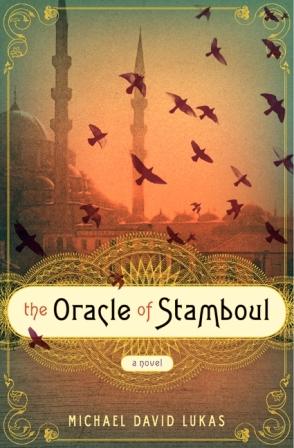 Eleanora Cohen is born on a day of omens. A flock of purple and white hoopoes take over her house in Constanta, two midwives mysteriously appear to assist in her birth, and unfortunately her mother dies, leaving her and her father alone in the world. Eleanora’s father asks his late wife’s sister, Ruxandra, to help raise the child, and so she grows up for a few years, long enough to display a precocious intelligence and to alienate her aunt with that extraordinary cleverness. When Eleanora’s father makes plans to travel to Stamboul, Eleanora decides to stow away on his ship rather than be left behind with her aunt, a decision that has unforeseen consequences. Eleanora Cohen is born on a day of omens. A flock of purple and white hoopoes take over her house in Constanta, two midwives mysteriously appear to assist in her birth, and unfortunately her mother dies, leaving her and her father alone in the world. Eleanora’s father asks his late wife’s sister, Ruxandra, to help raise the child, and so she grows up for a few years, long enough to display a precocious intelligence and to alienate her aunt with that extraordinary cleverness. When Eleanora’s father makes plans to travel to Stamboul, Eleanora decides to stow away on his ship rather than be left behind with her aunt, a decision that has unforeseen consequences.
The Oracle of Stamboul lies in that peculiar area of magical realism. It’s set in a firmly historical basis, but includes just a few touches of fantasy to keep us on our toes. Eleanora’s incredible intelligence for me might as well have been fantasy, and of course the flock of hoopoes as well as the myth surrounding Eleanora’s birth just adds to the book’s overall touch of mysticism. It’s something that I’m not always comfortable with, but which worked very well in this particular book. It’s appropriate to the slightly distant, slightly magical atmosphere that pervades the novel and Eleanora’s perception of the world around her.
Eleanora herself I found immensely appealing. Despite her cleverness, she has a fragility about her that makes it clear she’s just a girl trying to cope in the wider world. One incident earlier in the book displayed this perfectly for me; in a shop with her aunt, Eleanora discovers an error in their bill and says so quite loudly. She thinks she’s saving money, but her aunt hustles her out of the shop, scolds her, and puts a stop to her lessons. She doesn’t understand the world the way adults do, not yet, and it’s this alternating combination of intelligence and vulnerability which make her such an appealing heroine.
The story itself wasn’t quite as strong as I’d expected. While it goes along smoothly, the climax wasn’t what I’d hoped it to be, and to some extent that soured my reaction to the rest of the book. I felt slightly misled by the cover copy, which indicated that Eleanora would have a great impact on the Ottoman Empire – I think I was expecting more of an alternate history than I actually got. I don’t know very much about the fall of the Ottoman Empire, and personally I would have liked more. I didn’t feel as solidly grounded in the period as I would ideally have done. Perhaps the details would have weighed the book down for others, but not for me – I kept wanting to know more, looking up things on Wikipedia to try and connect the dots. The book had the right atmosphere and a good story, but lacked the historical substance and basis for me to really fall in love with it. For someone who knows more about this period and place in history, this particular concern would be irrelevant, but I genuinely was made curious by the story and characters. I wanted more from not only the history, but from the story itself.
Nevertheless, The Oracle of Stamboul was a thoughtful, especially well-written piece of historical fiction, with just the right touch of magic to set it apart from its fellows. Recommended.
 Want to read others’ reviews? Check out a few other stops on this TLC book tour: Want to read others’ reviews? Check out a few other stops on this TLC book tour:
Tuesday, February 8th: The Bodacious Pen
Tuesday, February 8th: The Reading Date
Tuesday, February 8th: Katie’s Nesting Spot
Wednesday, February 9th: Bibliophibian
Thursday, February 10th: One Girl Collecting
Thursday, February 10th: Confessions of a Rambling Mind
I am an Amazon Associate. I received this book for free for review from the publisher.
 Venice in the early fifteenth century is a nest of scandal. The titular Duke does not actually rule; instead, his mother, the Duchess Alexa, rules for him with her brother-in-law, the much-despised Alonzo. They’ve conspired to wed their niece, Giulietta, to the King of Cyprus, conveniently ignoring the fact that she’s not interested. Meanwhile, Tycho, a pale man who can’t stand the sun and has supernatural strength, awakens in the hold of a ship, bound with silver chains. When he is released, he runs into the head of the Assassini, an association of assassins. Their numbers have decreased drastically and said leader is aging. He immediately conscripts Tycho into training, not caring what his reasons for avoiding the sun are, merely doing his best to protect Venice in this troubled time. Venice in the early fifteenth century is a nest of scandal. The titular Duke does not actually rule; instead, his mother, the Duchess Alexa, rules for him with her brother-in-law, the much-despised Alonzo. They’ve conspired to wed their niece, Giulietta, to the King of Cyprus, conveniently ignoring the fact that she’s not interested. Meanwhile, Tycho, a pale man who can’t stand the sun and has supernatural strength, awakens in the hold of a ship, bound with silver chains. When he is released, he runs into the head of the Assassini, an association of assassins. Their numbers have decreased drastically and said leader is aging. He immediately conscripts Tycho into training, not caring what his reasons for avoiding the sun are, merely doing his best to protect Venice in this troubled time.
Despite the appealing nature of this book – full of politics, darkness, and supernatural beings – I had a difficult time getting into it. It’s received positive reviews across the internet, so apparently I am an anomaly, but I found the book too dark, and much too sexual and bloody for my personal liking. This probably fits with the nature of it, but is difficult to take and often felt like an unnecessary add-on. Moreover, the book’s plot moves very quickly. Usually, with a book like this, it’s fine to be tossed right in the mix of things, and get a grip as you move on and finally figure out who people are and what’s going on. The problem with this one was that I never really felt I had a handle on what was happening.
What I did like was the atmosphere in general and the setting. Historical Venice with magic – I could hardly ask for more. Grimwood sets the scene very well and is a master at descriptive language. The magical aspects seem to sit perfectly within the historical context, so this part of the book at least was easy to sink into. The battle scenes were also well done, and were among the few times I actually felt compelled to continue reading.
Unfortunately, I couldn’t get on with the characters either. The plot moves so quickly that we flit between a variety of them, never really caring about any of them. Worse, by the end quite a few of them are dead – but because I was never attached to any of them, this produced none of the emotional impact that it should have done. The book left me with the feel that I should have enjoyed it more, given its positive points and its very appealing plotline. For others who are in the mood for a speedy political read in a fantastic setting, I suspect The Fallen Blade would suit better.
I am an Amazon Associate. I received this book for free for review from Netgalley.
 The Lady Most Likely…, Julia Quinn, Eloisa James, and Connie Brockway The Lady Most Likely…, Julia Quinn, Eloisa James, and Connie Brockway
While masquerading as a full novel, this is really three novellas combined into one house party. Happily married Carolyn throws a house party for her brother, Hugh, a duke, to find his bride, but many other couples find themselves thrown together as well. It was cute and sweet, as I’d come to expect, but nothing particularly special despite having two of my favorite romance authors (Julia Quinn and Eloisa James) writing for it. Great for an afternoon’s diversion, but probably only if you can get it out of the library.
 Tempt Me at Twilight, Lisa Kleypas Tempt Me at Twilight, Lisa Kleypas
Harry Rutledge is a real romance novel hero; a rugged man who could easily be cast as a villain, but who really has a heart of gold. He’s been treated so badly throughout his life that he believes he’s lost the ability to love. Poppy Hathaway is just the girl to set him straight, from the minute she chases her sister Beatrix’s ferret into his office and has no idea who he is. Poppy has her heart set on Michael Bayning, but Harry is determined to win her for himself.
In part, I liked this book, and in part, I didn’t. Harry is too ruthless of a man for me, plus he’s quite a stereotype. He goes out of his way to ‘win’ Poppy without any consideration for her feelings. This made the beginning of the book very difficult to appreciate. (It didn’t help that I was on a plane and not particularly well!) When I picked the book up again later, though, things started to fall into place, especially when Harry realized he did care what Poppy felt about him. Of course, the novel proceeds to go the route of little-abandoned-boy-becomes-man-who-cannot-love-but-can-be-redeemed. At least it was done well, and when I finished I eagerly went on to the next in the series, which follows right below this one.
 Married by Morning, Lisa Kleypas Married by Morning, Lisa Kleypas
Leo Hathaway has seemingly recovered – as much as possible anyway – from the death of his fiancee several years ago. He’s cut a rakish path through society since then, more or less aimlessly and full of humor, with few people getting under his skin. The exception is his sisters’ governess, Miss Catherine Marks, with whom he shares a mutual hatred. They regularly mock one another but can’t seem to stay away, and naturally that sexual tension explodes. But Catherine has a few skeletons in her closet and Leo must relinquish his devil-may-care armor before they can truly fall in love.
Like most other people who have read and enjoyed this series, I have been waiting for Leo’s story since book 1. He’s the tortured soul that we all managed to fall in love with even when he was making life difficult for Amelia – who can’t adore a man who is so devastated over the loss of his fiancee? I think we all just wanted Leo to be happy. When Catherine Marks appeared, it was obvious that she was the one (as I’m sure Kleypas planned it!) This tied nicely into the last book and made them perfect follow-ups to one another. I felt this was stronger all around – stronger romance, better plot (though still a romance novel one), and sparkling interactions between all of the characters. For a book I’ve anticipated for a couple of years, Married by Morning didn’t let me down, and that was a nice feeling.
I am an Amazon Associate. I purchased all of these books.
In all honesty, I meant to write this post yesterday for #savelibraries day. Unfortunately, time got away from me, but I thought it was still important to write about how things are in this country, and why libraries are regarded as something that can easily be forgotten (in my opinion). I’ve written similar opinions on others’ blogs, but I thought it was time to finally put them on my own.
Libraries in the UK are being closed down now, part of many, many governmental ‘budget cuts’ that, to me, seem mostly designed to make life harder for poor people and easier for rich people. It’s the way it goes. But, as a reasonably well-off person these days, libraries are my main concern. Because I can afford to buy books, but I know others can’t. I know my parents couldn’t satisfy my insatiable need to read with buying (at least part of why I’ve read some of my childhood books 10+ times) and I’m pretty sure that today’s parents will struggle just as much. Literacy should be encouraged; as we watch our countries slide down in intelligence, as even schools start to go downhill, it seems basic literacy should be encouraged more than anything. I proofread others’ writing; I know just how bad at least some schools here are at teaching students how to write. I’m convinced that reading voraciously helps immensely with not only writing but a vast amount of skills that are simply necessary for modern day life.
So why are libraries failing and being cut as unnecessary? I have a few reasons to postulate:
1. Kids don’t read. Some do, yes, but their parents don’t read. Reading in our modern day lives has become a chore. The people I know in real life who do read don’t use the library. At all. But kids need guidance to learn what they like to read. While teachers should take this on, I firmly believe librarians can also play a huge part in this. My library here has programmes for kids to do just this. Without them, their resources are more limited. I see no programmes planned to replace those of closed libraries.
2. Libraries can actually cost money for borrowers. In my old library system, it cost 50p to reserve a new book. Everyone who paid their 50p could read the book before the rest of us. It also cost 50p or more to reserve a book in a different library in the system, and more than that to borrow a CD or DVD. I understand that they’re just trying to raise money, but surely charging for a borrowed book is not the way to encourage this. Especially with point number 3.
3. Charity shops are everywhere. And while their mission is to do good for various suffering people and animals across the country, it certainly doesn’t help libraries (or bookstores) that they sell books for 50p or £1. Some charity shops dare to charge £2.50-£4, but these are less popular than the former. If you can buy a book for the same amount of money it costs you to borrow it for 3 weeks, why bother with borrowing? Why risk it being overdue? If you buy it in a charity shop, you own it, and you can pat yourself on the back for donating money to good causes. I know I’ve done it, because it is a good thing, but it doesn’t help my main concern here.
4. Books in the UK are pretty cheap in general. Most paperbacks I buy new online are £5 or less, with free shipping. I buy the occasional hardcover for around £10. If I had a bricks-and-mortar shop to support locally, they’d still only cost about £8. I can go to Tesco, my local supermarket, right now and get two books for that price. It’s not the same difference in the US, where most paperbacks are now trade paperbacks and cost $10-15. That’s a bigger savings than £5. I can afford to buy more books new, so I do. I still use the library, but I buy the books they don’t have, since there is no request system in place for the purchase of new books.
There is simply less surface cause for British people to need the library – not if they don’t read particularly often – because books aren’t that expensive and quite often library charges cancel out the benefits of borrowing a book for nothing. But that doesn’t mean libraries should be closed. They’re essential to communities, offering services for both children and adults that won’t be replaced. I was thrilled to see a library in Doncaster featured on the BBC yesterday due to all the people that were protesting by checking out books. But it’s important to remember not to support your library on just one day. Support them regularly, and we can teach the government that they are something we genuinely need, that can’t just be ‘cut’.
ETA: Nymeth wrote an incredible post elaborating in much clearer detail on why libraries are important.
 Space travel is something that has fascinated people the world over, even before it was an actual scientific possibility. Now that it is, and has been, Mary Roach takes her approach into the funny, hidden side of traveling to the moon and the impending tests for a trip to Mars. She doesn’t skimp on the details, from astronauts’ diapers to disgusting dried meals to whether or not any astronauts have joined the “three dolphin club”, the equivalent to the “mile high club” for airplanes. At the same time, she acknowledges both the wonder and the terror of space flight and delves deep into the history of the men, women, and animals who have dared to go where no others had gone before. Space travel is something that has fascinated people the world over, even before it was an actual scientific possibility. Now that it is, and has been, Mary Roach takes her approach into the funny, hidden side of traveling to the moon and the impending tests for a trip to Mars. She doesn’t skimp on the details, from astronauts’ diapers to disgusting dried meals to whether or not any astronauts have joined the “three dolphin club”, the equivalent to the “mile high club” for airplanes. At the same time, she acknowledges both the wonder and the terror of space flight and delves deep into the history of the men, women, and animals who have dared to go where no others had gone before.
I’ve previously read one book by Mary Roach, Bonk, but I knew immediately upon reading it that I wanted to read more by her. Packing for Mars just seemed like an excellent choice; highly rated by many people I know and covering fascinating subject matter, I couldn’t resist. It’s science in a way anyone can consume it, even people who normally dislike science like me, mixed in with a healthy dose of humor and those anecdotes which other authors probably wouldn’t share, let alone investigate. Things like a freezer full of astronaut poos and the earlier-mentioned “three dolphin club” – I certainly didn’t expect to find those in this book, but I probably should have. There is plenty of history here as well as current experiments going on for future missions.
I also really appreciated the fact that Roach doesn’t limit herself to American astronauts. She also heads to Russia, and though fewer of her stories are about the cosmonauts, she certainly includes the country’s important role in space exploration and travel. Laika, the first dog in space, and her two followers who actually managed to survive the trip are mentioned right along with the monkeys that Americans used for their tests. I’ve spent a fair amount of time studying the Russian efforts into space, so I was happy to see a representation of both countries.
For me, this book was the perfect mix of facts and humor. I never felt bogged down by facts because the rest of the book was just so funny and informative. It’s great to learn and be entertained at the same time, and this is just what Roach delivers – providing a hilarious entry into the history and current situation of space travel. She doesn’t shy away from the dangers or the messy parts, and she experiences everything she can herself, from parabolic flights to going in a space travel toilet. Highly recommended.
I am an Amazon Associate. I purchased this book.
 Octavia Frost, a fairly ordinary novelist, has just written her most depressing book to date. Her new book, though, The Nobodies Album, is something completely different – she is rewriting the endings to all of her previous books. It’s perfectly apt for this time in her life, as she wishes many parts of her life could have turned out differently. She can’t begin restitution, however, until she hears shocking news: her rock star son Milo, from whom she has been estranged for years, has been accused of murdering his girlfriend. Octavia immediately flies to his home in California, not knowing what to expect, but ready for a change in her life and to support her son in the most difficult time of his. Interspersed with her story are the endings of all the books she’s written, along with their new chapters, shedding ever-increasing light on the changing state of Octavia’s emotions and outlook on life. Octavia Frost, a fairly ordinary novelist, has just written her most depressing book to date. Her new book, though, The Nobodies Album, is something completely different – she is rewriting the endings to all of her previous books. It’s perfectly apt for this time in her life, as she wishes many parts of her life could have turned out differently. She can’t begin restitution, however, until she hears shocking news: her rock star son Milo, from whom she has been estranged for years, has been accused of murdering his girlfriend. Octavia immediately flies to his home in California, not knowing what to expect, but ready for a change in her life and to support her son in the most difficult time of his. Interspersed with her story are the endings of all the books she’s written, along with their new chapters, shedding ever-increasing light on the changing state of Octavia’s emotions and outlook on life.
Despite the fact that it’s billed as a literary mystery, I found The Nobodies Album surprisingly satisfying. It’s true that the mystery wasn’t particularly mysterious; there is really only one person who has any motive for murdering Milo’s girlfriend Bettina, so even I, notoriously slow when it comes to solving these things, figured it out before the characters did. But I quite enjoyed the story along the way. Many of the other story elements aren’t revealed until further into the book, so it takes a while to truly understand how they have all gotten to this point. Seeing things from Octavia’s point of view, as an older woman who has made mistakes, tied in with the obvious change of attitude she’s had displayed through the old book endings spread throughout the story, made for a very emotive and moving read.
Though beautifully written, Octavia’s voice is slightly cold to start. I would encourage you to set that aside until the story gets more involved. She has reasons for acting the way that she does, and those reasons lead to the reveal of some fascinating, complex relationships – exactly what I look for in a book like this. The story takes a close look in particular at the relationships between mothers and their children; how even doing the best you can sometimes isn’t quite enough, especially not in the formative years. It’s true that Octavia and Milo have some terrible circumstances to deal with, but she realizes that their personalities – which are very similar – will clash while their lives are still normal. She isn’t the kind of parent Milo needs, but she’s the parent he has left, which leads to problems in their relationship that eventually result in their initial estrangement.
The Nobodies Album is a thoughtful and at times suspenseful literary mystery. Highly recommended to those who enjoy well-written characters and don’t mind the occasional break for another thread of the story.
I am an Amazon Associate. I received this book for free for review from LibraryThing Early Reviewers.
|
|



Recent Comments