|
|
 In this ballad turned modern novel set in the 1970’s, clever bookish Janet heads off to college to expand her mind, earn her degree, and perhaps meet some people along the way. Blackstock is immediately full of strange occurrences; a Classics department that rides through the woods, a ghost that throws books out of windows, and boys that look twice at her. Janet not only has to cope with the strange realities of college life, but also supernatural curiosities that she’s never quite sure she’s seeing. As her senior year approaches, Janet realizes she will have to fight for the one she holds most dear against an enemy she’s never been sure exists. In this ballad turned modern novel set in the 1970’s, clever bookish Janet heads off to college to expand her mind, earn her degree, and perhaps meet some people along the way. Blackstock is immediately full of strange occurrences; a Classics department that rides through the woods, a ghost that throws books out of windows, and boys that look twice at her. Janet not only has to cope with the strange realities of college life, but also supernatural curiosities that she’s never quite sure she’s seeing. As her senior year approaches, Janet realizes she will have to fight for the one she holds most dear against an enemy she’s never been sure exists.
Tam Lin is a book that has called to me for quite some time, and whenI saw it for the first time in real life in Forbidden Planet this past summer, I was fortunate enough to be with Ana who told me how much she enjoyed it. After that, I didn’t look back, and I bought it; it’s taken me until now to read it, but it was very worth that purchase.
For those of us who are very bookish, who majored in English and loved it (or wish we had), who love a touch of fantasy in our fiction, it would be very very hard to go wrong with this book. Janet and her friends obviously adore literature, and it would be a bit trying, I think, to follow along if you hadn’t been in love with it yourself. They are often quoting from poems and plays, and while I wasn’t totally with it on the poems, I could recognize a lot of their other quotes. How can you not love a main character who takes all of her favorite books to her dorm and is dismissed by one of her roommates for her tastes? I was defensive for her and it was only the start.
The fantasy touch is definitely a light one; in fact, this is probably the strangest aspect of the book, because it’s very uneven. The first year of Janet’s college career takes up what seems like more than half the book, while the next three speed by. There really isn’t that much fantasy here, until the very end; it could easily have just been Janet imagining things (and a very peculiar classics department). But we all know it’s going to have some fantasy; I was sneaky and read the ballad first, because it’s right in the back of this edition and I wanted to know what I was getting into so I could pick up the story better, which meant I knew what the last 20 or so pages would comprise of before I’d read 100.
I did adore the atmosphere. I love books set on school campuses (and house parties, and the like) because anything that confined makes for almost guaranteed excellent character building and interactions. Blackstock is almost a physical being in this particular book, with much of it described and Janet’s love for her chosen college, where she’s also grown up, comes out clear through the pages. The mysterious events that occur just add to the overall appeal.
So, for the impatient, this might not be a perfect choice. But for me, an odd little literary person who likes to think too much about things, and who loves character development above all else most of the time, this was a truly excellent read. Not perfect, but Tam Lin is a book I can see myself returning to as the years go by, to see what new insights it has to offer me in time.
All external links are affiliate links. I purchased this book.
 Hello everyone! I’m still hanging around, determinedly not writing blog posts it seems, and occupying myself with other pursuits. I’ve been reading very little after an incredibly busy week, culminating in one very late night, my trip to London, and another very late night on the way home. The presentation went well, for anyone who was wondering. I had plenty of delightful company, especially on the trip for our conference, as I get along with a few people from my workplace very well, so I didn’t read a single word over the space of two days. I know. How often does that happen? Hello everyone! I’m still hanging around, determinedly not writing blog posts it seems, and occupying myself with other pursuits. I’ve been reading very little after an incredibly busy week, culminating in one very late night, my trip to London, and another very late night on the way home. The presentation went well, for anyone who was wondering. I had plenty of delightful company, especially on the trip for our conference, as I get along with a few people from my workplace very well, so I didn’t read a single word over the space of two days. I know. How often does that happen?
This meant that I completely missed Thanksgiving, but I hope all of you who are in the US had an amazing time with family and friends. I did get to wish a Happy Thanksgiving to a number of other Americans at the conference, which I think gave us all a nice feeling of patriotism even in the middle of London.
This weekend, we’ve had houseguests, so while I’ve read a little, I’ve also failed at getting myself behind the computer working on writing (until now, of course). What I’ve read has been exceptional though; I finished up The Bungalow by Sarah Jio and Tam Lin by Pamela Dean. Both very different books, but recommendable in their own ways.
When I do have a chance to write, I’m working hard on a 2011 historical gift guide; I want to share with you my favorite history and historical fiction of the year so far in time for you to buy. Look for that to be published this week, probably towards the end, or early next week.
Also, who can believe it’s almost December? My work Christmas party is this Friday, which seems impossible, but it is indeed time to get out the Christmas music and decorate the tree. I’m not huge on the holiday season – you won’t catch me reading Christmas books or anything – but I am enjoying this year more than last, and I’m looking forward to celebrating my third Christmas with my husband.
Wishing you all a fantastic week! I hope you’re reading something exceptional.
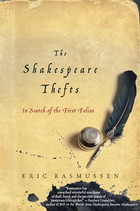 Shakespeare First Folios are rare objects and highly prized by the libraries and collections which manage to hold them. The First Folio was the very first collection of Shakespeare’s plays ever printed – there were individually printed editions previously but never a large set like this. Eric Rasmussen and his team of researchers have been seeking out First Folios around the world for years. Through their searches and investigations, he presents this collection of stories about individual First Folios, some lost and some found, which are and will continue to fascinate researchers for hundreds of years to come. Shakespeare First Folios are rare objects and highly prized by the libraries and collections which manage to hold them. The First Folio was the very first collection of Shakespeare’s plays ever printed – there were individually printed editions previously but never a large set like this. Eric Rasmussen and his team of researchers have been seeking out First Folios around the world for years. Through their searches and investigations, he presents this collection of stories about individual First Folios, some lost and some found, which are and will continue to fascinate researchers for hundreds of years to come.
This was a very interesting little book about the First Folios. I like Shakespeare well enough but have never really paid that much attention to the enduring physical legacy of his work, although I have been to Stratford-upon-Avon. But I love books and the marginalia that resides in older ones, so there was plenty to like in this book for me, and there certainly would be for anyone who loves physical books.
One thing I found odd, though, was that the book seemed almost as though it had been composed for a magazine or newspaper column previously; for a very short book, there is a lot of repetitiveness, and I thought that the author would have been a bit better assuming people would remember what had happened chapter to chapter. I had a look and couldn’t find anything, but I really wouldn’t be surprised. While there is continuity, it would be easy to pick up in the middle without any problems – perhaps the author expects his readers to dip in and out as they please rather than just read straight through as I did. There is, for instance, a whole lot about the author unable to access the manuscripts in Japanese libraries, and he reintroduces the painting he purchased in a subsequent chapter after he’d already bought it.
Still, this was an enjoyable book on a topic I like very much. Even though many of the Folios that Rasmussen discussed hadn’t actually been seen by him or his team, the stories are fascinating and I enjoyed heading through history with him. Because that’s really what this book is, a trip through history with books in tow. If that sounds like your cup of tea (and I think for many of you reading this, it will), The Shakespeare Thefts is a great choice.
All external book links are affiliate links. I received this book for free for review from Amazon Vine.
Macro and Cato are a pair of Roman soldiers who have saved the Empire again and again over the course of 10 different novels together. In this installment, they are embroiled in the intrigue that is commonplace in the capital city itself; as they learn, even the mighty Roman empire is just a few days from rebellion when the imperial stash of grain runs out. Macro and Cato are tasked with infiltrating the Emperor’s own Praetorian guard and discovering who wishes to topple the Emperor and cause chaos in the city before it’s too late to stop.
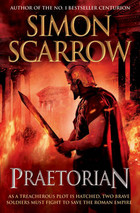 I’m new to Scarrow’s series about Macro and Cato set across the Roman Empire, currently in the time of Claudius’s rule, but I am a big fan of Bernard Cornwell and this series is considered similar enough to grab my interest. You know the kind of historical fiction I’m talking about; usually that concerned with the grittier realities of battle and intrigue rather than any sort of courtly or royal high life. This is much more firmly on the gritty side, with a fair share of battle, swearing, and conspiracy. I’m new to Scarrow’s series about Macro and Cato set across the Roman Empire, currently in the time of Claudius’s rule, but I am a big fan of Bernard Cornwell and this series is considered similar enough to grab my interest. You know the kind of historical fiction I’m talking about; usually that concerned with the grittier realities of battle and intrigue rather than any sort of courtly or royal high life. This is much more firmly on the gritty side, with a fair share of battle, swearing, and conspiracy.
I was curious from the first few pages; a large amount of silver bullion is stolen from underneath the Empire’s nose, leading into a complete scheme to kill the Emperor Claudius. What happens next differs depending who you talk to, but what matters is the Emperor’s life, and so Macro and Cato, who have proved themselves in so many other ways, are set in disguise and placed in wait to discover who is dissatisfied with the Emperor.
I wasn’t sure what to expect, jumping in without having read any of the preceding series, but I found I really didn’t need much prior experience with the characters to get into the story. There is a bit of the backstory between them revealed, mostly as and when it becomes relevant, but it seemed the perfect balance alongside the more fast-paced sections of the plot.
I also loved the touches of research that Scarrow threw into the book. I’ve never really studied the Roman Empire at all, but I have studied classical Latin, and I picked it up immediately when he included the famous phrase that gladiators said to the Emperor before a battle – “We who are about to die salute you” – which is known to have been genuinely said at least once, during the very battle that happens in this book. It was also a new and richer experience for me to read a book set in Rome now that I’ve been there; and Macro and Cato even take trips to Ostia, the port town that I visited which is still so complete. I could envision them walking down those streets, admittedly with a bit more flesh and plaster on the buildings, but the book itself did very well in giving me a mental portrait of Rome and the surrounding countryside.
Praetorian easily stands alone, then, and all by itself had me keen to look into reading the other ten volumes of the series. I’m very curious to see how the relationship between Macro and Cato has grown throughout the series, even if most of them aren’t set in Rome itself, and to pick up on the threads of backstory that were mentioned here. If you’re looking for historical fiction set in the Roman Empire, you can hardly go wrong with this one.
All external links are affiliate links. I received this book for free for review from the publisher.
I’ve decided to quit NaNoWriMo this year. I could probably persevere and hit the required word count; I got up to the halfway mark earlier this week. But I’ll be perfectly honest; I’m not enjoying it. I went out on a limb and started writing a fantasy without planning too much, because I’ve always been a seat-of-the-pants writer. As it turns out, not so much these days. I’m not having fun, and I could probably use my time more wisely than sitting here writing a story I’m no longer invested in. I’m finding it more stressful than anything else, and I don’t need voluntary stress.
So, I’ve changed my plans, and I’m going to try using the rest of the time I would have spent writing this month on planning a new novel. I need to figure out what’s going to happen to these people, or at least a little bit more about who they are, and mostly how they’re going to end up. And I just can’t write that many words a day. I give A LOT of credit to those who can – but it’s just not in me this time. So, here’s hoping for next year, and for a new project.
In reading news, as you can imagine, there hasn’t been very much going on. This week I managed to finish Praetorian by Simon Scarrow, and I’ll be posting a review for that tomorrow. I also just read A Moveable Feast this weekend; I’ve been meaning to read Hemingway’s own account of his early life in Paris ever since I finished The Paris Wife, and it promised to be as rewarding as I thought it might. I’ll be trying to review that one, too. And in future news, I squeezed in Trouble at the Wedding by Laura Lee Guhrke for some relaxation – it was just the thing I needed this week, so if you’ve been thinking about pre-ordering, I suggest you do so.
And that’s all the news from me this Sunday evening. This week, I’ll be heading to London for work, and I’m hoping to get some more reading done on the train there and back. This also means I won’t be celebrating American Thanksgiving on Thursday, but I wish a wonderful holiday with family and friends to all who are.
How are you all doing this second to last week in November?
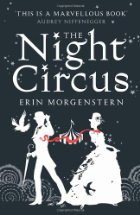 The circus appears overnight without any warning; the next morning, a field that was empty is strewn with magical black-and-white tents that hold wonders of which thousands have only ever dreamed. But at the center of this magical paradise are two magicians, Celia and Marco, whose competition gives life to the circus and keeps it growing and moving across the world. At the center of their rivalry, though, is a love that won’t let them carry out their competition to the bitter end. Who will take their place at the core of the circus as it slowly rots from the inside out? The circus appears overnight without any warning; the next morning, a field that was empty is strewn with magical black-and-white tents that hold wonders of which thousands have only ever dreamed. But at the center of this magical paradise are two magicians, Celia and Marco, whose competition gives life to the circus and keeps it growing and moving across the world. At the center of their rivalry, though, is a love that won’t let them carry out their competition to the bitter end. Who will take their place at the core of the circus as it slowly rots from the inside out?
I can almost guarantee you’ve heard about this book before. I have seen it on many, many different blogs in my feed reader and in fact that buzz is one of the reasons I went ahead and purchased it. Whenever there is a fantasy title that has people talking, I usually try and read it, simply because I love fantasy and I want to keep current and in touch with the conversation. This has gone well and not-so-well previously. Luckily, it went well with this one, which nicely justified my purchase and added up to a very pleasant week of reading.
One of my favorite aspects of The Night Circus straight off was the atmosphere. The way the circus is set up is so mysterious, the characters so quirky, that I was instantly intrigued by the entire situation. We start off with both magicians very young. Celia’s father didn’t even realize he had a daughter, and it is only her emergence as a player that leads Marco to be chosen as her counterpart. The circus comes about slightly differently, through a variety of players, all of whom are quite shadowy characters; merely sketches, not fully fleshed out.
But despite the oft-bemoaned lack of character and plot development, I really enjoyed this book. Maybe I wasn’t convinced by Celia and Marco’s love story, but I could taste the caramel apples and experience the magic of the tents for myself. As Jenny says, this is an atmosphere book. If you can approach it with that in mind and take it for what it is, rather than what it isn’t, I think you’ll enjoy it a lot more. It’s an excellent read for curling up with some tea by your side and taking it slowly – this isn’t a book you want to rush, it’s instead to be savored.
I’m very glad that I picked up The Night Circus, as it suited me perfectly when I am in the depths of my own writing efforts and allowed me to simply relax and sink in. Recommended.
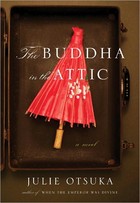 The Buddha in the Attic is the collective story of Japanese “mail-order” brides who came to the United States before World War II. They arrived to husbands they didn’t know, lives they didn’t expect, and a country that refused to accept them. And just when the Japanese finally began to grow a toehold in the community, the accusation and racism that defined World War II took effect and eradicated them from a visible role in the country for years. The Buddha in the Attic is the collective story of Japanese “mail-order” brides who came to the United States before World War II. They arrived to husbands they didn’t know, lives they didn’t expect, and a country that refused to accept them. And just when the Japanese finally began to grow a toehold in the community, the accusation and racism that defined World War II took effect and eradicated them from a visible role in the country for years.
When I saw that this was a finalist for the 2011 National Book Award, I immediately knew I had to read it. I’ve been longing to read Otsuka’s first book, When the Emperor was Divine, for a long time now, but since this was short and available on Netgalley, I seized the opportunity to finally experience this wonderful author for myself. I’m very pleased with the choice I made because this was an excellent book and I enjoyed each and every heartbreaking moment.
Because this is a collective story, it isn’t presented the way you would expect. There are no individual characters. There are Japanese brides, seasick on a boat, leaving behind a multitude of struggles, hardships, and even a scandal or two. There are men awaiting those brides, who may or may not live up to the photos and descriptions they sent across, who may exceed their wives’ expectations or who may disappoint them immeasurably. In less than 200 pages, we’re treated to an extensive range of what may have happened to these Japanese women; even though their experiences can be very different, they start out at the same point and unfortunately all of their stories in this volume end at the same point, with sorrow, heartbreak, and detention camps.
I loved this approach because even though it clearly depicts the difference between individuals, it also highlights the absolute universality of their experiences. It didn’t matter if the women were married to farmers or businessmen or shop owners. The end point for all of them was the same, a camp. And while many women got out of the camps eventually, the experience and suffering was universal. And because they are marked out as individuals in the middle – not by name, but by experience – it’s easy to sympathize with the women and feel that they are human beings, not the “Other” that allowed their fellow human beings to sweep them from their lives and shove them all in one place as “dangers.”
In short, The Buddha in the Attic is an incredibly powerful book, and one that in my opinion is certainly award-worthy. The description on the publishers’ website states that it is a book about the American Dream, and I think that is a particularly apt description – but it’s more about the elusiveness of that dream, and how easily it can be taken away, than anything else. Highly, highly recommended.
 Lady Vivienne Bancroft and her husband Miles have been estranged ever since he embarrassed her and left her alone while he went off with a prostitute after a party. She fled to New York to be with her adopted family, while he continued to languish in London. The series is set around Vivienne and her three siblings, each of whom is sent to a different part of the world to take over one aspect of their father’s business after his death. Vivienne is left with part of his business to develop in South Africa – not exactly the safest place for a woman alone at this point in history. Miles meanwhile has been in despair without his wife, and vows to go to South Africa to prepare the way for her and persuade her to give him half of the million dollars her father has promised her. Once together, though, they both realize that perhaps they should be working together as a team instead of standing at cross ends. Lady Vivienne Bancroft and her husband Miles have been estranged ever since he embarrassed her and left her alone while he went off with a prostitute after a party. She fled to New York to be with her adopted family, while he continued to languish in London. The series is set around Vivienne and her three siblings, each of whom is sent to a different part of the world to take over one aspect of their father’s business after his death. Vivienne is left with part of his business to develop in South Africa – not exactly the safest place for a woman alone at this point in history. Miles meanwhile has been in despair without his wife, and vows to go to South Africa to prepare the way for her and persuade her to give him half of the million dollars her father has promised her. Once together, though, they both realize that perhaps they should be working together as a team instead of standing at cross ends.
This was a book that I had trouble buying into at the start, but wound up feeling won over by the end. Primarily, I had a lot of trouble liking Miles, or believing that Vivienne would ever really fall for him again. Vivienne very obviously thinks of him as a frustrating wastrel, and the fact that he at first attempts to win her over because he wants the payout from her success at her father’s business meant I didn’t like him on my own, either.
But what I discovered as I went along is that while Miles tried to appear like he didn’t care and only wanted the money, he actually did care for Vivienne. He’d missed her. And he hid it from her, and to some extent from himself, mainly because he felt guilty. He’s a classic example of a person who needs genuine work to keep him out of trouble; once he’s given an actual purpose, he transforms. It’s not Vivienne who does it; she already tried. It’s simply the concept of a life outside the ordinary interactions of Victorian London.
I also liked the fact that, as the book developed, Vivienne and Miles became a team. It wasn’t that one of them could rescue the other. They both had their strengths and they learned to use them together rather than against one another as they had previously. Working towards a common goal instead of cross-purposes draws them together and helps them see how their relationship could be different. This focus was an excellent choice for me; instead of an indolent life with a multitude of servants and a lack of real effort, the characters realize that they can do and be more in the world. It was an inspiring turn and added something more to the book beyond the romance.
Not that there was anything at all wrong with the romance, which I enjoyed. But it was nice to have two powerful facets to the book, and Flawless is certainly one I would recommend to others who appreciate a good historical romance set outside the tired world of the ton.
All external links are affiliate links and I received this book for free for review from the author.
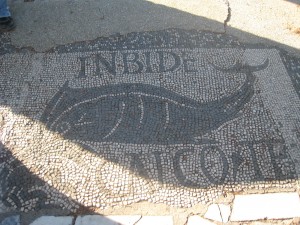
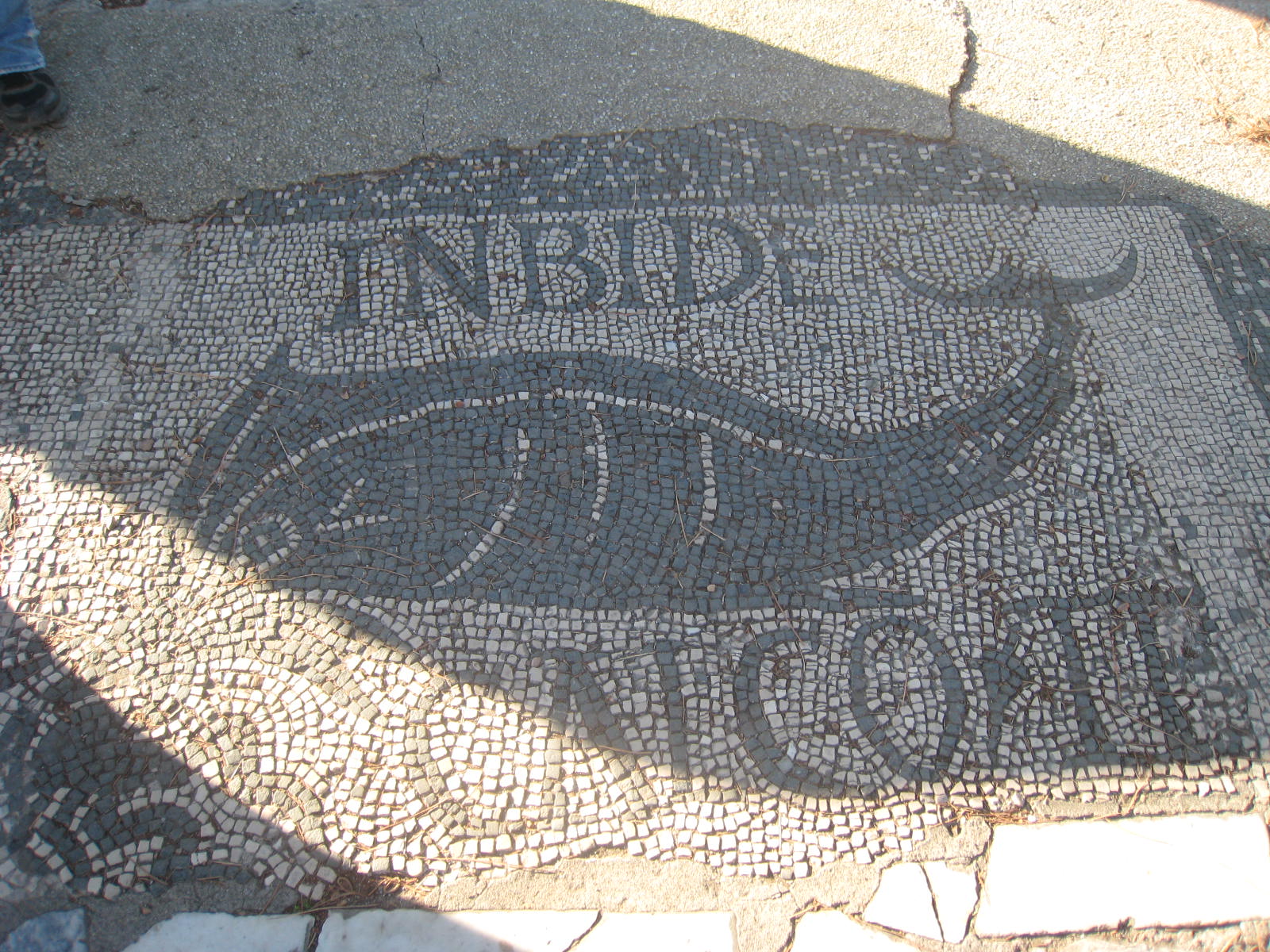
A fish shop mosaic from Ancient Rome, in Ostia Antica.
More Wordless Wednesdays
 Rome, the Eternal City; a place where Roman emperors have paraded, painters have worshipped God with their art, and ordinary people have lived. Robert Hughes touches on all of these aspects with his massive book on Rome, which is a mish-mash of history, art, and politics that spans the thousands of years that the city has stood upon its seven hills. Rome, the Eternal City; a place where Roman emperors have paraded, painters have worshipped God with their art, and ordinary people have lived. Robert Hughes touches on all of these aspects with his massive book on Rome, which is a mish-mash of history, art, and politics that spans the thousands of years that the city has stood upon its seven hills.
It’s non-fiction heavily filtered through Hughes’s own lens; he doesn’t provide any footnotes or endnotes, so I decided not to take anything he said for absolute truth and just enjoy the ride – although there is a lengthy bibliography for those who would like to learn more (as I would).
The book follows the history of Rome in chronological order, but it switches around between different areas of focus. It shifts around mostly with what was happening in the city at the time. So, while it takes place during the Roman empire, the focus is mostly on the history and the emperors, because for the most part we know a good amount about that. There’s less about individual artists, simply because there is less about them. The book moves on to the Middle Ages and devotes a lot of time, naturally, to Renaissance artists, and then straight up to the present day. In the 20th century, though, we move away from art and back into history and politics with Mussolini.
It also seems as though Hughes focuses less on art when he’s less interested in the art – he is an art historian after all – so when Rome is mostly influenced by Greece, and when Rome is in the modern period, there is far less art history and more just ordinary history.
Unsurprisingly, the narrative is actually most interesting when Hughes is talking about art. He’s clearly an expert and reading his opinions and views on the many different works of art that I actually saw was enlightening. It also made me really want to go back, but in the meantime my hardcover edition had a lot of photos inside so I could get an idea of what he was talking about in the parts of Rome I didn’t see. Reading more about Michelangelo, Raphael, Caraveggio, and Bernini, just to name four, was fascinating for me. If nothing else, this book will make you crave a really good art museum like little I’ve ever read before.
Unfortunately, I do think the book fell down somewhat in areas that aren’t Hughes’s expertise. He also gets very pessimistic about modern Rome and mass tourism – and given that I just engaged in mass tourism, I know that it is ridiculously overcrowded, but still felt a bit insulted that he could wish to deprive everyone of the sights he so gloriously describes – which was off-putting, and right at the end of the book as well. But Rome is the Eternal City, and even if we can’t see where it’s going, it’s hard to criticise modern Romans. After all, their ancestors took pleasure in watching lions tear humans apart; you can’t really get much worse than that, in my view. People throughout history have decided that their era is the worst of all of them; this sort of tired attitude was quite frustrating, in the end.
Still, Rome was a fascinating if uneven work – it really shines when Hughes is talking about his clear expertise. I’d recommend it for anyone who is particularly interested in the art of the city, but be aware that it isn’t a perfect book, and certainly can’t fit the whole of Rome’s history, art and political, in the space of a 500-page hardcover. You’ll find it hard to resist a trip after this read.
All external links to book sites are affiliate links. I bought this book.
|
|




Recent Comments