|
|
Taking a little break from blogging over the bank holiday weekend. I’ve recently become obsessed with a PC game (Crusader Kings 2 – essentially my perfect medieval game come to life), and whenever I’m not playing, I feel like I have a million different things to do, most of which is unfortunately work.
When I do have free time, I’ve spent it outside in the recent brilliant sunshine:

It’s cloudy again now, but I’m using the upcoming Jubilee weekend to recharge, and as such I’m waiting until afterwards to come back. I’ll see you all on June 6th!
 Tamar, princess of Georgia, can’t imagine her big, intimidating father ever losing a battle. But when an army attacks her country’s capital, Tamar is sent away to relative safety. Rebellious as she is, Tamar doesn’t stay hidden for long, and returns to the capital only to receive her father’s blessing as his heir, leaving her a female queen of Georgia when he dies. But in the countryside, Tamar met a boy that she can’t forget, even when she is forced to make a diplomatic match for her country’s strength. When the choice comes between the boy she loves and the country she would die for, which will Tamar choose? Tamar, princess of Georgia, can’t imagine her big, intimidating father ever losing a battle. But when an army attacks her country’s capital, Tamar is sent away to relative safety. Rebellious as she is, Tamar doesn’t stay hidden for long, and returns to the capital only to receive her father’s blessing as his heir, leaving her a female queen of Georgia when he dies. But in the countryside, Tamar met a boy that she can’t forget, even when she is forced to make a diplomatic match for her country’s strength. When the choice comes between the boy she loves and the country she would die for, which will Tamar choose?
I’d never read much about Georgia; to be honest, the only reason I even knew there was a country called Georgia is because it was part of the former Soviet Union, which I learned about when I studied Russian in school. But this book immediately took my interest; it’s set during the Middle Ages, and it’s about a woman who struggles with power. Queen Tamar genuinely existed and is a legend for current Georgians, with some buildings associated with her still standing. But from reading this book about the early part of her youth and her eventual reign, it’s obvious that a long and peaceful rule was by no means guaranteed, or even likely.
Told alternately between Tamar and her second husband, Lord Soslan, the book explores her struggles as the kingdom adapted to a woman on the throne. Tamar often demonstrates her intelligence, wilfulness, and determination to retain her throne and do her job properly. There are, as expected, a few uncertain first steps for her, particularly with a difficult aunt who comes to “advise” her on how to become a powerful queen, but her journey is an inspiring and compelling one. It’s really a coming of age tale, but that coming of age is one that an entire kingdom relies on.
I was completely fascinated by the history of this country I’d never read about before; the author includes touches of other parts of the world, particularly the Byzantine Empire, as Tamar’s sister goes to marry there and finds herself embroiled in, as usual, a succession crisis. This provides some essential context for the time period, but overall I loved reading about somewhere completely different. With deft touches, she shapes great characters in the space of a relatively short novel, making for a very pleasurable read over the course of an afternoon.
The Girl King is definitely recommended for other readers of historical fiction; if you’ve had enough of the Tudors and the Plantagenets, why not let Tamar take you back to 12th century Georgia?
All external book links are affiliate links. I received this book for free for review.
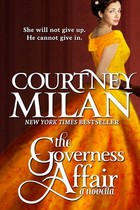 Miss Serena Barton demands justice. She demands it by standing outside the home of the Duke of Clermont in London through all the vagaries of English weather, attracting the attention of Hugo Marshall. As the duke’s secretary, Hugo plans to restore his riches and thus earn his own, fulfilling his ambition to make it in the world. But Serena’s plight attracts his attention and he quickly grows fond of this fierce, determined, protective woman. Miss Serena Barton demands justice. She demands it by standing outside the home of the Duke of Clermont in London through all the vagaries of English weather, attracting the attention of Hugo Marshall. As the duke’s secretary, Hugo plans to restore his riches and thus earn his own, fulfilling his ambition to make it in the world. But Serena’s plight attracts his attention and he quickly grows fond of this fierce, determined, protective woman.
Courtney Milan has fast become one of my very favourite romance authors. Her books are consistently beautifully written, with characters that truly tug at the heart and add in just that emotional intensity that sometimes lacks in other romances. This novella starts off another series of hers, and while it’s not as amazing as Unlocked was, it’s still a really wonderful read and a fantastic way to spend an hour or two. Also, it still only costs 99 cents, so it’s impossible to resist.
It is in part because this novella sets up a new series that it lacks a little bit. This is a bit more clearly a background story, and while Hugo and Serena are both wonderful characters as usual, there isn’t quite the same self-contained feel, particularly because of how the ending actually introduces the characters which will continue on the series. But this was still delightful; in particular, I loved the way the hero and heroine flirted with each other through little notes, as they started to get to know each other in their rather peculiar circumstances.
Even though this was a novella, and necessarily short, I again didn’t feel the story was particularly rushed, but rather enjoyed the way it played out. Serena was a wonderful woman who did clearly have a few things to learn, but whose determination was admirable to behold, and who deserved a better lot in life than she starts out with. Hugo’s own justification for his behaviour made perfect sense. I still felt like I got to know these two characters, although the rest of them remain as necessary shadows, and to get behind their happy ending.
The Governess Affair is another great novella for romance readers and I for once can’t wait for the rest of this series to come out!
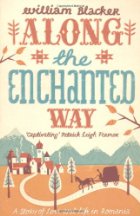 William Blacker spent years of his life in Romania from the early 90’s onwards. Longing for a simpler life, like that he’d experienced during his idyllic rural English childhood, he found the perfect match in rural Romania. People there still seldom watched TV and spent most of their lives at work in the countryside, harvesting and living off the land as their ancestors had done for generation after generation. It’s an image of not only the Romanians themselves, but the gypsies that live with them, and the disappearing other segments of the population as the steady march of modernisation takes yet another corner of the unspoiled world. William Blacker spent years of his life in Romania from the early 90’s onwards. Longing for a simpler life, like that he’d experienced during his idyllic rural English childhood, he found the perfect match in rural Romania. People there still seldom watched TV and spent most of their lives at work in the countryside, harvesting and living off the land as their ancestors had done for generation after generation. It’s an image of not only the Romanians themselves, but the gypsies that live with them, and the disappearing other segments of the population as the steady march of modernisation takes yet another corner of the unspoiled world.
I bought this book on a whim over a year ago and finally got around to reading it – I’ve recently become interested in the little pockets of Europe outside of my own knowledge, generally sticking to eastern Europe, and so this seemed like a perfect match. I found it even more interesting than I’d suspected, not only for Blacker’s experience, but for the comparisons he makes with medieval Europe, a topic with which I am very well acquainted.
First of all, the Romania he portrays is very much a rural idyll, so much so that I couldn’t help but feel some of the rougher areas were a little bit glossed over. It calls to the ideal of the rural peasant, happy to work, happy with life in general, free of superficial trappings of modern life like telephones, televisions, possessions, and so on. He also quotes from Huizinga’s The Waning of the Middle Ages, which is an old piece of scholarship that has been discredited in many ways by current medieval historians, a lot of which I read, and which put me on edge. I couldn’t help but feel that some of the problems of rural life, like bad harvests and lack of leisure time, were glossed over. Maybe the people did seem happier and more welcoming to him, and maybe they were, but he focused on other problems instead. It made for a very engaging read, and certainly I’d love to visit Romania now, but I questioned a lot of this as I read.
Blacker also spends a considerable amount of time with the gypsies, as the “love” in the subtitle alludes to, somewhat flabbergasted by their complete lack of preparation for life. The women, for instance, exist to do seemingly nothing but dance and charm foreign men, as Blacker discovers, and the gypsies almost always found themselves begging over the course of the winter as they failed to preserve enough food to last the whole season. Contrasted with the rural farmers, their lives seem confusing. He also meets some Germans, who even speak German, but return to the motherland over the course of the novel and find city life a difficult adjustment.
I think this review has already made it sound like I didn’t enjoy the book, which just isn’t true; I loved the descriptions of Romanian culture and people and Blacker’s experiences integrating into their society and trying to understand how things might have been. The book also has pictures in the middle, which helped, and I was outright fascinated by the idea that these people have been living the same way for centuries. They might have paved roads now, but the “good old days” such as they were do make for an excellent book.
I’d recommend Along the Enchanted Way if you, too, are interested in how life might be in the corners of forgotten Europe, but I’d take it with a little pinch of salt.
 One of the richest heiresses in eighteenth century Georgian Britain, Mary Eleanor Bowes had every reason to expect a glowing future. Educated beyond her female peers, indulged by her father, and pampered with every possible luxury, the young heiress satisfied her taste for literary and botanical endeavours, but at the same time was a very poor judge of men. When Andrew Robinson Stoney, a handsome Irish soldier, was gravely injured in a duel for her honour, she married him almost immediately, told that he had only days to live. To her surprise, he recovered within hours of their marriage and proceeded to wreak a brutal reign of terror on her life, beating, kidnapping, and imprisoning her and any other females who fell too closely within his grasp. One of the richest heiresses in eighteenth century Georgian Britain, Mary Eleanor Bowes had every reason to expect a glowing future. Educated beyond her female peers, indulged by her father, and pampered with every possible luxury, the young heiress satisfied her taste for literary and botanical endeavours, but at the same time was a very poor judge of men. When Andrew Robinson Stoney, a handsome Irish soldier, was gravely injured in a duel for her honour, she married him almost immediately, told that he had only days to live. To her surprise, he recovered within hours of their marriage and proceeded to wreak a brutal reign of terror on her life, beating, kidnapping, and imprisoning her and any other females who fell too closely within his grasp.
But Mary Eleanor wouldn’t endure his tyranny forever, and her fight back, for herself and her children, resulted in hope for all abused wives throughout Britain.
What a fascinating book. This popular history, which reads almost like a novel at times, traces the fall of an incredibly rich and privileged woman due to a couple of bad, life-changing decisions, and is a fascinating look at how a single man could ruin the lives of everyone around him. Stoney wasn’t even born particularly highly, but by simply using his attractiveness and ability to lie guilelessly, he managed to bag himself not one but two heiresses. By the standards of their day, his treatment was judged out of the ordinary, but both of his wives had very little power to free themselves from his clutches.
Mary Eleanor Bowes herself was a very compelling character and I felt for her very strongly throughout the course of the book. She was spoiled when young, and did obviously have bad judgement and suffered from a lack of maturity despite her rather more advanced book learning, but none of that meant that she deserved to be so ill-treated. I found all of the struggles she went through to finally free herself to be enlightening – married women under 18th century law genuinely had zero rights. She no longer owned any of the property her father had bestowed on her, as her new husband forced her to renounce her prenuptial contract keeping her own income and properties, and was kept a virtual prisoner by servants hired by her husband. She had nothing, not even her children most of the time.
Her fight to regain those rights is engaging and heartening, as it must have been for any of the women of her time following the case. It made me very glad that I wasn’t born in the eighteenth century, and that so many women before me fought for our gender, as I hope we continue to do so. Indeed, Moore lists when women gained some of the rights Mary Eleanor deserves, and some of them are depressingly recent, which only underscores the fact that there is still so much ground we need to gain.
A peek into the real-life trauma of a disastrous eighteenth century marriage, Mary Eleanor’s fight for her life and family in Wedlock makes for fascinating reading, even as it reminds us of how much women have fought for their rights over the past couple of hundred years.
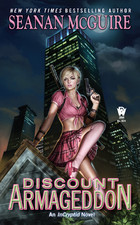 Verity Price is a cryptozoologist and a competitive ballroom dancer. Living in a world full of cryptids, or species that aren’t humans or animals as we know them, it’s her job discover those which aren’t harmful and the protect them against the Covenant, a group whose aim is to eliminate as many of them as possible. Her family, the Prices, were formerly members of the Covenant, and as such any Covenant member is not likely to view her favourably. When one of them invades on her territory in New York City, she immediately feels threatened, and launches into action to protect her city and the cryptids from any potential threat. But, as always, it’s not the handsome by-the-book Covenanter who threatens New York; it’s a much greater danger that could place both of them at risk. Verity Price is a cryptozoologist and a competitive ballroom dancer. Living in a world full of cryptids, or species that aren’t humans or animals as we know them, it’s her job discover those which aren’t harmful and the protect them against the Covenant, a group whose aim is to eliminate as many of them as possible. Her family, the Prices, were formerly members of the Covenant, and as such any Covenant member is not likely to view her favourably. When one of them invades on her territory in New York City, she immediately feels threatened, and launches into action to protect her city and the cryptids from any potential threat. But, as always, it’s not the handsome by-the-book Covenanter who threatens New York; it’s a much greater danger that could place both of them at risk.
A new urban fantasy series by Seanan McGuire? Wild bears couldn’t keep me away. She’s authored one of my two favourites, the October Daye series, and has also written the Newflesh trilogy (my review of Feed) under the name of Mira Grant. I completely trust her talent at this point and I simply can’t resist the prospect of more of her writing. I immediately bought this book on release day, and savoured it once I’d read it. Here once again, McGuire proves her talents by creating a book that is fun, different, and very much worth your time.
Like most urban fantasy series, a kickass heroine lies at the heart of this book in Verity Price. She’s not exactly your average kickass heroine though; her hobby is ballroom dancing, and she competes professionally alongside her job at a waitress at “Fish and Strips”. Her family is absolutely laugh-out-loud ridiculous, trained as they all are to combat standards; as an example, her grandfather disappeared years ago, and her grandma still trawls alternate dimensions with grenades trying to find him. The funniest part for me, though, has to be the Aeslin mice, a sentient breed of mouse that lives with the Price family and concoct festivals for every mundane event that happens in Verity’s life. It did at times feel that McGuire was intent on fitting every humorous line she’d come up with into the book, and not all of them resonate perfectly, but for the most part, I was far too busy laughing to mind.
As the first novel in a series, the world has to be set up, but the way this is done is overall so creative that I barely noticed. There is no learning curve; the book is simply fun and enjoyable from cover to cover. I loved the fact that Verity actually had a family who loved her; that she did something completely different and feminine alongside her fighting skills; and that the romance was subtle and woven into the overall context of the story, rather than the other way around.
Sure, Discount Armageddon is still a little bit shallow in parts, especially regarding the love interest, but I felt like this was a fantastic start to something that is yet again that much different from McGuire. Definitely recommended, and I will most certainly keep reading anything Ms McGuire writes.
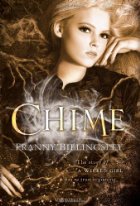 Everything bad that’s happened in Briony Larkin’s life is all her fault, for one simple fact; she is a witch. It is she who burned down the library, who caused illness in her family, who must then protect her sister Rose from all harm. As such, she is no longer going to the swamp, where she might ask the fae to do harm for her by accident, and instead stays close by the parsonage to protect her sister and keep to the right path. But when a young man, Eldric, comes to live with them, and worms his way into her family, Briony’s life and assumptions are turned upside down. Everything bad that’s happened in Briony Larkin’s life is all her fault, for one simple fact; she is a witch. It is she who burned down the library, who caused illness in her family, who must then protect her sister Rose from all harm. As such, she is no longer going to the swamp, where she might ask the fae to do harm for her by accident, and instead stays close by the parsonage to protect her sister and keep to the right path. But when a young man, Eldric, comes to live with them, and worms his way into her family, Briony’s life and assumptions are turned upside down.
I loved this book. I read several excellent reviews from a number of other trusted bloggers, enough to make me buy it, but I didn’t actually understand how much I’d love it until I began reading it. Billingsley uses one of my very favourite devices, the unreliable narrator whose worldview changes radically as he or she realises some important truths, and combines that with a delightful mix of fantasy, romance, and elegant writing to make a truly outstanding novel.
The book starts out slightly confusing. Briony is a narrator that lives very much inside her own head, and as a result the story is told fractiously; it takes a while for us to work out exactly what she is talking about, why she feels threatened by Eldric and his family, and about Rose’s peculiar behaviour. But once hooked, I couldn’t stop reading, and devoured the entire book in a single evening. I loved the atmosphere, which was very much like England a hundred years ago and with more magic. The swamp reminded me of the way the fens were in Lady of the Butterflies by Fiona Mountain, although the books themselves are wildly different; a magical and mysterious place that no longer exists in the modern world, long past drained to produce more land for houses, farms, and monetary gain in general.
It was the relationships and how they grew that really affected me, though; I absolutely adored Eldric and the way he bonded with each of the characters, especially Briony and Rose. He really causes her to question all of the assumptions she’s built up over the years. Backing him up is Rose, who seems to understand more about everything that’s happened despite her own peculiarities. I loved how Eldric and Briony so clearly made one another happy, too, and the completely organic way their relationship grew over the course of the narrative. It’s completely in contrast to the other young male character, Cecil, who attempts to bully Briony into marrying him.
In fact, just talking about Chime makes me want to read it again, which for me is a sure sign of an incredible read. It immediately secured its place on my new “to be re-read” shelves, and as such I completely recommend you make space for it on yours, too.
 Last week, I talked a little bit about the history I have with re-reading, and the fact that I’m trying to start again based on the fun I’ve had re-reading Harry Potter. So, this week, I thought I’d share with you my new to-be-re-read bookcase. Last week, I talked a little bit about the history I have with re-reading, and the fact that I’m trying to start again based on the fun I’ve had re-reading Harry Potter. So, this week, I thought I’d share with you my new to-be-re-read bookcase.
As it stands, I have two normal size bookcases, one for books I’ve already read and want to keep and another for books I haven’t read yet. Both are ridiculously full and double-layered, which means it’s hard to find specific books sometimes. When I bought a new desk for my computer, Ikea had a set with both a simple desk and a bookcase, on sale for less than the cost of a similar desk by itself, so the choice was really really obvious. I’ve designated this smaller bookcase for re-reads (I have another for hardcovers that are personal favourites) and I’ve started putting a few books on it already!

On this top shelf, I have my two favourite urban fantasy series (plus Discount Armageddon, which won’t be due for a re-read for a while, but fit well with McGuire’s other books). I will almost guaranteed re-read the Kate Daniels series when the next book comes out, as I actually managed to do before Magic Slays was released, and I’d really like to read all of the October Daye series again before the next book in that series comes out later this year. So, that choice was easy, and I also love to see those matching books lined up without hiding behind other reads. I also put The Name of the Wind here. I still haven’t read The Wise Man’s Fear although I own it because I genuinely remember very little about the first book except that I loved it, so I really need to read them in order.

This is a mix of books for me and my husband to read. 1984 was recently removed because he’s actually reading it. Chime earned a place immediately after I’d finished it. The Lions of al-Rassan is my favourite Guy Gavriel Kay, but I haven’t read it more than once, so I brought it back to the UK with me this time and am really looking forward to it. Foreigner and Dune are sci-fi classics – I actually enjoyed the former, but not the latter because I was much younger when I read it (or so I think), and thus I’d like to give it another try. And on the right, we have the first three books in A Song of Ice and Fire. I also have the next two, but on the hardcover shelf.

More series I’d like to re-read – the Tiffany Aching series, of which I also have the next two books, but one is with a friend and the other is on the hardcover shelf. I adored these books to bits and I definitely want to read them again. Same, really, with the next set of books by Megan Whalen Turner, except I don’t even own the fourth one because I need to read these three again first. And then, The Hunger Games trilogy, which I hope I’ll read before they release the second film. I know Mockingjay had issues, but I still very much want to read these three again. I’ve got Girl Reading on the side there, another book I absolutely adored but which I read recently, so I’m going to wait a while until I re-read that.

And finally – The Wheel of Time. I attempted to start a re-read of these chunksters last year and failed miserably. They are incredibly dense and time-consuming, which is a difficult to justify when I have so many other series to read (and there are 11 of these that I own and two more to come). I do, however, want to finish the series when it’s completed, so I will at some point start once again. Fortunately, I think I remember the first now, so at least I won’t be starting from scratch.
What books do you want to re-read most?
 Three lost souls meet in Athens, where their lives are destined to change forever. Rebecca is a young French painter, fleeing two years as a stewardess with Air France and a life bereft of personality and understanding. While trying to work out who she is, she stumbles upon two men; her first friend in Athens is George, a lonely American Ivy League educated linguist in love with ancient languages, alcohol, and Rebecca herself. But then she stumbles upon Henry Bliss, a Welsh archaeologist, who she suspects can show her not only the secrets of the ancient city she lives in but of her own heart, even though he’s hiding his own secrets from the distant past. Each of them is lost in some way; each of their relationships defines who they are and what they will become in the years ahead. Three lost souls meet in Athens, where their lives are destined to change forever. Rebecca is a young French painter, fleeing two years as a stewardess with Air France and a life bereft of personality and understanding. While trying to work out who she is, she stumbles upon two men; her first friend in Athens is George, a lonely American Ivy League educated linguist in love with ancient languages, alcohol, and Rebecca herself. But then she stumbles upon Henry Bliss, a Welsh archaeologist, who she suspects can show her not only the secrets of the ancient city she lives in but of her own heart, even though he’s hiding his own secrets from the distant past. Each of them is lost in some way; each of their relationships defines who they are and what they will become in the years ahead.
I’ve heard so very many amazing things about Simon Van Booy that it was only a matter of time before I actually read one of his books. He’s earned acclaim as a short story writer, too, but I always prefer to read novels when given a choice, and Everything Beautiful Began After is his first novel.
After reading the prologue, I was worried that I would find the whole novel somewhat impenetrable – beautiful, but written so abstractly that I’d need to really concentrate to work out the meaning, something I don’t always have the energy for at present. I could grasp what he was trying to do, viewing events through the lens of a child, but I was relieved when the rest of the book was written in a more easily readable style. Still very beautiful, though, as occasionally he jumps out at you with phrases that smack you over the head with meaning, such as:
… truth is just a lie that everyone believes.
And it takes a moment just to let that sink in, how true it is to life, but how it also simply sums up everything that particular character is experiencing at that moment.
All of the characters in this book are very inward-looking, very self-aware, and prone to analysing their own feelings through a microscope. But it’s really about growing and changing, not forgetting tragedies, not getting past them, but accepting them as part of who you are and what you’re going to become. Even just as the title says – everything beautiful began after – and indeed, it’s once you get past and accept the snags of your life that something beautiful can begin.
This is also a surprisingly fast read; I have a relatively small size hardcover version with 400 pages and I absolutely zipped through it. Except for those moments which catch you off guard, and make you stop and think, the book is a smooth and very beautiful read. It is probably worth sinking in and spending a bit more time with it if you can, though I do think it was incredibly powerful to read it in as few sittings as possible, as I did.
Very highly recommended for those who enjoy literary fiction, flat out beautiful writing, and engaged, thought-provoking characters. This won’t be the last time I read a book by Simon Van Booy.
All external links are affiliate links. I received this book for free for review.
 Anne Wynter is a governess, eking out a living for herself after a somewhat disastrous separation from her family at a tender age. Daniel Smythe-Smith is a gentleman, recently returned from exile after one of his own badly planned younger mishaps sent him to the continent for 3 years. When Daniel spots Anne playing with his cousins at the annual Smythe-Smith musicale, he can’t take his eyes off her; who is this mysterious woman who draws him in so easily? As he seeks her out, Anne tries to hide the minefields of her own past, even as she finds herself falling hopelessly in love with a man clearly above her station. Anne Wynter is a governess, eking out a living for herself after a somewhat disastrous separation from her family at a tender age. Daniel Smythe-Smith is a gentleman, recently returned from exile after one of his own badly planned younger mishaps sent him to the continent for 3 years. When Daniel spots Anne playing with his cousins at the annual Smythe-Smith musicale, he can’t take his eyes off her; who is this mysterious woman who draws him in so easily? As he seeks her out, Anne tries to hide the minefields of her own past, even as she finds herself falling hopelessly in love with a man clearly above her station.
Julia Quinn’s books are regularly delightful and fun reads, but I’ve felt recently that she’s been losing a bit of her touch – focusing more on the sweet, less on the actual emotional perils that make romance novels such compelling reads. To my surprise, A Night Like This still retained her sweet hallmarks, but added on a layer that felt like a refreshing blast from the past as far as her writing goes.
I think the main thrust behind this was the past of both of the characters. Daniel’s past is immediately apparent; he accidentally shot his friend Hugh, the son of the Marquess of Ramsgate, in a duel, and was driven from the country for three years while the fledgling lord’s father sought revenge. He only has returned to England because Hugh came to visit him and assure him in person that his father would no longer kill Daniel if he stepped foot on his native soil. Anne’s past, on the other hand, is revealed much more slowly, and is far more heart-breaking, adding a touch of emotional tension to an otherwise sweet and romantic read. It wasn’t the actual subplot that I liked, as romance novel mystery subplots tend to be silly or useless obstacles; it was the addition of depth to each of the characters.
I liked the scenes where we witnessed Anne as governess to the younger Smythe-Smith girls and their individual personalities, too; they add a further touch of humour to the book and help a reader understand just why Daniel and Anne fall in love with one another. Again, Quinn’s novels are very sweet and sparkly on the interactions, but tend to be lacking in the emotional intensity department, and while this is an improvement on the last one, I still don’t think she’s quite returned to the early Bridgerton days.
As a pleasurable way to pass an afternoon (or a transatlantic flight, which is where I read this), A Night Like This is a great choice, and definitely a sign that Julia Quinn is making strides towards regaining her golden touch. Not quite there yet, but a lot of fun, and recommended for romance readers.
And as a final note, this is a truly delightful cover, a refreshing change from the usual half-undressed couple!
All external book links are affiliate links. I received this book for free for review.
|
|



Recent Comments