|
|
 Piscine Patel is the young son of an Indian zookeeper. A deeply religious boy, he loves every sign of God, even in the animals that his father keeps. When Pi’s family is forced to leave their native India and move to Canada, many of the zoo’s animals in tow on a massive industrial boat, Pi is alternately excited and devastated. When the ship sinks, though, and Pi must battle for his life, devastation, survival, and even religion take on new meaning. Piscine Patel is the young son of an Indian zookeeper. A deeply religious boy, he loves every sign of God, even in the animals that his father keeps. When Pi’s family is forced to leave their native India and move to Canada, many of the zoo’s animals in tow on a massive industrial boat, Pi is alternately excited and devastated. When the ship sinks, though, and Pi must battle for his life, devastation, survival, and even religion take on new meaning.
Life of Pi is a book that I had kicking around for more than four years, knowing that other people had loved it but somehow never making the time to read it for myself. The release of the film, and the possibility that I might see a film before I’d read the book that inspired it (gasp), led me to finally pick it up and see for myself what all the fuss was about. What I found was perhaps the first book featuring magical realism that I’ve enjoyed and a striking tale about survival and stories and, in the end, true meaning and whether or not it matters.
I admit that I was a bit perplexed when I first started reading. Nearly a third of the book takes place before Pi has even left India and a surprising chunk of that part of the book is consumed by his religious nature. He decides that he believes in Christianity, Islam, and Hinduism, praying and taking mentors for each religion. He just wants to worship God, and all ways of worshipping God are sacred to him, an idea which I found fascinating but which didn’t seem related to the part of the book that I knew about, which was the part where he is on a lifeboat with a tiger.
It all makes perfect sense in the end, fortunately, and I think what Martel is trying to comment on is really the nature of story. If you read to the end of the book, he offers two explanations for what happened to Pi on the lifeboat, but it doesn’t really matter what truly happened. Either explanation can be true; one just requires more of a leap of faith than the other. In such a way, religions require that leap of faith, that belief, but at the core of them, the stories are human. I’m an atheist myself but I found the whole story and the end fascinating. It wasn’t what I’d expected at all, and I immediately felt that this is a book I’d like to talk about in a lot more depth, which might take on new significance the more it’s considered.
Regardless of how you take the story within this book’s pages, it’s a moving portrayal of Pi’s spirit and will to survive in the face of elements clearly much larger than he is. Definitely a book worth reading – and now I’m looking forward to seeing the film!
All external book links are affiliate links. I purchased this book.
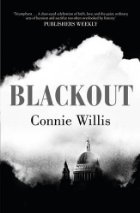 In 2060, humans have discovered time travel, and it’s now a fantastic method for historians to get a real view of what happened in the past. For three young historians, England during World War II is the destination of choice. Eileen, or Merope in 2060, is assigned to be a maid in a country house, looking after evacuees. Mike Davis finds himself posted to just before Dunkirk to watch the boats depart. Polly Sebastian, meanwhile, heads straight into the heart of the London Blitz. Each goes armed with knowledge to survive his or her particular assignment and full knowledge of where their “drop” points are and when they’re meant to check in. But, around the same time for each of them, things start to go wrong, and these historians find that rather than simply observing history, they have to live it. In 2060, humans have discovered time travel, and it’s now a fantastic method for historians to get a real view of what happened in the past. For three young historians, England during World War II is the destination of choice. Eileen, or Merope in 2060, is assigned to be a maid in a country house, looking after evacuees. Mike Davis finds himself posted to just before Dunkirk to watch the boats depart. Polly Sebastian, meanwhile, heads straight into the heart of the London Blitz. Each goes armed with knowledge to survive his or her particular assignment and full knowledge of where their “drop” points are and when they’re meant to check in. But, around the same time for each of them, things start to go wrong, and these historians find that rather than simply observing history, they have to live it.
I put Blackout on my pile for Long-Awaited Reads Month and am I glad – this is a book I shouldn’t have put off for a year. There were many aspects about it that I really, really liked, and by the time I reached the end, I was thrilled that I had All Clear on the shelf waiting for me to pick this story back up again. The book doesn’t really end, it just cuts off, and there are many loose plotlines left dangling for the second book to pick up again. I’ve since had a poke around the internet and I’m fortunate to have picked it up after All Clear was published; one big complaint for early readers is that they were left hanging for an entire year. I’m happy that won’t happen to me.
While my edition of this book is over 600 pages long, I found that it fled by as I got wrapped up in the individual problems of Eileen, Mike, and Polly. My previous experience with Willis’s time travel books is Doomsday Book which I also loved, so I was prepared to get deep inside each character’s mind as everything starts to go wrong. I actually found the whole process that each of them went through really fascinating – they’re all so confident in their ability to escape at will that they don’t really think much about where they’re going. Polly, for instance, gets an implant with each and every bombing incident during the part of the Blitz that she is meant to experience, so she’s not meant to be in any real danger. Instead, she’s assigned to just watch how those who are actually in danger experience it, and that’s all she expects. Of course, when the drop doesn’t open and she realizes that she’s actually stuck in the middle of the London Blitz, and sometimes has no real way of actually knowing where and when is safe, her perspective completely changes.
At that point, when the three of them start to wonder about what’s happened to their retrieval teams and their drop points, they each start to actually live in the midst of World War II. There is some element of repetitiveness, as a lot of what they experience is quite similar; there are meant to be retrieval teams that investigate if they haven’t returned at a certain point, and they each spend a lot of time pondering their arrival. In addition, they start to worry that they’ve affected history, despite the apparent truth that historians can’t alter history, particularly Mike, who finds himself seemingly changes events at a critical period in World War II. Not only do they panic about what happens next to themselves, they start to feel as though they genuinely *don’t* know what’s going on in the war.
I particularly loved how Willis depicted ordinary heroism in the face of extraordinary danger. At times, particularly during the bombing raids, her descriptions reminded me how devastating a war this was for London and that it didn’t happen all that long ago. Even for people who weren’t that close to the bombs, living with the reality and unpredictability that each night might be their last took an incredible amount of courage. The atmosphere that she evokes is incredibly well done. One of my very favorite parts of the book had a Shakespearean actor getting up in the middle of an air raid shelter and going through monologues to distract the others in the shelter. That scene is going to stay with me for some time.
Blackout is a book that I had an amazing time with, but don’t read it unless you have All Clear ready to go immediately after – otherwise, you’ll be frustrated that it ends in the middle with no resolution whatsoever. So far it looks like I’ll be recommending these!
All external book links are affiliate links. I purchased this book and its sequel.
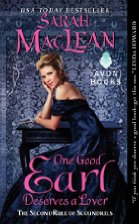 Lady Philippa Marbury has always felt out of place in society; with her keen and intelligent mind, she’s far from the ideal debutante. Regardless, she’s managed to snag a fiance, Lord Castleton and she can’t help but be curious about the marriage bed, since no one has ever really told her what might happen. In search of a man with experience who won’t make her feel uncomfortable, she propositions Cross, part owner of the gambling den with her brother-in-law. She doesn’t want to do anything in particular, she just wants to learn what might happen, so that she’s prepared for her wedding night. Cross is immediately attracted to Pippa, but of course refuses; he can’t tell her what she really wants to know, it would be completely wrong, and besides that, his tortured past means he hesitates to let her in at all. Lady Philippa Marbury has always felt out of place in society; with her keen and intelligent mind, she’s far from the ideal debutante. Regardless, she’s managed to snag a fiance, Lord Castleton and she can’t help but be curious about the marriage bed, since no one has ever really told her what might happen. In search of a man with experience who won’t make her feel uncomfortable, she propositions Cross, part owner of the gambling den with her brother-in-law. She doesn’t want to do anything in particular, she just wants to learn what might happen, so that she’s prepared for her wedding night. Cross is immediately attracted to Pippa, but of course refuses; he can’t tell her what she really wants to know, it would be completely wrong, and besides that, his tortured past means he hesitates to let her in at all.
Sarah MacLean is one of the romance authors that I always give to newbies of the genre. Her books are accessible and brilliant at pulling in those who aren’t quite familiar with the tropes as the rest of us are. She’s a fantastic writer, and she has the ability to really make you feel for her characters and hope for the outcome that, despite knowing it’s assured, seems impossible in the meantime. This book is really no different, with a great, smart heroine and a tortured hero. Like many readers will, I desperately wanted Cross and Pippa to get together. I loved that Cross adored Pippa because she was a little bit strange, because she is intense and smart and doesn’t just flirt and tease as normal society girls do.
One aspect of this book that I particularly liked was the simple fact that Pippa’s fiance is not a terrible person. In fact, they might have even gotten on together well, it’s simply that there is no real spark of passion in their relationship. Comparing Castleton to Cross is difficult because that spark is there with him, but I liked that he was a kind, logical man and, more importantly, that there were no stupid excuses required for Pippa to get her own happy ending. He’s certainly not Cross, who for me was the star character of the book, but he’s a perfectly acceptable man.
I suppose I’d say the only thing I didn’t like, really, was the fact that for a woman who often comes across as very intelligent, Pippa also comes across as very stupid. Propositioning the owner of a gambling den, even though he knows her brother-in-law, is an extraordinarily stupid move no matter how understandable the motive, and some of the actions that Pippa takes indicate that she’s so comfortable in her own little world that she’s lost sight of how dangerous the real world can be. It’s a very classic case of intelligence versus common sense, and Pippa seems to have very, very little common sense at times. It’s not that she’s unrealistic, as I think we’ve all met people who are very clever and very dim at the same time, it’s more that in these circumstances I wanted her to act with some sense and caution.
Saying all that, One Good Earl Deserves a Lover is a book that I thoroughly enjoyed reading, and I fully intend to keep up with Sarah MacLean’s future releases in this series. Highly recommended for other romance readers.
All external book links are affiliate links. I received this book for free for review.
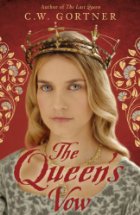 Isabella of Castile is not expected to rise to greatness. Not only does she have an older half-brother, but she also has a younger full brother, and both are ahead of her in the line to the throne. But when crisis strikes her family and plunges Castile into civil war, Isabella finds herself fighting to claim the throne for herself and her own descendants. Alongside her is Fernando, heir to Aragon, and her chosen husband, even when her family wishes for her to marry someone else. Throughout Isabella’s struggles, one thing is always for certain, and that is her goal to do her best for her people. Isabella of Castile is not expected to rise to greatness. Not only does she have an older half-brother, but she also has a younger full brother, and both are ahead of her in the line to the throne. But when crisis strikes her family and plunges Castile into civil war, Isabella finds herself fighting to claim the throne for herself and her own descendants. Alongside her is Fernando, heir to Aragon, and her chosen husband, even when her family wishes for her to marry someone else. Throughout Isabella’s struggles, one thing is always for certain, and that is her goal to do her best for her people.
Isabella of Castile and Ferdinand of Aragon are historical figures that are familiar to most American children (and likely plenty of others as well); they financed Columbus’s journey to “the New World” and, as much as I dislike what ensued from that journey, it’s taught to us from a very young age. As I grew older, I learned more about them. They unified a Christian Spain on something of a crusade and set off the Inquisition, an infamous institution throughout the early modern era. They’re fascinating figures, and Isabella herself is a perfect candidate for a historical fiction novel.
Fortunately, C.W. Gortner sticks to his excellent record and does Isabella justice. Gortner is one of those authors who can always remind me why I’ve spent so much of my life so far reading historical fiction. He really brings Isabella and her world to life, fully fleshing out her character and spending just the right amount of time on descriptions of the world around her and the events that shape her personality. Starting from a young age and going right up until she is the mother of several children, Gortner captures a huge chunk of Isabella’s life and explores how she might have felt over a number of both traumatic and inspiring events.
Before going into this particular book, I really wondered how Gortner was going to handle Isabella’s strict Catholicism. It’s very widely recognized that the Inquisition, and religious persecution in general, is an atrocity that practically everyone reading this review will wish was consigned to the distant past. He handles this with a delicate touch; Isabella regrets what she is doing and is forced into it by essentially riots. In order to satisfy the majority, she has to persecute the minority. I’m not sure how accurate this is in terms of real life, but it is a way of getting around this issue.
Another delicately handled situation is Fernando’s infidelity. Powerful men have received a pass on cheating for most of history, and Isabella’s husband isn’t an exception to this rule. How she deals with it is I feel surprisingly realistic, and I liked that Gortner didn’t invent fidelity when it was incredibly unlikely.
All things considered, The Queen’s Vow is a fantastic portrayal of Isabella of Castile, the story of a girl who grows into medieval Spain’s greatest queen, and an excellent book besides. Very highly recommended to those who enjoy historical fiction.
I received this book for free for review. All external book links are affiliate links.
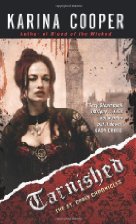 Cherry St. Croix lives in two worlds, London Above and London Below. Above, she’s the somewhat ostracized daughter of a mad scientist and his aristocratic, much-loved wife; after their deaths when she was a child, Cherry has had to navigate the waters of London’s social set with the guidance of her guardian, but she has never had much success or care for the intricate social politics. Below, she’s a Collector, a detective of sorts who finds and turns in people who owe something to others. As the only female collector, and one who has to keep her identity a secret, Cherry takes great pride in her success. But then, one of her bounties disappears, and the “sweets”, or prostitutes, of Below’s menagerie tell her about a horrible murder and ask for her help in finding the killer. Cherry St. Croix lives in two worlds, London Above and London Below. Above, she’s the somewhat ostracized daughter of a mad scientist and his aristocratic, much-loved wife; after their deaths when she was a child, Cherry has had to navigate the waters of London’s social set with the guidance of her guardian, but she has never had much success or care for the intricate social politics. Below, she’s a Collector, a detective of sorts who finds and turns in people who owe something to others. As the only female collector, and one who has to keep her identity a secret, Cherry takes great pride in her success. But then, one of her bounties disappears, and the “sweets”, or prostitutes, of Below’s menagerie tell her about a horrible murder and ask for her help in finding the killer.
I really liked this book; it’s a twist on steampunk London, adding fantasy and new elements that made for an interesting world. I thought the actual, literal split between London’s rich and poor was a fascinating division, and it means that whoever shows up “Below” has a real motive and a reason for being there. It appears to be a racial divide as well, although I don’t recall any explicit mention of this. All of the characters of color are met under London, and the social elites are all white. The literal divide means that Cherry actually does live in two worlds, and her different identities in each are starkly defined.
The story itself is actually wrapped up in Cherry’s identity, though; the mystery that she attempts to solve is closely wrapped up in her own past, and as a result we do get a significant amount of her backstory in this one book. We need to, just to understand what’s going on and why it matters. I thought the story was decently intriguing, although readers should be aware that it doesn’t end here at all, and plenty of mysteries are left unsolved for future books in the series.
There is also a romance element to this particular book, although it doesn’t actually get very far. Cherry doesn’t really fall in love with anyone, but she has an intense attraction to two men who personify the split between her two worlds. The first is the leader of the Menagerie, a dark and charismatic figure that Cherry can’t avoid being attracted to; the second is the son of her worst aristocratic nemesis, a tall and golden-haired earl. It’s immediately clear that to be with either, Cherry would have to sacrifice one of her identities, but there’s no hint of a choice in this book, just the beginning of what could be a love triangle in the future.
While Tarnished was a good read, it remained a like, not love, book, for reasons I can’t really explain. Certainly good enough to continue with the series, though; I’d recommend it to those who like urban fantasy and steampunk, but it wouldn’t be the first on my list for current urban fantasy series just yet.
All external book links are affiliate links. I purchased this book.
 Anne Morrow is a shy college student when her father, the US Ambassador to Mexico, invites Charles Lindbergh, the world-famous aviator who has just completed the first solo flight from New York to Paris, to his family’s Christmas. Anne hardly knows what to say to Charles, and imagines that he’s fallen for her beautiful sister Elisabeth; but Charles surprises her, inviting her for a secret flight and eventually proposing marriage to her. Covering the whole of the Lindberghs’ marriage, The Aviator’s Wife is a striking portrayal of how Anne’s thinking developed, how she went from biddable, awe-struck wife to become her own person and chart her own course in life. Anne Morrow is a shy college student when her father, the US Ambassador to Mexico, invites Charles Lindbergh, the world-famous aviator who has just completed the first solo flight from New York to Paris, to his family’s Christmas. Anne hardly knows what to say to Charles, and imagines that he’s fallen for her beautiful sister Elisabeth; but Charles surprises her, inviting her for a secret flight and eventually proposing marriage to her. Covering the whole of the Lindberghs’ marriage, The Aviator’s Wife is a striking portrayal of how Anne’s thinking developed, how she went from biddable, awe-struck wife to become her own person and chart her own course in life.
Having previously read and enjoyed one of Benjamin’s previous books, The Autobiography of Mrs Tom Thumb, I’ve been looking forward to reading The Aviator’s Wife. I don’t know much about the Lindberghs, but I had heard of Charles and his flight over the Atlantic in The Spirit of St. Louis, and so I was curious to read about his wife’s point of view. This is especially true once I’d learned that she was a pioneer in her own right, going alongside her husband to make records that no other woman had ever done. I’m all about historical women getting the recognition that they rightly deserve, and just because she was married to a more famous man doesn’t mean she should spend all of history in the shadows.
This was an insightful and thoughtful book; Benjamin has a way with words that makes you feel as though you’re inside her characters’ minds and living their experiences for yourself. I loved her depictions of Anne’s life particularly in the early years of her marriage to Charles, when she felt like everything and anything was possible, and I found her ways of describing how Anne behaved even when she disagreed with Charles to be realistic. Her research seemed thorough; as with all excellent historical fiction authors, she covers in the footnotes what was and wasn’t true, but throughout the whole book I did feel as though there was a ring of authenticity.
In particular, Anne struggles to find herself, especially after she’s had children and lived in the shadow of her husband for years. She isn’t sure what her own purpose is, and I think this will still ring true for many women who define themselves by the people around them rather than as themselves. It really brought her out as a realistic character for me, and the combination of historical fiction and women’s issues worked exceptionally well. Since I knew virtually nothing about these people’s lives, each detail was new to me, even the kidnapping, and so I was as desperate as the characters to find out what happened next and how their stories would progress.
I’d certainly recommend this book to others who enjoy historical or women’s fiction; I was captivated by it, and Anne’s story certainly deserves a second look. I’m now inspired to not only keep on reading Melanie Benjamin’s books, but to seek out a few of the many books that have been written by and about the Lindberghs to add some non-fiction to my newly acquired interest in them.
All external book links are affiliate links. I received this book for free for review.
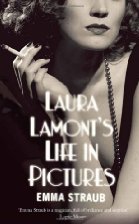 Blonde little Elsa Emerson loves the stage. Born in 1920, she’s just in time for the delight of the silver screen and the glamour of acting. She grows up around and on her father’s stage, playing small roles, and loving and being loved by her two sisters, especially beautiful Hildy. When tragedy strikes her family, Elsa decides that she should live her life on a bigger stage, and when Gordon-from-Florida Pitts comes to her small town in Michigan, Elsa heads straight for Hollywood. There, she’s christened Laura Lamont by the most famous producer in town, transforming from blonde and wholesome country girl to glamorous screen star. Blonde little Elsa Emerson loves the stage. Born in 1920, she’s just in time for the delight of the silver screen and the glamour of acting. She grows up around and on her father’s stage, playing small roles, and loving and being loved by her two sisters, especially beautiful Hildy. When tragedy strikes her family, Elsa decides that she should live her life on a bigger stage, and when Gordon-from-Florida Pitts comes to her small town in Michigan, Elsa heads straight for Hollywood. There, she’s christened Laura Lamont by the most famous producer in town, transforming from blonde and wholesome country girl to glamorous screen star.
The early days of Hollywood have always held a strange fascination for me. Modern celebrities don’t interest me at all, but the first years of films have passed into the realm of history, and the fact that we can still see all of these people on screen today makes their lives all the more interesting. Laura Lamont is, of course, fictional, but she’s been written in such a way that she could have been many famous actresses from our time. Her transformation from “ordinary” girl to superstar is actually quite remarkable; with the change of name, hairstyle, and diet, Elsa becomes Laura in a way that she hadn’t precisely anticipated, and the consequences of that are profound.
What I most liked about this, I think, was the way that Laura’s life was so far from perfect. The contrast between her public and her private lives was absolutely immense. Even when she grows older, the reaction that she gets from people who loved her old films is notable compared to her actual life outside them; it shows how little we really know about celebrities when they keep their personal lives quiet, and how eternal they seem to us when, in reality, they are flawed and age just as the rest of us do. We don’t really spend all that much time experiencing a “glamorous” lifestyle through Laura’s eyes; the book really focuses on her actual life behind the screen and her family, both at home in Michigan and in Hollywood.
Straub is naturally influenced by what happened in real-life Hollywood; I’ve even seen various guesses of who Laura herself is inspired by. Some of her silver screen friends are somewhat obvious, but I didn’t spend much time trying to pin who was inspired by who. For those who know more about Hollywood history than I do, there is undoubtedly quite a bit to spot here in terms of influences, but it’s not critical to liking the book, at least it wasn’t for me.
A thoroughly enjoyable read, although sometimes unsettling thanks to the ups and downs of Elsa / Laura’s life, Laura Lamont’s Life in Pictures is a good choice for anyone who enjoys thinking about the early days of Hollywood or is at all interested in the lives of celebrities behind the scenes.
I received this book for free for review.
 Translating, often assumed to be a fairly standard process, is in reality anything but. Text is one language is not directly transferable to another language. Just try translating an idiom from one language to another; finding a needle in a haystack or having your mouth water is not something that can be directly translated. And what is translation, anyway? To what extent do you change the text to make it fit in, and to what extent do you change it further to give a text an “atmosphere”? In this book, David Bellos, a translator himself, deconstructs the process and examines why we do what we do when we convert something from one language into another. Translating, often assumed to be a fairly standard process, is in reality anything but. Text is one language is not directly transferable to another language. Just try translating an idiom from one language to another; finding a needle in a haystack or having your mouth water is not something that can be directly translated. And what is translation, anyway? To what extent do you change the text to make it fit in, and to what extent do you change it further to give a text an “atmosphere”? In this book, David Bellos, a translator himself, deconstructs the process and examines why we do what we do when we convert something from one language into another.
My interest in this particular topic has been prompted by the fact that the company I work for in real life specializes in multilingual and multinational search. We have a translation agency in our company, and I’ve personally been involved in many projects where translation is involved and is really important to the project in question. Plus, with such an international workforce, it’s fun to get into debates about how different languages are and how it’s much more difficult to translate between some than others. We always focus on local and local knowledge as much as we possibly can, but there has to be the ability to translate somewhere, and that’s why I was quite curious about the actual process – plus, an ongoing interest in linguistics that I’ve abandoned since university is always a factor.
That said, I’d expected something a lot lighter than this book actually was. Bellos is an academic and his book reads like one that was written by an academic. Some parts are fascinating and full of facts, while others are a bit dry. He has one particular chapter that’s about meaning and how it’s expressed, which isn’t a light read for anyone. It’s all fascinating, in my view at least, but it took me longer and more brain power to get through than your average non-fiction read.
I did feel as I was reading that I was really learning something, though; I don’t speak anything but English fluently, so a lot of the book was new to me since I don’t know what goes through a translator’s head. I loved particular little tidbits which really made me feel I was genuinely learning, such as:
For the ancient Greeks, the sound of the foreign was the unarticulated, open-mouthed blabber of va-va-va-, which is why they called all non-Greek-speakers varvaros, that is to say, barbarians, “blah-blah-ers”.
I already knew about what he says directly after – that the Russian word for German means, basically, deaf – but that about the origin of the word “barbarian” just made me smile.
Bellos wraps up the book with more thoughts on meaning, and how we can express meaning without language at all. It’s a thoughtful look back at the whole book and the way people actually understand each other. I really liked Is That a Fish in Your Ear?, but I don’t think it’s for everyone; if you do enjoy languages and translation, though, it’s certainly a book that you should try.
I purchased this book.
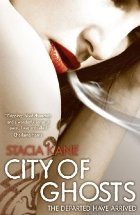 Chess Putnam is a wreck in almost any way she can think of. She’s driven away her closest friend by sleeping with another man and she’s a drug addict that can barely function without a few pills. The only positive thing in her life, really, is her job as a Church witch and her faith in the Church’s ability to debunk ghosts. Even that faith is about to be thrown into question, though, as Chess begins working with a girl called Lauren, the daughter of the Grand Elder, a Church cop. Chess feels that there is something wrong about Lauren; her spells are wrong, her magic is wrong, but with the promise of a hefty check in the bank and little reason to pursue other paths in life, she goes along with it, only to find that the Church is not nearly so powerful as she’d thought. Chess Putnam is a wreck in almost any way she can think of. She’s driven away her closest friend by sleeping with another man and she’s a drug addict that can barely function without a few pills. The only positive thing in her life, really, is her job as a Church witch and her faith in the Church’s ability to debunk ghosts. Even that faith is about to be thrown into question, though, as Chess begins working with a girl called Lauren, the daughter of the Grand Elder, a Church cop. Chess feels that there is something wrong about Lauren; her spells are wrong, her magic is wrong, but with the promise of a hefty check in the bank and little reason to pursue other paths in life, she goes along with it, only to find that the Church is not nearly so powerful as she’d thought.
I’ve more or less stopped reviewing most of the urban fantasy that I read on my blog because I tend to read books in a series very often and very quickly, and once I get to the middle of a series, it gets harder to keep track of spoilers and find something unique to say about each installment. But everyone, I loved this book in a way that makes me want to write about it, so here I go giving it a try once again. I don’t love it in the way that I love, say, The Remains of the Day or Among Others, but this was such an incredible, addictive, heart-pounding read that it satisfied every little desire I had for an urban fantasy book.
I really like the darkness that this series brings along with it. Chess’s city, especially Downside, is not a nice place to live. It reminds me of a Gotham city, except even more corrupt; the people she cares about are all generally drug pushers or addicts, except for those in the church, and her own life is an example of how a person gets so addicted to drugs that they can rarely care about anything else. But Chess does care about something else, and that something else is actually a person called Terrible. You see, in the last two books, we’ve been watching the relationship between Chess and Terrible develop, in a heart-melting, exciting way, until he saw something that turned him away from her completely.
The agony that’s resulted from this for Chess is incredibly intense – it took losing him to realize how much she really cared about him, and watching their relationship move on from this was honestly so emotional that I couldn’t believe I was feeling quite that much about these two people who are so incredibly broken. Terrible is a guy that scares the people of Downside as Bump’s chief enforcer; he is the guy who forces money out of people if they don’t pay up for their drugs. He’s so far from the charming rogues that grace some of my favorite historical romance novels that I doubt he’d recognize a suit if he saw one. But based on these books, I completely fell in love with his character, and with Chess and him together. Yes, she screwed up, but this relationship is simply addiction of the strongest kind. For them, and for me, the reader.
The story itself is good too, of course; the mystery around what’s happening with Lauren and Chess’s investigation is well worth following. But as always for me with a series, it’s the relationships that characters build that keep me going, and this series has completely, already, hooked me in. Very, very highly recommended.
I purchased this book.
 Miles Vorkosigan, one of the Barrayaran Emperor’s right-hand men, has been sent to investigate rumors of bribery and corruption on a world which focuses heavily on the cryogenics industry before those industries get involved on Barrayar. On Kibou-daini, almost everyone gets frozen either before or very immediately after their deaths, which has led to a huge bureaucracy built up around the industries that supply this freezing technology. Miles, a man whose life was saved by cryo technology, isn’t going to fault them for wanting to avoid death, but what he does find is a cold, corrupt industry that fails to look after those who have entrusted their lives to the future. Miles Vorkosigan, one of the Barrayaran Emperor’s right-hand men, has been sent to investigate rumors of bribery and corruption on a world which focuses heavily on the cryogenics industry before those industries get involved on Barrayar. On Kibou-daini, almost everyone gets frozen either before or very immediately after their deaths, which has led to a huge bureaucracy built up around the industries that supply this freezing technology. Miles, a man whose life was saved by cryo technology, isn’t going to fault them for wanting to avoid death, but what he does find is a cold, corrupt industry that fails to look after those who have entrusted their lives to the future.
Like many others have said before me, Cryoburn isn’t really a novel that stands up the same as the other Vorkosigan novels do. While Miles is still the main character, he is no longer growing and changing; he’s the same disarmingly clever and ingenuous man as always, but he’s now completely matured and committed to the world as he knows it. Not many of the series’s other recurring characters appear in this book; Ekaterin features in just one scene and we don’t even get to visit Miles’s children. The only one with Miles is Armsman Roic, although a few familiar faces appear in the latter half of the book. The stakes aren’t quite as high here either; sure, things are messed up on Kibou-daini and for many of the people Miles meets, but he himself is out of danger and off investigating fairly quickly.
For what it was, though, I quite enjoyed it. I liked meeting the side characters and seeing Miles through a different set of eyes yet again, especially those of the children. Jin with his menagerie was a charming character, although I didn’t really understand why he was so adamant about running away from his aunt, especially if she let him keep his animals outside. Even the other Barrayarans on the planet with Miles were entertaining, and I liked what Bujold did with those stories too. It was a book that I enjoyed reading, but it wasn’t a book that would have made me fall in love with the series as I have over the past year and a half.
That said, then the ending happened, and I had to pick my jaw up off the floor. I know the next book in the series features Ivan, not Miles, but seriously, after that? I had to take a break from reading to recover for a while. It totally wouldn’t have worked if I hadn’t had the accumulated feelings from the entire series, I think; each of the little snippets was heart-breaking in its own way. Another reminder that this is a series which belongs all together, and it’s not worth reading from it without starting at the beginning.
As with all the Vorkosigan books, this series is highly recommended. Start with Cordelia’s Honor or Young Miles!
|
|



Recent Comments