|
|
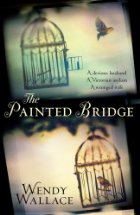 After less than a year of marriage, Anna’s rigid clerical husband decides that she isn’t a suitable wife for him, and has her committed to a mental institution. She’s perfectly sane, but that doesn’t matter to anyone – not to the fake doctors whose signatures let him commit her to the hospital, not to the employees, not to the real doctors in the hospital, and certainly not to her husband. Anna is determined to escape, but she has no idea how, until she meets Lucas St. Clair. St. Clair is a young doctor who is attempting to use photography to discern the true nature of patients’ souls. Will his pictures show Anna as the innocent she is or the madwoman everyone believes? After less than a year of marriage, Anna’s rigid clerical husband decides that she isn’t a suitable wife for him, and has her committed to a mental institution. She’s perfectly sane, but that doesn’t matter to anyone – not to the fake doctors whose signatures let him commit her to the hospital, not to the employees, not to the real doctors in the hospital, and certainly not to her husband. Anna is determined to escape, but she has no idea how, until she meets Lucas St. Clair. St. Clair is a young doctor who is attempting to use photography to discern the true nature of patients’ souls. Will his pictures show Anna as the innocent she is or the madwoman everyone believes?
I have to start off this review by saying I didn’t really manage to connect with this book. There were plenty of interesting elements, but they never combined for me into something that I genuinely liked much. It sounds like such an interesting premise; although we know that pictures aren’t really the key to the soul, when photography was a new art, people weren’t really sure what its purpose was. The idea that a doctor would try and use it to diagnose mental patients sounded very interesting to me. Moreover, the idea of an innocent woman condemned to one of these mental hospitals held a certain amount of appeal, even though I already knew that Anna’s life was going to be terrible once she was committed.
The main problem, unfortunately, was that I didn’t really connect with Anna at all. The reason that she’s deemed unsuitable by her husband is because she went to the seaside on her own to try and give aid to some shipwrecked sailors. To be perfectly honest, this does seem like a strange thing for a young woman in Victorian England to do without telling her husband. She even sells some of his things to get money for the sailors and proceeds to stay in an inn on her own without any supervision. Her behavior by no means justified the punishment, but she seemed foolish and naive, which made it hard for me to like her. I often say that I don’t really need to like a character to enjoy a book, but a lot of this story hinges on feeling sympathy for Anna, and it’s not really a complex character study that might justify her strange behavior. There is a reason for it, but not until the end of the book, and not quite earth-shattering even then.
While I didn’t fall in love with it overall, there were certain elements that I did like. One was the different ways that the women were constrained – maybe not appropriate to say I liked it, but it showed the limitations of a woman’s role once a man was in control at the time. The asylum is run by a man with a wife and teenage daughter, and both the wife and daughter are constrained because of what the men in their lives do. The other “patients” are obviously prisoners and generally with little wrong with them. Even the female employees in the institution have no control over their lives, and the one who does seize control comes to an unfortunate end. Anna’s own imprisonment is just one way that a Victorian woman could be trapped by the men around her.
With some interesting ideas, The Painted Bridge could have been an excellent book. For a different reader, it could be an exceptional read. Unfortunately, it wasn’t for this one.
All external book links are affiliate links. I received this book for free for review.
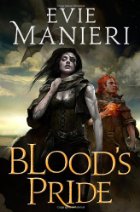 The story of the Norlanders and the Shadari is that of conquest. Two decades ago, the Norlanders laid waste to the Shadari homelands, killing their strongest people and enslaving the rest. Nearby, the desert people, the Nomas, watched in silence, despite Shadari calls for aid. Now, Lord Eonar rules over the Norlanders still far from home, while his three grown children squabble amongst themselves for power. But the Shadari aren’t as subdued as they might seem, and it will soon be time for all three of Eonar’s children to grow up and face the people that they have lived with for their entire lives. The story of the Norlanders and the Shadari is that of conquest. Two decades ago, the Norlanders laid waste to the Shadari homelands, killing their strongest people and enslaving the rest. Nearby, the desert people, the Nomas, watched in silence, despite Shadari calls for aid. Now, Lord Eonar rules over the Norlanders still far from home, while his three grown children squabble amongst themselves for power. But the Shadari aren’t as subdued as they might seem, and it will soon be time for all three of Eonar’s children to grow up and face the people that they have lived with for their entire lives.
This book hit me at just the right time, when I was completely ready to read an immersive fantasy novel, and though I didn’t fall in love with it, I really liked it. All of the components fell together neatly and I really liked what the author did with the story.
The Norlanders, who reminded me of fantasy-Vikings with their often pale coloring and actual cold skin and blood, are very typical conquerers, reigning over a much larger popular of darker skinned “natives”, the Shadari, who have a king and culture of their own. The Shadari can hardly bear to touch Norlanders, and the language that Norlanders speak is actually impossible for Shadari to hear or understand, though the Norlanders can speak the Shadari language.
What I liked about this book, in part at least, is how well it demonstrated the way that conquerers can integrate into the societies completely by accident. Eonar’s children have grown up with the Shadari, in very close contact, and as a result see this supposedly conquered people as, well, people, rather than the “Other” their parents’ generation easily attacked. Many of the Norlanders who were later transplants don’t integrate quite the same way, and the learning process is still going on by the end of the book. There are examples of “good” and “bad” characters in both and the plot revolves around their machinations, rather than any external events.
With this in mind, I found myself caught up in the plot and wondering what was going to happen next. Manieri also includes a number of stronger female characters, though this is still largely a world where men dominate the highest leadership positions. There are a few worthy characters that had me rooting for them and I really liked where the author took the story. This is the first of a trilogy, I believe, but I thought the ending would have been quite satisfactory even if it wasn’t. Most things wrap up fairly well, with just enough still happening to keep readers ready for the next installment.
Blood’s Pride is a fantasy novel that I enjoyed greatly – and if you like character-driven fantasy, you might want to try it too.
All external book links are affiliate links. I received this book for free for review.
 Ivan Vorpatril, never regarded as one of the brightest in the Miles Vorkosigan series, gets his own book in the Vorkosigan saga with Captain Vorpatril’s Alliance. Consigned to a relatively minor military governance role, Ivan’s life is relatively peaceful and his job is one that he does well. That is, until his cousin Byerly Vorrutyer appears on the same planet and informs him of a plot against a woman in the same exact city. A gentleman at heart, Ivan goes to investigate and befriend said young woman, and before long finds himself more or less accidentally married. Ivan Vorpatril, never regarded as one of the brightest in the Miles Vorkosigan series, gets his own book in the Vorkosigan saga with Captain Vorpatril’s Alliance. Consigned to a relatively minor military governance role, Ivan’s life is relatively peaceful and his job is one that he does well. That is, until his cousin Byerly Vorrutyer appears on the same planet and informs him of a plot against a woman in the same exact city. A gentleman at heart, Ivan goes to investigate and befriend said young woman, and before long finds himself more or less accidentally married.
I’ve written a lot about how much I love the Vorkosigan Saga and thus it’s no surprise that I actually preordered this book as soon as I discovered its existence. Ivan is mentioned a lot in the saga as Miles’s less intelligent cousin who ends up involved in a great number of the latter’s schemes, and it was a great idea to give him his own story so we could finally see inside his head. Because I actually waited a few months to read this book, I’ve seen a number of reviews and read quite a few opinions already, and I do have to agree that while this particular installment isn’t as amazing as some of the other books in the series, it’s a lot of fun and worth reading.
Captain Vorpatril’s Alliance is a book that is very well-plotted, with events taking place at all turns, and a certain elegance to the way that all of the various schemes by all of the characters play out at the end of the book. It felt a good deal lighter than some of the previous books in the series, though, perhaps because the life-or-death circumstances generally aren’t quite as severe as the situations that have faced Miles. Really, they’re over by the time that Ivan and his surprise bride, Tej, get married, and a lot of the rest of the book has to do with how that particular couple get on both with one another and with some of Tej’s family.
A lot of the ensemble cast from the rest of the series appear, too; some of them only appear for a few pages, but they do add a certain something to help the book fit in with the universe. For this reason, though, I think a new reader of the Vorkosigan saga would end up confused, as there are a number of little in-jokes and references to the world that would simply pass them by. This is definitely one for those who have already read most of the series. Chronologically, it takes place in the years before Cryoburn, and it wouldn’t surprise me if preferred reading order later places this in front.
Overall, though, I had a lot of fun with Captain Vorpatril’s Alliance and it’s certainly worth reading for those who have enjoyed the rest of the saga.
All external book links are affiliate links. I purchased this book.
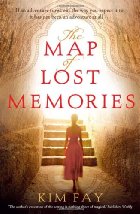 Irene Blum’s world is falling apart. Certain that she’s going to be appointed curator of the museum where she works when her mentor retires, she’s devastated when the board appoints someone else instead of her. Though it’s 1925 and the position of women is uncertain, Irene thought that her hard work and determination over the course of her life would pay off. Then her mentor, Henry Simms, gives her a task; go to Cambodia and find ten copper scrolls that depict the history of the Khmer people. Irene has always loved Cambodia and learning that her parents were there before gives her a new incentive to go. Armed with knowledge and taking a few people with her along the way, Irene’s journey is about more than ten scrolls; it’s about finding a purpose in her life beyond a single museum. Irene Blum’s world is falling apart. Certain that she’s going to be appointed curator of the museum where she works when her mentor retires, she’s devastated when the board appoints someone else instead of her. Though it’s 1925 and the position of women is uncertain, Irene thought that her hard work and determination over the course of her life would pay off. Then her mentor, Henry Simms, gives her a task; go to Cambodia and find ten copper scrolls that depict the history of the Khmer people. Irene has always loved Cambodia and learning that her parents were there before gives her a new incentive to go. Armed with knowledge and taking a few people with her along the way, Irene’s journey is about more than ten scrolls; it’s about finding a purpose in her life beyond a single museum.
I heard quite a bit about this book when it came out and I was really looking forward to reading it for its UK paperback release, which took place last week. I mean, it sounds fascinating and has some of my favorite elements; it’s historical fiction, centered around museums and exciting artifacts, and had the potential to delve into the history of the Khmer people. I’ve never been to Cambodia or to see Angkor Wat, the legendary temple complex that they built, but it’s on my wishlist of places I’d love to go, and so the setting was bound to captivate me. And while that happened, what was lacking for me was the characters.
The main character, Irene, does visibly grow and change over the course of the novel. Her life doesn’t go as she expected, and rather than break, she bends and grows stronger because of it. Her plan falls apart, so she puts together a new plan and forges forward. Despite this, though, I never felt that I liked her very much, nor did I really feel for any of the other characters. I got the feeling that certain revelations were meant to be deep and insightful, but I wasn’t there with the characters. I was never quite interested enough in the outcome of the story to actually pick the book up when I wasn’t already in a convenient position to do so. It was fine while I was reading it, but I wasn’t drawn in, and I didn’t feel that I was really experiencing an adventure story as I might have hoped.
All that said, there are certainly great points to this novel, and it’s been appreciated by plenty of other people. The writing is well done and I liked the atmosphere that it evoked, especially towards the end when Irene finally makes it to Cambodia. I think it’s more a book about one woman’s discovery, rather than quite what I’d expected. If you keep that in mind, I expect you’ll enjoy The Map of Lost Memories a great deal more than I did.
All external book links are affiliate links. I received this book for free for review.
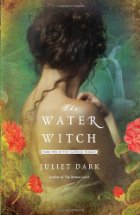 Just when Callie McFay thinks she’s returned her life to normal, having banished the incubus she very nearly loved from her home, she’s recruited to help save the world of Faerie. Convinced that the supernatural creatures which are entering the human realm are causing harm, a group of witches are about to close the last door to Faerie; as the doorkeeper, only Callie can stop them. Some of her nearest and dearest friends in her adopted town of Fairwick are fae and splitting the two realms will cause a disaster for many of them. But Callie can’t even work out her feelings for her banished incubus lover, her tutor in magic, or her new handyman, let alone save the connection to Faerie for all. Just when Callie McFay thinks she’s returned her life to normal, having banished the incubus she very nearly loved from her home, she’s recruited to help save the world of Faerie. Convinced that the supernatural creatures which are entering the human realm are causing harm, a group of witches are about to close the last door to Faerie; as the doorkeeper, only Callie can stop them. Some of her nearest and dearest friends in her adopted town of Fairwick are fae and splitting the two realms will cause a disaster for many of them. But Callie can’t even work out her feelings for her banished incubus lover, her tutor in magic, or her new handyman, let alone save the connection to Faerie for all.
Somehow, when I requested this book from Netgalley, I completely missed that it was the second in a trilogy. I strangely assumed that it was the first in a new series, perhaps because I hadn’t heard of it before, but I kept wondering why so much had happened before the book started. Once I finished, I looked online, and I did realize that this is the middle book of a trilogy – so it’s worth keeping that in mind. I actually found that, while this meant that I had no real introduction to the world, the author did a fantastic job making sure I knew what happened in the previous book. While I as always would have preferred to start from the beginning, I didn’t feel I’d actually missed out too much.
Once I’d settled into the rhythm of the story and accepted that I wasn’t going to get a deep introduction to the world, I found myself quite enjoying the book and wondering if Callie was going to manage to actually save all the people she cared about. This was an extraordinarily fast read, and while I wouldn’t really say it was particularly deep, it was definitely fun. I also enjoyed the romantic side of the book, with Callie’s many love interests – although the three get narrowed down in different ways as the book rolls along. There were a few moments towards the end when I felt as though she was being blind and wanted to tell her what was going on, but since she’s traumatized from so much happening and figures it out, I couldn’t hold it against her too much.
The Water Witch would be a great read for someone who enjoys both fantasy and romance, although I’d probably recommend starting from the beginning. I intend to.
All external book links are affiliate links. I received this book for free for review.
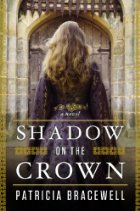 Emma of Normandy never suspects that she’ll be married before her sister – or that she’ll be sent north to England to wed King Ethelred, an aging monarch who disdains her immediately on her arrival. Emma’s life on arrival in England is far from what she thinks a marriage should be like. Her husband doesn’t respect her and she misses her family and all that is familiar from home. Worse, her husband’s seven children stand between her offspring and the throne of England. But Emma soon realizes that the only power she or her children will ever have is that she can seize herself, and the sooner the better. Emma of Normandy never suspects that she’ll be married before her sister – or that she’ll be sent north to England to wed King Ethelred, an aging monarch who disdains her immediately on her arrival. Emma’s life on arrival in England is far from what she thinks a marriage should be like. Her husband doesn’t respect her and she misses her family and all that is familiar from home. Worse, her husband’s seven children stand between her offspring and the throne of England. But Emma soon realizes that the only power she or her children will ever have is that she can seize herself, and the sooner the better.
Queen Emma is a fascinating historical figure. I’ve spent a small amount of time studying her life, though not in any great detail, enough to know what generally happened to her. It wasn’t long before I realized that Shadow on the Crown was covering only a tiny fraction of her life, because it went into much greater detail and imagined things I’d never considered before about the start of her life. While this part is often skimmed over in favor of her later life, I was riveted by Bracewell’s narrative and re-imagining of Emma’s young married life. I want to emphasize that a lot of this is imagining, and Bracewell includes the very useful author’s note so we can see where she’s changed history to better suit her narrative.
As I would have imagined, really, life in a foreign land as depicted here isn’t easy, especially when Emma is descended from England’s enemies, the Vikings. The Vikings were a scourge on England’s coast throughout Ethelred’s reign, so it’s no surprise that her relations to them cause distrust and unhappiness – even more so when a young, foreign queen marries an older king and ruins the chances for English women. Not only that, but while she doesn’t expect her husband to like her, he doesn’t even respect her, and he mistreats her frequently. It was easy to get attached to and feel for Emma, and I liked how the author put little hints in regarding where the story was going to go in the future.
I also felt that the author gave readers a great sense of what life might be like under a Viking siege. At one point, the characters’ lives are at risk, with events taking a terrifying turn. It was easy to understand how terrified they were and why some of them took the actions they did. Bracewell doesn’t use this event just for the sake of gratuitous violence, but actually uses the events of the raid to further the plot along. Several characters experience key events that help us understand their characters better and which will make a lot of sense going down the line.
Though by no means an entirely positive tale of a young queen, Bracewell’s ideas shed a lot of light on how Emma became the women she was later on, and I’m greatly looking forward to finding out how she fleshes out Emma’s story and reveals the multiple facets of her life as we go along. Recommended!
All external book links are affiliate links. I received this book for free for review.
 Everyone has heard the rumors about Mr. Wright. He’s a notorious rake, and not at all appropriate company for Miss Eliza Cade. While she’s old enough to be out in society, her family is convinced that she’ll bring them all down into scandal; so convinced that her three sisters must marry before she can have her first Season. And so, spending time with the very scandalous Mr. Wright is dangerous, leading her right down the path her family worries about, but somehow Eliza just can’t resist. Everyone has heard the rumors about Mr. Wright. He’s a notorious rake, and not at all appropriate company for Miss Eliza Cade. While she’s old enough to be out in society, her family is convinced that she’ll bring them all down into scandal; so convinced that her three sisters must marry before she can have her first Season. And so, spending time with the very scandalous Mr. Wright is dangerous, leading her right down the path her family worries about, but somehow Eliza just can’t resist.
This novella was simply delightful. I’ll admit to being shallow and mainly buying it because the title was so appealing, but I have read and previously enjoyed a few of Tessa Dare’s full-length novels so it was worth the very small price tag.
Immediately, I was struck by how very clever the writing in this book was. I read it in Kindle format, and the number of “highlighters” – other people marking a passage in a novel as significant – was higher than any I’d ever seen in another romance novel. The author has a habit of sneaking truths in dialogue that catch you off-guard and immediately build character. Take this example that comes from Harry when Eliza suffers grief:
“You’ve seen that all the joy and beauty of the world is fragile. Just bright daubs of paint on the surface of an eggshell. Now you’ll reach for it more cautiously. No more wild grasps at glory. It’s that innocence you’re mourning.”
And from Eliza, at a flirtatious moment:
“It’s a funny thing about suspicions, Mr. Wright. All too often, they’re just vain hopes in disguise.”
Little statements, caught in dialogue, but snatching at truths about life and growing up and understanding these characters.
I loved the way Tessa Dare challenged external assumptions in such a short form. Harry – Mr. Wright – might be deemed scandalous, but why? What does it take to gain that reputation? Similarly, Eliza’s parents are convinced she’ll get into trouble because of something that happened when she was young, but once the reader discovers the reason behind it, we’re compelled to question our assumptions about both characters and revise what we previously thought. They have to do the same with each other throughout the book, and watching them learn one another’s true characters was a real pleasure.
Moreover, the novella format means that we’re focused on just one thing; there aren’t any sideplots and the only other romances are Eliza’s sisters’ in the background. No, here we have a love story between two people who are attracted to one another from the start, but who have to learn a great deal about each other before they can properly fall in love. The Scandalous, Dissolute, No-Good Mr. Wright is wonderful and sigh-worthy, and completely recommended for an evening in. Excuse me while I go gorge on the rest of Tessa Dare’s wonderful books!
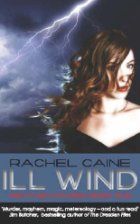 These are the first two books in the Weather Wardens series. I thought it was easiest to review both in one post and share more general thoughts on the series, rather than a specific book review for each. These are the first two books in the Weather Wardens series. I thought it was easiest to review both in one post and share more general thoughts on the series, rather than a specific book review for each.
Joanne Baldwin can control the weather. As one of the Weather Wardens, she’s responsible for maintaining the natural flow of the weather and helping even out major crises. But things aren’t going so well for her, as she’s acquired a Demon Mark and the only person she knows who can help her get rid of it is in hiding. In fact, he’s impossible to find, and Joanne is running out of time. With deceitful Djinn (genies) in her way and secretive friends, Joanne isn’t sure who she can trust to help her get rid of her Demon Mark and return to her job.
Urban fantasy is one of my favorite genres. I have plenty of examples of the genre where the characters are amazing and develop with realistic relationships and death-defying odds and cool magic systems – everything that I look for in a fantasy novel. Unfortunately, these books didn’t deliver on what I wanted, and as a result I think I’ll be leaving this series behind. I’d purchased these books in a 2 for 1 style deal, so I thought I’d keep going, but the second one didn’t really improve on the first.

Primarily, I didn’t connect at all with the main character, Joanne. She’s too focused on fast cars, attractive men, and clothes for me to like her, in perfect honesty. She doesn’t seem all that bright and she doesn’t make the right choices. Or, I should say, the choices I would make in her shoes, nor is she the sort of character that I’d try to understand anyway.
Secondly, maybe I’m not far along enough yet in the series, but there doesn’t seem to be much of a unifying factor. A lot changes in the second book, yes, but then could be completely reversed at the end, which makes me wonder what was the point of reading it at all. The relationships didn’t develop in ways that I believed in, and the characters apart from Joanne felt mostly like cardboard. It’s really an action and emotion novel; you have to get sucked in to follow the ride, and this time I simply wasn’t sucked in at all.
It’s a shame because I really wanted to like this series, and it isn’t as though I minded reading it. I just feel like my standards for this genre have been raised so high by the utterly amazing fantasy that I’ve been reading that these two books weren’t really there. I am afraid I can’t recommend this series.
I purchased these books.
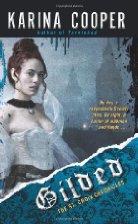 Cherry continues her difficult balancing act between the aristocracy and the lower levels of society in this second installment of the St. Croix Chronicles. After the traumatic events of the last book, she’s determined to find out more about her family and where she actually comes from. At the same time, she is becoming aware how precarious her life is, and worse, how unsteady her behavior makes the lives of those around her. Soon Cherry is forced to make a choice, between keeping the life she’s used to and keeping those she loves safe, if that’s even a possibility … Cherry continues her difficult balancing act between the aristocracy and the lower levels of society in this second installment of the St. Croix Chronicles. After the traumatic events of the last book, she’s determined to find out more about her family and where she actually comes from. At the same time, she is becoming aware how precarious her life is, and worse, how unsteady her behavior makes the lives of those around her. Soon Cherry is forced to make a choice, between keeping the life she’s used to and keeping those she loves safe, if that’s even a possibility …
I liked the first book in this series, Tarnished, but Gilded was magnitudes more involving. As happens quite often in a series like this, the part of the first book that’s devoted to setup can be devoted to plot in the second, and Cooper delivers on the promise of the first one in spades. I actually read them very close together, despite the fact that my reviews are scattered so far apart, and I was really rewarded by doing that. Unfortunately the result means I can’t separate them in my mind as much as I should be able to, except for the end.
This is in part because this book directly follows on from the last one. It has a little bit of a plot arc of its own, centered around a riddle that is posed to Cherry and which she can’t help but try and solve, but not as much as I was expecting. Since this plot arc follows on so well, though, I absolutely didn’t mind; I was quite happy to continue the story where it left off, because it left off in quite an uncertain place, with plenty of plot threads dangling.
As with the last book, what I really like about this world is the difference between literally the upper class in the upper part of London and the lower class down below. It’s impossible to walk from one to the other, you need transportation; it’s an actual separation between the classes. Cherry is dauntingly flitting between these two worlds, which effectively demonstrates to us that (of course) people are people and there are wonderful and terrible ones in both places, but breaking the barrier is the real challenge.
The love stories also progress, and I found my jaw on the floor at the ending – it was the kind of ending I’d expect to find later in a series, not in the second book. I immediately wanted to find out what happens next, and now I’m only sorry that there isn’t a publication date yet for it.
If you like the sound of a steampunk, alternate London urban fantasy, these two books are definitely worth picking up. Highly recommended.
All external book links are affiliate links. I received this book for free for review.
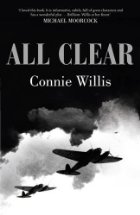 This review will contain spoilers for Blackout. You should always read that first before you read this book or this review! This review will contain spoilers for Blackout. You should always read that first before you read this book or this review!
Mike, Polly, and Eileen have finally found one another in the midst of the London Blitz in 1941, but they’ve discovered, to their dismay, that none of them can get back to their own time. Oxford in 2060 is several lifetimes away and they may need to resign themselves to living in the Blitz forever. They keep trying, however, sending messages to the future and coding things to let their time travelling cohorts find them more easily, and slowly the pieces of how they got lost in the past start to fall together.
These two books – Blackout and All Clear - have received a lot of criticism for being too long and under-edited. I’ve seen plenty of cynical remarks to the effect that two books sell more copies than one. I am going to say that I never really felt that way. They were long books, yes, but perhaps I read through them so quickly that neither dragged for me. After I finished Blackout, I immediately picked up All Clear so I could get right back into the disrupted lives of these three time-travelling characters.
I was glad that, not too long into this book, the plot threads start to go together and everything begins to make more sense. While the first book was about each character’s realization that they are trapped in an incredibly dangerous historical period, the second book is about how they will get themselves out of that and what actually happened to a few of the other characters mentioned in the previous book. They are still very much required to deal with the situation, but everything actually wraps up. There were a couple of characters introduced in the first book without any real background story and their roles were clarified and we did figure out who they all were.
Everything I loved about the first book is still true; the atmosphere remains fantastic throughout and I appreciated that we continued to get a feel of the different parts of the war, too. The main focus is really on London and precisely what happened, and there are some very tense and dramatic scenes as the characters fight to keep themselves and others alive. Willis really can make you feel as though you’re in the midst of each and every struggle with the characters.
There isn’t much else I have to say about this book that I didn’t say about the first, but rest assured that if you are looking for a dramatic read set during World War II and don’t mind or would love a little time travel in your books, this is a duology well worth reading. Highly recommended.
All external book links are affiliate links. I purchased this book.
|
|



Recent Comments