|
|
 George is living out the fairly boring life of a middle-aged divorced “good guy” until one night he hears a strange noise outside his house. He finds a crane, her wing pierced by an arrow; he saves her and she flies away. The next day, a beautiful, somehow old fashioned woman called Kumiko appears outside his print shop, and he falls in love with her almost immediately. George’s adult daughter, Amanda, is mystified and somewhat jealous, living out her own life as a single mother with a small child and feeling as though she’s never quite fit in. In small, significant ways, Kumiko starts to change their lives, but never quite lets them into her own. George is living out the fairly boring life of a middle-aged divorced “good guy” until one night he hears a strange noise outside his house. He finds a crane, her wing pierced by an arrow; he saves her and she flies away. The next day, a beautiful, somehow old fashioned woman called Kumiko appears outside his print shop, and he falls in love with her almost immediately. George’s adult daughter, Amanda, is mystified and somewhat jealous, living out her own life as a single mother with a small child and feeling as though she’s never quite fit in. In small, significant ways, Kumiko starts to change their lives, but never quite lets them into her own.
A re-telling of a Japanese folk tale, The Crane Wife felt to me like an odd mix of beauty and disappointment. In parts of the book, like the actual stories of the tiles, I felt that I could feel the gorgeous writing and meaning I’d found in Patrick Ness’s other works shine through. In most of the book, though, I felt disappointment, as something I’d expected to love fell apart with every page.
Perhaps this book just fell prey to the fact that I really don’t much like stories set in the “real world”. I may be the only person who just didn’t appreciate the fact that George is relieving himself in the middle of the night when he hears the crane on the very first pages of the book. I can, in a way, see how Ness was trying to juxtapose the ordinary with the fantastic, by bringing George right into our world with one of humanity’s most basic needs alongside the crane’s mysterious call and appeal. I can see that, but it’s something that I wasn’t looking for, and so the book hit a wrong note with me immediately.
Plus, the book is insistent on the fact that George is a good, nice guy. He’s one of these nice guys who seems to vaguely feel like the world owes him something for being nice; he has infinite female friends but he’s just too nice for any of them to love him, and his ex-wife actually says this in the course of the book. I don’t like this stereotype; the world doesn’t owe anyone anything and I actually think that there are plenty of women who would love a nice guy (I married one, after all). I also felt that, as the book went on, he actually proved more or less that he wasn’t really that nice a guy.
Much of the book also felt a little bit like it was trying too hard to say something meaningful. Patrick Ness’s other books are incredible and subtle; A Monster Calls affected me so much that I never actually managed to write anything about it because if anything I felt too much. With this book, I honestly just felt distanced from the characters and the story, almost as though I could see how the weaving was meant to affect me without it actually happening.
That’s not to say it’s all bad; I found some beautiful passages within the book, and I almost felt as though the interludes about the woman and the volcano could have worked as a short story on their own. Here’s one that I marked:
Her hand is raised, ready to fall, ready to end this torment, which she will admit, if only to herself, is as bad for her as it has ever been for him. She loves him and it is impossible. She hates him and that is impossible, too. She cannot be with him. She cannot be without him. And both are burningly, simultaneously true in a way that grinds the cliché into dust. (210)
I actually appreciated the message that we need to trust, to believe that those we love will love us back. But I think some of the meaning of the book slipped through the cracks for me.
I wanted to love this book, but it just didn’t happen, and in the end, I feel more disappointed by that than anything else.
I received this book for free for review.
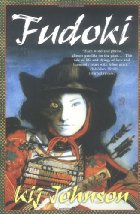 Princess Harueme has lived her life in the shadow of Japanese emperors. In the winter of her years, though, she needs to leave court and head to a convent, where she already knows she will die. Compelled to fill empty notebooks, Harueme begins telling the story of Kagaya-hime, a cat who has lost her family and her fudoki due to a horrible fire in the middle of her city. As the story progresses, Harueme intertwines the tale of her own life with Kagaya-hime’s, and we slowly learn about these two women and their individual struggles. Princess Harueme has lived her life in the shadow of Japanese emperors. In the winter of her years, though, she needs to leave court and head to a convent, where she already knows she will die. Compelled to fill empty notebooks, Harueme begins telling the story of Kagaya-hime, a cat who has lost her family and her fudoki due to a horrible fire in the middle of her city. As the story progresses, Harueme intertwines the tale of her own life with Kagaya-hime’s, and we slowly learn about these two women and their individual struggles.
I never doubt Ana when she recommends a book and this is one I can specifically trace back to her recommendation. I could not resist the idea of this cat-turned-woman story. Even so, as with so many books, it sat on my wishlist until a friend bought it for me, and then I finally read it – and, of course, I loved it. It immediately drew me in with the tale of a tortoiseshell cat who loses her entire family and just barely survives the fire; it’s sad, but poignantly written, and it felt just pitch-perfect. The book remains just that perfectly and magnificently written.
This story of intertwined women shines so brightly and has so many things to say about life that I’m not even sure I can review it properly. It’s one of those books that illuminates things that I hadn’t necessarily thought about, but in a way that stuck me as perfect.
Perhaps some quotes can illustrate this better than I can:
What man, what lost love or deceased kinsman is worth death? The space in my life that my half-brother once filled is now an aching icy pain, like the hole left after a tooth is pulled, and I am dying in weeks or months – and yet I still fight for life, as every mouse does, until the final beak-blow. The grace in tragedy is not to succumb, but to fight on. (87-88)
It’s such a beautiful book. I loved the format with the story of the two women, I loved Kagaya-hime’s cat-like sensibilities, I loved Harueme’s thoughtful reflections on her life gone by. It’s a book to make me wish I was more articulate so I could explain better just why it appealed to me. I haven’t read The Fox Woman which is Johnson’s first book, but I wish that I had, as I’ve read that the books are connected in small ways. In a way, though, I’m glad, because it’s an excuse to read this book again.
Another quote:
Domei once told me that he missed war.
“How can you?” I asked, shocked.
He was drunk and more candid than usual: he slurred as he spoke. ” I have never had such good friends.”
“You are surrounded by people who love you,” I said, “and no one is dying here.” How could war be better than this? Than me?
“We are all dying,” he said. “We just forget that when nothing is trying to kill us.” (233)
Very highly recommended.
 Seraphina has spent much of her life refusing friendships and hiding herself from those who might get close to her. Why? Because she is half dragon, would be considered an abomination by almost everyone she knows, and cherishes her relative freedom from prejudice and prosecution. The love between her parents was forbidden and she has already overstepped her bounds slightly by taking a job in the royal court, helping with the orchestra and giving the Princess Grisselda music lessons. The peace between dragons and humans is an uneasy one, however, particularly when dragons can take human form, indistinguishable from real humans if they fail to wear their bells. Both dragons and humans are wary, and it would take just one powerful rebel to tip the balance. Seraphina has spent much of her life refusing friendships and hiding herself from those who might get close to her. Why? Because she is half dragon, would be considered an abomination by almost everyone she knows, and cherishes her relative freedom from prejudice and prosecution. The love between her parents was forbidden and she has already overstepped her bounds slightly by taking a job in the royal court, helping with the orchestra and giving the Princess Grisselda music lessons. The peace between dragons and humans is an uneasy one, however, particularly when dragons can take human form, indistinguishable from real humans if they fail to wear their bells. Both dragons and humans are wary, and it would take just one powerful rebel to tip the balance.
Seraphina is a book that completely surprised me. I don’t know why – I bought it because I’d seen many praising reviews of it around the blogosphere, so I knew, objectively, that I might like it. But subjectively, it didn’t actually appeal to me that much. I didn’t feel like reading a book about dragons, the cover didn’t broadcast to me that I would like it (although why I’m not sure – on a closer look it’s actually lovely), and YA is not my favorite genre. I bought it when it was on the Kindle Daily Deal, as something that I knew I should try, but had no particular plan to read it. And then I was on the train on Friday, I’d finished the last book I was reading (Widow’s Web by Jennifer Estep), which had ended on a slightly low note, and I just had no idea which book I wanted to read next. For whatever reason, Seraphina called to me then, so I opened it.
It wasn’t even love at first few pages. In fact, I found it difficult to get into, and if I wasn’t sitting on train with nothing else appealing to me much, I might have wandered over to my bookshelves and chosen something else. But I stuck with it, because I had twenty minutes to fill. And then I fell in love with it, and found myself absolutely glued to the Kindle until I finished. I loved it even more because it blind-sided me and I expected not to like it; instead I found an absolute gem. The book has a fantastic, multi-layered world, deep characters, and a plot that races along and managed to surprise me at the end.
I simply adored Seraphina. I loved that the book took prejudice head-on and showed that this tough, brave, sensitive, clever, gifted girl is someone that most of the population around her would hate if they knew her true nature. They adore her, but how easily that could change, and how worried she is despite that affection – this is a worry that is justified but this book is a perfect example of how well fantasy can teach us about our world, too. I even loved how Lucian Kiggs, another significant character in the book, shares some stigma with Seraphina because he’s a bastard, but in a totally different way. We could also talk about how much I loved the romance and how utterly perfect it was, but that really just capped off a book that was already spectacular.
This is the book I wish I’d read instead of all of those disappointing YA fantasy books I did read. Highly, highly recommended.
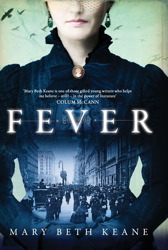 Mary Mallon is an Irish immigrant simply doing her best to get by in a difficult world. At the turn of the twentieth century, few jobs are open to older women, but Mary has found her calling as a cook. By the time she hits her fifth decade, Mary has cooked for some of Manhattan’s most prominent families. But sickness follows her everywhere she goes, though she barely realizes it; after cooking for a few weeks, the family is inevitably hit by an illness that kills one or more of them. Mary never puts together the pieces, but others do, and soon she’s accused of spreading typhoid around New York and killing two dozen people. Mary Mallon is an Irish immigrant simply doing her best to get by in a difficult world. At the turn of the twentieth century, few jobs are open to older women, but Mary has found her calling as a cook. By the time she hits her fifth decade, Mary has cooked for some of Manhattan’s most prominent families. But sickness follows her everywhere she goes, though she barely realizes it; after cooking for a few weeks, the family is inevitably hit by an illness that kills one or more of them. Mary never puts together the pieces, but others do, and soon she’s accused of spreading typhoid around New York and killing two dozen people.
Like many people, I’d heard of “Typhoid Mary” before; Mary Mallon was the case which helped doctors realize that seemingly healthy people could be carriers of illnesses. Imprisoned for a large chunk of her life to prevent her from spreading typhoid, Mary’s case spawned the discovery of numerous other healthy carriers and spurred us towards hygiene controls that prevent diseases spreading in quite the same way. But I’d never really thought about Mary as a person before, or what it must have felt like to realize that you’d been spreading illness when you really just wanted to make a living and cooking delicious food.
That’s the dilemma that faces Keane’s fictional version of Mary. While she’s convinced – at first – that she could never be the cause of the harm that has befallen these families, that little niggling doubt enters her mind. But that doubt isn’t enough for her to give up her livelihood, and that’s what Mary Mallon ends up imprisoned when others with her condition are allowed to go free, just not to spread their illnesses. What Keane does is give us a woman who is surprisingly convincing in her decisions, even when they’re bad. We can see how she fell into getting in trouble, how the doubts preyed on her mind but she refused to believe them, and even why she kept on working and making people sick.
When I first picked up this book, I was a little bit perplexed; very shortly after the beginning of the book, Mary is imprisoned and caught for her “crimes”, and goes fighting all the way. It seemed as though there was no real lead-up and no background, but what actually happens is that the background comes later. We understand her past in the context of her future, which was a great way to actually structure the book for those who might not know who “Typhoid Mary” was. It gives us context and only later do we see how she actually became a cook and fought for that job, understanding the background of the story once we get an idea of where it’s going. Towards the end of the book, chronological events fall back into order, and thus we finish it with a full sense of who Mary is.
I really enjoyed this book; it put a catch phrase and person on the fringes of my knowledge into full perspective and delivered a great story at the same time. I’d definitely recommend Fever to those interested in historical fiction.
All external book links are affiliate links. I received this book for free for review.
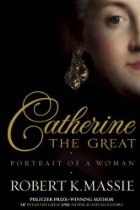 Catherine the Great is an iconic female monarch, known even to those who have never glanced at Russian history. Her reign ushered in something of a golden age for much of Russia, symbolized by cultural and physical expansion, the effects of which were felt for decades after her reign had concluded. In this biography of Catherine, Robert K. Massie covers the entirety of her life, from her origins as a relatively modest German daughter of a prince, through her disastrous marriage to the heir to the Russian throne, until her death as one of Russia’s greatest rulers. Catherine the Great is an iconic female monarch, known even to those who have never glanced at Russian history. Her reign ushered in something of a golden age for much of Russia, symbolized by cultural and physical expansion, the effects of which were felt for decades after her reign had concluded. In this biography of Catherine, Robert K. Massie covers the entirety of her life, from her origins as a relatively modest German daughter of a prince, through her disastrous marriage to the heir to the Russian throne, until her death as one of Russia’s greatest rulers.
Massie’s biography looks intimidating, at almost 600 pages long in hardcover in my edition, but his narrative of the flow of Catherine’s life is incredibly smooth and easy to read. I actually managed to read a lot in one sitting and in parts it could almost read like fiction, which makes this a very accessible non-fiction read. I can imagine most readers enjoying this if they have an interest in imperial Russia and Catherine’s long reign. Massie also makes Catherine easy to relate to; he draws from her letters and her own memoirs to try and build her character and explore how she might have been feeling through her life.
I didn’t like that there seemed to be little connection to Massie’s sources aside from the originals, though, and the notes aren’t marked in the text, which I didn’t like either. A lot of the start of the book is based on Catherine’s memoirs, which means that we have to take her word for the way that things happened, and I’d have liked some sort of evidence of external sources corroborating what she says. In reality Massie consulted a lot of sources, but it’s really hard to see what’s coming from where. It made it difficult for me at least to trust what he was saying.
That said, though, I liked how comprehensive this book was and how well it was structured. It roughly follows Catherine’s life chronologically as the book is separated into sections, but each chapter within those sections tends to deal with just one subject. This made it very easy to follow what was happening in Catherine’s life at any given time, but also allowed the author to delve deeper into each subject. As I said earlier, it’s very easy to feel sympathy for Catherine, and the frequent quoting from her memoirs and letters helps us as readers feel as though we are actually learning about the real woman. Because Massie starts at the beginning of her life, we can understand some of the motivations she’s had for later actions. In addition, Massie never passes judgement on her for any of her actions, which makes him a valuable biographer for a woman who often gains undeserved negative press for the number of “favorites” she had (when male monarchs did the same without any note).
He follows the shifts in her political focus easily, too, and traces how the relative enlightened idealism of her youth is crushed by the realities of ruling a country, an aspect of the book that I found particularly fascinating. But again, he doesn’t pass judgement on her; he doesn’t judge her for her inability to free Russia’s serfs, for her eventual censoring of the press after the French Revolution, or for any of her other political actions which don’t particularly match up with current beliefs. Catherine’s actions were not always ones that we would agree with, but Massie leaves it to readers to decide, without attempting to influence them. I found this quite valuable.
A riveting biography, Catherine the Great is a complete picture of the last, and greatest, female monarch of Russia. For anyone who enjoys history, this book would be an exceptional choice.
All external links are affiliate links. I received this book for free for review.
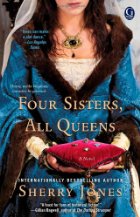 The count and countess of Provence had four daughters. A normal medieval family might have been disappointed that they didn’t have any sons, but not this one, because not only can these girls inherit, they can also be manuevered into place to become queens of countries across Europe. Marguerite is first, sent away to marry the French king, where she finds herself dominated by her mother-in-law and unable to exercise her own intellect. Then Eleanore is escorted to cold and rainy England to marry the “old” English king Henry III. Beatrice and Sanchia don’t gain their status as queen until well after marriage, but each have a husband chosen to benefit the family. Throughout their lives, the sisters work together and sometimes against one another, whether or not they choose to obey the family motto, “Family comes first”. The count and countess of Provence had four daughters. A normal medieval family might have been disappointed that they didn’t have any sons, but not this one, because not only can these girls inherit, they can also be manuevered into place to become queens of countries across Europe. Marguerite is first, sent away to marry the French king, where she finds herself dominated by her mother-in-law and unable to exercise her own intellect. Then Eleanore is escorted to cold and rainy England to marry the “old” English king Henry III. Beatrice and Sanchia don’t gain their status as queen until well after marriage, but each have a husband chosen to benefit the family. Throughout their lives, the sisters work together and sometimes against one another, whether or not they choose to obey the family motto, “Family comes first”.
For me, this book got off to an excellent start. I liked the relationship between the sisters as they were young, and the different ways that each sister adapts to her new life as a married woman. Because of the difference in ages, the marriages are staggered, so for a good portion of the first half of the book events are new and fresh. Each sister grows up and adapts to her marriage and husband differently, so that we get a great feel for each of their personalities and their struggles. It’s also nice to read something which focuses so clearly on the relationships between powerful siblings in a historical context and how ambition can put a huge wrench in the best of intentions.
Unfortunately, after the sisters were all married and settled, as often happens, the book started to lag. I can never really blame the author in these situations because, quite frankly, most women’s lives in this period, even those of queens, had the same cycle of pregnancy and birth which (for me at least) just doesn’t make for that exciting a story. In general, a queen gets pregnant, has a baby, and then hands the baby off to someone else. Occasionally one of them is separated from and then longs for her children, and Marguerite in particular has a dramatic time going off on Crusade for years and saving her incompetent husband, but I think the whole book lost a little bit and I struggled to get back to it. Plus, because there are four sisters, there are a number of scenes where the sisters get together and fight about various things, all of them being stubborn and none giving any ground. Beatrice is the main culprit here, as she spends most of the book longing for her sisters’ love and trying to win it and then coming up against a wall. It felt repetitive, even though there were still things going on in the wider plot.
I also think the book suffered because Eleanore and Marguerite were the more interesting queens – Sanchia and Beatrice married younger brothers who took crowns elsewhere and it is fairly clear that they hadn’t done much which was significant or left a huge historical record. The author’s hands are tied in these cases, of course.
Perhaps my expectations were too high, but Four Sisters, All Queens left me a bit cold after a promising start. Still a good prospect for someone who is looking for a book about powerful women and the relationships between them in medieval Europe.
I received this book for free for review.
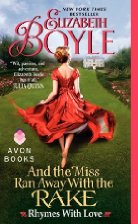 The Dale and the Seldon families are enemies, and no members of either family want anything to do with each other. Miss Daphne Dale, slightly on the shelf, unfortunately is required to attend her friend Tabitha’s wedding to a dread Seldon. Why? Because she’s fallen in love with a pen pal after she answered an ad in the papers, and the wedding is the one place that they can meet. Little does she know that her suitor is Henry Seldon, one of the family’s eligible bachelors, who opened her letter and fell for her entirely by accident, and thus one of her sworn enemies. How long can Daphne and Henry try to avoid facing the reality that they’ve fallen in love with each other despite family differences? The Dale and the Seldon families are enemies, and no members of either family want anything to do with each other. Miss Daphne Dale, slightly on the shelf, unfortunately is required to attend her friend Tabitha’s wedding to a dread Seldon. Why? Because she’s fallen in love with a pen pal after she answered an ad in the papers, and the wedding is the one place that they can meet. Little does she know that her suitor is Henry Seldon, one of the family’s eligible bachelors, who opened her letter and fell for her entirely by accident, and thus one of her sworn enemies. How long can Daphne and Henry try to avoid facing the reality that they’ve fallen in love with each other despite family differences?
Elizabeth Boyle is another new-to-me romance author, albeit one I’ve heard a bit about in the past. I will be honest and confess that when I chose to read this book, it was mainly because of the really cute cover and the title; lots of romance novels are about misses and rakes but I wanted to find out how this one actively ran away. (You can imagine my disappointment when she didn’t actually run away with him).
I thought huge portions of this book were very cute, and I loved the fact that the author inserted excerpts from the couple’s love letters to each other throughout the narrative. That was an incredibly sweet touch and it gave us some insight into how they’d first fallen in love, before they realized that they were falling for the enemy. I adored their first meeting in particular, before they knew who the other was; they are both absolutely certain that they’re found The One until their family and friends tell them the truth.
The only note that I’d make as a downside was the fact that, even though the reader and both of them actually knew who the other was, it takes these two absolutely ages to actually admit it. They both kind of hope that their mysterious lover is still someone else, which gets frustrating after a while, until it becomes absolutely ridiculously obvious. I would have almost preferred that the author let them reconcile sooner and then throw some other obstacle in the way of their happiness. With a family feud, it certainly would have been possible, and it wouldn’t have been so easy to get frustrated with these characters about denying reality for most of the book.
While I wouldn’t yet put Elizabeth Boyle on my list of immediate romance authors to buy, I’ll certainly be keeping my eyes open for more of her books in the future. And the Miss Ran Away With the Rake is a lovely little romance read, just be aware that it’s not completely flawless.
All external book links are affiliate links. I received this book for free for review.
 Olivia and Clayton are young lovers, completely wrapped up in each other, until Clayton discovers that Olivia’s father is embezzling money from the government through his paper mill. Olivia refuses to believe that her father could ever do such a thing, and so asks him about it, sure that there is a perfectly innocent explanation. Instead, her lover is thrown into prison, and her father tells her that he’s been hanged. Olivia and Clayton are young lovers, completely wrapped up in each other, until Clayton discovers that Olivia’s father is embezzling money from the government through his paper mill. Olivia refuses to believe that her father could ever do such a thing, and so asks him about it, sure that there is a perfectly innocent explanation. Instead, her lover is thrown into prison, and her father tells her that he’s been hanged.
Ten years later, Clayton walks back into Olivia’s life intent on destroying the mill which ruined his life, only to get her hauled off to Russia by accident. Convinced that she’s a spy, since that’s what Clayton’s been doing since he vanished, a group of Russian gangsters kidnap Olivia and attempt to coerce her into breaking a code for them. Clayton follows to rescue her, but doesn’t expect to fall for her charms a second time …
This was a fun read. I was mainly drawn to it because it takes place in Russia, which seemed like it would be a refreshing change from the usual Regency-style romances set in England. I’ve read and loved plenty of those but I’m definitely open to more locations and different storylines. Mostly, the setting didn’t impact hugely on the book. It’s colder and the bad guys are after the tsar instead of a king or a prince, but otherwise, the romance followed along reasonably traditional lines.
Not that I minded, because the romance itself was done well. I liked that Randol flashed back to their youth but backed it up with romance that was solidly in the present, too. Their quest to stop the assassination plot brings them together while their fragile trust is replenished. It also gives them numerous opportunities to prove themselves to one another, as events around them make life challenging. This is a really good background for a romance read, as it makes the book about a lot more than just how this particular couple can fall in love.
I’m actually quite sorry that I missed the first book in this series before reading this one, too. While I didn’t need the background of Clayton and his two fellow spies to understand what was going on, or to appreciate their relationship, I’m definitely one of those people who prefers to read a series in order, and now I think I’d probably have liked the first book.
A sweet romance with a decent spy plot that adds an extra element to the book, Sins of a Ruthless Rogue is a good romance read and I’d certainly recommend it to other romance readers.
All external book links are affiliate links. I received this book for free for review.
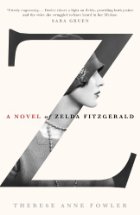 Zelda Sayre is a vivid eighteen-year-old from Montgomery, Alabama, always the life of the party, when she meets F. Scott Fitzgerald. The youngest in her family, Zelda loves being the center of attention, and Scott is happy to put her at the focal point of his universe – for a time. As an aspiring author, but simultaneously a man who enjoys having fun, Scott is torn between numerous passions in a way that isn’t clear to Zelda when they meet. When they marry, they’re both certain that their lives are going to be full of success and love, with no perception of just what might happen when two vivid personalities clash. Zelda Sayre is a vivid eighteen-year-old from Montgomery, Alabama, always the life of the party, when she meets F. Scott Fitzgerald. The youngest in her family, Zelda loves being the center of attention, and Scott is happy to put her at the focal point of his universe – for a time. As an aspiring author, but simultaneously a man who enjoys having fun, Scott is torn between numerous passions in a way that isn’t clear to Zelda when they meet. When they marry, they’re both certain that their lives are going to be full of success and love, with no perception of just what might happen when two vivid personalities clash.
I knew very little about Zelda Fitzgerald before I started reading this book. I had heard before that she had held back Scott’s career and that she’d been in a mental institution; I’d also read somewhere that she and Scott loved each other despite the difficulties. This book gave me a lot of insight, I felt, into the kind of woman Zelda might have been, and went a long way towards explaining how two people can love each other an absurd amount and yet hate each other at the exact same time.
The novel starts with Zelda as a young, impressionable teenager who meets Scott and completely falls for him, a Northerner with ambitions completely different from any that the boys she knows have. They quickly marry and the book spans the rest of their lives up until Scott’s death, so we get an insight as to how Zelda may have felt about all of his achievements, including his lack of them at times.
What I also really appreciated was that the novel gets across how Zelda might have felt as the wife of a man who was famous. She suffers hugely from a lack of her own identity, which made perfect sense to me; how would an ambitious, talented girl feel when she’s constantly shuffled to the side? I can’t imagine now, for myself, living in a time where my only duty was to keep house for my husband, simply because I’m not the sort of person who would be happy pouring all of my effort into someone else’s life without any real recognition of my own. This is especially true for Zelda, who watches as her husband spends the hours he’s meant to be working with a bottle in his hand, and who feels that she’s lost her own identity to support his. Her struggles were so clearly understandable to me and I could feel their mutual frustration pouring out of the pages. What’s heartbreaking about this book is that it’s also obvious that they do love each other, but it’s a destructive kind of love that is powerful but takes something huge out of both of them.
I also hadn’t realized that Zelda was a creative force in her own right, painting, writing, and dancing in a way that might have brought her recognition on her own. Perhaps not if she’d never met Scott, but once she has a foothold in the creative world, she keeps on going. She had her own art exhibitions and she was invited to dance professionally; she even had her own published novel and short stories. I had never had any idea, and now I’m actually very curious to read the fictional accounts, on both sides, of their marriage.
A wonderful book that brought a historical figure to life for me, Z is a spellbinding read. Highly recommended.
All external book links are affiliate links. I received this book for free for review.
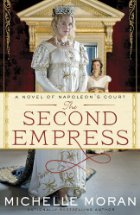 If Princess Maria Lucia of Austria doesn’t marry Napoleon Bonaparte, he’ll topple her father from his throne and ruin her family’s future. It’s not even a choice, in her mind, and so she leaves everything she loves behind to become the next Empress of France, in a journey startlingly reminiscent of Marie Antoinette, the beheaded Austrian queen of France. In Napoleon’s court, she meets his sister, Pauline, whose mood swings and affairs are legendary, and her chamberlain Paul, a Haitian who longs to return to his native land but can’t stop loving Pauline. Together they endure one of France’s most turbulent periods. If Princess Maria Lucia of Austria doesn’t marry Napoleon Bonaparte, he’ll topple her father from his throne and ruin her family’s future. It’s not even a choice, in her mind, and so she leaves everything she loves behind to become the next Empress of France, in a journey startlingly reminiscent of Marie Antoinette, the beheaded Austrian queen of France. In Napoleon’s court, she meets his sister, Pauline, whose mood swings and affairs are legendary, and her chamberlain Paul, a Haitian who longs to return to his native land but can’t stop loving Pauline. Together they endure one of France’s most turbulent periods.
Michelle Moran has penned some of my favorite historical novels and I love the way she gives a focus to women in history who haven’t really been spotlighted in her last three. Marie-Louise has always existed in the shadow of Napoleon’s great love story with Josephine, his first wife and empress, and it’s lovely that Moran chose to give her a focus with this book. Napoleon’s sister Pauline is better known, but still not usually in the limelight, and Paul is a completely different focus altogether.
Unfortunately, while this premise was good, I actually preferred Marie-Louise to both Paul and Pauline. I felt much more for her as she left her home and her actual lover to marry this man that extorted money from her country and threatened her father. I should have felt more for both Paul and Pauline, but the former didn’t really appeal to me and the latter just seemed out of touch with reality. I kept hoping to get back to Marie-Louise’s story and I rushed through the other chapters so that I could spend more time with her. I can understand how Pauline in particular might appeal to another reader because she really is a character, and I know a lot of the elements here were taken from fact, but I couldn’t really feel for her at all.
Another reason I didn’t really love this one as much as some of Moran’s other books was because I found out that Marie-Louise only met Adam, the lover she leaves in the book when she has to go marry Napoleon, much later on when she’s already a married woman. I felt disappointed by this; it’s such a huge part of the plot in the beginning, when we discover Marie-Louise isn’t an innocent and that everyone knows she loves someone else, that I felt let down to discover it wasn’t really close to the truth. I would have preferred a narrative constructed more around the historical reality, and I think her departure already had the potential to be quite emotional. It isn’t a minor detail, either, like moving a date around, and it just made me feel that the way the historical gaps had been filled in wasn’t believable any more. It was a real shame and I will confess that it left me disappointed. Am I being unfair here? Maybe a little – but I always prefer the gaps in the historical record to be filled in, and an emotional reality imagined, and discovering that the emotional reality simply couldn’t have happened does have an impact on my feelings about the book.
While I still enjoyed actually reading The Second Empress, I’m afraid that I’d recommend one of Moran’s other books first, and to accept that this read might land much more on the fiction side of historical fiction.
All external book links are affiliate links. I received this book for free for review.
|
|



Recent Comments