|
|
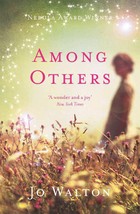 In recent years, since I’ve been keeping track, there have been two books that have catapulted themselves into becoming my instant favorite of the year. The first was The Remains of the Day by Kazuo Ishiguro. The second was The Guernsey Literary and Potato Peel Pie Society by Mary Ann Barrows and Annie Shaffer. The first has remained among my favorites ever, a book that I have forced on a number of people; for some reason my enthusiasm for the second hasn’t quite stuck nearly so much although I did love that book. Among Others by Jo Walton is now the third, a book that spoke to me in so many different ways that I couldn’t help but love it nearly from the first word. In recent years, since I’ve been keeping track, there have been two books that have catapulted themselves into becoming my instant favorite of the year. The first was The Remains of the Day by Kazuo Ishiguro. The second was The Guernsey Literary and Potato Peel Pie Society by Mary Ann Barrows and Annie Shaffer. The first has remained among my favorites ever, a book that I have forced on a number of people; for some reason my enthusiasm for the second hasn’t quite stuck nearly so much although I did love that book. Among Others by Jo Walton is now the third, a book that spoke to me in so many different ways that I couldn’t help but love it nearly from the first word.
Fourteen-year-old Morwenna’s life has been irrevocably changed by magic; from an early age she understood the consequences of wishing for something to be, and now her mother’s magic has cost her her twin sister and the full use of her leg. Mori, as she prefers to be known, runs away from her mother and ends up with her father, who had also run away from her mother, after a stint in a home for children. Sent to boarding school and away from everything and everyone she loves, except for her beloved science fiction, Mori struggles to find a life for herself and escape permanently from her mother’s influence.
There are so many ways in which I connected to this book. For one, very obvious thing, I lost my not-quite-two-years-younger brother when I was a teenager, and while it’s not the same as losing your twin I’m sure, losing a sibling that you’ve been so close to and grown up with changes your life in significant and very similar ways. As Mori notes, “The thing with dying, well, with death really, is that there’s a difference between being someone who knows they can really die at any time and someone who doesn’t.” This is something you learn when you lose your sibling at a young age, the person who you expected to be with you throughout your whole life as they had always been in memory, and the difference between life before and life after simply isn’t the same. Mori is younger than I was, but I felt like I understood her, immediately.
But it’s not just that. It’s the way that Mori grows as the story progresses over the year, the way that she discovers who she is in the absence of her surroundings, what she loves and who she can become, if only she can make that happen. Her journey is nothing less than inspiring, and though it might seem quiet on the outside, if you actually read a summarized plot, it has that ability that books I love best do to show you what happens when it looks, on the outside, like very little is happening at all.
That’s not to mention the fact that Mori loves books and spends her time surrounded by them. She reads mainly science fiction, but she has special places in her heart for fantasy and for historical fiction, and loves to learn the context about the stories she’s reading. I think this book would be even richer for someone who was more familiar with popular science fiction from the 70s, as Mori doesn’t hide her opinions and talks directly about the books she’s reading. For those I did recognize, her quotes and references are intelligent and certainly add an extra layer to the book. It would be nearly impossible, in my mind, for someone who also loves books to not relate to her, and not appreciate the way they save her from difficult situations over and over again.
Anyway, I hope I am getting across my sheer love of this book to you. After I finished, I simply sat for a while and thought of it, and actually couldn’t bring myself to start another book. I didn’t want to let Mori and her world go, not yet. Certainly not before I’d written this review, one of those rare times I’ve finished a book and immediately felt the urge to tell you all about it and persuade you to read it yourself.
So, clearly if you’ve been reading this, Among Others has my whole-hearted, enthusiastic recommendation. Please read this book, and then come back and talk to me about it. It’s won multiple awards, so it isn’t just me that fell in love with it, plenty of others have too.
All external book links are affiliate links. I purchased this book (one of the best pounds I have ever spent).
 A young, dark-skinned girl awakens in the woods, unsure of who or what she is, burned across the huge majority of her skin, with massive head injuries. Shori slowly begins to understand the world around her and recall knowledge, but her past is lost to her. Though she has the appearance of a ten or eleven-year-old girl, Shori is actually fifty-three years old, a vampire, and needs blood to survive. Genetically modified to survive in the sunlight and stay awake during the day, Shori is anathema to some of her kind, and her very nature makes her a target and a threat to all she holds dear. A young, dark-skinned girl awakens in the woods, unsure of who or what she is, burned across the huge majority of her skin, with massive head injuries. Shori slowly begins to understand the world around her and recall knowledge, but her past is lost to her. Though she has the appearance of a ten or eleven-year-old girl, Shori is actually fifty-three years old, a vampire, and needs blood to survive. Genetically modified to survive in the sunlight and stay awake during the day, Shori is anathema to some of her kind, and her very nature makes her a target and a threat to all she holds dear.
When Aarti proposed this week’s A More Diverse Universe blog tour, I knew immediately that I wanted to read something by Octavia Butler. I have for some time now, and this gave me the perfect excuse to finally get one of her books – the bookstore near me never seem to have them in stock – and actually find out what her writing style was like. I was rewarded with a vampire book that genuinely made me think about racism, with a few telling moments, but which also provided a story that I found compelling and interesting.
The main thread of the story focuses on the fact that someone is trying to kill Shori and the quest to find out who it is and bring them to justice. She doesn’t necessarily realize this at first, as she’s forgotten everything that happened to her. But slowly it becomes obvious that she is the target. Whether it’s because she has dark skin amidst pale, blond vampires, because she’s human, or because she’s genetically engineered, Shori must face up front people’s bigotry and dislike of her based on factors that she can’t control and that have nothing to do with who she is.
The fact that Shori has lost her memory gives the story a perfect way to impart this information to us, and there was indeed a considerable amount of detail on the Ina societies and how they sustain themselves. Despite the fact that Shori’s life is under threat, this isn’t really a book with a lot of action; some of the final scenes take place in a courtroom of sorts, rather than with violence. I found all of the detail really interesting and the way the society was fleshed out held my interest throughout. It was a short book, so I didn’t feel it was moving slowly at all in this respect.
The one aspect that made me vaguely uncomfortable was Shori’s age appearance. Picturing her as a ten year old sleeping with a twenty-five year old man really wasn’t a pleasant mental image. It’s easy to understand that their lure is incredibly strong, but it still put me off when scenes of that nature occurred.
The real attraction of the book, anyway, is how Butler questions the racism of the people around Shori. It could be any number of reasons why, and she experiences several of them to a certain degree. For example, on questioning a human who has just tried to kill her, Shori is presented with the strange dichotomy of a racist who can love a black person that he is related to, but is still racist against all black people. After he calls her filthy names, he continues saying:
I didn’t mean to call you … what I called you. My sister, she married a Dominican guy. Her kids are darker than you, and they’re my blood, too. I would kick the crap out of anyone who called them what I called you.
 And indeed Shori faces this problem several times – a person can know and love someone who appears different from him or herself, but remain racist against others just like them. And indeed Shori faces this problem several times – a person can know and love someone who appears different from him or herself, but remain racist against others just like them.
All in all, Fledgling is a very thoughtful book, vastly different from most out there featuring vampires, and definitely recommended.
For more blogs on the tour and to view the great range of reviews already, visit the tour schedule. Huge thanks to Aarti for organizing this fantastic week!
 Thomas of Hookton and his men, familiar to readers of Bernard Cornwell after the events of his Grail Quest series, are still in the middle of France, seeking to help Edward III and his son Edward, the Prince of Wales, called the Black Prince but not in his own time, to win the Hundred Years’ War. Focusing on the Battle of Poitiers, a true historic battle fought by the Black Prince, Cornwell takes Thomas around the lead-up to the battle where he must seek another holy relic, protect his wife and his men, and face down corruption from the Church’s most inner circles. Thomas of Hookton and his men, familiar to readers of Bernard Cornwell after the events of his Grail Quest series, are still in the middle of France, seeking to help Edward III and his son Edward, the Prince of Wales, called the Black Prince but not in his own time, to win the Hundred Years’ War. Focusing on the Battle of Poitiers, a true historic battle fought by the Black Prince, Cornwell takes Thomas around the lead-up to the battle where he must seek another holy relic, protect his wife and his men, and face down corruption from the Church’s most inner circles.
I love reading Bernard Cornwell’s medieval historical fiction; when I’m reading one of his books, I feel I’m actually getting fairly close to the way things would have been in a battle, at least as close as fiction can bring me at present. Cornwell does sometimes like to introduce slight supernatural elements which do serve to remind me that actually, I’m not in the *real* 1356. In context, though, knowing that people of this era believed that they had holy relics and deeply in the power of their religion, this works surprisingly well, and doesn’t ruin the feel of the book for me at all. In this book, Thomas is after a sword; in his previous trilogy, he sought the Holy Grail.
Throughout 1356, the characters do move around the countryside, and we learn about many of the things that made the Black Prince and the Hundred Years’ War relatively famous. The chevauchées throughout the countryside, weakening the French significantly, the practice of tournaments, and the strength of the English archers and the significant advantage they represented all feature majorly in the book. Chivalry is demonstrated most eloquently through a particular character, Roland, who believes himself to be a knight without reproach, convinced by romances that he was meant to always fight honorably and in a certain way. He learns, over the course of the book, that actually, it’s about winning, not really so much about remaining honorable at this stage in history. Chivalry is a fascinating subject and one that I spent some time studying, and I loved that Cornwell featured a small tournament on the outskirts of the battle, as did genuinely happen, as part of Roland’s learning process.
As usual, Cornwell’s battle scenes are gripping and his writing kept me very interested as I progressed through the book. I really like his down-to-earth style. I generally don’t feel too attached to his characters, but I felt like this set of them was very well-rounded, as though they could have been real people, helped by the fact that I’ve read books featuring them before. Even the new additions stand out in my memory, though, and I liked how they faced individual challenges, yet all had a part to play in the massive battle that came at the end.
Overall, another excellent addition to Cornwell’s impressive collection of historical fiction works. You needn’t read the Grail Quest series to enjoy this book, although I do think it adds to it – all you need is a keen interest in history. Recommended.
All external book links are affiliate links. I received this book for free for review from the publisher.
 In this second volume of Ben Kane’s Spartacus duology (read my review of the first), Spartacus has already been acknowledged as a serious threat to the Roman people. While he and his pregnant wife Ariadne are keen to return his army to Thrace and re-take his homeland, his army, made up of slaves from across the empire, is more interested in plundering Rome’s heartland and establishing a base where the land is rich. Spartacus has to choose whether to retake his homeland, but lose his army in the process, or stay in Rome and attempt to subvert the incredible power of the Roman state. In this second volume of Ben Kane’s Spartacus duology (read my review of the first), Spartacus has already been acknowledged as a serious threat to the Roman people. While he and his pregnant wife Ariadne are keen to return his army to Thrace and re-take his homeland, his army, made up of slaves from across the empire, is more interested in plundering Rome’s heartland and establishing a base where the land is rich. Spartacus has to choose whether to retake his homeland, but lose his army in the process, or stay in Rome and attempt to subvert the incredible power of the Roman state.
As with Spartacus: The Gladiator, Ben Kane delivers an action-paced historical fiction novel with Spartacus: Rebellion. Their release relatively close together means that we can seamlessly pick up the story from one to the other, and that’s really the way these books are meant to be read. They are two halves of one story that really belongs in one, and neither book will really stand alone particularly well without the other, especially not this one. It picks up right after the events of the first book and all of the tensions between the characters already exist and intensify over the course of the book.
This might come as a surprise to you, but I actually didn’t know what happened to Spartacus at the end of the book. I won’t spoil it, but this made the book far more gripping than normal historical fiction fare is. Spartacus and all of the people around him really do have to fight for their lives, as the Roman state out in force is determined to kill them and eradicate any threat that they represent to the orderly Roman way of life, slaves and all. It made for a surprisingly exciting book, and I really enjoyed feeling like I had no idea what was going to happen next.
As I’ve mentioned for the previous book in this set of two, Ben Kane writes historical fiction in what I tend to call the “gritty” way. There is no court here, no fancy trappings or much political intrigue; there is battle, and blood, and death, and deception. It’s a refreshing change when you read quite a bit of historical fiction focused on royalty and the people at the top, and though Spartacus is certainly a leader of his men, he doesn’t get puffed up with ego and remains very much an inspiring character, for both the men in the book and for the reader.
This duology is an excellent choice for anyone who prefers the “grittier” historical fiction with all of the violence that entails, or those who are interested in fiction set during the Roman Republic. Definitely recommended.
All external book links are affiliate links. I received this book for free for review.
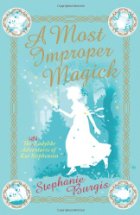 Twelve-year-old Kat Stephenson is looking for adventure. Fortunately (or unfortunately, as the case may be) she doesn’t have to look far, as she’s just discovered that she and her two older sisters may have inherited their mother’s talent for magic. While Kat is clearly a guardian, as she discovers very early on in the book, her sister Angeline has inherited her mother’s witch magic. Combined, the sisters represent a threat and a lure to many magic users in their version of Regency England. When Kat’s eldest sister Elissa is determined to sacrifice herself to ensure her family’s happiness, Kat decides that drastic action is required. Twelve-year-old Kat Stephenson is looking for adventure. Fortunately (or unfortunately, as the case may be) she doesn’t have to look far, as she’s just discovered that she and her two older sisters may have inherited their mother’s talent for magic. While Kat is clearly a guardian, as she discovers very early on in the book, her sister Angeline has inherited her mother’s witch magic. Combined, the sisters represent a threat and a lure to many magic users in their version of Regency England. When Kat’s eldest sister Elissa is determined to sacrifice herself to ensure her family’s happiness, Kat decides that drastic action is required.
I don’t have all that much to say about this book – I remember reading quite a bit about Kat, Incorrigible when it came out in the US, so when the UK version I’m reviewing here appeared on Kindle for a small amount of money, I decided to read it for myself. I got exactly what I expected – a light, fun Regency story about a young girl with magic. I liked Kat’s relationships with her sisters and her antics were fantastic to read about.
I also liked that it wasn’t just Kat who made for an interesting character. I think her second oldest sister, Angeline, also had a story of her own, as did Elissa, and their stories would have fallen a bit more into my interest range, as they both had a fair bit of romance involved. With the focus on Kat, the book is more appropriate for younger readers, and does mean that the author can have fun with her main character while still hinting at some of the internal feelings of her older, more mature sisters.
A Most Improper Magick was a fun read that I’d recommend to younger fantasy readers who would appreciate a bit of history in with their magic. I’d have loved it when I was 12, and I think many pre-teens and teenagers would feel exactly the same.
 Bobby Dollar – or the Angel Doloriel – helps guide souls to Heaven once they’ve passed on. It’s his job as an advocate to battle the minions of Hell in a courtroom for each soul’s afterlife, fighting to save as many souls as possible, even when they have to spend some time in Purgatory first. But when a soul disappears, right underneath his nose, without ever having appeared to himself or Hell’s advocate, and then keeps happening, normality is uprooted and both sides are in crisis. Dollar feels compelled to investigate, but as he gets closer to the truth, he finds himself accused of theft, chased by an ancient monster, and madly in lust with Hell’s most attractive demon. Bobby Dollar – or the Angel Doloriel – helps guide souls to Heaven once they’ve passed on. It’s his job as an advocate to battle the minions of Hell in a courtroom for each soul’s afterlife, fighting to save as many souls as possible, even when they have to spend some time in Purgatory first. But when a soul disappears, right underneath his nose, without ever having appeared to himself or Hell’s advocate, and then keeps happening, normality is uprooted and both sides are in crisis. Dollar feels compelled to investigate, but as he gets closer to the truth, he finds himself accused of theft, chased by an ancient monster, and madly in lust with Hell’s most attractive demon.
Compared to Tad Williams’ epic fantasies, this book is a speedy, exciting read, a cross between a thriller and a detective novel with a whole lot of fantasy mixed in. The concepts behind the novel are actually quite epic in themselves; we get a full description of his version of Heaven and Hell, and Bobby frequently tries to describe what Heaven’s like (since he is an angel). He might be in an improvised courtroom, but he does in fact help determine the eternal fate of people, which is not a small-town job in the slightest.
As an angel, Bobby is naturally somewhat tougher than a normal human, even though he wears a human body; he can still be killed, but usually angels reincarnate in new bodies. He’s done it before, but it’s never a guarantee, which means he is relatively careful and does try not to get too badly beaten up in the pursuit of answers. It’s really common in practically all urban fantasy novels for the main character to not sleep and suffer severe injuries that would probably kill another character, so this little caveat is very handy.
I didn’t love this book as much as I’d hoped, unfortunately; compared to the pace of a normal urban fantasy, I actually found parts of it moved slowly, and there was a lot of description as the world was built. Bobby is a good character, with a snarky attitude, but I wasn’t really drawn into his feelings towards Casimira, the demon, or his attitude towards women in general. I felt as though the book had a huge amount of potential, but never really swept me up and carried me away as a good book should. I’m hoping that subsequent books in the series stop with so much description and make me feel more attached to the characters in general. It’s been known to happen and I certainly hope it happens here.
The Dirty Streets of Heaven would be a good choice for a reader who already enjoys Tad Williams’ work and is looking for something a little less like a doorstopper, but it’s not quite up there with some of the other fantastic urban fantasy series. It could be, but he’s not quite there yet.
All external book links are affiliate links. I received this book for free for review.
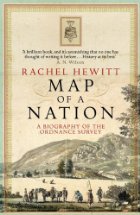 If you’re hiking somewhere in the UK and you’ve bought a map, you’re probably holding a little piece of the Ordnance Survey in your hands. The governmental organization responsible for mapping the nation, the Ordnance Survey faced a difficult road in its early years to successfully covering the entirety of the UK, including England, Scotland, Wales, and Ireland. In the seventeenth and eighteenth centuries, maps were inaccurate, expensive, and incomplete, leaving travellers in most of the world unsure about the shape of the space in which they lived. The Ordnance Survey was created for the military, but it quickly became something that ordinary people eagerly followed as the outlines of their world were defined correctly for the first time. In this book, Rachel Hewitt traces the origins of the Survey through to the completion of the “First Series” of maps, where the entirety of Great Britain and Ireland was completely mapped in detail for the first time. If you’re hiking somewhere in the UK and you’ve bought a map, you’re probably holding a little piece of the Ordnance Survey in your hands. The governmental organization responsible for mapping the nation, the Ordnance Survey faced a difficult road in its early years to successfully covering the entirety of the UK, including England, Scotland, Wales, and Ireland. In the seventeenth and eighteenth centuries, maps were inaccurate, expensive, and incomplete, leaving travellers in most of the world unsure about the shape of the space in which they lived. The Ordnance Survey was created for the military, but it quickly became something that ordinary people eagerly followed as the outlines of their world were defined correctly for the first time. In this book, Rachel Hewitt traces the origins of the Survey through to the completion of the “First Series” of maps, where the entirety of Great Britain and Ireland was completely mapped in detail for the first time.
I don’t really know all that much about the Ordnance Survey, except for the fact that most maps seem to come from them, but I was very intrigued by the prospect of the origins of accurate map-making. Another little niche part of history that I know nothing about? Please, tell me more. Hewitt, in great detail, does exactly that, creating a readable early “biography” of an institution, peopled with many intelligent characters and full of descriptions about just how maps were created several hundred years ago.
I will completely at first admit that I didn’t actually come away from this book understanding precisely how maps are made, although I do have a greater knowledge than I did before. The geometry just baffled me; it’s been over ten years since I studied actual geometry and more than eight since I did any sort of mathematical subject, so I would suggest you hold this against me, not the book. I sort of understood the process of making triangles out of the land based on visible landmarks to check accuracy and map everything in between, but if I was ever asked to do such a thing, I’m pretty sure no maps of the world would have existed before satellites. There is enough of this sort of thing here to slow the book down occasionally, but I wouldn’t let it put you off.
What I personally found far more interesting were the people that Hewitt profiles, especially the earliest ones and those who successfully run the Ordnance Survey from its inception on to the conclusion of the book. Their efforts and seeming belief in their hard work was admirable, and I was left with a distinct sense of awe at the actual enormity of the task they were trying to accomplish. There is a fantastic reminder that all of these men (because of course the project was exclusively run by men, unfortunately) were really just people on page 225 of my edition. As a reward for working diligently over four months’ surveying in Scotland, the men are treated to an enormous plum pudding, nearly 100 lbs of it, for which they conscripted many spare pots and pans and bits of cloth, and all took turns watching it boil so it didn’t burn.
The sections I also really liked had to do with place names, or toponymy. Coming up with accurate place names, especially as detailed here in Wales and Ireland, was a severe problem. The mainly English surveyors struggled to understand what people were calling their towns, much less how to spell it, and in Ireland the surveyors met with some reticence on behalf of the Irish (for which no one can blame them). The early Welsh maps were riddled with inaccuracies and the system used to determine place names had to be revised several times – in Ireland, eventually a separate team of all Irishmen was hired just to work out what the accurate names of places were.
In all, I found Map of a Nation to be a completely fascinating piece of history on a subject I really did know absolutely nothing about. I also trusted it more as it originated as a PhD thesis and the huge number of notes and works cited led me to believe that the author knew exactly where she was coming from. At the end, the author has bolded her works cited to indicate which books are most appropriate for further reading, a nice touch which has inspired me to see if I can get my hands on any of her copious recommendations. Those who aren’t particularly used to reading history might find it a bit dry and hard to get through, especially during the parts describing how the map-making happened, but it’s an endeavor that is well worth it.
All external book links are affiliate links. I purchased this book.
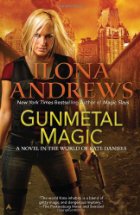 Andrea Nash is broken. Still traumatized in some ways by her childhood as a beastkin, kicked out of the Order of Knights of Merciful Aid, and seemingly single after losing the love of her life, Andrea has no direction. She finds herself sleeping in cupboards, avoiding her friends, and hiding from her true nature. She’s trying to put her life together, in part by running a new investigative firm called Cutting Edge with her best friend, Kate Daniels. One of the first cases that she needs to handle is an investigation at a dig site run by that former lover, Raphael, the alpha of Clan Bouda. Several shapeshifters have lost their lives and it’s Andrea’s job to find the killer, setting her feelings aside for the good of the Pack and all of Atlanta. Andrea Nash is broken. Still traumatized in some ways by her childhood as a beastkin, kicked out of the Order of Knights of Merciful Aid, and seemingly single after losing the love of her life, Andrea has no direction. She finds herself sleeping in cupboards, avoiding her friends, and hiding from her true nature. She’s trying to put her life together, in part by running a new investigative firm called Cutting Edge with her best friend, Kate Daniels. One of the first cases that she needs to handle is an investigation at a dig site run by that former lover, Raphael, the alpha of Clan Bouda. Several shapeshifters have lost their lives and it’s Andrea’s job to find the killer, setting her feelings aside for the good of the Pack and all of Atlanta.
This excellent expansion of the Kate Daniels universe is expertly well crafted, giving us a new main character who is distinctly (thankfully) different in voice from Kate and a real character in her own right. Andrea is clever and interesting but hurting constantly, and parts of this book definitely had my emotions in tangles. Her real problem is her nature as beastkin; her father was a hyena first, which means she’s considered a target by much of the shapeshifting world, as she can’t shift properly. Instead, she becomes a hybrid human and hyena, more beautiful and natural in appearance than a normal shapeshifter’s “warrior” form, but discriminated against because of her father’s beast-like nature. Her inability to accept who she is due to this discrimination has led to many of the problems she’s facing and a big part of the book is her acceptance of who she really is and just why she should be loved.
As usual with the rest of this series, the novel is action-packed. I loved the way that Andrea and Raphael interacted; I have always been a fan of them as a couple, but this novel in my opinion took that to new heights. Raphael’s quest to win Andrea back, knowing that she harbored feelings for him, was fantastic. One of my favorite moments was when he carved “MINE” into her kitchen table, a perfect summation of shapeshifter feelings and courtship. If she hadn’t loved him, this might well have been creepy, but in the book it works perfectly, as does Andrea’s retaliation.
Overall, I didn’t find that Gunmetal Magic ever really reached the heights that the books featuring Kate do, mainly because it didn’t quite give me that feel of desperately saving the world that Kate’s books usually manage, but I sincerely hope that there are more featuring Andrea. This could be the start of a fantastic spin-off series.
Also included in this volume is the novella Magic Gifts, which does feature Kate, and lines up with the story in the first part of Gunmetal Magic. Some reviews have advised to read this first; I didn’t read those reviews, so I read this one second. I did think it would probably have been better first, because those parts would have been fresher in my mind, but I certainly wasn’t complaining. I missed this story when it was posted on the Ilona Andrews website (I have since become a devoted follower) and I was very happy to get it, and a little bit of Kate, at the same time. It helps that this story is a good one and brings Kate and all of her gathered crew together to save a little boy from a choking magic necklace.
All I have left to say, really, is when is the next book coming out again? I’ll be first in line to buy it.
All external book links are affiliate links. I bought this book.
 Hannah Levi is renowned as the best midwife Venice has to offer. She delivers babies that no other midwife can manage, aided by her set of birthing spoons that enable her to pull reluctant babies from their mother’s wombs, saving both of them. But Hannah is Jewish, which means that she can’t practice on Christian mothers and babies, until a nobleman enters her house and begs for her help to save his wife. Hannah’s initial reluctance vanishes when the count offers her enough money to ransom her husband, who has been captured at sea and enslaved for months. Her choice to try and save mother and baby creates an intense rivalry amongst the count’s family that endangers everything she strove to save and may leave her husband trapped on Malta forever. Hannah Levi is renowned as the best midwife Venice has to offer. She delivers babies that no other midwife can manage, aided by her set of birthing spoons that enable her to pull reluctant babies from their mother’s wombs, saving both of them. But Hannah is Jewish, which means that she can’t practice on Christian mothers and babies, until a nobleman enters her house and begs for her help to save his wife. Hannah’s initial reluctance vanishes when the count offers her enough money to ransom her husband, who has been captured at sea and enslaved for months. Her choice to try and save mother and baby creates an intense rivalry amongst the count’s family that endangers everything she strove to save and may leave her husband trapped on Malta forever.
I wasn’t really sure what to expect from The Midwife of Venice; even though I had it for review, it spent a bit too long on the shelf before I finally persuaded myself to pick it up and give it a try. Compared to The Red Tent and People of the Book – both books I loved – it did sound like something I would like, but I simply don’t crave historical fiction these days. With this book, I was initially reluctant and it took me a few pages to get into it, but before long I became invested in Hannah and Isaac and eager to find out what happened to each of them next.
The story is told through alternating viewpoints, with Hannah in Venice and Isaac stranded in Malta. Each of them deal with completely different difficulties, but one of the constants of the book is their longing to be back together, though they’ve been separated for months and fear the other dead. It’s a story about an established love, which doesn’t occur quite as often as new romance in a book like this one.
In addition, Hannah’s half of the story revolves around the uniquely female sphere of childhood and, in that time, child-rearing. Many of the people she deals with are women, and in fact the only kind character who is male on her side of the story is the count himself. His wife, the previous midwife, and Hannah’s sister all have a role to play in her quest to get her husband back, making the female relationships in this novel intriguing even as we note how precarious their positions are. Hannah, as a Jewish midwife, is intensely vulnerable when delivering a Christian child, as she could be accused of killing the baby and its mother in a heartbeat. Her sister, a converted Christian prostitute, also faces the very severe difficulties of her position, especially when we discover exactly how she ended up that way.
I found Isaac’s side of the story somewhat less compelling, as he battles against people trying to enslave him and stays faithful to his religion despite the temptation of nourishment and safety. I’m not entirely sure why; I know that slave stories are important, but Isaac’s didn’t have much to add, and people in general just seemed too keen to help him. I know this sounds like me saying “he isn’t suffering enough!” but it just felt somewhat unrealistic that he’d have multiple helpers devoted to rescuing him when undoubtedly most captured slaves had a very difficult time of it.
Reservations aside, The Midwife of Venice is a book that I enjoyed very much, and would be a perfect fit for someone looking for historical fiction outside the standard templates of Great Britain, monarchy, or Rome.
All external book links are affiliate links. I received this book for free for review.
 Retiree Harold Fry has spent most of his life, he thinks, being a failure. He’s let down his son, never advanced very far in his career, virtually separated from his wife Maureen despite living in the same house, and lost the only friend he really made. When he receives a letter from that friend, Queenie Hennessey, dying of cancer 600 miles away in Berwick-upon-Tweed, Harold at first simply writes her a nice note and leaves the house to take it to the post box. When he reaches that post box, he thinks – why not go a little further into town? And so begins Harold’s walk up England and his quest to keep Queenie alive, transforming the remainder of his life for good. Retiree Harold Fry has spent most of his life, he thinks, being a failure. He’s let down his son, never advanced very far in his career, virtually separated from his wife Maureen despite living in the same house, and lost the only friend he really made. When he receives a letter from that friend, Queenie Hennessey, dying of cancer 600 miles away in Berwick-upon-Tweed, Harold at first simply writes her a nice note and leaves the house to take it to the post box. When he reaches that post box, he thinks – why not go a little further into town? And so begins Harold’s walk up England and his quest to keep Queenie alive, transforming the remainder of his life for good.
The Unlikely Pilgrimage of Harold Fry has been getting tons of press lately; lots of reviews from bloggers and a lot of attention from mainstream media too. Longlisted for the Man Booker Prize 2012 and highlighted by Waterstone’s, I found it impossible to resist reading this charming little book for myself. In fact, I bought and started reading it on the same day, very curious to see what all the fuss was about.
What I found was an insightful, truly heart-warming and moving book about an old man’s quest to find the friend he adores. Harold is such a timid soul; he despises attention and has no confidence in himself whatsoever. He’s not seeking attention and he’s not even sure that he can do it. But he reckons, inspired by a girl he meets in a garage, that if he can walk 600 miles, his old friend from work, Queenie, can stay alive, and maybe even get cured. He loves his wife, Maureen, but the gulf between them is now so wide that he doesn’t even tell her he’s going, bringing us to the other half of the story; the woman left behind.
It’s hard to review this book without really giving away much of the story. I didn’t really know much at all and I liked it very much that way. The story is by turns sad, sweet, and even funny sometimes, as we follow Harold on his unlikely journey north. My heart broke for him and Maureen on a regular basis, it seemed, as they played out the memories of their life together, the slow road they travelled together away from love and towards estrangement. The slide towards taking each other for granted, towards settling rather than striving, towards mediocrity. It makes Harold’s journey so, so poignant and perfect in comparison, the completely unexpected act of a man who has always done the expected.
The book itself is written in beautiful, at times deceptively simple and easy to read yet perfect prose, making the story come to life. Harold’s hardships are by no means ignored; he spends a large part of the early walk in serious pain from lack of preparation until he meets a woman who was a doctor once. The descriptions of the English countryside are beautiful, especially in the beginning of the book, and the level of Harold’s reflection is directly tied to his mood. As I read and experienced their past, I was completely swept away by emotion and found myself near to tears more than once.
There is a reason that The Unlikely Pilgrimage of Harold Fry has received so much acclaim. It is a simply beautiful, charming, at times heart-rending book that is very much worth your time.
All external book links are affiliate links. I purchased this book.
|
|


Recent Comments