|
|
 Since young adulthood, Charles de Lacey has led a profligate life mostly full of care, isolated from his family and completely uninterested in the dealings of his estate. As the heir to a dukedom, he’s simply let his brother Edward take charge alongside his father, while his soldier brother Gerard served the purpose of bravery. But when Charlie’s father dies, haunted by a blackmailer who’s discovered a deadly secret, this devil-may-care nobleman must whip himself into shape in order to ensure he secures his inheritance. On the trail, Charlie meets Tessa Neville, a stubborn, intelligent woman whose presence around the suspected blackmailer raises Charlie’s curiosity. How is she connected with the case – and can she help him rescue his family? Since young adulthood, Charles de Lacey has led a profligate life mostly full of care, isolated from his family and completely uninterested in the dealings of his estate. As the heir to a dukedom, he’s simply let his brother Edward take charge alongside his father, while his soldier brother Gerard served the purpose of bravery. But when Charlie’s father dies, haunted by a blackmailer who’s discovered a deadly secret, this devil-may-care nobleman must whip himself into shape in order to ensure he secures his inheritance. On the trail, Charlie meets Tessa Neville, a stubborn, intelligent woman whose presence around the suspected blackmailer raises Charlie’s curiosity. How is she connected with the case – and can she help him rescue his family?
The Way to a Duke’s Heart is the third in a trilogy of books about the de Lacey brothers. I’ve also reviewed the first two. You don’t have to read the first two to enjoy this book; as with most romance novels, the external plot is not really that tight and the focus is much more on the romance. All you really need to know is that Charlie is hunting for a blackmailer who could rob him of his inheritance, making him and his two brothers into virtual paupers overnight. Some clues were found by Edward and Gerard over the course of the first two books, but it is really down to Charlie to find the answers and save his own fortunes, as well it should be.
That’s because Charlie is most definitely the wastrel of the three; we learn very early on that he was driven away by his father holding him to too-high standards as his heir, while failing to allow him to marry the woman he thought he loved at a tender age. But now that Edward and Gerard have in some sense settled down with their wives, he’s left on his own to solve the mystery and prove himself worthy of his title. Tessa, on the other hand, is a businesswoman before they really existed. Running her brother’s estate, she’s left to make all the decisions for him and has made a huge success of herself. She’s in Bath to investigate a canal building project – and she does a cracking good job of it – where she and her elderly companion run into Charlie. Sparks fly, Tessa doubts, Charlie charms, and solves the mystery while he’s at it.
All in all, this was a really delightful ending to the trilogy. I liked that Charlie finally got his resolution in more ways than one; it’s obvious that it’s going to happen, but I was very pleased with the way it all turned out for him. I was completely satisfied with the finish of the mystery that has lasted over the course of the trilogy, too. Even though the blackmailer plot more or less served as a way to get these three brothers in contact with their three new wives, I did find that it intrigued me and I wanted to know what happened to their father in his younger years. And I loved Tessa, as you might expect; she’s so very intelligent with her businesslike mathematical mind, I could see why she would have had so little previous luck with men. I enjoyed Charlie’s charm and persistence with her greatly, and I very much cheered for their happy ending.
A very entertaining and highly recommended trilogy of romantic novels!
All external book links are affiliate links. I received this book for free for review.
 Theodora Saxby and James Ryburn, the future Duke of Ashbrook, have been friends for their entire lives. When James proposes to his “Daisy”, as he affectionately calls Theo, hardly anyone can believe it. After all, Theo is no beauty, and everyone has expected him to aim somewhat higher. But Theo and James discover happiness almost immediately, when they realize that the friendly affection they’ve always harbored for one another does in fact run deeper. That’s until Theo hears the real reason for their marriage; that James’s duchy is deeply in debt, and in reality he needed her money to stay afloat. Dismayed and heartbroken, the couple separate for years. After he nearly loses his life in battle as a pirate, James returns to London, determined to persuade his transformed duchess to give him her heart once again. Theodora Saxby and James Ryburn, the future Duke of Ashbrook, have been friends for their entire lives. When James proposes to his “Daisy”, as he affectionately calls Theo, hardly anyone can believe it. After all, Theo is no beauty, and everyone has expected him to aim somewhat higher. But Theo and James discover happiness almost immediately, when they realize that the friendly affection they’ve always harbored for one another does in fact run deeper. That’s until Theo hears the real reason for their marriage; that James’s duchy is deeply in debt, and in reality he needed her money to stay afloat. Dismayed and heartbroken, the couple separate for years. After he nearly loses his life in battle as a pirate, James returns to London, determined to persuade his transformed duchess to give him her heart once again.
I loved the way that Eloisa James immediately drew me into this book with the incredibly sweet way that Theo and James immediately fall for each other. It’s the perfect friendship turned love story, until she tears it apart. What better way to make you truly care for these two characters before their story really even begins? Even though I knew what was going to happen, in that James was going to leave Theo at her own request, I really didn’t want it to happen. I wanted them to continue being happy. But if that had occurred, we wouldn’t have had much of a book.
Unfortunately, I didn’t really like the rest of the book as much as I liked the sweet beginning. Theo’s transformation from ugly duckling to graceful swan takes place while her husband is far, far away, learning how to be a pirate. Her marriage, though it turns into a sham, is the perfect catalyst to free her from the usually dominating parents and allows her to exercise her rather obviously excellent taste in clothing and style. What I didn’t like was the relationship with the press, although it was certainly very realistic; it’s Theo who has driven off her husband, Theo who is at fault for everything; it made my heart break more for her, but I didn’t like it regardless. The couple spend the middle section of the book apart, then reunite for the last third.
As usual, Eloisa James delivers a very enjoyable, thoughtful romance. Though I still don’t think this is a match for the amazing Desperate Duchesses series, it also didn’t bother me the way that her last did. Not entirely my favorite, but The Ugly Duchess is a good read for a historical romance reader.
All external book links are affiliate links. I received this book for free for review.
 Standing on the edge of the Peninsular War and the true beginning of her adult life, newly married Harriet Raven moves to London, restless and discontented. Her husband, James, is posted to Spain as a Captain of the 9th Regiment, under the command of Lord Wellington. While Harriet befriends Lady Wellington in London, witnessing progress firsthand and trying to work out what she should do with herself, James is thrust for the most part into the thick of battle. Over the course of three years, lives change, and married couples form in isolation of each other, unprepared for what life intends to throw at them. Standing on the edge of the Peninsular War and the true beginning of her adult life, newly married Harriet Raven moves to London, restless and discontented. Her husband, James, is posted to Spain as a Captain of the 9th Regiment, under the command of Lord Wellington. While Harriet befriends Lady Wellington in London, witnessing progress firsthand and trying to work out what she should do with herself, James is thrust for the most part into the thick of battle. Over the course of three years, lives change, and married couples form in isolation of each other, unprepared for what life intends to throw at them.
This is a complicated story that is incredibly difficult to describe. There is a host of historical characters, from Lord and Lady Wellington to the Prince Regent and Frederick Winsor, the man who introduced gas lighting to Britain. Harriet, her husband, and most of the people we are more closely involved with are fictional, seemingly designed to set in contrast the difference between war and home and as always the way society changes. There are many threads to this novel, from the enticing prospect of blood transfusions, to marital infidelity, to war and the endless human need to wage war with one another. Painters, writers, businessmen, scientists, doctors; we get a huge swathe of society in just over 350 pages.
As you might expect, then, this book is something of a challenge; the third person narration switches between characters who are together sometimes within the same paragraph, leaving me feeling somewhat on edge and careful to check that I understood what was happening. The Peninsular War is a conflict that was new to me and in this case Tillyard’s view as a historian ensures that the book contains all the small details that make such a war fleshed out and understandable for her readers. There are many historical events taking place here, changing the very face of London with gas lighting, changing healthcare with experiments on blood transfusion, changing the lives of workers with the introductions of mills and factories.
It’s perhaps too many issues for a single book, and the large cast of characters and huge number of causes limits the author’s ability to simply tell a good story. It’s beautifully written with a number of passages that caught my attention, but there is almost too much happening for any single focus, which means that the book isn’t really all that compelling. It never called to me from its place on the bedside table, although I certainly felt that it should. I just never particularly liked any of the characters, barring perhaps one, but he doesn’t really appear in the narrative quite often enough to draw me in, and I didn’t feel that there was anything about the plot (if there really was one) to keep me going.
Ultimately, I found Tides of War disappointing, even as someone who loves history.
All external book links are affiliate links. I received this book for free for review from Amazon Vine.
 Ruling Rome is a dangerous business, and Emperor Nero is on the throne without an heir, about to learn this to his peril. Young Aulus Caecina Severus, nearly thirty years old and just recently covered in glory thanks to a successful campaign against Boudicca in Britain, is caught up in a scheme against Nero that could lead to incredible danger or even more glory and authority. For his appointed emperor, he’s required to lead armies, commit treason, fight against his own people, and even suffer torture. Told from the perspective of his older self, Severus takes us through what is called the Year of Four Emperors as we witness some of the worst depths of the Roman political machine. Ruling Rome is a dangerous business, and Emperor Nero is on the throne without an heir, about to learn this to his peril. Young Aulus Caecina Severus, nearly thirty years old and just recently covered in glory thanks to a successful campaign against Boudicca in Britain, is caught up in a scheme against Nero that could lead to incredible danger or even more glory and authority. For his appointed emperor, he’s required to lead armies, commit treason, fight against his own people, and even suffer torture. Told from the perspective of his older self, Severus takes us through what is called the Year of Four Emperors as we witness some of the worst depths of the Roman political machine.
Unlike a lot of the other Roman focused historical fiction I read, this isn’t really a blood and guts, down to earth, as it really was book. It could have been fairly easily and at times it approaches that level. After all, Severus sees his fair share of battles, and the book opens with one. But Severus’s tone makes it very clear to us that he is more sophisticated than that. He’s not a plain soldier, but a man who feels he warrants greater things and who has been educated to take them. I think the book’s mildly arrogant tone perfectly fits a Roman citizen who spends most of the book amongst people he calls barbarians in Rome’s conquered territories.
Though the politics of this particular period in history are fairly complex, Venmore-Roland does a good job of simplifying them enough that he won’t lose his audience while keeping the tension high. I’d never heard of this period in history, and I was definitely intrigued enough to keep on reading throughout. There are a lot of back door conversations and at times the info-dumping gets very severe. This is a natural consequence of the fact that our main character is far away from Rome, the nerve center of most of the rebellion, and has to receive information and instructions from messengers. He’s also very, very reactionary in this respect. There are a few times when he takes action, like when he leads a battle and saves his men from complete destruction, but usually he hears about or is faced with an event and has to react to it.
What this book does focus on is the level of treachery that could go on within the Roman empire. Severus takes part in a rebellion against the sitting emperor, other people join the rebellion and then defect, he fights against men who are essentially on the same side as him thanks to treachery, and so on, without spoiling the actual events of the book. It’s an entertaining ride through treason, that’s for certain.
The Last Caesar would be a great historical fiction read for someone who is particularly interested in the Roman empire or would like a battle-focused novel without the same blood-and-guts feel of similar books in the genre.
All external book links are affiliate links. I received this book for free for review.
 Chess Putnam is a ghost hunter, a member of the Church of Real Truth aiming to save humanity from the risen dead. Her job is to investigate hauntings and banish the ghosts that arise, reimbursing citizens for their genuinely reported spooks. But Chess isn’t all good; she’s seriously addicted to drugs and in debt to a dangerous drug lord, Bump. When Bump needs her help with a very dangerous job, Chess has no choice and must oblige him, but with corruption in the church and an alarming attraction to Bump’s lead enforcer and a rival gang leader, she’s in for trouble. Chess Putnam is a ghost hunter, a member of the Church of Real Truth aiming to save humanity from the risen dead. Her job is to investigate hauntings and banish the ghosts that arise, reimbursing citizens for their genuinely reported spooks. But Chess isn’t all good; she’s seriously addicted to drugs and in debt to a dangerous drug lord, Bump. When Bump needs her help with a very dangerous job, Chess has no choice and must oblige him, but with corruption in the church and an alarming attraction to Bump’s lead enforcer and a rival gang leader, she’s in for trouble.
I’ve never managed to say no to more urban fantasy, and when I stumbled upon this book half price at the Strand in New York City back in April, I really couldn’t resist buying it. At first I found it more difficult to get on with, but the origins of a new fantasy world are always daunting. There are new rules of magic to learn, characters to get acquainted with, and bad guys to worry about. Once I was 100 or so pages in, I started to get invested in the story and, as usual, really enjoyed my latest foray into a more city-focused world of magic.
This book is definitely set in the underworld, despite Chess’s job as an ostensible protector of the public. I was really surprised by the fact that she has a drug addiction and that she is severely torn between two different men. Love triangles are fairly typical in books like this, but the fact that she’s attracted to and goes relatively far with both men was a surprise for me. I’m used to the tamer conflict in the October Daye series as an example, where there are competing love interests but the feelings are somehow subtler. With Chess’s drug addiction on top of this, I was surprised I liked her at all, since she’s a person so completely different from me; but I really, seriously did, and I wanted the best for her. I also managed to have a favorite of her two love interests, of course, and I’m looking forward to seeing how that turns out in subsequent books.
I also liked the historical component of the ghosts and the reason behind the haunting that she investigates for Bump; there is a lot of mystery going on here, although I did manage to guess the culprit of one of the mysteries well before Chess managed to figure it out. By the end of the book, I became very swept up in her story and completely sympathetic to her, and I immediately wanted book 2 (and 3, and 4) of the series so I could continue. I’ve read reviews and I know it gets even better, so I’m definitely looking forward to delving even deeper into this world.
Recommended for urban fantasy enthusiasts, Unholy Ghosts is a dark yet enthralling read that will immediately leave you craving more.
All external book links are affiliate links. I purchased this book.
 Bletchley Park is now widely known as the center of British codebreaking during the Second World War, leading to huge advances in intelligence and in computing by some of the geniuses who were recruited to work there. But during and for years after the war, Bletchley Park was treated as a complete secret by the government and the many people who held jobs there during those years. McKay interviewed a number of the Bletchley Park veterans once the information was finally available to the public and has compiled his book in large part from their stories as well as archives held in the Bletchley Park museum. Bletchley Park is now widely known as the center of British codebreaking during the Second World War, leading to huge advances in intelligence and in computing by some of the geniuses who were recruited to work there. But during and for years after the war, Bletchley Park was treated as a complete secret by the government and the many people who held jobs there during those years. McKay interviewed a number of the Bletchley Park veterans once the information was finally available to the public and has compiled his book in large part from their stories as well as archives held in the Bletchley Park museum.
This book received a lot of coverage towards the beginning of the year and, curious sort that I am, I decided that I should read it for myself and find out exactly what happened at this well-known place. It hasn’t always been well known; the secret was kept for over thirty years after the war and many who worked there went to their deaths without breathing a word of its purpose. More recently, though, the achievements of those who worked within the park have been acknowledged and celebrated, with many of these intelligent people decorated for their efforts.
McKay covers the period right from the start of Bletchley Park, with its purchase and first use, until its eventual abandonment and resurrection as a museum. In between, of course, we meet several of the enigmatic people who worked there. Alan Turing, for example, is given a prominent place within this book, as he is one of the most well-known people who worked on the code-breaking machines which were the forerunners of today’s computers. He interviews a number of people who worked there, including some couples who met and fell in love while working there, and emphasizes mainly what life was like for them, from the conditions of their billets to the meals they ate and the truly grueling work that many of them performed.
For quite a few of them, who were brilliant young people recruited into the service without knowing much about what they were doing, Bletchley Park was something of a continuation of school and university, full of like-minded people who worked hard but enjoyed themselves in the little bit of downtime that they got. But their work was of critical importance to the war, and McKay never dodges around the simple fact that their hard work resulted in a massive amount of intelligence and huge steps taken in the war. He explains how they cracked the codes and the intelligence that resulted, which adds an interesting layer to the history I already know about World War II.
Despite the book’s discussion of computing systems there, I don’t think this is quite the book for those who are more interested in technology, but there are aspects of it involved here. I didn’t really feel like I grasped what was going on in this respect, other than some machines decoded encrypted messages in brilliant ways. Overall the writing in the book is relatively basic; the focus is much more on what happened than literary eloquence.
Very recommended to those who are interested in the history of World War II, The Secret Life of Bletchley Park is an engaging read that delves into the lifestyle behind the scenes in every way.
 In Gujaareh, it is the Gatherers’ job to shelter innocent civilians and lead them to a peaceful death once their time has come. Their tithes allow the city to run smoothly and peacefully, while the remains of their dreams are given to the sick who deserve healing and longer lives. Gatherer Ehiru has Gathered souls under the Dreaming Moon for most of his life when he slips and makes his first mistake. Already doubting himself, Ehiru soon finds himself in an even deeper conspiracy, as a woman he was sent to kill instead reveals damaging truths about his world. Now Ehiru must protect Sunandi in order to prevent the war which threatens all he’s spent his life working towards. In Gujaareh, it is the Gatherers’ job to shelter innocent civilians and lead them to a peaceful death once their time has come. Their tithes allow the city to run smoothly and peacefully, while the remains of their dreams are given to the sick who deserve healing and longer lives. Gatherer Ehiru has Gathered souls under the Dreaming Moon for most of his life when he slips and makes his first mistake. Already doubting himself, Ehiru soon finds himself in an even deeper conspiracy, as a woman he was sent to kill instead reveals damaging truths about his world. Now Ehiru must protect Sunandi in order to prevent the war which threatens all he’s spent his life working towards.
N.K. Jemisin’s debut, the Inheritance Trilogy, was a fantastic set of books that explored concepts of godhood in serious depth. Once again, with The Killing Moon, Jemisin has written an engaging book that looks closely at religion, and what the differences between religions are, in a setting reminiscent of ancient Egypt. Her book is centred on two city-states, Gujaareh and Kisua. Ehiru and his apprentice Nijiri are Gatherers from Gujaareh, while Kisuan Sunandi is fundamentally opposed to them due to her inherent and insistent hatred of their religious practices, a hatred and disgust shared by her people. Yet this trio finds common ground as they try to prevent their homes from flying headlong into war.
Because Jemisin always aims to do something a little bit different (she explains in an interview in the back of my edition why she eschews more typical medieval based fantasy tropes), her books come with a little bit of a learning curve. She likes to throw her readers right into her books, which means there is some learning to be done about the world and culture. Even though this is based on Egypt, it didn’t really *feel* to me like ancient Egypt. It certainly didn’t feel typical, but nothing about it was shouting “Egypt” – instead, it felt like a new fantasy world, and one which intrigued me as I settled deeper into the book.
What I always like about Jemisin’s books are the relationships between characters and how well they work. All of them feel very natural; Nijiri’s love for Ehiru, for example, is something that would bother many people in our culture, as a young man in love with one who is much older, but it is something here that is viewed as completely natural. And I liked the way they both interacted with Sunandi, and she with them, as they all struggle to get over their prejudice and accept each other as human beings.
Jemisin delivers another wonderful epic fantasy with The Killing Moon. I’m now looking forward to reading The Shadowed Sun and finishing this duology!
I received this book for free for review from Amazon Vine.
 Miss Pettigrew is a lonely, desperate fortyish spinster in the whirlwind of social change happening between the two World Wars. Desperate for work, she’s sent by her agency seemingly by accident to work for a nightclub singer instead of the normal group of unruly children. Almost immediately on meeting Delysia LaFosse, Miss Pettigrew’s life starts to change drastically in this heart-warming Cinderella-esque tale. After this day, will her life ever return to normal? Does she even want it to? Miss Pettigrew is a lonely, desperate fortyish spinster in the whirlwind of social change happening between the two World Wars. Desperate for work, she’s sent by her agency seemingly by accident to work for a nightclub singer instead of the normal group of unruly children. Almost immediately on meeting Delysia LaFosse, Miss Pettigrew’s life starts to change drastically in this heart-warming Cinderella-esque tale. After this day, will her life ever return to normal? Does she even want it to?
I’ve been hearing about Persephone books for nearly the entire time I’ve been blogging, but I’ve never actually owned one before. This is not a proper Persephone, but rather one of their newer Classics editions, highlighting the books that have enjoyed the most success out of those they’ve published. And what a classic this book truly is; I can see why some people hold it up as their favorite book ever, period.
That’s because it really is a proper feel-good novel. It’s a fast read and I loved Miss Pettigrew instantly. Her timidity and anxiety immediately wraps you up in her problems; she’s exactly the same as a shy unemployed single woman would be now in terms of attitude, if in little else. And as soon as Miss LaFosse opens that door, we’re lost right along with her in this madcap comedy, where a proper spinster meets a woman with no less than three lovers and several glamorous friends. It feels completely unlikely and delightful at the exact same time; a fantasy that it’s easy to imagine a woman having at this point in time.
One aspect of this that I really liked is that Miss Pettigrew completely transforms when she is given just a little bit of nudging. In reality, she’s not a timid shy woman; or, rather, she is, but she’s also brave and bold and capable of defying expectations. Society has placed a cloak on her and this novel is all about casting that away and embracing what life might throw at you. And fantasy or not, that’s something that most of us could use a little reminder about ourselves. Miss Pettigrew’s story alternately thrills us and dares us to think what might happen if we stepped outside the boundaries as far as she begins to.
For example:
Flattered, bewildered, excited, Miss Pettigrew made for the door. She knew she was not a person to be relied upon. But perhaps that was because hitherto every one had perpetually taken her inadequacy for granted. How do we know what latent possibilities of achievement we possess? (7)
It’s incredibly delightful. Combine that characterization and transformation with a fantastic atmosphere, complete with a visit to an actual nightclub, Miss Pettigrew’s complete innocence and discovery of the world of men, and a first taste of alcohol, and you have what is a remarkable, charming, adorable read that simply deserves the hours of your time required to read it. I loved it, and next time I’m in a bookshop, you might just find me in front of the row of Persephones, pondering just how many will fit within my budget.
 In 2020, John Boone sets foot on Mars for the first time. Seven year later, 100 colonists arrive, a mix of Earth’s most intelligent people best suited to create a new world in order to deal with the ever-more-crowded Earth. The new colony has been completely prepared for them, with large deposits of materials dropped on the planet over the course of several years, and it’s up to the colonists to set everything up and determine the future course of Mars. As ever, divisions appear almost immediately, between those who aim to preserve the beauty of the planet, those who would like to turn it into another Earth, and those who serve a corporate agenda, among many others. Kim Stanley Robinson’s novel is an epic journey into precisely what it might be like to create an entirely new civilization in the face of pressures from many varied directions. In 2020, John Boone sets foot on Mars for the first time. Seven year later, 100 colonists arrive, a mix of Earth’s most intelligent people best suited to create a new world in order to deal with the ever-more-crowded Earth. The new colony has been completely prepared for them, with large deposits of materials dropped on the planet over the course of several years, and it’s up to the colonists to set everything up and determine the future course of Mars. As ever, divisions appear almost immediately, between those who aim to preserve the beauty of the planet, those who would like to turn it into another Earth, and those who serve a corporate agenda, among many others. Kim Stanley Robinson’s novel is an epic journey into precisely what it might be like to create an entirely new civilization in the face of pressures from many varied directions.
I took a leap into a new territory with this book and I’m very glad I did. Red Mars is an example of so-called “hard” science fiction, the sort that actually makes plausible sense and has been thought through from a scientific perspective. I chose to buy it because I really wanted to read 2312, but thought I should probably go for a cheaper paperback before I decided I knew I wanted to read the newer release. Red Mars is one of Robinson’s best known books and has garnered a huge amount of high ratings – and that choir is one I’m about to add my voice to.
That’s because I really loved this book. It took me a very long time to read, about a week and a half, which is intense for me, but I was really savouring it and getting involved deeply into the world that Robinson creates around the new Mars. I loved some of his descriptions so much that I even marked out pages, something that I virtually never do. Here is one of my favourites:
She recalled vaulted ruins she had seen years ago on Crete, at a site called Aptera; underground Roman cisterns, barrel-vaulted and make of bricks, buried in a hillside. They had been almost the same size as these chambers. Their exact purpose was unknown; storage for olive oil, some said, though it would have been a n awful lot of oil. Those vaults were intact two thousand years after their construction, and in earthquake country. As Nadia put her boots back on she grinned to think of it. Two thousand years from now, their descendants might walk into this chamber, no doubt a museum by then, if it still existed – the first human dwelling built on Mars! And she had done it. Suddenly she felt the eyes of the future on her, and shivered. They were like Cro-Magnons in a cave, living a life that was certain to be pored over by the archaeologists of subsequent generations; people like her who would wonder, and wonder, and never quite understand. (145)
That passage sums up a lot, to me, about why this book is such a wonderful read. It really is a civilization, but it isn’t exactly created from scratch; instead it’s created from our culture, that which is already all around us, and it’s an incredibly intriguing vision of a future that might yet be. This is science fiction’s purpose, to make us consider what might happen in the future, and I was hypnotized by Robinson’s version of that future.
That’s not to say that the characters aren’t brilliant in their own ways, too. We only spend time with a few of the first 100, but by getting to know them, we experience a whole range of pure human emotion. The span of the book is fairly lengthy, and by the end, most of the first hundred have grown older, old enough to see the civilization they essentially birthed take on a life of its own. But while they are celebrities for that, they are also just people, with all of the little struggles and drama that all of this entails. Despite their intelligence, they suffer grief and loss and experience love and joy in equal measure; they might all be clever but they completely disagree in many ways, and the fabric of civilization stretches and tears to accommodate their dynamic personalities.
It’s all just plain fascinating. There is a small amount of science in this book; they do build various things to help keep them alive, after all, but I never felt particularly overwhelmed or frustrated by any of it. Instead, it just seemed plausible, that the author had considered all sorts of odds and ends that others don’t, and the pure logic behind it made the entire book that much more credible.
In short, a fantastic read, and highly recommended if you’ve ever wanted to try science fiction, or are looking for an addition to your speculative fiction library.
And just to round this post off, two more quotes:
He was losing the crowd. How to say it? How to say that they alone in all that rocky world were alive, their faces glowing like paper lanterns in the light? How to say that even if living creatures were no more than carriers for ruthless genes, this was still, somehow, better than the blank mineral nothingness of everything else? (17)
“The beauty of Mars exists in the human mind … Without the human presence it is just a collection of atoms, no different from any other random speck of matter in the universe. It’s we who understand it, and we who give it meaning. All our centuries of looking up at the night sky and watching it wander through the stars. All those nights of watching it through the telescopes, looking at a tiny disk trying to see canals in the albedo changes. All those dumb sci-fi novels with their monsters and maidens and dying civilizations. And all the scientists who studied the data, or got us here. That’s what makes Mars beautiful. Not the basalt and the oxides.” (212)
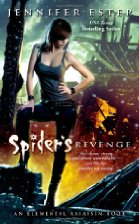
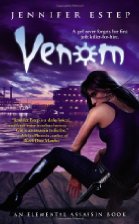 These are my thoughts up to the fifth book of this series. It does continue to a currently available sixth and soon to be released seventh book, but the first five fill a natural plot arch, and seemed a good time to jot down my thoughts on the series. I have reviewed the first book, Spider’s Bite, in with some other mini reviews. These are my thoughts up to the fifth book of this series. It does continue to a currently available sixth and soon to be released seventh book, but the first five fill a natural plot arch, and seemed a good time to jot down my thoughts on the series. I have reviewed the first book, Spider’s Bite, in with some other mini reviews.
All the books focus on Gin Blanco, who begins the series as The Spider, so named for the silverstone runes that were embedded in her flesh during an attack on her family when she was just thirteen years old. The attack destroyed her family home, orphaned her, and landed her in the street, where she was saved by Fletcher Lane, the man who turned her into the assassin that she is. We learn that the culprit, incredibly powerful Fire Elemental Mab Monroe, is the leader of the gang that effectively runs Gin’s town of Ashland, and that Mab would certainly kill Gin if she connected her with her real identity, Genevieve Snow. Throughout, Gin has to deal with a number of lesser criminals, love affairs, and the complications inherent in most urban fantasy series.

I’ve had a lot of fun with this series, and around the third book, became so addicted that I had to acquire the next two immediately in order to keep going. I’ve read most of it within the space of a couple of months, and have become attached to the characters and very curious about what’s going to happen next. I’m reasonably satisfied with the conclusion of this particular plot arc, but I’m also intending to follow it through to the actual conclusion.
One of the highlights of the series, for me, is Gin’s intense relationships with the people she cares about. She didn’t really need her shell to break down for her to care about people, as she’s been connected closely with Fletcher and Finnegan Lane, Fletcher’s son, since before the book’s beginning. But as the series progresses, we really get to know all of these characters, and to an extent understand why Gin feels the way she does. Her family is full of many different types of people, but all of those are interesting, from Jo-Jo and Sophia, the dwarf sisters, to the flirtatious Finnegan.
 The book also has a number of detailed descriptions of food; Gin is a cook and a baker, and she’ll often prepare a dessert for her friends while discussing some important plot point. This will make you hungry and longing for the various things she’s cooking, whether it’s steak-cut fries (one of her favourites) or some sort of chocolate brownie and ice cream. I did enjoy these and wish I was eating what she was talking about as soon as she started. The book also has a number of detailed descriptions of food; Gin is a cook and a baker, and she’ll often prepare a dessert for her friends while discussing some important plot point. This will make you hungry and longing for the various things she’s cooking, whether it’s steak-cut fries (one of her favourites) or some sort of chocolate brownie and ice cream. I did enjoy these and wish I was eating what she was talking about as soon as she started.
One of the big negatives of the series for me, though, is the repetition. The same things are described in every single book at the beginning. Mab is always the Fire Elemental. I learned how Gin got those silverstone runes in her hands, and about the silverstone knives she carries secreted in various places around her body, multiple times per book, I think. I’m not sure if the author assumes we have an impossibly tiny attention span or is simply trying to get new readers into the groove, especially with the plot summaries at the beginnings of each book, but for someone addicted enough to read them right after each other, I will admit that this did get annoying. Gin also has a habit of describing her boyfriends and saying “Mmm” at the end, like she was eyeing a tasty dessert, which put me off as well.
Regardless, this is a series I’ve enjoyed greatly, and would certainly recommend to someone looking for another light urban fantasy read. It’s been a lot of fun, and I’m looking forward to continuing Gin’s adventures.
|
|


 Since young adulthood, Charles de Lacey has led a profligate life mostly full of care, isolated from his family and completely uninterested in the dealings of his estate. As the heir to a dukedom, he’s simply let his brother Edward take charge alongside his father, while his soldier brother Gerard served the purpose of bravery. But when Charlie’s father dies, haunted by a blackmailer who’s discovered a deadly secret, this devil-may-care nobleman must whip himself into shape in order to ensure he secures his inheritance. On the trail, Charlie meets Tessa Neville, a stubborn, intelligent woman whose presence around the suspected blackmailer raises Charlie’s curiosity. How is she connected with the case – and can she help him rescue his family?



Recent Comments