|
|
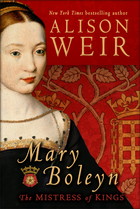 Like many of the women who are the new focus of popular history, Mary Boleyn has left a very slim paper trail. There are entire periods of her life where no one is quite sure where she actually was, let alone what she was doing or feeling. Only two of her letters survive, to our knowledge, and our ideas of her as a legendary whore are based mainly on much later opinions of her. With very little to work with, Weir attempts to reconstruct Mary’s life and, in several cases, set the record straight. Like many of the women who are the new focus of popular history, Mary Boleyn has left a very slim paper trail. There are entire periods of her life where no one is quite sure where she actually was, let alone what she was doing or feeling. Only two of her letters survive, to our knowledge, and our ideas of her as a legendary whore are based mainly on much later opinions of her. With very little to work with, Weir attempts to reconstruct Mary’s life and, in several cases, set the record straight.
In a lot of this book, Weir engages in one of my favourite things, evaluation of other historians. I love historiography, and she does a good job picking apart others’ arguments and showing what was based on actual source and what wasn’t. Unfortunately, a number of the historians she chooses to engage with were working a considerable amount of time in the past, rather than those who are working now and would be more likely to follow current standards for documentation and analysis. Saying that, I’m not sure how many historians are presently working on the Tudors and Mary Boleyn, as popular culture is not necessarily connected to academic culture, so it’s possible she didn’t have much more recent to work with; her main focus is revising people’s opinions of Mary as an infamous whore, and I did enjoy her investigation of how that reputation came about.
Unfortunately, because of the scarce information, some flaws pop up in Weir’s work; it’s extremely repetitive, as she has the need to make an assumption about Mary’s past, then treats it as fact and tells us about it over and over again. Her reputed affair with the French king is constantly discussed, for example. I’ve definitely appreciated some of Weir’s other works more than this one in this respect. There just isn’t much here. I felt like Mary’s life would have been much more suited to a longer article or inclusion into a collection, instead of a book on its own. I failed to really get a sense of who she was; the most affecting and interesting part of the book, for me, was when Weir actually quoted a letter that she wrote. I understand that there are only two letters, but the difference really demonstrated to me how little I’d felt for Mary up until that point.
Mary Boleyn was a book I didn’t mind reading; it may be considered dry by others who aren’t particularly used to reading history and expect it to be more like a novel (there are pages of speculation about Mary’s birthday, for instance), but if you do enjoy biography you won’t have any trouble getting involved here. Unfortunately, I found the end result ultimately disappointing, and I hope Weir chooses a better documented subject for her next full-length work of popular history.
I received this book for free for review. All external links are affiliate links.
 In Hannah Payne’s world, a dystopian United States set in the future, criminals are punished by having their skin turned various colours, length and colour determined by the severity of the crime. Chromes, as they’re called, are society’s outcasts, shunned and often killed for their crimes. When we join her story, she’s been turned red, indicating that she is guilty of murder. She is guilty of aborting her child – the product of her adultery with one of the foremost religious figures of her day, whom she absolutely refuses to turn in, even though it would make her sentence more bearable. This cross between The Scarlet Letter and The Handmaid’s Tale has a considerable amount of power as we follow Hannah into defying her upbringing in a world that has startling parallels to our own. In Hannah Payne’s world, a dystopian United States set in the future, criminals are punished by having their skin turned various colours, length and colour determined by the severity of the crime. Chromes, as they’re called, are society’s outcasts, shunned and often killed for their crimes. When we join her story, she’s been turned red, indicating that she is guilty of murder. She is guilty of aborting her child – the product of her adultery with one of the foremost religious figures of her day, whom she absolutely refuses to turn in, even though it would make her sentence more bearable. This cross between The Scarlet Letter and The Handmaid’s Tale has a considerable amount of power as we follow Hannah into defying her upbringing in a world that has startling parallels to our own.
When She Woke is a book that gained a lot of praise when it first came out, and I’ve been looking forward to it for a while. I loved The Handmaid’s Tale - as much as you can love a book in that vein – and I’m alternatively fascinated and horrified by these indications of where society might go. In light of the recent controversy in the United States over birth control, this book seemed like an incredibly timely read, and the implications not entirely far-fetched, either, certainly not when a debate I thought (hoped) was in the past has turned out to remain relevant. The book certainly has a pro-abortion slant, and would likely go against the beliefs of many conservatives.
While I don’t think it’s quite as powerful as the two books I mentioned in the description, particularly not The Handmaid’s Tale, it is a worthy addition to that crowd. I found the scenes after Hannah is released from her initial imprisonment to be the most powerful – her father finds her a safe house, which turns out to be a place where women are brainwashed into feeling incredibly guilty and traumatised over their sins, to the degree of creating dolls to represent their aborted children and telling the story of their abortions over and over again.
I did have some trouble with Hannah’s choices – at one point, she risks her life and those of many others simply to see the man she loves again – especially at the end of the book. After all that had happened to her, I simply don’t think I would have done that, even though it’s clear she loves him beyond all degree of sanity. But overall, I really was swept away by the story and found myself absorbed and disturbed by the book as I read. This is an emotional read and I did really feel for Hannah throughout the very large majority of the book, alongside her fellow suffering women.
When She Woke is indeed a fantastic read, and Hillary Jordan remains an author I’ll be watching.
I am an Amazon Associate. I received this book for free for review.
 Seven portraits of women reading, seven stories imagined by the author, Katie Ward, about the history of each painting. This brief, beautiful book captures the universal emotions of women throughout history, at all different stages in their lives, all centered around that one activity which many of us love above all others. The stories range in date from the fourteenth century to the imagined future, where the author cleverly ties together all of the paintings and their stories. Each chapter, focused on the imagined history of one painting, is a kind of short story, and can easily stand alone as well as part of the wider collection that is concluded to some degree at the end. Seven portraits of women reading, seven stories imagined by the author, Katie Ward, about the history of each painting. This brief, beautiful book captures the universal emotions of women throughout history, at all different stages in their lives, all centered around that one activity which many of us love above all others. The stories range in date from the fourteenth century to the imagined future, where the author cleverly ties together all of the paintings and their stories. Each chapter, focused on the imagined history of one painting, is a kind of short story, and can easily stand alone as well as part of the wider collection that is concluded to some degree at the end.
The writing in this book is beautiful and I just adored the way it was structured. I had a good look at the source behind each of the stories – both the real paintings and the inspirations for those which don’t exist or are conglomerates – and thoroughly enjoyed the connections and the differences in style as the novel progressed. Each chapter does feel like its own little story, with its own world and characters. The ending ties them up neatly, but so does the universal female emotion that pervades each. For me, each story highlighted how much we all exist in our own worlds, but how we are all tied together by our very existence. For example, in one of the stories, a teenage girl obsesses over an older painter, imagining herself in love, her feelings so reminiscent of my own immature years that I was completely taken aback. In another, a mourning aristocratic lady asks her artist friend to finish a painting of her female lover, who has recently passed on, and the grief and the emotion contained within just that one story was incredibly moving.
Several reviews of this book have highlighted the fact that it doesn’t contain quotes for speech, and that this makes it difficult to follow; I did not have this problem at all, and I actually enjoyed the flow of the writing. It’s worth noting, though, if that is something about a book that will bother you, but I didn’t even think of it as a complaint until I’d looked at other reviews. All of it was breathtaking, I thought, and Ward’s narrative voice was gorgeous enough to keep me pinned to the pages. It’s as though Ward gave me a window into the minds of the women in each of the paintings, and those thoughts were simply stunning.
I really can’t praise this book enough – Girl Reading is perfect for women who love to read, who love history, who are looking for a book that reminds them of our experiences throughout history. Very, very highly recommended.
I received this book for free for review.
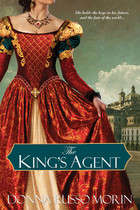 Battista della Paglia is an art collector, a thief, and a secret agent for François, the king of France. His mission is to find the most valuable artifacts, paintings, and sculptures for the king’s growing art collection. When Battista is instructed to find a mysterious sculpture, his quest brings him into contact with a woman with a secret. This is the Lady Aurelia, who accompanies Battista on his quest to find the sculpture. Aurelia has been living under the watchful eye of the Marquess of Mantua, her guardian, and has never felt anything like the freedom and emotions she experiences with Battista. But Aurelia’s secret could put all that they’ve built together in jeopardy, should she reveal it to Battista and the world. Battista della Paglia is an art collector, a thief, and a secret agent for François, the king of France. His mission is to find the most valuable artifacts, paintings, and sculptures for the king’s growing art collection. When Battista is instructed to find a mysterious sculpture, his quest brings him into contact with a woman with a secret. This is the Lady Aurelia, who accompanies Battista on his quest to find the sculpture. Aurelia has been living under the watchful eye of the Marquess of Mantua, her guardian, and has never felt anything like the freedom and emotions she experiences with Battista. But Aurelia’s secret could put all that they’ve built together in jeopardy, should she reveal it to Battista and the world.
I was very much intrigued by this book when I first heard of it; having read and enjoyed one of Donna Russo Morin’s earlier books, I was looking forward to reading another of them. Morin’s most recent effort is not a disappointment, but is quite a creative take on Dante’s Inferno. Combined with some of the adventure from one of the author’s favorite video games, The Legend of Zelda, the book finds our two heroes thrown into some serious, death-defying situations, which may not entirely reflect real life, but which provide a lot of entertainment for the historical fiction reader. Tied in with this is a romance between our two main characters, who naturally feel themselves drawn to one another after the harrowing experiences they’ve had searching for these objects. Mainly, the book is a lot of fun, very much a historical romp, which requires the reader to let go a little bit and simply enjoy the ride.
While I did enjoy the book, I found the author’s prose a little bit hard to get into at times. It’s not necessarily a book that you can just pick up and put down again; some immersion into her world is definitely required. The main character, Battista, was a real person, and an art thief at that. One of my favorite Renaissance artists, Michelangelo, also makes a substantial appearance, as do a few of his pieces. I’m always happy to see known historical characters appear in the books I’m reading and I was pleased to see him depicted. He definitely added to the overall atmosphere. I also enjoyed Battista’s band of fellow thieves; there’s an air of male camaraderie amongst them that means we – and Aurelia – immediately fall in love with a few of them.
All in all, The King’s Agent was an enjoyable read, and a pleasurable immersion into the world of early sixteenth century Florence. Recommended for historical fiction fans who are able and willing to suspend disbelief to enjoy a fun book set in a fascinating historical world.
I read this book as part of a tour with Historical Fiction Virtual Book Tours. For more information and the full tour schedule, please go here. To read more about the author, visit her website.
All external book links are affiliate links. I received this book for free for review as part of the tour.
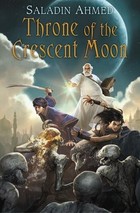 Adoulla Makhslood is the last real ghul hunter in the city of Dhamsawaat. All he wants is to retire, but protecting the city is a job that one cannot retire from. The threat is worse than ever, and Adoulla and his partner Raseed, a god-fearing young warrior, have their hands full. These two ghul hunters, plus a young girl who has lost her Bedouin-like tribe and has the ability to turn into a lion, and Adoulla’s friends, are soon swept up with preventing a devious plot to take the throne from its rightful heir. Adoulla Makhslood is the last real ghul hunter in the city of Dhamsawaat. All he wants is to retire, but protecting the city is a job that one cannot retire from. The threat is worse than ever, and Adoulla and his partner Raseed, a god-fearing young warrior, have their hands full. These two ghul hunters, plus a young girl who has lost her Bedouin-like tribe and has the ability to turn into a lion, and Adoulla’s friends, are soon swept up with preventing a devious plot to take the throne from its rightful heir.
I’m going to admit something completely, 100% shallow; I became interested in Saladin Ahmed because of his name. The Saladin who fought against the crusaders in the Middle Ages has long been one of the people in history who fascinates me, and so this author’s name stuck in my head far easier than others had been able to. I listened to a couple of his stories which were available for free online, enjoyed them, and pre-ordered this book. As you may be expecting, I was rewarded.
Far from the typical pseudo-European fantasies (which I’m not disparaging, as I love them very much), this one is set in the middle of a desert, in a pseudo-Middle East, although still at the same time period as most fantasies. This makes the book feel very distinctive immediately; and so does the fact that the main hero is over 60, approaching retirement, but still spry and brave, determined to fight. He is balanced out nicely by his younger partner, Raseed, who is so religious that it stifles his emotional life. Together, they make a formidable team, but potentially not formidable enough for the enemy they face.
Despite the very short length of the book for a fantasy novel, each character is distinctive and well-drawn, and reading about them and their world is a pleasure. The plot is not particularly complex but it does draw the reader in, as it is certainly life-threatening and suspenseful for the characters, and they are the stars of the show here. Raseed wrestling with his religion and his desires, Zamia’s quest to avenge her tribe, Adoulla’s longing for a rest and for the love of his life, and almost all of the characters’ love for their city and homeland – this is what makes the novel a worthy read.
An adventure fantasy novel that seems to delight in turning some of the conventions of the genre on their heads, Throne of the Crescent Moon is a worthwhile read, and Saladin Ahmed is an author to watch for a lot more than his name.
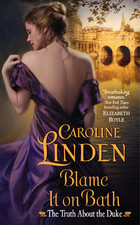 In One Night in London, we learned that the three de Lacey brothers may lose their inheritance due to their father’s prior marriage – they could all be illegitimate. Gerard de Lacey, the youngest of the brothers, may be something of a war hero, but is in serious trouble if he does get disinherited, as he will have very little left for himself in the world. Determined to find the blackmailer, he heads to Bath, where the clues lead, but his path is interrupted by a young widow who proposes to him on the spot. Lady Katherine Howe is not beautiful, but she is wealthy, and she’s desperate to escape her mother and her impending marriage to a second man that repulses her. In One Night in London, we learned that the three de Lacey brothers may lose their inheritance due to their father’s prior marriage – they could all be illegitimate. Gerard de Lacey, the youngest of the brothers, may be something of a war hero, but is in serious trouble if he does get disinherited, as he will have very little left for himself in the world. Determined to find the blackmailer, he heads to Bath, where the clues lead, but his path is interrupted by a young widow who proposes to him on the spot. Lady Katherine Howe is not beautiful, but she is wealthy, and she’s desperate to escape her mother and her impending marriage to a second man that repulses her.
Ah, the marriage of convenience. It’s a trope that appears in quite a lot of historical romance and, of course, because this is a romance novel, the characters do fall in love eventually. That said, a trope done well is still an enjoyable read, and I certainly found Blame it on Bath to be precisely that. Almost as fun as One Night in London, and actually happening in parallel, Gerard and Katherine – affectionately nicknamed Kate early on – are a couple that beg to fall in love from their very first, awkward meeting.
In this particular book, Kate blossoms from a girl hidden beneath her mother into a woman in her own right. Clothed in plain, simple, dark dresses throughout her life, so that her mother faces no competition, Kate’s marriage to Gerard allows her to shed that weight and figure out who she really is. She may not be one of the gorgeous heroines which feature on the pages of most novels, but as he falls in love with her, Gerard sees her personality shine through her face and realize that she is, in fact, beautiful to him; it’s very heart-warming to read.
I liked the setting, too; Bath is easy to visualize now that I’ve been there, and the city is very similar to the way it would have been in the book. It was a nice change from London, where most romances of this type take place.
Still, I didn’t enjoy this book quite as much as the first in the series; the couple fail to communicate at certain parts of the book, which never ceases to annoy me. It just creates problems – it certainly made the heroine have a moment of backsliding that frustrated me a lot.
So Blame it on Bath is not a flawless romance, but it was certainly worth reading, and I’ll happily pick up the third and final installment when it releases.
I received this book for free for review.
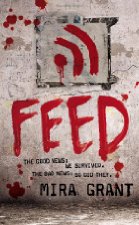 It’s been twenty-five years since the Kellis-Amberlee virus hit the world population. When the virus that finally cured cancer, in a young girl called Amberlee, and the virus that cured the common cold, created by Dr Kellis, combined, disastrous consequences ensued. The virus wound up living inside ordinary people and reanimating them once they died; these zombies are a constant threat, hungry for flesh that they, too, can infect, a neverending supply of horror. The world has changed drastically in the face of the virus, and Georgia and Shaun Mason, brother and sister, are part of the new wave of media – bloggers who report from the edge . Together with the third member of their team, tech whiz and writer Buffy, and a crew supporting them, they’ve just won the biggest contract of their career; the position of press team on Senator Ryman’s quest to become President of the United States. It’s been twenty-five years since the Kellis-Amberlee virus hit the world population. When the virus that finally cured cancer, in a young girl called Amberlee, and the virus that cured the common cold, created by Dr Kellis, combined, disastrous consequences ensued. The virus wound up living inside ordinary people and reanimating them once they died; these zombies are a constant threat, hungry for flesh that they, too, can infect, a neverending supply of horror. The world has changed drastically in the face of the virus, and Georgia and Shaun Mason, brother and sister, are part of the new wave of media – bloggers who report from the edge . Together with the third member of their team, tech whiz and writer Buffy, and a crew supporting them, they’ve just won the biggest contract of their career; the position of press team on Senator Ryman’s quest to become President of the United States.
I let Feed languish on my shelves for a number of months before I finally persuaded myself to pick it up. Although I adored Warm Bodies a year and a half ago, zombies have never really been my favorite member of the horror brigade. What did draw me to this book were the spectacular reviews and the simple fact that Mira Grant is a pen name for Seanan MacGuire, the author of one of my top two favorite urban fantasy series. In search of something I could love as much as I love October Daye, I finally picked this book up. And I was rewarded far more than I’d expected to be, because this is a truly fantastic book, and not really about zombies at all.
There is some background to be learned in the first part of the book; we need to know about this world, and this particular author happens to be an incredible world builder. It takes a little longer to get started than other books, with all the time spent learning about Kellis-Amberlee, about the characters and their lives, and about the new way that people get their news in this post-apocalyptic world. By about halfway, however, the book is constantly exciting and suspenseful, building up a mystery that had me turning the pages faster and faster, both dreading and anticipating what would come next.
As with many books I adore, the main character, Georgia Mason, generally known as “George” to the people who love her, is a fantastic, gutsy, brave, smart woman. She’s not afraid to love, with her brother the primary example, but she’s ferociously loyal to her ideals and sticks by her mantra of always delivering the news. She’ll do what’s right for journalism and for the world. She loves her brother Shaun above all others, including the rest of her family, and together, they make an incredible team that has resulted in the success of their news site. She is the narrator of this book, but each chapter has snippets of blog posts and news stories from each character, so we do hear all of their voices.
This is an excellent way to tell the story, because in truth all three of the main crew, Georgia, Shaun, and Buffy, alongside some side characters, are very well fleshed out. I cared what happened to all of them, especially as things started to heat up, and parts of the book very nearly had me in tears.
This isn’t just about zombies, truly; and in fact, there really aren’t that many zombies in it, which makes their appearances all the more suspenseful. No – it’s about the barriers set up against the truth, about how ordinary people can be more threatening than our worst nightmares, and very much about what journalism should be at its best. It’s also very political; Georgia is right inside a presidential campaign, and imagining how politicians might cope when the very fabric of their world and morals is constantly fraying makes for further amazing characterization.
Is this a book you should read? Yes – I was completely swept along for the ride and left with my jaw on the floor at the end of it, longing to find out what this author could possibly do next. The book doesn’t end in a cliffhanger, but it was so good that I was eager for more. Very highly recommended.
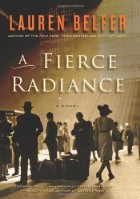 Claire Shipley, a divorced single mother, is a photographer for Life magazine. With the United States on the cusp of, and then deep into, World War II, she has plenty to photograph, but one story captures her devoted attention. It’s the development of penicillin, the miracle antibiotic which has the potential to save lives. After losing her daughter to septicaemia at the age of 3, Claire knows all too well what a difference this drug could make in people’s lives, but it’s incredibly difficult to manufacture and impossible to synthesize – moreover, the government has mandated that penicillin be affordable and patent-free. That means the drug companies are dangerously eager to research more profitable alternatives, and they’re not afraid to hurt the people Claire loves to get their hands on that potential. Can she balance telling the story with keeping her family safe? Claire Shipley, a divorced single mother, is a photographer for Life magazine. With the United States on the cusp of, and then deep into, World War II, she has plenty to photograph, but one story captures her devoted attention. It’s the development of penicillin, the miracle antibiotic which has the potential to save lives. After losing her daughter to septicaemia at the age of 3, Claire knows all too well what a difference this drug could make in people’s lives, but it’s incredibly difficult to manufacture and impossible to synthesize – moreover, the government has mandated that penicillin be affordable and patent-free. That means the drug companies are dangerously eager to research more profitable alternatives, and they’re not afraid to hurt the people Claire loves to get their hands on that potential. Can she balance telling the story with keeping her family safe?
This was a fascinating book. I knew that penicillin, and the other antibiotics we have today, was a game-changer for human life as it stood, but I’d never thought about it from this perspective. The idea that a scratch or a blister could end up killing a person is completely foreign to most of us now. I’ve never had an infection from anything; we even have antibiotic bandages and soaps. Viewing the world from Claire’s perspective, with her full knowledge that this could indeed save lives, was breathtaking and added a layer of intensity to a story that, for me, was already compelling.
That’s because Claire’s emotions don’t remain detached from the story for long. She falls in love with a handsome doctor in charge of the initial tests after photographing him at his work. This makes the hunt for antibiotics personal and close to home; moreover, Claire’s own father, absent from nearly all of her life, begins to make more of an impact on her, leaving her to make tough decisions that affect both her life and that of her son Charlie.
I found all of the characters in the book to be interesting, really; I enjoyed a turn in each of their minds. The book occasionally shifts perspective strangely, because it’s written completely in third person, but it doesn’t happen often enough to be a problem. It’s certainly worth considering everything from each of their perspectives, as in some ways the book is a deeper look at what motivates people to commit certain acts that are either condemned or praised. Life is not black and white, and it certainly isn’t here.
Written thoughtfully, with sympathetic and deep characters, against a truly fascinating backdrop, A Fierce Radiance is one for the historical fiction fans amongst us. And it’s still relevant; after all, with the over-prescription of antibiotics, we may well return to a world where each and every scratch could be a death sentence. Recommended.
All external book links are affiliate links. I received this book as a gift from Kathy. Thanks again, Kathy!
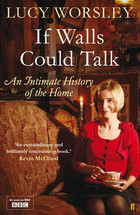 Home is probably the most cherished place in the world for most of us. We spend huge chunks of our lives cleaning, decorating, organising, and simply enjoying our homes, but how has the house change throughout history? What would our houses tell us about what went on in them before? Lucy Worsley tackles this topic by exploring the history and evolution of four different kinds of room in an English house, from the medieval period right through to the present. The living room, the kitchen, the bathroom, and the bedroom are Worsley’s subjects, but the people who populate them truly make them what they are, and this is a fascinating journey. Home is probably the most cherished place in the world for most of us. We spend huge chunks of our lives cleaning, decorating, organising, and simply enjoying our homes, but how has the house change throughout history? What would our houses tell us about what went on in them before? Lucy Worsley tackles this topic by exploring the history and evolution of four different kinds of room in an English house, from the medieval period right through to the present. The living room, the kitchen, the bathroom, and the bedroom are Worsley’s subjects, but the people who populate them truly make them what they are, and this is a fascinating journey.
I must admit a little bit of bias and prior knowledge of this book. The series, hosted by Worsley, was actually televised here in the UK over four episodes, one for each room. So I already knew that I was interested in the subject matter (although that wasn’t a surprise) and I’d picked up many of the facts previously. If you have seen the show, though, the book adds bits and pieces and draws more conclusions from Worsley’s experiences living certain aspects of old-fashioned lives.
Social history, for me, is completely addictive; I love finding out why there might be a shoe hidden in my attic or how recently some British homes actually got proper bathrooms and plumbing. There are Victorian ash-midden privies in my little garden and, even though now they’re considered “outbuildings”, that little slice of history is one of the things I love about England. Worsley gives equal time here to the ordinary and the aristocratic, particularly because in many cases developments made for the wealthy finally trickled down to the poor.
Worsley’s writing style is also very engaging and the book is a pleasure to read. There are plenty of endnotes, but this is not dry history at all. It’s full of facts that I’m sure I will regale people with for weeks to come, lots of curiosities about how our homes actually got to be the way they are and how differently people treated them. Consider the bedroom, once simply integrated into the main living space with little to no privacy, which slowly migrated to becoming one of the most private places of all, especially as the living room took its place.
One of the most interesting aspects of a book like this, for me, is how the home can highlight just how much society has changed. Just one part of this is obviously the presence of servants in our lives. Not that long ago, a huge proportion of the population was employed in service, a respectable occupation and one that had a huge part to play in the development of the home. Some things certainly wouldn’t have been possible without servants – older kitchen ranges, for example, required daily cleaning and blacking, not to mention the issues surrounding the chores of actually preparing and serving food. The monumental shift away from servants, along with the inventions and innovations that replaced them, have played a role in the development of the home today.
All in all, If Walls Could Talk is a fascinating journey through the home, a joy to read, and a trove of worthy little details for those interested in the history of ordinary people as well as royalty. Definitely recommended.
All external book links are affiliate links. I received this ebook for free for review.
 Lucy Morgan’s position in Elizabethan society is awkward, to say the least. Part of a troupe of singing girls who entertain the queen and court, Lucy is often hidden away in the back due to her African heritage, even though she has one of the most beautiful voices in the group. That’s until one of the soloists becomes ill, and the queen takes a liking to her. On the famous royal visit to Kenilworth, often viewed as the occasion during which Robert Dudley aimed to win the queen’s hand in marriage, Lucy becomes favored by the queen, and is asked to spy on Dudley and his mistress Lettice Knollys for Elizabeth. But she’s not the only one spying – or plotting – in the court, and an assassination plot that Lucy uncovers could have deadly consequences for all involved. Lucy Morgan’s position in Elizabethan society is awkward, to say the least. Part of a troupe of singing girls who entertain the queen and court, Lucy is often hidden away in the back due to her African heritage, even though she has one of the most beautiful voices in the group. That’s until one of the soloists becomes ill, and the queen takes a liking to her. On the famous royal visit to Kenilworth, often viewed as the occasion during which Robert Dudley aimed to win the queen’s hand in marriage, Lucy becomes favored by the queen, and is asked to spy on Dudley and his mistress Lettice Knollys for Elizabeth. But she’s not the only one spying – or plotting – in the court, and an assassination plot that Lucy uncovers could have deadly consequences for all involved.
It’s been a few months since I read a novel set in Elizabethan England, and I think the break did me good as I found myself thoroughly enjoying this novel. Told in alternating viewpoints, with Lucy, her guardian and spy Goodluck, Lettice Knollys, and the queen herself narrating, I was quickly swept up in this exploration of the history surrounding that single event, a visit to Kenilworth Castle. For me, this worked much better than another book covering some large part of Elizabeth’s reign. Instead, we witness all those tensions over the course of a summer, when many things appear to come to a head.
For one thing, the author chooses to depict this as the moment at which Elizabeth firmly rejects her lifetime love, Robert Dudley, for practical reasons in part; she chooses to speculate something about the queen which I won’t reveal. The real origin of this is disclosed in the author’s notes, as with all the historical fiction I like best. But there is also Elizabeth’s anger at Dudley’s relationship with Lettice Knollys, her younger cousin who still retains much of Elizabeth’s youthful, now vanished beauty.
All of this creates quite a bit of emotional drama at the court, and Lucy is mixed up in all of it. She is chosen by Leicester and by the queen to carry out individual tasks, plus she is becoming aware of herself as an attractive person thanks to the fact that she meets a stableboy, Tom, who shares the color of her skin, and who is very attracted to her. But this isn’t a romance novel, and Tom isn’t her primary concern; the queen, her guardian, and Leicester are. She’s under a lot of pressure to reveal secrets, only to discover that there might be even more afoot. There are consequences to the prestige that Lucy’s always wanted, and she certainly discovers them in spades here.
I also really liked Lucy as a character; I could easily imagine a young black woman being shoved to the back of a procession not very long ago, much less in the Tudor period, and I found her reactions to be honest and authentic for the most part. The author does a very good job setting the scene at Kenilworth, too; I’ve been there, and I could picture some of the events taking place in a more complete castle. It added a nice bit of realism to the whole book.
A very enjoyable read for those of us who are still looking for more Elizabethan historical fiction; if you haven’t been reading any for a while, you may find yourself pleasantly surprised by The Queen’s Secret. Recommended.
All external book links are affiliate links. I received this book for free for review.
|
|


Recent Comments