|
|
 Cathy Rozier opens her narrative by informing us that she’s actually killed her best friend Nic. But before we find out how, we must go back and discover why; how two friends who spent so much time together could end up so opposed that their relationship ends in death. Intertwined with Cathy’s difficult story of angst-ridden teenagers is the story of Guernsey throughout World War II, when her father, uncle, and grandparents struggled through the German occupation, narrated through documents and letters in a variety of different voices. Put together, it’s the tale of an island then and now, the secrets held by so many people and the damage they can wreak on other lives. Cathy Rozier opens her narrative by informing us that she’s actually killed her best friend Nic. But before we find out how, we must go back and discover why; how two friends who spent so much time together could end up so opposed that their relationship ends in death. Intertwined with Cathy’s difficult story of angst-ridden teenagers is the story of Guernsey throughout World War II, when her father, uncle, and grandparents struggled through the German occupation, narrated through documents and letters in a variety of different voices. Put together, it’s the tale of an island then and now, the secrets held by so many people and the damage they can wreak on other lives.
At first, I found it difficult to get into this book. Cathy’s voice is acerbic, cynical, and self-deprecating; she’s a character I don’t think I could ever like. At the same time, her teenage attitude is incredibly appropriate for the kind of book this is, and it isn’t always necessary to like a character in order to gain appreciation for a book. And in the end I love the twisted storylines, particularly the historical letters and details from Charlie’s side of the story (surprise surprise).
There are quite a few bits and pieces in this novel about the occupation that are skipped out or found no place elsewhere, such as the burying of the prisoners’ bodies, that helped flesh out what I’d read before and add true atmosphere to this novel. Knowing precisely what happened in the past adds layers to Cathy’s story that simply wouldn’t exist in an ordinary contemporary novel with a mystery. Cathy has revelations to make about her family that can deeply impact her, but throughout she acts as a teenager would and I was completely convinced by her character.
Once engrossed, the novel is easy to race through, as we are keen to figure out just what happens next and how Cathy will handle everything that is happening around her. Perhaps not surprising given the subject matter, this is a dark book, with a setting that feels particularly grim. We can sense Cathy’s dissatisfaction with Guernsey and the little it offers to a modern day teenager even as the richness of its past has strong impacts on precisely the present that is so hum drum.
This is a book that, off-putting to start, turns out to be an addicting read. I had quite a time with it and feel I’ve been left with a lot to think about now that I’ve finished. I would definitely recommend The Book of Lies to those who are also interested in probing the past, about the difficulties of teenage years, or even just looking for a good story.
All book links to external sites are affiliate links. I received this book for free for review from Netgalley.
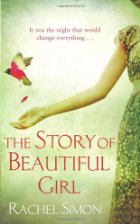 On a night like any other in the 1960s, a mysterious couple turns up on Martha’s doorstep. Both are disabled; the man Homan cannot speak or hear, while the woman Lynnie, the most beautiful Martha has ever seen, appears unable to talk. They are refugees from a nearby mental institution, and they’re not alone; they have a baby with them, a baby that clearly does not belong to Homan. Within minutes, the police are after them, and Lynnie and Homan are about to spend years of their lives trying to find their independence in a society that hides and suppresses anyone with the slightest disability. Meanwhile, Martha is left with their small burden, to her an unspeakably precious gift, that she must help grow up safe and undiscovered. On a night like any other in the 1960s, a mysterious couple turns up on Martha’s doorstep. Both are disabled; the man Homan cannot speak or hear, while the woman Lynnie, the most beautiful Martha has ever seen, appears unable to talk. They are refugees from a nearby mental institution, and they’re not alone; they have a baby with them, a baby that clearly does not belong to Homan. Within minutes, the police are after them, and Lynnie and Homan are about to spend years of their lives trying to find their independence in a society that hides and suppresses anyone with the slightest disability. Meanwhile, Martha is left with their small burden, to her an unspeakably precious gift, that she must help grow up safe and undiscovered.
I’ve heard a lot of praise floating around about this book already and I have to admit that all of it was completely warranted. This was an amazing book which has stuck with me; it’s taken me ages to review it but as soon as I started thinking of the story again it all popped back into my mind freshly. It’s partly because the characters are so vivid, with so many problems and no way to really solve them. They struggle and, frankly, sometimes they fail, but sometimes they succeed.
The core of the story is the struggle that both Lynnie and Homan go through as they try and break free of the stereotypes surrounding people with disabilities in the mid twentieth century. Both of them have endured the rigors of a mental institution, a place called The School for the Incurable and Feebleminded. They’ve survived the systemic abuse that plagued these places, the complete lack of understanding or care, but they have to keep on going to try and find ways to adjust eventually to living in the real world. They have demons to conquer, and while they do have assistance through people like the kind-hearted attendant Kate, it’s not a simple task.
It’s that journey which really made this entire book for me, as I found both of their individual stories to be incredibly touching and moving.It’s so hard to believe these places still existed only fifty years ago, and while I would hope for care to be substantially better these days, it is a worthwhile reminder of how easily people who need help and encouragement can instead be abused. I loved the characters of both Lynnie and Homan.
The least interesting part of the story for me was Martha’s journey with the infant Julia, Lynnie’s daughter. This story takes us up until Julia is fourteen and had less of an impact on me overall. It’s easy to understand why Martha hides her, because if the institution found her she would probably end up in the same situation as her mother. But as time goes on, I just didn’t find their narrative as affecting, and that was probably the only downside of the book for me.
Overall, though, The Story of Beautiful Girl is a beautifully written story of the struggles that disabled people must endure. The author’s sister is disabled, and the passion with which she writes really helped me feel she knew what she was talking about and could give me an experience I’ll never have on my own, but one which is most certainly worth understanding. Highly recommended.
All book links to external sites are affiliate links. I received this book for free from Amazon Vine.
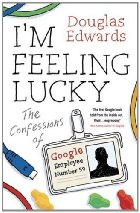 Google employee number 59, Douglas Edwards got a job when the company was still very small, had no financial model, but for some reason appealed to him. A veteran marketer for newspapers, Edwards took a pay cut to satisfy his desire to work at a start-up after turning down a job at Yahoo!. Though the story is through Edwards’ eyes, it’s really a tale of Google from start-up to corporation, a truly tumultuous ride and a whirlwind expansion as the company that now seems determined to plant itself all over the internet first found its footing as a successful search engine. Google employee number 59, Douglas Edwards got a job when the company was still very small, had no financial model, but for some reason appealed to him. A veteran marketer for newspapers, Edwards took a pay cut to satisfy his desire to work at a start-up after turning down a job at Yahoo!. Though the story is through Edwards’ eyes, it’s really a tale of Google from start-up to corporation, a truly tumultuous ride and a whirlwind expansion as the company that now seems determined to plant itself all over the internet first found its footing as a successful search engine.
I still remember the first time I was taught to use a search engine at school. It was AltaVista, which according to my teachers was the best at the time. I no longer remember when I switched to Google, but it certainly wasn’t long afterwards, and I’ve been a fan ever since; I now have an Android, couldn’t live without Google Reader, and use Google Chrome, Gmail, Google Calendar, and many other Googley products. You can look at a timeline displaying how Google used to look here. I now work directly with things that relate to Google and Matt Cutts is a name bandied about at work on a daily basis. So an insight into the beginning of Google was instantly appealing to me, and the book lived up to its promise in many ways.
Douglas Edwards was the first director of consumer marketing and brand management at Google for six years during its start-up phase. It was his voice that represented Google to us on the internet up until 2005. Really the only problem with the book is that it doesn’t take us up to the present day! Edwards talks about the origin of products that are now very familiar to us, the insider struggles over new products, and the way Google rushed to scale as more and more opportunities were tossed their way.
I had no idea that Google used to update its index once a month, if that – the index is updated constantly these days. I never knew anything about server farms or the way Gmail actually developed. And I’d only had a small idea of the competition Google faced in search, which was widely regarded as a full playing field, and how it finally developed the monetization model which is so successful. Some of the other options are truly atrocious and I found it very easy to see why AdWords was and is so very successful.
What was most interesting to me, and probably will be to others, was Google’s start-up culture and merge into corporate culture. We’ve all heard about the amazing food and perks offered to Googlers, seemingly in an attempt to make sure they never left the office. And indeed they rarely did; Edwards discusses emails sent at 3 am as the company took on employees with advanced degrees but little to no actual life outside of Google. It always sounds appealing to have every meal for free and to have 20% time devoted to whatever one would like, but it’s easy to forget that those are in exchange for hours of overtime and devotion to Google above most other things in life. Edwards left when the company’s flat start-up hierarchy had turned into a true company’s hierarchy. I did feel at times that the book struggled to decide whether it was a history of Google or a history of Edwards within Google, but I appreciated all of the information.
I really enjoyed this insight into Google and even the character of the author himself, who does come through the pages clearly. As a meld of business history and memoir, I’m Feeling Lucky is a worthwhile read for anyone who is at all interested in Google.
All book links to external sites are affiliate links. I received this book for free for review from the publisher.
 Please note that Magic Slays is book five in a series. This review will assume you have read the first four books in the series. Please note that Magic Slays is book five in a series. This review will assume you have read the first four books in the series.
After quitting the Order of Knights of Merciful Aid, Kate Daniels has attempted to strike out on her own with her own business. Unfortunately, she has failed to win many new clients, because the Order is busy spreading rumors against her. Moreover, Kate is now the acknowledged mate of the Beast Lord, which keeps certain people well away from her. When Ghastek, one of Atlanta’s Masters of the Dead, finally contracts for her services, Kate is thrilled, but not for long as she confronts a new menace to the world she knows and the people she’s finally grown to care about.
I reread the entire series in preparation for this book, something I hardly ever do but which I felt was very warranted. I’ve said far and wide that this is one of my favorites, somehow making me completely fall in love with prickly, brave yet vulnerable Kate and the many characters who populate the world around her. It was absolutely delightful to spend so much time in this universe; once you’ve grown an affection for the characters, it’s easy to enjoy all of the books even more.
And then I moved on to this one, which is a game changer, which feels just as epic as the last few. I’m not sure how long the series is going to last, because there are certainly threats hanging over Kate’s head and she can only delay them for so long. Another one of the characters who Kate loves comes into grave danger in this book, with her increased vulnerability becoming ever more obvious to her. She was trained to let no one in, and now that she’s let in a ton of people, she’s become more at risk than ever. Watching that transformation has been one of the best parts of the series for me, and now it’s coming full circle as she confronts the consequences.
One of the fun parts of this book was learning more about Kate’s past and getting an insight into where her parents came from. We’ve slowly gained bits and pieces of Kate’s past and heritage, with the pace increasing over the past couple of books. This time, we learned more about Kate’s mother, who hasn’t featured very strongly in previous books, and Kate’s history on that side of the family.
With every book I continue to wonder what’s going to happen in the finale; I think there is only one outcome to this series (which has two books left) and I am looking forward to where it goes. What is certain for me is that the quality hasn’t dropped at all and, if anything, each book has simply gotten better. I’m already waiting for book six with anticipation.
All book links to external sites are affiliate links. I purchased this book.
 As many of you who have stuck around for a while will realize, I am not a big audio listener. Audiobooks have gotten huge in the book blogging community lately and I have felt a little bit left out! They just seem the perfect way to fit more reading in and make otherwise unpleasant tasks an excuse to keep reading a little bit longer. While they’re expensive to buy, my library does have them, so I don’t have any excuses there. As many of you who have stuck around for a while will realize, I am not a big audio listener. Audiobooks have gotten huge in the book blogging community lately and I have felt a little bit left out! They just seem the perfect way to fit more reading in and make otherwise unpleasant tasks an excuse to keep reading a little bit longer. While they’re expensive to buy, my library does have them, so I don’t have any excuses there.
The true problem is that I’m not very good at listening. I never have been. In fact, I tend to tune out sounds the minute my brain starts whirring, so I’ll be listening to something, have a connection in my mind, and then follow the thought tangent instead of returning to the sound. I’m horrible at paying attention on the phone, I hated it when we were forced to read plays aloud in school (I could read the paper version much faster), and I’m even bad at listening to music. I like it, but I hardly ever do it, and when I do I tune out until I forget what I’ve heard.
So, that’s the core of my problem with audios. But, determined to see what I was missing, I decided this week to try again. I’m always a glutton for punishment. I’ve been moving back in a fantasy and sci fi direction over the past few weeks, when I do have a chance to read, so when I saw this post at Fyrefly’s Book Blog I leapt at the opportunity to download Tor short story podcasts. What better way to get myself interested in audio than with a short story I can finish in a day’s walk to and from work?
So far, I’ve listened to the first two, and I thought I’d include a couple of mini reviews.
After the Coup – John Scalzi
This story takes place in the same universe as the Old Man’s War series but with different characters and a different scenario – mostly focusing on a one-on-one battle with a peculiar alien. As with all of Scalzi’s work, I liked this; he narrated it himself and I thought he did quite a good job. It was very funny at times and I had no trouble actually paying attention aside from in the middle of a few conversations. The battle scenes were surprisingly gripping and I was invested in the story – I’d have happily kept listening instead of working.
Overtime – Charles Stross
I’ve never read anything by Charles Stross, so this was new to me. It’s set during a Christmas break while the main character has to work overtime and ends up fretting about an alien invasion. I’m not sure who narrated this one but he had an awesome voice, even when I tuned out I still liked having it in the background! There was a bit of humor here too, but I didn’t get on with it quite as well. The story would be better suited to Christmastime instead of the warm July day when I listened to it!
In summary, I actually think this experiment has been a success, and I’m busy downloading a couple more short stories from collection onto my iPod. There are quite a few on there I’m very interested in, so I’m looking forward to them.
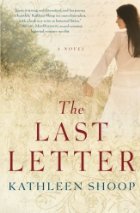 Jeanie Arthur and her family have lost almost everything. As recourse they head out to the prairie to make new lives for themselves where no one knows about the family scandal and they can remake their lives. No matter how far they go, there are still numerous tensions simmering underneath the service, tensions that remain throughout the eldest daughter Katherine’s life. Told through two different timelines, the story explores the difficulties of family, the secrets that parents keep to protect their children, and the power of that love above all other kinds. Jeanie Arthur and her family have lost almost everything. As recourse they head out to the prairie to make new lives for themselves where no one knows about the family scandal and they can remake their lives. No matter how far they go, there are still numerous tensions simmering underneath the service, tensions that remain throughout the eldest daughter Katherine’s life. Told through two different timelines, the story explores the difficulties of family, the secrets that parents keep to protect their children, and the power of that love above all other kinds.
It’s been a good long while since I read a book set on the prairie and I’d forgotten how difficult that life was. Like many girls, I was a huge fan of Little House on the Prairie and ever since then stories set on the prairie certainly have tons of appeal. Released right in time for Mother’s Day (and still perfect for next year), this is a celebration of family love and endurance against incredible setbacks. Jeanie is in many ways an inspiring character, difficult and stubborn but still human beyond all of that. For better or for worse, as she goes along in the book her experience teaches her certain things and she simply cannot just unlearn those, however much she’d want to.
Juxtaposed with Jeanie’s pure struggle to stay alive and keep her children happy and safe is older Katherine’s difficulty with her mother’s failing health and her mentally disabled sister. Both of them have come to live with her at the turn of the twentieth century and she has a hard time forgiving her mother for what happened on the prairie, which we don’t find out until the story progresses. It’s a neat way of keeping the tension going as I was certainly wondering what the final straw was, especially given how close and loving Katherine and Jeanie are at the start of the novel.
All of the characters endure their fair share of agony, and they don’t always react in the way that we’d like them to, but they’re all changed in ways that I found to be realistic. Not everyone bends with the pressure of life, some people break, and it’s unfortunate but true. Overall I found myself completely swept up in the story, and even though it’s not a short book I managed to read it over a few days (with much else going on at the time!).
Truly, though, the core of the book is a mother’s love, and how a mother will put her children above everything else, even if they’re not sure why she’s doing it. I’m not a mother myself, but I think it will speak to them very much. Jeanie has always loved her children, but it’s the harsh prairie that truly brings out her maternal nature and makes the entire book.
The Last Letter is the perfect read for mothers who love historical fiction, but it can be appreciated very well by the rest of us too. Recommended.
All book links to external sites are affiliate links. I received this book for free from a publicist.
 Blood Work is a multi-pronged look at the history of blood transfusion during the Scientific Revolution in both England and France. Tucker mainly tells the story of Jean-Baptiste Denis, a physician outside the cult of Paris-educated noblemen, who in what could have been a world-changing experiment transfused calf’s blood into a madman in Paris. The madman died and Denis wound up framed for murder as a result. Tucker also looks at the race between the English and the French to transfuse faster, and their struggles to publish first and occasional glossing over of facts as they did so. The book is also a deeper look at the ethics behind blood transfusion; the many ways people questioned what they didn’t understand, tried to stop it happening, and eventually wound up slowing progress for hundreds of years. Blood Work is a multi-pronged look at the history of blood transfusion during the Scientific Revolution in both England and France. Tucker mainly tells the story of Jean-Baptiste Denis, a physician outside the cult of Paris-educated noblemen, who in what could have been a world-changing experiment transfused calf’s blood into a madman in Paris. The madman died and Denis wound up framed for murder as a result. Tucker also looks at the race between the English and the French to transfuse faster, and their struggles to publish first and occasional glossing over of facts as they did so. The book is also a deeper look at the ethics behind blood transfusion; the many ways people questioned what they didn’t understand, tried to stop it happening, and eventually wound up slowing progress for hundreds of years.
Blood Work has been on my wishlist since well before it was published. I bought it almost immediately afterwards, but for some reason took a while to actually get around to reading it. I think my expectations were slightly too high. I needn’t have worried, as this is truly a riveting account of a story I’d heard little about. Blood transfusion is an essential for our modern day doctors. It saves lives every day. As a result, it’s somewhat shocking to read about the origins of it and the many crazy things people thought would happen. Would cow’s blood turn a man into a bovine? Would he start to baa like a sheep? If you transfused blood from people of different colours, what happened? These questions made people very nervous, some so much so that they would do anything in their power to stop the process.
I have to admit one of the questions foremost in my mind as I was reading this book was just how people and animals weren’t dying left and right from the transfusions. There was no idea of blood types then. These scientists thought they were transferring blood from all different species, including at the final experiment, and most patients seemed to have only mild symptoms. Tucker thankfully reveals the answer to this; there probably wasn’t actually that much blood being transferred. The technology wasn’t really advanced enough until the 20th century, when luckily blood typing was also discovered.
The philosophical issues surrounding transfusion were also fascinating. Tucker explains in the book that she was inspired by George W. Bush’s statements against stem cell research. Many of the same arguments we hear now against stem cell research were employed in the battle against blood transfusions. That treatment saves lives every single day. I’ll let you draw your own conclusions, but it certainly provides much food for thought.
I haven’t even touched on the historical mystery that Tucker explores within the book, but it also works quite well and the threads of the book fit perfectly together. My only reservation is that parts of the book made me a bit queasy – I’m not even good with this sort of thing written in words! For someone who isn’t particularly bothered by descriptive language about transfusions, this wouldn’t be a problem.
Blood Work is a very engaging, fast paced narrative work of history that will appeal to any curious about the Scientific Revolution, how blood transfusions began, or even the issues surrounding experimentation on human beings. Recommended.
All book links to external sites are affiliate links. I purchased this book.
 Marcelline Noirot is a London dressmaker trying to make it big. Her innovative, French-inspired designs are unlike anything seen in staid English ballrooms and Marcelline is convinced that all she has to do is score one big client to ensure her family’s success – and freedom from poverty – for the rest of her life. So she sets her sights on the future Duchess of Clevedon, by way of the Duke, who has yet to propose. Marcelline gambles that the best way to convince Clevedon is to show him just how incredible her creations are in person, in Paris; what she stands to lose is no less than her reputation and her heart to a man she can never have. Marcelline Noirot is a London dressmaker trying to make it big. Her innovative, French-inspired designs are unlike anything seen in staid English ballrooms and Marcelline is convinced that all she has to do is score one big client to ensure her family’s success – and freedom from poverty – for the rest of her life. So she sets her sights on the future Duchess of Clevedon, by way of the Duke, who has yet to propose. Marcelline gambles that the best way to convince Clevedon is to show him just how incredible her creations are in person, in Paris; what she stands to lose is no less than her reputation and her heart to a man she can never have.
Loretta Chase is a rising star on my romance radar. After a few fairly disappointing reads by her, I seem to suddenly be falling in love with her books. Silk is for Seduction is not an exception, as I virtually inhaled it on a couple of train journeys and struggled to keep the tears from my eyes in public. I did catch a few anachronistic notes, as I don’t really think this HEA would have occurred in real life, but the emotions were all genuine and the story was fabulous.
Marcelline herself was one of the high points of the book for me. A woman who has clearly been through it all, a widow with a small child who has pulled her entire family out of poverty and established them as dressmakers, she still manages to dream big. She’s obviously clever and positions herself as the dressmaker who will single-handedly inspire English fashion, but she knows it won’t be easy, putting in far more effort than she ever lets any of the other characters know.
Meanwhile Clevedon, the hero of our story, needs to learn a few of those tough lessons and stop taking everything in his life for granted. He’s returning from a three year wastrel’s tour of Europe having finally decided to propose to the woman who has been waiting for him for years, even though he truly believes he loves her. Marcelline shows up and, without meaning to, throws his life completely off track by introducing something he needs to work for and a purpose he can devote himself to. It’s easy to fall in love with him.
What I also loved about this book was the atmosphere. The sensation that Marcelline causes whenever she walks into a ballroom in one of her creations has still left a lingering memory imprinted on my brain – I can almost see her dresses in my mind. She’s present in glittering ballrooms across Paris and London, making an imprint on fashion that none of the characters ever manages to forget. To me, this added a real dimension to the book.
And, finally, the shadow heroine, Clevedon’s intended Clara. She too comes into her own in this book, and I sincerely hope she will be the focus of her own soon.
There were a few picky things I didn’t like about it; as I said earlier, I wouldn’t put this HEA in the context of real life because it isn’t particularly realistic. Neither was Marcelline’s daughter, who was an adorable character but for some reason I couldn’t imagine her as a real child. There was a side plot involving theft of Marcelline’s designs which did contribute to the story but was very much on the side of the main romance as well.
All in all, however, I loved reading this book and it’s stuck vividly in my mind for weeks now. I would highly recommend it to any romance reader.
All book links to external sites are affiliate links. I received this book for free from Netgalley.
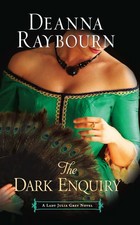 Lady Julia and her husband Nicholas Brisbane have now returned from their honeymoon and are ready to start living their proper married life together in London. Julia has begun to tinker with substances and, as you would expect, stick her nose into Brisbane’s business once again. This time, under the guise of worrying about him and his mysterious associations with her brother, Julia tags along to a seance dressed as a man. She doesn’t find anything as simple as communion with the spirits; instead, she finds herself embroiled in a murder mystery, spy plot, and tangled love affairs between other people. Lady Julia and her husband Nicholas Brisbane have now returned from their honeymoon and are ready to start living their proper married life together in London. Julia has begun to tinker with substances and, as you would expect, stick her nose into Brisbane’s business once again. This time, under the guise of worrying about him and his mysterious associations with her brother, Julia tags along to a seance dressed as a man. She doesn’t find anything as simple as communion with the spirits; instead, she finds herself embroiled in a murder mystery, spy plot, and tangled love affairs between other people.
A new Lady Julia Grey novel is an intensely exciting event for me – this declared itself as one of my favorite series in book 1, Silent in the Grave, and has never budged from that position. Dark Road to Darjeeling only came out about six months ago and I am loving the shorter wait in between books of this series. The Dark Enquiry certainly did not disappoint and I am thrilled that the standards for this series haven’t dropped at all, even though we’re now on book 5.
One of the differing aspects of this particular book was the new-ish supernatural element. We’ve always known that Brisbane’s migraine headaches are a result of him refusing to see visions which are a result of his gypsy birthright. I can’t really remember them rising to the fore like they have in this one, though, perhaps because Julia was not so intimate with him when they did strike previously. Here, though, they serve a pivotal plot point, and we’ve even visited a gypsy camp with Julia and Brisbane, to explore a bit further into his past. These seem like tantalising little glimpses of a world we have yet to enter, though, and I’m sure we’ll be hearing a lot more about Brisbane’s past and his visions in subsequent volumes. An interesting new character is introduced as well who I also suspect will play a prominent position in books to come.
One other aspect that I picked out of this one and particularly enjoyed was the fact that ever-impulsive and headstrong Julia comes into contact with a few less free-thinking men of her time during her investigations. As many have observed before me, Julia is very peculiar for a Victorian woman, and though it’s easy for me as a modern woman to relate to her, I think a real woman of her type would have run into this problem very quickly. The men in question don’t play a pivotal role in the story but Julia’s reaction to them and their thoughts was another added layer to a story I already enjoyed.
The Dark Enquiry is another excellent installment in the Lady Julia Grey series that I and many other readers have come to love. I would definitely recommend this series to mystery and historical fiction fans alike.
I am an Amazon Associate. I received this book for free for review from Netgalley.
 Vivienne de la Mare’s marriage has been fading for a while, so she doesn’t actually mind very much when her husband goes off to fight in World War II, leaving her, her mother-in-law Evelyn, and her two daughters alone on the island of Guernsey. Vivienne has many other problems to deal with, such as Evelyn’s fading memory, her elder daughter’s budding womanhood, and the difficult choice of whether to leave the island. Just when Vivienne chooses to stay, the Germans occupy Guernsey, and Vivienne faces the most pressing problem of all as she falls in love with a German soldier, Gunther, even as she witnesses the atrocities committed by his fellow soldiers right before her eyes. Vivienne de la Mare’s marriage has been fading for a while, so she doesn’t actually mind very much when her husband goes off to fight in World War II, leaving her, her mother-in-law Evelyn, and her two daughters alone on the island of Guernsey. Vivienne has many other problems to deal with, such as Evelyn’s fading memory, her elder daughter’s budding womanhood, and the difficult choice of whether to leave the island. Just when Vivienne chooses to stay, the Germans occupy Guernsey, and Vivienne faces the most pressing problem of all as she falls in love with a German soldier, Gunther, even as she witnesses the atrocities committed by his fellow soldiers right before her eyes.
After I flat out adored The Guernsey Literary and Potato Peel Pie Society I knew I wanted to read more World War II fiction centred around the occupation of Guernsey, one of the Channel Islands. This book fit right in with my plans; smooth and easy to read, it nonetheless dealt with a lot of the very difficult issues surrounding German presence on the island as well as Vivienne’s own struggle to continue to live a meaningful and content life in the shadow of so many other problems.
Because Vivienne’s husband has been rather openly cheating on her, she has very little guilt about betraying him, but with a German soldier? That’s a whole different story, because Vivienne can see all too well the suffering that other Germans are inflicting on others. She doesn’t have to rely on tales she hears when there are dying men in front of her eyes. But she knows that Gunther is different, even as she questions how deeply she can ever truly know a person. It’s thoughtfully and sensitively handled; Leroy speaks to both the horrors of Nazi acts even as she shows us that not every soldier was behind what was happening.
At the same time, it’s a considerate look at the difficulties that children go through in wartime. Vivienne’s elder daughter longs to have the glamorous life she’s read about in so many places, but it simply isn’t possible with rationing. She dreams of London and fancy dresses, but she’s trapped on Guernsey and Vivienne is the one who must tell her so and attempt to keep her daughter happy in the midst of deprivation and struggle.
And there’s Vivienne’s own self-discovery, as she starts to come out of the shell that years of an unloving marriage have left her in, with difficult decisions to make completely on her own. Her indecisiveness at the beginning of the book changes as she make choices, and whether they turn out correct or not, we can see that Vivienne’s experience through the war years have changed and strengthened her.
Overall, The Collaborator is a very moving and sensitive read, dealing with issues unique to wartime and universal to women at the same time. Well worth it for those who enjoy historical and women’s fiction.
All book links to external sites are affiliate links. I received this book for free from a publicist for review.
|
|



Recent Comments