|
|
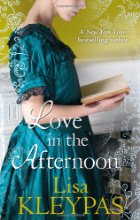 Love in the Afternoon, Lisa Kleypas Love in the Afternoon, Lisa Kleypas
Beatrix Hathaway has always been the oddest member of her family. More at home with the animals in the stable than with other people, she’s content to be out of society and has always assumed that she’ll remain unmarried forever. All that changes, however, when she discovers that her friend Prudence has been completely neglecting one of her beaus, Christopher Phelan, even though he’s at war. Beatrix takes it upon herself to write letters in Pru’s name, with her permission, because she knows a soldier needs that kind of comfort. But what she doesn’t expect is to fall in love with her correspondent, who has never liked her, or for her reaction to his return to England.
This book won me over from the first few pages. I can’t resist a love letter and the first pages of this book are precisely that, Christopher and Beatrix’s exchange. I could genuinely feel the love between them and I was immediately won over, somehow – it was a perfect pairing from that moment on.
While the rest of the book didn’t quite match those letters, they still set up this love story very well. A few of the pieces didn’t fit – it’s impossible to believe Beatrix and Prudence actually ever made friends – but the strength of the main couple carried the book through very well.
This was a lovely ending to the Hathaway series and I’m sorry to see them go!
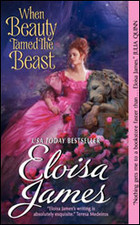 When Beauty Tamed the Beast, Eloisa James When Beauty Tamed the Beast, Eloisa James
Piers Yelverton, the Earl of Marchant, is a doctor in Wales. Despite having a temper, hating his father, and a leg wound that has never healed, Piers is a brilliant doctor; that won’t get him married, like his father wants. Linnet, meanwhile, has been ruined completely by accident, but lucky for her she can charm a rock, and is thus sent to become Piers’s bride. Despite the fact that he’ll have nothing to do with her, she’s determined to become his wife and persuade him to love her – but when she falls in love with him, she has to face the fact that he may never feel the same.
Eloisa James is one of my auto-buy romance authors. If a new book with her name on it is coming out, you can guarantee I will have preordered it somewhere (in the case, the handy Book Depository). I’m loving her latest romances based on fairy tales – this is the second one and doesn’t disappoint in the slightest. Beauty, naturally, is Linnet, who is not only gorgeous but charming and perfect in every way. Beast is Yelverton, who is not unattractive physically but has a bad leg and a temper to match. The author freely admits that she was inspired for his character by the TV doctor House which in my eyes (and I imagine in many others’) only made him a more appealing character.
What I loved about this book is the way that the author turned around the stereotypes by forcing Beauty to deal with unattractiveness and by showing Beast that he really isn’t horrible after all. It was very clever and well done – I am already looking forward to the next book by Eloisa James.
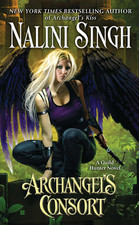 Archangel’s Consort, Nalini Singh Archangel’s Consort, Nalini Singh
The third book in the ongoing paranormal romance / urban fantasy series about archangel Raphael and his consort Elena, this novel focuses on the growing threat to angelkind from the awakening of an older, mentally unstable archangel – Raphael’s mother, Caliane.
This novel is very much a continuation of previous novels in the series – I wouldn’t dream of reading it on its own. Relationships continue to develop and the backstory of both characters is fleshed out more. I have to admit that so far, I am preferring Singh’s Psy-Changeling series, simply because I prefer getting to know two different characters. I like these two, but they’re already in love – they’ve lost a bit of that glow for me. Regardless, I enjoyed reading this one, and fully intend to pick up the next in the series, which in any case will be focusing on another character.
All external links are affiliate links. I purchased these books.
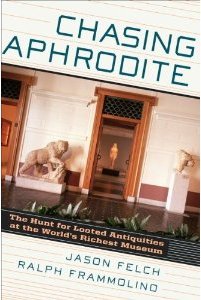 Museums that focus on the antiquities have to get art from somewhere, and for much of history, it’s been done through regrettable looting. Starting with imperialism and carrying right on down to the present day, many astonishingly renowned museums have continued to populate their collections with looted art, stolen in particular from Italy and Greece. This hasn’t stopped despite a number of laws and international sanctions passed against the destruction of archaeological sites and the theft of priceless art. The Getty Museum is one such offender; a museum that sped to fame largely on the basis of looted art, but which then positioned itself against the practice, led by curator Marion True. When the scandal was exposed, the Getty’s reputation fell with it. This is the expose of the museum, the result of years of investigative reporting, and a true insight into the practice of purchasing looted art in the United States. Museums that focus on the antiquities have to get art from somewhere, and for much of history, it’s been done through regrettable looting. Starting with imperialism and carrying right on down to the present day, many astonishingly renowned museums have continued to populate their collections with looted art, stolen in particular from Italy and Greece. This hasn’t stopped despite a number of laws and international sanctions passed against the destruction of archaeological sites and the theft of priceless art. The Getty Museum is one such offender; a museum that sped to fame largely on the basis of looted art, but which then positioned itself against the practice, led by curator Marion True. When the scandal was exposed, the Getty’s reputation fell with it. This is the expose of the museum, the result of years of investigative reporting, and a true insight into the practice of purchasing looted art in the United States.
I love museums and history, but I thought that looting was a practice that had ceased long ago. About the only thing I’d heard about recently was Greece’s requests for the Elgin Marbles from the British Museum, and even that doesn’t seem to be an urgent matter. I have been appalled at the carelessness with which archaeological artifacts were treated, but largely in the context of the past – mainly the Victorians destroying archaeology in search of the good stuff, most of which I’ve probably seen in the British Museum. I had no idea that this still happened, and worse that it was happening in Italy and Greece, probably the most archaeologically rich countries in Europe. This book really laid that all out for me, not only what damage the looters were doing with descriptions of art dirty, in pieces, and broken, but also how much history is lost. We have no idea why so many statues existed simply because they were wrenched from their context with no way of returning them.
The trade in stolen art had significant consequences for the Getty, which appears to have considered itself free of any laws virtually from its founding. The original curator regularly helped “donors” cheat on their tax returns, getting back millions for art that was often worth just a few thousands. He, of course, willingly acquired stolen objects. Through the ensuing years we can see pretty clearly the difficulties that museums were in. If they weren’t acquiring new and exciting antiquities, they fell from the limelight – but all the new and exciting antiquities were obviously stolen. Curators regularly had to choose between their morals and their career, if they even considered their morals at all. The curator who finally did, Marion True, still couldn’t resist purchasing looted art when it called to her, which ultimately led to the destruction of her career and positioned the Getty as a hypocritical institution.
What I liked was that even though the Getty is at the center of the book, the conclusions drawn clearly apply to other museums as well. This book deals solely with American museums, so it depicts which other museums caused scandals in their time and which ones ended up returning stolen items just like the Getty. It was a widespread crime, and we can imagine similar discussions happening in other institutions as happened in the Getty. The book also shows how attitudes in America changed; the top museums do now have policies against looted art and have begun returning stolen artifacts to Italy and Greece, starting off partnerships that will enrich museums across all the countries. The Getty is the focus, with documented conversations and interviews, but its fate was pivotal in the role of all such institutions in the country.
If you’re at all interested in museums and their history in the US, Chasing Aphrodite is definitely a book for you. I found it utterly fascinating; I thought about it while I wasn’t reading about it and even went so far as to tell others about it (even though they were clearly uninterested). I was appalled by what happened, but I feel I now have a better idea about the workings of museums and I’m much more confident that they’re moving in the right direction. We’ll never know quite how much knowledge is lost, but we can hope that more is left to discover in the future.
I am an Amazon Associate. I received this book for free from Netgalley for review.
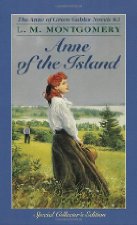 Anne is growing up further; this novel finds her attending Redmond College to get her BA after her short early teaching career. She has dreamed of getting her BA since Anne of Green Gables and so her education is top priority. While there, however, she experiences her first love affairs, including proposals from several men and an embarrassing first proposal, and meets new friends as well as retaining old ones like Gilbert Blythe. Though Anne retains her dreamy nature, it’s clear that she is grown and ready to face the real world after her education. Anne is growing up further; this novel finds her attending Redmond College to get her BA after her short early teaching career. She has dreamed of getting her BA since Anne of Green Gables and so her education is top priority. While there, however, she experiences her first love affairs, including proposals from several men and an embarrassing first proposal, and meets new friends as well as retaining old ones like Gilbert Blythe. Though Anne retains her dreamy nature, it’s clear that she is grown and ready to face the real world after her education.
I first read these books as a young girl and I found my enjoyment of them diminishing as they went on. I enjoyed this one more than I remembered, but at the same time I could see why I started to lose interest in the series as a kid. They turn more to romance than adventurous escapades, and while Anne is just as endearing as ever, her refusal to admit her love for Gilbert among other things obviously frustrated me when I was younger.
Saying that, though, I felt Anne really matured in this book and started to set aside her youthful foibles to become a proper young lady, somehow without losing the spirit at the core of her. I loved the addition of Phil, a completely lively new friend of Anne’s, and it was a delight to remember just who she falls in love with for all of her beauty and vivacity. Similarly, reading about all of the Avonlea folk getting settled and moving along in life is simply a delight for someone like me who would quite happily live in this world for a long, long time. Billy Andrews’ proposal to Anne through his sister was hilarious, as was Anne’s mortification over her story’s publication.
Reading Anne of the Island was a lovely trip through familiar and new experiences alike in Anne’s world. As always I was eager to read the next once I’d finished and I’m enjoying my reread very much!
All book links to external sites are affiliate links. I downloaded this book for free through Project Gutenberg.
 The Slepy family story begins with Christina ‘Seena’ Slepy on trial for her husband’s murder in Africa. The portion of the story leading up to the day is slowly revealed through flashbacks interposed with Seena’s thoughts on just how she and her family got to this point. Dick’s obsession with Catholicism, Seena’s affair, Amaryllis – so dark and different from her sisters – questions her parentage, and Mary Grace, Mary Tessa, and Mary Catherine all grapple with their own problems related to growing up and becoming women. Arrival in Africa merely exacerbates the tensions between the family members, each a world unto themselves, until the novel’s explosive conclusion. The Slepy family story begins with Christina ‘Seena’ Slepy on trial for her husband’s murder in Africa. The portion of the story leading up to the day is slowly revealed through flashbacks interposed with Seena’s thoughts on just how she and her family got to this point. Dick’s obsession with Catholicism, Seena’s affair, Amaryllis – so dark and different from her sisters – questions her parentage, and Mary Grace, Mary Tessa, and Mary Catherine all grapple with their own problems related to growing up and becoming women. Arrival in Africa merely exacerbates the tensions between the family members, each a world unto themselves, until the novel’s explosive conclusion.
I struggled with Amaryllis in Blueberry for a number of reasons, primary among them the fact that it reads like a shallower imitation of The Poisonwood Bible. I loved that book when I read it in high school and I have even managed to read it again since, a rarity for books I read in those days. It has stuck with me over the years in a big way, enough that the parallels between these books, with the divided family of daughters, one vain, one religious, the super-religious father, all heading to Africa on said father’s initiative, struck me at once. In that book, I was swept away by how the characters grew and developed, how Africa changed them in ways both good and bad.
Christina Meldrum appears to be trying for the same effect here, and while I enjoyed the book as I was reading it, just a day away from it has made me question it. It certainly did not have a similar effect on me, and I’m sure that’s in part because I didn’t care for the characters. They all seemed very self-absorbed, not unrealistic, but people I couldn’t relate to. Even Amaryllis, the title character, is a vague and shadowy girl.
One thing I did very much appreciate, though, was the characters’ efforts to break free of boxes, particularly Grace. She knows that because she is beautiful and blonde that she doesn’t have to be smart and that people in fact expect her to be dumb and make mistakes. So, even though she was clever as a child, she begins to rely on her beauty and becomes the stereotype that others expect. Some of the events in Africa help her to realize that she doesn’t have to be that way, that she shouldn’t put others in the boxes she hates herself, and that she can be both smart and beautiful.
I also think part of the problem is that the book is too short for what it’s trying to do. The narrative skips around between a huge number of characters, a real problem when their chapters are only a couple of pages long, and it’s difficult to get to know any of them particularly well. Some of the storylines seemed unnecessary, like Clara’s, and at times I felt irritated that the book led me to think in one direction just to provide an ‘a-ha!’ moment at the end. It felt cheap to me because the book wasn’t powerful enough to deliver an ‘a-ha!’ moment on its own. The writing was lovely, but in the end I just didn’t connect with it.
A few other reviews to give you a different perspective …
All book links to external sites are affiliate links. I purchased this book.
 The Hemings family as slaves are most famous for their connection with Thomas Jefferson, of course, because while he owned the family he also had a long-term affair with Sally Hemings after the death of his wife. That affair was made public while Jefferson was a very visible figure, leaving an impression of Sally that lasts up until the present day. Gordon-Reed views the Hemings family as a whole, covering multiple generations to explore who they were, how slavery affected them, and thus to look more in depth at this relationship between Jefferson and Hemings. The Hemings family as slaves are most famous for their connection with Thomas Jefferson, of course, because while he owned the family he also had a long-term affair with Sally Hemings after the death of his wife. That affair was made public while Jefferson was a very visible figure, leaving an impression of Sally that lasts up until the present day. Gordon-Reed views the Hemings family as a whole, covering multiple generations to explore who they were, how slavery affected them, and thus to look more in depth at this relationship between Jefferson and Hemings.
I’m no scholar of American history; my interests have been firmly European for a good few years now. That doesn’t mean I can’t appreciate an excellent work of American history and that is precisely what The Hemingses of Monticello is. It is very detailed and long, so not for the faint of heart, but I felt it unearthed a ton of truth in its portrayal of this family so affected by slavery. Gordon-Reed in many respects returns agency to Sally and the rest of her family, looking at how they may have been as people rather than as objects or simply as enslaved people who, despite the pain of their condition, were not all the same in other fundamental respects.
One of my favorite sections of the book took place before Jefferson was president, while he and Sally and one of her brothers were together in France. This was fascinating because, in France, they could have become free. It was a recognized possibility and Jefferson did not follow the law while they were there; instead he paid them wages and seems to have treated them more like free servants instead of the slaves they were. What does it mean that both of them returned with him, seemingly voluntarily, to the world of slavery? Or that Sally had already conceived at that point? Evidence is slim but Gordon-Reed’s case is convincing, and I did believe that she went with him because he promised her children would be free (and they were). A risky decision given that he could have died before that, and indeed his death was disastrous for the Hemings family, but not in that way.
Tied up in that is the notion of their relationship, naturally, and the fact that Jefferson clearly slept with a woman who was his slave and had a relationship with her. He could have forced her for all we know – but if he did why didn’t she flee? Slave women did flee from their rapists, as the author demonstrates. They did cry out for help. Gordon-Reed continues by questioning what options were open to them – why do we dismiss the possibility of love if there is no option for marriage? Jefferson never married again and didn’t father children (that we know of) with any others of his slave women. He treated her family and her in particular very differently than he did the rest of his slaves. It’s something we don’t want to touch because slavery is so horrific but I felt Gordon-Reed did very well in considering what was happening from all angles, not just one.
Overall I felt Gordon-Reed did an excellent job probing into many of the thorny issues surrounding history, slavery, and our ideas of the two, taking a deeper look at individuals without treating the subject of slavery like it was anything but wrong. The Hemingses of Monticello was wordy and very carefully considered but well argued and, for me, worth the week I spent reading it. Recommended.
All book links to external sites are affiliate links. I borrowed this book from my local library.
 After Brenna was mentally abused and nearly killed at the hands of a notorious murderer, she has struggled to feel safe even amongst her fellow changelings. What’s worse, she’s lost the ability to change after her abuse, making her feel vulnerable and completely unlike herself. In this state of mind, she has been trying to heal with the help of Sascha, star of Psy-Changeling book 1, and Judd Lauren, one of the coldest Psys around. Judd makes Brenna feel safe, though, and as she begins to spend more time with him the attraction between them goes. But every touch and emotion is literal pain for former Arrow Judd, trained so well that his brain begins to combust at the seams, making the fulfilment of their feelings seem like an impossibility. After Brenna was mentally abused and nearly killed at the hands of a notorious murderer, she has struggled to feel safe even amongst her fellow changelings. What’s worse, she’s lost the ability to change after her abuse, making her feel vulnerable and completely unlike herself. In this state of mind, she has been trying to heal with the help of Sascha, star of Psy-Changeling book 1, and Judd Lauren, one of the coldest Psys around. Judd makes Brenna feel safe, though, and as she begins to spend more time with him the attraction between them goes. But every touch and emotion is literal pain for former Arrow Judd, trained so well that his brain begins to combust at the seams, making the fulfilment of their feelings seem like an impossibility.
I have had an interesting relationship with Nalini Singh’s work so far. In the romance blogosphere, I’ve found that she is completely revered. So many people love her books that it’s impossible to resist picking one up. For me, though, the connection hasn’t been there. I’ve enjoyed her books but so far she hasn’t catapulted her way up my favorites list. With this book, though, I could sense something starting to change, as I got so much more invested in this book than in the earlier two.
In this one, I think the difference was in the characters. Judd Lauren in particular is just the kind of hero I seem to like best. He’s tough because he has to be, the classic dangerous man who just needs a little affection. What I really loved, though, is that he doesn’t really soften. He doesn’t become like a changeling. Instead he expresses his emotions towards Brenna as best he can; he can fall in love but she can’t completely change him. They’re very clearly different types of people who bond regardless. They need healing, but their past lives can’t be erased just because they’ve fallen in love. The entire romance was excellently done, in my opinion, and had me really eager to read more, wishing I had already had the next Psy-Changeling book!
Caressed by Ice is a solid, very enjoyable paranormal romance, further enhancing the Psy-Changeling world and drawing me deeper into Singh’s snare. Recommended!
All book links to external sites are affiliate links. I purchased this book.
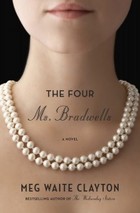 In one life-altering law school class, four women of different backgrounds and beliefs were christened Bradwells, and afterwards became friends for years. Though life has taken each of them down different paths, of success and of failure, Mia, Betts, Laney, and Ginger have remained loyal to one another and to their friendship since that day. Now, with Betts about to be appointed to the Supreme Court, investigators have dug up the memories of one summer where a man committed suicide. All four women flee from the truth and end up on the island where it happened, where Ginger’s family lived in the summers, to try and face the facts of their past and work out how to grow from here as women and as friends. In one life-altering law school class, four women of different backgrounds and beliefs were christened Bradwells, and afterwards became friends for years. Though life has taken each of them down different paths, of success and of failure, Mia, Betts, Laney, and Ginger have remained loyal to one another and to their friendship since that day. Now, with Betts about to be appointed to the Supreme Court, investigators have dug up the memories of one summer where a man committed suicide. All four women flee from the truth and end up on the island where it happened, where Ginger’s family lived in the summers, to try and face the facts of their past and work out how to grow from here as women and as friends.
The Wednesday Sisters by Meg Waite Clayton was released to favorable reviews nearly everywhere, so even though I hadn’t managed to read that one yet, I still jumped to get my hands on The Four Ms. Bradwells. I wasn’t quite sure what I expected from it when I started, but what I got was a tale about four strong women who have to face demons from their past – demons that many women face in their own private lives without the spotlight placed on these four. As such, it was a compelling and meaningful read with a lot of relevance for women’s lives.
The story is told mainly through flashbacks. All of the friends are together on the island trying to face what they’ve kept from the world for so long. As they experience the familiar scenery, they are reminded of the past and forced to reflect upon their lives. I liked how the novel touched deeply on the nature of female friendships, relationships, and family, how the women can love one another yet cause each other to suffer. We’re only given the past through these flashbacks, so at the beginning I had no idea what had happened. The actual events weren’t earth-shattering but were certainly moving and I felt for these characters and the pain they’d endured over the years.
There were things I didn’t like about the book as well, unfortunately. For one thing, I found it really hard to distinguish the women’s separate voices. I never take note of chapter headings and I more than once experienced the phenomenon of confusion as it turned out the perspective had switched and I hadn’t noticed. Ginger’s poetry and Laney’s Latin helped with this some but also got old as the novel wore on. I’d find someone who quoted Latin phrases or any poetry endlessly to be annoying in real life, too, so no surprise that happened here. And, finally, I understood that the said event was a terrible event for these women and their families, but I didn’t really see it as ‘dirt’ that would interest anyone about Betts’s nomination to the Supreme Court. Is it really that bad if you’re simply at a weekend party where a suicide happens? I know I wouldn’t have thought anything of it.
Overall, though, I did enjoy The Four Ms. Bradwells and it’s certainly a worthy read for other women. I also still intend to read The Wednesday Sisters as I have for at least a year now – soon I hope!
All book links to external sites are affiliate links. I received this book for free for review.
 Told entirely through letters, The Color Purple is the story of Celie, a black girl who is sexually abused by her father, giving birth to two of his children, and who grows into a woman abused and cowed by her husband. It’s only when her husband’s long-time lover, Shug, a nightclub singer, comes to stay with the family that Celie begins to find her feet, experiencing sexual awakening, love, and a modicum of independence for the first time in her life. Alongside Celie’s story are letters from her sister Nettie, who becomes a missionary in Africa over the course of the story and discovers her own happiness in a very different way. Told entirely through letters, The Color Purple is the story of Celie, a black girl who is sexually abused by her father, giving birth to two of his children, and who grows into a woman abused and cowed by her husband. It’s only when her husband’s long-time lover, Shug, a nightclub singer, comes to stay with the family that Celie begins to find her feet, experiencing sexual awakening, love, and a modicum of independence for the first time in her life. Alongside Celie’s story are letters from her sister Nettie, who becomes a missionary in Africa over the course of the story and discovers her own happiness in a very different way.
I knew this book was going to be good; I’ve had it recommended to me multiple times, but somehow never managed to actually get my hands on it until I read about it in The Heroine’s Bookshelf. Set alongside some of my all-time favorite books, The Color Purple finally called out to me and demanded to be read. Now that I have, I’m very glad I listened!
This is not a book for the faint of heart. These poor women have a very tough time, particularly Celie, who is beaten down again and again until she has virtually no spirit left. She’s abused as a very young girl, forced to give birth to children of incest, and not even allowed to keep those children – the only two she ever has. She’s told constantly that she is plain, worthless, and exists to do the bidding of the men around her. Her only bright spot in life is her sister Nettie, and when Nettie goes then Celie’s spirit goes with her. Even though she meets other vibrant women, it takes living with a woman with spark, Shug, to teach Celie how to embrace her own.
I felt so much for Celie throughout this book. She is treated like a slave and never stands up for herself, but as readers we know that she has a pure heart and is a woman just waiting to love and be loved. The other characters also inspire sympathy – I loved in particular Nettie’s letters from Africa – but not to the same extent. This is her book of suffering and her book of self-discovery, both in one go. Celie’s revelation is not only of this world but it’s also religious, which I could appreciate even without sharing her beliefs.
In fact, there was only one thing I didn’t like about the book; the timelines. The lives of Celie and Nettie simply don’t match up. Events that take years in Celie’s life pass by in much less time in Nettie’s life. It was confusing, but ultimately the book still has a lot to say and I didn’t let this put me off.
The Color Purple is a fantastic book that I waited much too long to read. Don’t make the same mistake!
All book links to external sites are affiliate links. I purchased this book.
 Catherine Sanderson decided she was destined for Paris as a young girl and followed through on her dreams as an adult, eventually establishing herself in a solid relationship with a Frenchman, called ‘Mr Frog’, and giving birth to a daughter, appropriated named Tadpole, while living and working in Paris. But as Tadpole begins to grow, Catherine realizes that she is unhappy and starts a blog to chronicle her love affair with Paris alongside her more personal musings about the difficulties of her relationship with Mr Frog. Catherine’s blog brings her into contact with an eager reader, James, opening up a whole new world of conflicts in her relationships and catharsis to a community of worldwide readers. Catherine Sanderson decided she was destined for Paris as a young girl and followed through on her dreams as an adult, eventually establishing herself in a solid relationship with a Frenchman, called ‘Mr Frog’, and giving birth to a daughter, appropriated named Tadpole, while living and working in Paris. But as Tadpole begins to grow, Catherine realizes that she is unhappy and starts a blog to chronicle her love affair with Paris alongside her more personal musings about the difficulties of her relationship with Mr Frog. Catherine’s blog brings her into contact with an eager reader, James, opening up a whole new world of conflicts in her relationships and catharsis to a community of worldwide readers.
I’ve heard of the Petite Anglaise blog once or twice and I’m sure I saw this book reviewed elsewhere, so when I saw it at the library I decided to read it. I have no real love affair of my own with Paris but I greatly enjoyed my visit there and, oddly, I love reading about other people who feel passionately about places that aren’t their homes, I suppose because I can relate to them.
Catherine’s life as contained in this memoir read more like a soap opera than anything else. From the minute Jim from Rennes showed up in the comments of her blog, I knew something was going to happen there, and I was proven correct. She goes from staid and ordinary Parisian life with steady partner and child to feeling like a siren again, recapturing the passion lost from her relationship with Mr Frog and coming to learn more about herself as an individual in the process. While I wouldn’t agree with her actions in that she cheats on her partner, it’s a bit like a roller coaster that you have to stay on just to get to the end. I will note that the cover description is very misleading as it doesn’t really cover what happens in this book – she’s never really ‘in trouble’ in the way I’d imagined it.
What comes across in this memoir that I found fascinating was Catherine’s relationship with blogging itself. I’m not a personal blogger; there are snapshots here and there of my life and opinions and I do share big news that comes up, but I’m blogging about books, not about my life, and Catherine experiences many of the pitfalls I would expect from putting life out on the internet for anyone to read. Writing is inherently cathartic and Catherine comes to crave the opinions of her readers. She puts love letters and exchanges out there for anyone to read and she does hurt people she loves in the process. I can’t remember ever previously reading a memoir that covers what happens when your life becomes so glaringly public and you’re not already a celebrity. (Unsurprisingly, she’s almost stopped blogging now for these very reasons).
There were a few things I didn’t like about the memoir, namely that it doesn’t really accomplish much. It’s simply a snapshot of a sensational time in the author’s life and covers quite a few of the dramas she experiences between her relationships, parenthood, blogging, and Paris; it’s not really any one thing because it has aspects of all of these, giving it a haphazard feel at times. It focuses on one person which makes it feel very self-centered, something a lot of memoirs suffer from, and at times I felt worse for the people hurt by the author’s blog than for her, who could at least control what she put out there and what she did.
Still, if you’re looking for the perspective of a very public blogger, snapshots of life in Paris, and the difficulties of relationships, Petite Anglaise is an excellent choice.
I am an Amazon Associate. I borrowed this book from my library.
 Hadley is on the edge of spinsterhood with few prospects when she meets young Ernest Hemingway in Chicago at a friend’s party. She is instantly smitten despite warnings from close friends about his unreliability and winds up marrying him with no regrets, vowing to support his writing at the expense of all else. Newly married Hadley and Ernest head to Paris, where he can hobnob with the most exciting writers of his day, but where Hadley struggles to fit in with socialites and snobs. As the couple travel the world, the tensions of society, of Hadley’s desire for family life, and Ernest’s burgeoning fame and importance start to drive a wedge between them, leaving Hadley to be forever known as the Paris wife. Hadley is on the edge of spinsterhood with few prospects when she meets young Ernest Hemingway in Chicago at a friend’s party. She is instantly smitten despite warnings from close friends about his unreliability and winds up marrying him with no regrets, vowing to support his writing at the expense of all else. Newly married Hadley and Ernest head to Paris, where he can hobnob with the most exciting writers of his day, but where Hadley struggles to fit in with socialites and snobs. As the couple travel the world, the tensions of society, of Hadley’s desire for family life, and Ernest’s burgeoning fame and importance start to drive a wedge between them, leaving Hadley to be forever known as the Paris wife.
I surprised myself by how much I enjoyed this book. I was predisposed to like it, shallow as this is, by the beautiful condition it arrived to me as an ARC complete with two picture postcards:

They really helped when envisioning the characters and helped me remember that these people really lived. I have only ever read The Old Man and the Sea by Hemingway, so didn’t really have any preconceived notions about him or his life other than I wasn’t his biggest fan. This book made me incredibly interested in his life and gave me a new historical figure to fixate on in the person of his wife Hadley.
To me this novel illustrated very clearly one of the peculiarities of the writer’s life at the time. Hadley and Ernest are throughout almost constantly struggling for money, pinching pennies and living in unpleasant places, but they are also free to do more or less as they wish. Ernest writes for newspapers and is sent off on excursions, but has days free to work on his fiction and Hadley of course does not work, first keeping house and then taking care of their baby. It’s hard to imagine living such a life as these early twentieth century authors, just breathing in relaxation or going off to party after a few hours’ writing work. Things ease as Hemingway gets more famous, but Hadley is mainly there at the start, when everything is uncertain, when he needs her as an anchor.
The novel also very clearly illustrated how the cracks can grow in a marriage that seems perfectly happy to others. Little disagreements become big disagreements and the magic is lost because neither half works at maintaining their relationship. Even when one tries, both are needed, and there is a clear point of no return here for them. It’s easy to feel for Hadley, who is often thrust in an uncomfortable world and loses friends due to her husband’s moods, and to hope she gets something a bit better in the end. Hemingway is mercurial, needing Hadley’s reassurance, but almost from the start we can see that his success and his selfishness will replace her in the end.
While I never had much interest in the Hemingways before, this work of historical fiction has made me very curious and provided an exceptional story besides of marriage, love, and the writer’s life in the early twentieth century. Highly recommended.
I am an Amazon Associate. I received this book for free for review from Amazon Vine.
|
|



Recent Comments