|
|
 This review will contain spoilers for the entire series. If you haven’t read these books yet, skip this post and read them! This review will contain spoilers for the entire series. If you haven’t read these books yet, skip this post and read them!
I am not even going to attempt to summarize this, but I thought instead I’d just post a collection of thoughts now that I’ve finally managed to finish the book myself, before I go out and read all the other reviews that might influence my own opinion.
First of all, I had a harder time connecting with this book than with either of the first two. I found it difficult to recognize these characters after the horrors they’d endured, and Collins just kept piling on the pain. The entire world has become unrecognizable due to the rebellion, so I found that there were few points for me to hang onto as references; all I had was Katniss and even she is often drugged, suffering, and considered mentally unstable by everyone else. Every time something happens to her, on come the drugs and the seclusion and I got very tired of it. All of the other characters either die or become distant versions of themselves, so affected by the turmoil of war that they are fundamentally changed.
And I think that’s what I didn’t like about the book in the end, that it was basically war. The Hunger Games certainly weren’t easy to take in either of the first two books, but there was a definitive goal, things I knew had to happen to get to the end. I knew which characters were in danger. This is just the horrors of war, over and over, and even though the Capitol is designed like a Hunger Games arena, I just found it that much more difficult to deal with. I think it may have made it worse, reading all three in a row, because there’s just so much violence and pain and suffering. By this point, I couldn’t take it. She doesn’t soften anything at all.
I also really didn’t like how the deaths were almost glanced over. Here I’ve gone and become attached to all of these characters and they just die over and over and there was no break in the book to mourn them. I had this problem with another dystopia, The Knife of Never Letting Go, and it bothered me just as much here.
That’s not to say I didn’t like the book, although it’s harder to say I like such a very dark book. I thought most of what happened in it had to happen for the ending to come out the way it did. We all could easily see the rebellion coming, that Katniss was the focal point of it, and that people were going to die to make it all come out okay for the rest of them. The plot had a few surprises in store. It was still just as absorbing a book as the rest of them, but I am not sure it lived up to my expectations. About the only thing that completely satisfied me was the ending, which was just how I wanted it to be, and Katniss even shared my reasoning for her eventual choice. I was worried that she wasn’t going to choose at all, based on some blog titles I’d seen around and the way the book seemed to be going. I do kind of think the epilogue was unnecessary, but not entirely unwelcome.
I’m glad that, in the end, the book left me satisfied, but since I did a reread of the first two before launching into this one, I genuinely don’t think it’s as good. I didn’t like it as much, it didn’t absorb me to the same extent. I may change my mind if I do a reread of the whole series in a year or two, when my internal hype has died down, and I’ll see if the conclusion sticks as well as the first two did.
What did you think of Mockingjay?
 Jack and Sadie Rosenblum move to England just before the start of World War II, their little girl in tow and big dreams in their heads. In Jack’s head, at least, as he longs to be a proper Englishman. On arrival in England, Jack receives a checklist of ways to become English. Jack fails to recognize the nuances of the said list and instead decides to conform to everything as though it were a requirement, marking him out as a foreigner just when he wants to fit in. Meanwhile, his wife Sadie wants to cherish her roots, and daughter Rose becomes a genuine native. When Jack reaches the final item on his list – joining a golf course – he struggles to find membership as a German Jew, and embarks on a quest to build his own golf course in a small rural town. Jack and Sadie Rosenblum move to England just before the start of World War II, their little girl in tow and big dreams in their heads. In Jack’s head, at least, as he longs to be a proper Englishman. On arrival in England, Jack receives a checklist of ways to become English. Jack fails to recognize the nuances of the said list and instead decides to conform to everything as though it were a requirement, marking him out as a foreigner just when he wants to fit in. Meanwhile, his wife Sadie wants to cherish her roots, and daughter Rose becomes a genuine native. When Jack reaches the final item on his list – joining a golf course – he struggles to find membership as a German Jew, and embarks on a quest to build his own golf course in a small rural town.
This book was completely charming in just about every way. Natasha Solomons writes in a wonderful, easy to read prose style but conveys the very true difficulties of adapting into a new society. Perhaps it’s unlikely that a man would conform to a list in order to fit in, but Jack uses the pamphlet as guidelines and doesn’t ever get close enough to English people in order to learn otherwise. They shut him out and treat him as a bit of a dummy, but again, he can’t pick up on those nuances – and when he does, they hurt so much that he simply ignores them. It’s enough to break your heart.
I loved the relationships in this novel, particularly when Jack and Sadie move out of London and try to fit in a country town. They’re still outsiders, true, but it’s a little bit different when you’re the only outsiders and don’t have your own community to rely on. The reactions of the townspeople to them are vastly interesting, as are those with their London friends who occasionally come for a visit. This part of the book seemed remarkably true to life for me; obviously, no one discriminates against me quite so much, but I have seen nationalities band together and form friendships based on nothing but their similar backgrounds; if you’re the only foreigner, attitudes and behaviors change.
Finally, I loved the culinary threads woven throughout the novel. It’s so true that food is a clear link to heritage; smells and flavors remind us of certain times in our lives as nothing else does. I wanted to try everything that Sadie made for myself; it’s so evocatively described that I could almost but not quite taste it. The food also made clear how Sadie felt in ways that the prose by itself couldn’t quite express, adding another layer on to the cultural isolation of the family and her character in particular.
Truly, Mr. Rosenblum’s List was a delightful book. It warred with my emotions and is surprisingly sad in parts, but it’s a remarkable depiction of the immigrant experience and manages to be a fantastic story besides.
This book is known as Mr. Rosenblum Dreams in English in the US. I’m an Amazon Associate and I purchased this book.
 Mina Murray thinks she’s a lucky woman. She has a fiance who some may have considered out of her reach, a pair of best friends, and enjoys her time teaching before she’s married. But she has dreams about a man she can’t identify, dreams that go beyond what a proper lady should be capable of imagining, and her friend Lucy appears to be in serious trouble with the men who wish to court her. Worst of all, Mina’s fiance goes on a trip to Romania and doesn’t write her, finally emerging seriously ill on the border, making Mina question the future she’s planned for herself and long for the man of her dreams to appear in the flesh. Mina Murray thinks she’s a lucky woman. She has a fiance who some may have considered out of her reach, a pair of best friends, and enjoys her time teaching before she’s married. But she has dreams about a man she can’t identify, dreams that go beyond what a proper lady should be capable of imagining, and her friend Lucy appears to be in serious trouble with the men who wish to court her. Worst of all, Mina’s fiance goes on a trip to Romania and doesn’t write her, finally emerging seriously ill on the border, making Mina question the future she’s planned for herself and long for the man of her dreams to appear in the flesh.
I’m not sure if this is another case of me being far too fond of the original, but I just didn’t seem to love this one as much as everyone else did. It was definitely engaging and drew me in, but it kept reminding me of the original Dracula and making me long to read that one instead of continuing to read this story that turned it all upside down. I appear to have a soft spot for certain favorite books and I don’t always like other authors popping in and changing things. I have enjoyed Essex’s other books, but this one just didn’t have the same effect on me.
Setting my partiality aside, I did like how Essex turned the sexual stereotypes in Dracula on their head. Instead of women sitting in the background, having brains like men and not brains in their own right, Mina takes the forefront here, and has perfectly normal feelings and desires that all women share. Instead of being ashamed of her sexuality, Mina learns to appreciate it and to acknowledge her feelings. The scenes in the asylum are just heartbreaking; perfectly ordinary women are consigned to terrible lives simply because men decided they were too lustful, something that sadly did happen at the time.
I’ve seen a few complaints floating around about the novel’s sexuality; this isn’t really something I had a problem with. The thing about vampires is that they have always been sexual – seriously, think about it – we’re just a little more comfortable about admitting it these days. Saying that, I would definitely not recommend this book if you don’t want any of that in your books, because it is fairly frequent and a major part of the story.
Unfortunately, all the book really inspired me to do was start reading Dracula again. Dracula in Love may work better for you if you’re not so attached to the original (seriously, a friend and I nicknamed ourselves Mina and Lucy in high school), but I would still recommend Stealing Athena and Leonardo’s Swans first.
I am an Amazon Associate. I received this book for free from the publisher for review.
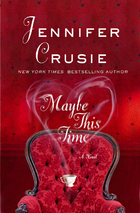 Andie Miller is finally over her ex-husband, North Archer. She’s getting married to someone else, and heads to his office to symbolically return ten years’ worth of alimony checks. As it turns out, though, North still needs her help; he has two young wards in a supposedly haunted house. Three nannies have fled from the kids, and North is pretty desperate. So he offers Andie a ridiculous amount of money to take care of them for just a month, convinced that she’s the one – not ready to let her go. She can’t turn that down, not just to take care of two kids, but it turns out that the house truly is haunted – and the ghosts don’t want to let the kids go. Andie Miller is finally over her ex-husband, North Archer. She’s getting married to someone else, and heads to his office to symbolically return ten years’ worth of alimony checks. As it turns out, though, North still needs her help; he has two young wards in a supposedly haunted house. Three nannies have fled from the kids, and North is pretty desperate. So he offers Andie a ridiculous amount of money to take care of them for just a month, convinced that she’s the one – not ready to let her go. She can’t turn that down, not just to take care of two kids, but it turns out that the house truly is haunted – and the ghosts don’t want to let the kids go.
Jennifer Crusie is the only contemporary romance author I like and she’s proved herself yet again here. This isn’t a romance, because the romance isn’t driving the plot, but it is one fantastic book no matter what genre you put it in. I picked this book up and I did not put it back down. I ignored basically everything else going on and absolutely inhaled this book because I just completely loved it. I loved it so much that I’m not sure I can even articulate why but I will completely agree with Crusie’s editor – your weekend might be shot because of this book, but you won’t be sorry.
First of all, the plot. Most of the book takes place in the haunted house with the kids and their skeezy housekeeper. I knew there were ghosts involved, but for a while there is some suspense around who they are, why the kids won’t leave the house, and what everyone’s so nervous about. Andie not only has to win the kids’ affection and, you know, educate them, but has to contend with ghosts who will not let the kids leave. The pace quickly ratchets up and is part of the reason I sped through the book. I had to know what happened and I couldn’t let the story go long enough to set the book down. And, to my surprise, it was genuinely creepy. There was a definite gothic feel to the book. I was afraid for Andie, Alice, and Carter, and I wasn’t sure how it would all end.
The relationships in this book are most definitely its strongest point. There’s so much growing and changing that it’s almost incredible, between Andie and the kids, Andie and the ghosts, Andie and North, even between all the eventual houseguests, who all have their own distinctive and wonderful personalities. They feel like real people and they react like real people and I was desperate for most of them to be okay and happy. I could believe in everything happening here, and at times their interactions just brought tears to my eyes. It was that good.
And, of course, the romance is just spectacular. Crusie’s words are magic. Andie and North have a history that’s slowly revealed and better yet, they’ve made mistakes. They’ve changed. They’re adults now in ways they weren’t really before, but they can still feel the romance of their youth and bring it back. I loved how their memories intertwined with what was happening now to create a completely new relationship based on the foundations of the old.
Honestly, Maybe This Time was just great. I think it could appeal to many people outside of Crusie’s normal audience, who are bored by a normal romance but would definitely enjoy the suspense and quirky characters of this one. It was absolutely perfect for me and I suspect I will go on recommending it to everyone I see for a long, long time.
I am an Amazon Associate. I received this book for free from the Amazon Vine program.
 After twenty years in England, Bill Bryson and his family moved back to his native United States, for reasons he can’t quite fathom. To his surprise, his country has changed a lot since he last lived there. Even though he isn’t particularly inclined to write a newspaper column about it, his friend asks him to, and his essays are published weekly. This book is a collection of some of these essays, on topics ranging from the tax system to sports to garbage disposals. After twenty years in England, Bill Bryson and his family moved back to his native United States, for reasons he can’t quite fathom. To his surprise, his country has changed a lot since he last lived there. Even though he isn’t particularly inclined to write a newspaper column about it, his friend asks him to, and his essays are published weekly. This book is a collection of some of these essays, on topics ranging from the tax system to sports to garbage disposals.
I’m on a bit of a Bill Bryson spree these days, so I picked this book up without really thinking about it. I found its quality to be more variable than the first two books of his I read, but overall it was still very enjoyable. Bryson’s humor is excellent and he makes even the most mundane exchanges into passages that have me giggling away, to the extent that my husband asks what’s so funny and is, I suspect, now eager to get his hands on one of Bryson’s books.
The funniest passages were easily the ones that I have had experience with. This book is now quite dated; it was published in 1998 and so all of the essays are from before that time. As a result, things in America aren’t the same as they were, but I can remember a lot of this from my childhood. The catalogues, for example; it did feel at times like we got a catalogue for everything under the sun without ever actually asking for them. Plenty of trees were wasted for this purpose, but some of the products in catalogues were delightful and exciting, even if I can’t actually remember ever ordering anything out of them.
Some of the sections didn’t work quite so well; these are generally the few that don’t consist of actual anecdotes but are just him trying to demonstrate the absurdity of things like tax forms. There are also some outdated ones which no longer strike the right note, like his comments on computers. Overall, though, these are only a few pages long so they don’t detract too much from the overall humor of the book.
It’s also best to approach this knowing that mostly he makes fun of Americans and American things, but as he seems to do this with everything, it didn’t bother me. It just amused me because most of it was true and his style of writing makes it clear that nothing is really an insult at all. It’s just, for the most part, a very amusing book about American culture.
Notes from a Big Country is not quite a travelogue, but it’s an entertaining look at America through a former expat’s eyes. Despite the few off notes, if you like Bill Bryson’s books, you’ll enjoy this one too.
I am an Amazon Associate. I borrowed this book from my local library.
 One spring morning in Catalunya, Matthew Parris came across an awesome sight; a large, moldering, old house that immediately spoke to him. Clearly medieval and once high status and in the process of remodeling, the house had been left to sit and rot for at least fifty years. It was called L’Avenc; virtually everyone in the small nearby town knew about it and thought its slow destruction was sad, but none of them was going to save it. So Parris, his sister Belinda and her husband, and her husband’s brother put together the money and purchased the house themselves. The remodelling took longer and was more expensive than any of them had imagined, but their goal to save the house kept them going through catastrophe after catastrophe. One spring morning in Catalunya, Matthew Parris came across an awesome sight; a large, moldering, old house that immediately spoke to him. Clearly medieval and once high status and in the process of remodeling, the house had been left to sit and rot for at least fifty years. It was called L’Avenc; virtually everyone in the small nearby town knew about it and thought its slow destruction was sad, but none of them was going to save it. So Parris, his sister Belinda and her husband, and her husband’s brother put together the money and purchased the house themselves. The remodelling took longer and was more expensive than any of them had imagined, but their goal to save the house kept them going through catastrophe after catastrophe.
I’ve seen it bandied about that this entire book is mostly an advertisement for the holiday cottages Parris and his family built alongside the house, but I thought it was quite a lot more than that, especially considering I didn’t even realize that you could stay there until halfway through the book. (Of course, I want to now, so if it was an advertisement, it worked.) I loved the fact that these four people took on this medieval house. One of them did research into its origins and found out the various stages of its actual construction; parts of it date from the 12th century. Anyone who spends hundreds of thousands to rescue a medieval house is awesome, and this book truly gets across the author’s love for this house and its character.
He also conveys the vast difficulty, sometimes seemingly insurmountable, of actually restoring the house. The roof was falling in, the floors were rotting away, and there were no plumbing, electricity, or telephone lines. The construction went on for years, hampered by legal difficulties and an angry neighbor who cut off the family’s water supply and refused to reinstate it. It’s not even finished when the book is, although I think it must be by now.
A Castle in Spain is also partly travelogue, with Parris extoling the virtues of various parts of Catalunya (also spelled Catalonia). He expresses plenty of regret that people mostly visit Spain to go to cramped beaches and cities instead of exploring the beauty of its interior, Catalunya in particular. I must admit that despite my recent interest in travelogues, I found these parts a bit boring. I would love to visit Spain, but I am not sure Parris’s writing style is that suited to it, and I found his discussions of the house much more interesting.
This book is a very interesting tale of a family and a mission, with some history and culture thrown in for good measure. It is perhaps not the most standout of its genre, but it certainly made me curious about the area. I wish I could actually afford one of the holiday cottages, if only to see it all myself in person. Recommended if you like travelogues, memoirs, and old, crumbling houses. It seems to be out of print, but used copies are about for fairly low prices.
I am an Amazon Associate. I borrowed this book from my local library.
 Bess of Hardwick wasn’t born to privilege. The daughter of a relatively small landlord, she rose to high status slowly and purposefully. Placed in high status houses, she married four men and outlived all of them. She also outlived three monarchs and built a number of houses, the most prestigious of which is Hardwick Hall in Derbyshire. She became one of the richest and most powerful women in Elizabethan and early Stuart England, a time when women were still chattel, and died wealthy, in a house that she herself had constructed, after a long and productive life. Bess of Hardwick wasn’t born to privilege. The daughter of a relatively small landlord, she rose to high status slowly and purposefully. Placed in high status houses, she married four men and outlived all of them. She also outlived three monarchs and built a number of houses, the most prestigious of which is Hardwick Hall in Derbyshire. She became one of the richest and most powerful women in Elizabethan and early Stuart England, a time when women were still chattel, and died wealthy, in a house that she herself had constructed, after a long and productive life.
My first encounter with Bess of Hardwick was in the novel A Woman of Passion by Virginia Henley. I was still in my initial romance novel stage of reading, and much of that particular novel is romantic, but it really led me to be curious about the woman behind the fiction, the actual Bess of Hardwick. It also ends when she marries Shrewsbury, or so I recall, which leaves plenty of interesting years completely without mention. Then just recently I visited Hardwick Hall myself and was reminded of why I was so interested in her. The house itself is ridiculously impressive, with its huge windows, imposing winding staircases, and immense visiting halls. I wanted to know more, and so when I saw this book in the library, I decided it was time.
On first impression, I was actually amazed at how easy this was to read. I love history, but it does take longer to read and naturally provokes more thought than an average fiction novel, at least for me. This, though, was so interesting and enjoyable that I actually found myself going well beyond my daily page targets because I just was so curious about what happened next. Bess’s childhood is mostly skimmed over, of necessity really since very little information is available about her specifically. Instead, the author regales us with all sorts of interesting information about Tudor childhoods in general and Bess’s family in particular. I knew some of it, but not all of it, and I was completely fascinated, as I was with most of the book.
Lovell then goes on to talk about Bess’s various marriages, her children, and her gradual rise to power and prominence. She quotes from plenty of letters, although mostly from others to Bess, and keeps everything in a neat and tidy timeline so that it’s easy to trace Bess’s life from start to finish. There are plenty of details and documentation, and she does argue with the generally accepted historical record sometimes – including denouncing some of my favorites, those pesky historical “facts” which seem to have no basis in actual documentation. These are generally started by a historian somewhere along the way (usually in the 19th century) who of course did not name his sources and probably just made up that particular fact. There is no way of actually knowing if it’s true or not, so it’s best to stick with what we actually do know. So the book was not just an entertaining biography, but intellectually stimulating as well.
Bess of Hardwick brought home to me how much I miss history with its fascinating portrait of a woman who proved her worth over and over again. Undoubtedly Bess would have been the CEO of some humongous corporation these days, but in her own time she was a clever, enchanting woman who made her money work for her, loved her husbands and children, and generally proves everyone who denounces Tudor women wrong. I would enthusiastically recommend this book to anyone who enjoys history, especially Tudor history.
I am an Amazon Associate. I borrowed this book from my local library.
 On one November night in 1940, the city of Coventry was to be changed forever by the bombs of the German Luftwaffe. The destruction was immense; what wasn’t destroyed by bombs was consumed by the fires that they set, including the city’s immense medieval cathedral. The bombs will also drastically change the lives of three people trapped in the destruction; Harriet, a widow since the first World War, Jeremy, a young firewatcher, and Maeve, Jeremy’s mother. On one November night in 1940, the city of Coventry was to be changed forever by the bombs of the German Luftwaffe. The destruction was immense; what wasn’t destroyed by bombs was consumed by the fires that they set, including the city’s immense medieval cathedral. The bombs will also drastically change the lives of three people trapped in the destruction; Harriet, a widow since the first World War, Jeremy, a young firewatcher, and Maeve, Jeremy’s mother.
This was such a stunning book; it’s hard to describe just how much. It’s one of those that highlights the sudden and unexpected connections between people, the reactions of different people to catastrophic events, and somehow comes out recognizing the significance of such horror yet also showing how healing, with space and time, is possible. For some, the world goes back to the way it was, changed but still the same old world, while others’ lives end in a blaze of wanton destruction.
My husband lived in Coventry for a few years, and as a result I too have been there. I’ve seen plenty of documentaries about it, heard the stories of survivors, and even visited the old cathedral. It’s still a bombed out shell; there are still two charred beams that form a cross where the altar once was. I have even spent time thinking about what wonderful medieval architecture was lost due to the bombing; the city as it is now is mostly concrete and ugly and its original character, with which these characters would have been so familiar, is utterly lost. But in this book, none of that is important; it’s all about survival.
I think it was the character of Harriet who touched me the most, probably because her reactions are similar to what mine probably would be in a crisis. She really just wants to get out. She helps people when she sees them, but there’s always a tinge of reluctance to it, because she knows full well that she might die. Death was brought home to her when she lost her husband of just a few weeks in the first World War, so she’s all too aware of what her fate might be. She’s completely unlike Jeremy, who seems virtually unaware that he could die at any moment; he’s too young to realize how fragile life is. And Maeve, of course, is consumed with worry for her son; she’ll happily go back into the flames for him, while Harriet only does so because she knows it’s right.
The entire book really got across the feeling of what it must have been like to live through that night, as horrific as it was, but I couldn’t tear my eyes from the page. It was compelling, breathtaking, and heartbreaking in turns. It’s an evocative depiction of the senselessness of war, while simultaneously demonstrating the strength that individual people have even when they don’t expect it. Coventry is highly recommended.
I am an Amazon Associate. I purchased this book.
 When she was young, Harper Connolly was struck with a bolt of lightning, and ever since then has had something of a connection with dead people. She can sense bodies, causes of death, and sometimes even flashes back into that person’s life to witness their death from their perspective. It’s more than a little stressful, but Harper uses her unusual talent to help people figure out the causes of their loved ones’ deaths, for a fee. When she and her stepbrother travel to a small town in the Ozarks to try and find the body of a local teenager, they realise that there’s a whole lot more than a suicide going on – and no one wants Harper to figure out the truth. When she was young, Harper Connolly was struck with a bolt of lightning, and ever since then has had something of a connection with dead people. She can sense bodies, causes of death, and sometimes even flashes back into that person’s life to witness their death from their perspective. It’s more than a little stressful, but Harper uses her unusual talent to help people figure out the causes of their loved ones’ deaths, for a fee. When she and her stepbrother travel to a small town in the Ozarks to try and find the body of a local teenager, they realise that there’s a whole lot more than a suicide going on – and no one wants Harper to figure out the truth.
While this was absolutely nothing like the Sookie Stackhouse series, I still enjoyed it a surprising amount for a mystery. I don’t normally like mysteries, and I wouldn’t really call this one of my favorite books, but it held its own as a short, enjoyable read for an afternoon or two. The book is quite dark overall, which makes sense; the very nature of the book means that Harper is pretty much always thinking about death, how people died, and whether or not she’s about to be killed herself.
When I first started reading, I wasn’t really sure I was going to enjoy the book. Harper is a strange character; she’s very edgy and often wishes she could just be a normal person. She has a strange relationship with her stepbrother as well; they’re not actually related by blood and seem to do everything together, which feels a little strange. The whole book also has a dark feel that really suits its status as a mystery. Harris is never going to win an award for the greatest writing; she still focuses a little too much on mundane details like clothes and when characters wash up, the same as she does in the Sookie series, but her writing does go down easily and the book really sped by. This is especially so as the mystery began to unravel and I became more curious about each character and where the whole situation was going.
Because the book is so short, I don’t really have too much else to say about it, but for me Grave Sight had all the trademarks of an entertaining read. I do plan to continue the series; I’m so far not quite as drawn to it as I am to Sookie, but I won’t mind staying in this world a little longer either.
I am an Amazon Associate. I purchased this book.
 In order to win the hand of his sweetheart Anna, Dutch Jacob de Zoet must make his fortune, and that is how he finds himself bound for the Japanese port city Dejima. Immediately on arrival he frets about his family Bible, worrying it will be censored in a place where he isn’t permitted to practice his own religions, but as he begins to experience life at the port he realizes he has larger problems to contend with. Even when he attempts to expose injustice, he is himself punished for not colluding in various schemes to get rich quick, and he finds himself disturbingly attracted to a young midwife that couldn’t be further in character from his intended. In order to win the hand of his sweetheart Anna, Dutch Jacob de Zoet must make his fortune, and that is how he finds himself bound for the Japanese port city Dejima. Immediately on arrival he frets about his family Bible, worrying it will be censored in a place where he isn’t permitted to practice his own religions, but as he begins to experience life at the port he realizes he has larger problems to contend with. Even when he attempts to expose injustice, he is himself punished for not colluding in various schemes to get rich quick, and he finds himself disturbingly attracted to a young midwife that couldn’t be further in character from his intended.
I am probably the only person in the entire English-speaking world that hasn’t fallen in love with this book. It’s my first read by David Mitchell and I wonder if my expectations were too high. There were things I enjoyed about it and things I didn’t; I could see its merit but I’m afraid I’m forced to conclude that this really just wasn’t perfect for me.
My main problem really was that I just didn’t get on particularly well with Mitchell’s writing style. It felt weighty and elaborate, in that it actively slowed my reading down in ways I didn’t appreciate. His writing has been praised up and down for its beauty, but I only felt like there were moments of brilliance amidst a whole lot of muck. I didn’t appreciate the clipped sentences, short paragraphs, broken dialect – all of it just genuinely frustrated me. But then he’d go off onto something else, and immediately I’d be startled out of my annoyance by a lovely passage. I especially appreciated the ones about language and thought, so much that I’ve even managed to put a bookmark in (very rare, I assure you):
The word ‘my’ brings pleasure. The word ‘my’ brings pain. These are true words for masters as well as slaves. When they are drunk, we become invisible to them. Their talk turns to owning, to profit, or loss, or buying, or selling, or stealing, or hiring, or renting, or swindling. For White men, to live is to own, or to try to own more, or to die trying to own more. Their appetites are astonishing! They own wardrobes, slaves, carriages, houses, warehouses and ships. They own ports, cities, plantations, valleys, mountains, chains of islands. They own this world, its jungles, its skies, and its seas. Yet they complain that Dejima is a prison. They complain they are not free.
When I read that, I wonder if I should have just spent more time trying to read it instead of getting annoyed that the book would not be read at my pace.
Anyway, I liked other parts of the book too, such as Jacob’s overall honesty and faith. I thought he was a wonderful character; I liked the other Dutch characters considerably less and as a result I wasn’t crazy about the sections set on the port. What I really did enjoy was Orito’s narrative in the middle, in actual Japan. This was the first and last part of the book that I was actually compelled by and genuinely enjoyed reading.
And then I got to the end, and suddenly had a strange nostalgic fondness for the whole journey. I thought the end was really well done and got across not only the epic nature of Jacob’s life but also the very fleeting nature of it. Who is going to care what we’ve done, what we’ve stood for, after we’re dead? Unless we are very famous – and even then only sometimes – no one is going to remember.
So I closed the book feeling a lot more gracious towards it than I did when I started, and that’s why this review is so conflicted. Because I genuinely did not like parts of it, felt they were a slog, wished I didn’t have to read the book. Then I loved other parts of it and wished the whole book could have made me feel that way. I can certainly see why The Thousand Autumns of Jacob de Zoet has been nominated for the Booker prize, and I have decided I will try some of Mitchell’s other work to see if I like it better. This one was an effort, but I do think it was worth it, and I’m glad I read it.
I am an Amazon Associate. I received this book for free for review from the publisher.
|
|



Recent Comments