|
|
 It’s 1941. Frankie Bard, a rare female radio personality, reports from London every night on the state of the burgeoning war in Europe, trying desperately to convince Americans that the time has come to intervene and stop Germany. In Franklin, Massachusetts, both Emma Fitch, the doctor’s new wife, and Iris James, the town’s postmistress, listen to Frankie from the comfort of a small town in Cape Cod. But the war can’t stay out forever and these three women will find their lives intertwined as the question of who delivers the news becomes paramount in all of their lives. It’s 1941. Frankie Bard, a rare female radio personality, reports from London every night on the state of the burgeoning war in Europe, trying desperately to convince Americans that the time has come to intervene and stop Germany. In Franklin, Massachusetts, both Emma Fitch, the doctor’s new wife, and Iris James, the town’s postmistress, listen to Frankie from the comfort of a small town in Cape Cod. But the war can’t stay out forever and these three women will find their lives intertwined as the question of who delivers the news becomes paramount in all of their lives.
I’ve heard a lot of hype lately about The Postmistress. It seems that everyone who reads it enjoys it. I’m not an exception – I didn’t love it, but I did enjoy reading this. It’s a smooth read, very well-written, with some fantastic imagery. I loved in particular Frankie’s radio stints. I could almost hear her voice in my head, especially when the other characters described how she sounded – like she was smiling, or if she sounded tired or angry. I almost never listen to the radio personally, but it always strikes me as an essential part of twentieth-century history.
In fact all around Frankie was my favorite, but I also appreciated the contrast between war-time Europe and sleepy Cape Cod. It seemed amazing to me – as it did to Frankie – that throughout so many European countries people were regularly exiled from their homes, shipped off to concentration camps, or trapped in hiding while Americans did nothing even though they knew precisely what was happening. The contrast seemed strikingly relevant to the present day as well, where there are plenty of war-torn countries while we sit comfortably in our homes and hardly ever have to worry about our safety when we go to the grocery store. I have no solutions, but the book certainly brings up plenty of questions that are still relevant to our lives.
For some reason, though, this never became a book I loved. Maybe because of the ending, which I found a little on the unnecessary side, or maybe just because the whole book was full of secrets. I know others feel more strongly about it than I do, but I don’t think it’s one I’ll need to revisit. I’d probably still recommend The Postmistress to someone looking for fiction about the Second World War with a female focus.
I am an Amazon Associate. I purchased this book.
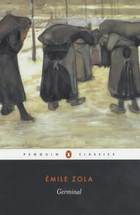 Etienne Lantier is unemployed and desperate. Economic conditions are bad and no one wants to take on new workers. As he wanders, he finally comes across a coal mine where he is hired on. If possible, though, working down the mine is even more difficult than starving to death and Etienne has a hard time adjusting. Whole families work in the mine – elderly people who can still manage it, mothers, fathers, small children – and people are injured and sicken under Etienne’s very eyes. When the managers attempt to lower wages, Etienne’s vast amount of reading kicks in and he riles the rest of the workers to protest their poor conditions and lack of adequate pay. Etienne Lantier is unemployed and desperate. Economic conditions are bad and no one wants to take on new workers. As he wanders, he finally comes across a coal mine where he is hired on. If possible, though, working down the mine is even more difficult than starving to death and Etienne has a hard time adjusting. Whole families work in the mine – elderly people who can still manage it, mothers, fathers, small children – and people are injured and sicken under Etienne’s very eyes. When the managers attempt to lower wages, Etienne’s vast amount of reading kicks in and he riles the rest of the workers to protest their poor conditions and lack of adequate pay.
Germinal is very much a political book and that’s not really what I’d expected of it – probably because I’d only read The Ladies’ Paradise and I wasn’t quite prepared for a book so unrelentingly dreary. I know some books like that can be great but this one dragged on for five hundred and thirty-two long pages.
I found the writing to be strikingly evocative of the mine and I’m sure the fact that I felt so very sorry for these people made the book that much harder to read for me. The darkness was pervasive and it just got worse. Even when the people began to strike, they also began to starve and made almost no progress in their strike. It was hard to bear, especially when they were contrasted with the wealthier mine owners. One of the managers even envies the poor people their freedom as compared to his restricted aristocratic lifestyle – I don’t think he quite understood the situation.
I was amazed throughout at the violence of all the characters, which I think prevented me from getting attached to any of them. All the men beat their wives and sometimes their children as well. Everyone is valued only for the wages they can bring in; small children who are not yet old enough to work are almost nothing but a burden. There are some glimpses of maternal love through La Maheude, the main motherly character in the book, but she still often feels anger towards her children for eating and not earning.
The book is very political and much of the workers’ revolution felt like a cry out for socialism. Etienne has read all the big names and attempts to get all the workers to join an organization. I thought in this respect it was an interesting picture of its time; I have a hard time imagining any workers to ask for socialism these days even though the wage gap is still very much in evidence. But somehow Zola creates a bit of sympathy for the managers as well, so the true solution is unclear (as history proved anyway).
In the end, my feelings toward Germinal are mixed. There’s no way to deny that it took me a week to read and at times I avoided it because I didn’t want to deal with the miners’ lives any longer. But as a political novel, as a picture of its time, it’s invaluable and it left me with a lot to think about. It’s not cheerful in any sense but it’s surprisingly easy to read with lovely prose that’s truly evocative of the imagery within – whether underground or above. It’s a piece of literature that I think has held quite a bit of value, and for those reasons it’s worth reading even if it does go slowly.
I am an Amazon Associate. I borrowed this book from my local library.
 Patrick’s life could rightly be called a disaster. He failed out of university, his fiancee dumped him, and he’s severely lacking focus. He decides that he needs a break and takes a job in a seaside town. Patrick has hopes for his new place and sometimes even gets along with the widowed owner of his boardinghouse. But for the most part, he struggles to fit in and feels misunderstood almost constantly. Eventually, the misunderstandings become insurmountable and Patrick accidentally commits an act he’ll regret for the rest of his life. Patrick’s life could rightly be called a disaster. He failed out of university, his fiancee dumped him, and he’s severely lacking focus. He decides that he needs a break and takes a job in a seaside town. Patrick has hopes for his new place and sometimes even gets along with the widowed owner of his boardinghouse. But for the most part, he struggles to fit in and feels misunderstood almost constantly. Eventually, the misunderstandings become insurmountable and Patrick accidentally commits an act he’ll regret for the rest of his life.
I read this book a week ago now and it still hasn’t left my consciousness. Sometimes I find myself really connecting with bleak books that expose the grittiness of a harsh life I hope never to live personally (and trust me, I won’t be living this one). And this book is very, very bleak. Patrick’s life is never easy and he never gets a break. Not once. But somehow there was still so much that was great about it, perhaps because I went into it with incredibly low expectations – I’ll try to explain.
First off, the atmosphere. I could palpably sense the desperate feel of the town, down on its luck, and the setting was perfect for this type of book. I was amazed to find that I couldn’t put the book down and I found it amazingly easy to read no matter what else was going on. It was that absorbing. I remember actively avoiding other books that treated characters this badly, so this was truly unusual. I did keep hoping for Patrick, hope that wasn’t realized, but I thought it quite remarkable that Hyland could create sympathy for such a disturbed character.
And he is disturbed; it isn’t all his fault, of course, that he’s always felt second best and rejected. He’s intelligent but never manages to make good on that intelligence. Instead he is awkward, unsure of the correct course of action most of the time, completely unable to judge what’s appropriate and what isn’t in social situations. He tries, but he often tries too hard. I was left wondering if he had an undiagnosed mental disorder and I felt for him because I wanted him to succeed, have people see past the creepy exterior.
One of the biggest criticisms I’ve seen of This is How is that it’s too dark, that the ending doesn’t offer any hope, just continued suffering. I don’t know if I agree. I thought that most of the second half of the book was Patrick’s struggle to accept his crime, and I thought that at the end he did – that he finally began making the best of one of life’s worst situations even though he is still suffering. No, nothing in this book is cheery or happy – but somehow I was completely drawn into it and it was arguably one of the more compelling books I’ve read this year. I’m not going to list it one of my favorite books of all time, but I do think it earns its spot on the Orange Prize longlist.
I am an Amazon Associate. I received this book for free from the publisher for review.
 These two novellas are bound in one volume for me. The summaries are short because the stories are; I don’t want spoilers! These two novellas are bound in one volume for me. The summaries are short because the stories are; I don’t want spoilers!
In The Hundred and Ninety-nine Steps, Sian is working on an archaeology dig at Whitby Abbey, working to bury her dark dreams even as she exposes history to the light. By accident one day she meets a man with a charming dog who gives her a bottle. Inside is a century-old manuscript with the link to a hidden murder.
I really enjoyed this novella, but I have to admit that I think the cover sold it as a little more exciting than it actually was. I wouldn’t call it a thriller – more a woman’s discovery about herself and about the world after it had brutally betrayed her. There is some mystery too, but I wasn’t precisely on the edge of my seat waiting to find the truth. That’s not a bad thing – I was fine with it the way it was. The book is also something of a love story – but whether it’s between Sian and Mack, the man she meets, or between her and the dog Hadrian (who could not love a dog named Hadrian?) is a choice left up to the reader! I loved the descriptions of the archaeology and I wanted to be there digging in Whitby Abbey; Michel Faber is a fantastic writer.
The Courage Consort is about a group of singers, through the eyes of Kate Consort, and their week in a remote European retreat. Away from everyone else, they attempt to learn a new and revolutionary piece of music, but what they learn instead is about their relationships with each other.
Even though this one takes a less prominent place on the cover of the book, I loved it and it was by far my favorite of the two. Kate was just such an interesting heroine. Similarly to Sian, she goes on a journey of self-discovery, from paranoia and depression to a surprising peace with herself and the world. She steps out from her husband’s shadow and I really love reading about women who discover their own independence, when it’s okay to rely on someone and when it’s not.
And as anyone reading my blog should know by now, I love stories based around relationships and that’s exactly what this was. The characters all really came to life for me and their interactions felt real and true. There isn’t much of an actual plot, but everything does come to something of a conclusion at the end and a surprising one at that. I can’t say much more than that, but it was really great and I was totally caught up in these people’s lives.
Both of these novellas come highly recommended by me, but if you choose one, choose The Courage Consort.
I am an Amazon Associate. I received this book for free from the publisher for review.
 Celia’s mother died giving birth to her, so Celia grew up under the eye of her Aunt Tassi and, unfortunately, her Uncle Roman in Black Rock, Tobago. Roman is Tassi’s second husband and a sly alcoholic, planting lies about Celia and getting uncomfortably close to her on a constant basis. Celia is a clever girl and wants one day to go to university, but after her uncle proves his horrible nature correct, Celia can’t stay to be in the same room with him. So she flees to Trinidad, to her aunt Sula, to get away from the horror that had previously been her life. Celia’s mother died giving birth to her, so Celia grew up under the eye of her Aunt Tassi and, unfortunately, her Uncle Roman in Black Rock, Tobago. Roman is Tassi’s second husband and a sly alcoholic, planting lies about Celia and getting uncomfortably close to her on a constant basis. Celia is a clever girl and wants one day to go to university, but after her uncle proves his horrible nature correct, Celia can’t stay to be in the same room with him. So she flees to Trinidad, to her aunt Sula, to get away from the horror that had previously been her life.
I was actually amazed by how very much I enjoyed this book. It sounded good but the beginning was very dark. I knew what was coming almost from page one, and I truly skimmed that particular section as much as possible. But then Celia escapes to Trinidad, and even though her life wasn’t wonderful, I just completely fell in love with the book. I loved the way that the author made this country I’d hardly ever heard of come to life for me through her descriptions. I adored Celia’s voice and even as I longed for the best for her I could completely understand her choices, even when they weren’t choices I would have made myself.
I think what really got me about this book was that even though there is a lot of bad in Celia’s life, there is also hope. She is vividly alive from page one and she almost constantly is fighting for that life, retaining her spark even when she thinks she’s lost it. She made the book for me. I also loved the tensions between all the characters in the novel, at least after that beginning; how love and desire develop, for example, and how they don’t, and Celia’s relationship with her Aunt Sula, who she barely knows. It prodded at the stigma of the relationship between the white English master and the black servant girl in England’s colonies, as well, and how easy it was for the master to blatantly use his beautiful young employees. It may be a familiar theme, and we all know how wrong it was, but it doesn’t make this story any less affecting. Celia’s slow rediscovery of herself and what she wants to be is magnificently done, too, and I loved the ending. It made perfect sense.
Honestly, Black Rock was a fantastic read. I am so pleased that I read it and I definitely recommend it.
I am an Amazon Associate. I received this book for free from the publisher for review.
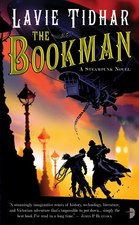 Orphan is just that – an orphan. But he loves his girlfriend, Lucy, and he has his mentor, Gilgamesh, to guide him through his Victorian world. But when Gilgamesh disappears and Lucy is killed in a terrorist attack, supposedly committed by the Bookman, Orphan longs for revenge and a way to get Lucy back. The Bookman offers him this, but soon Orphan realizes that nothing is as simple as he thinks, and that perhaps everyone is lying to him. Orphan is just that – an orphan. But he loves his girlfriend, Lucy, and he has his mentor, Gilgamesh, to guide him through his Victorian world. But when Gilgamesh disappears and Lucy is killed in a terrorist attack, supposedly committed by the Bookman, Orphan longs for revenge and a way to get Lucy back. The Bookman offers him this, but soon Orphan realizes that nothing is as simple as he thinks, and that perhaps everyone is lying to him.
This was a very interesting read. It’s set in a steampunk world where the ruling family of Britain are Les Lezards, in short not human at all, and there are automatons and other various mechanical elements sprinkled about. It made sense to me internally, which was good, and I liked seeing how the author chose to mix actual British history with fictional history. I really liked the origins of the mechanics, how the author used real historical figures as inventors. I also liked when they popped up in the narrative. Jules Verne makes a nice lengthy appearance.
As far as the story was concerned, I was less engaged than I should have been. Whether this was the book’s fault or mine I’m not entirely sure, but I had trouble really immersing myself in the book. I was mildly interested in Orphan’s plight but I think it was all just a little too much to take in. Orphan was constantly learning new things and going new places – there is no time for a reader’s brain to rest. Plus, part of it took place on a ship, which we all know doesn’t really work all that well for me. I struggled to really care about Orphan. I felt like I didn’t have much of a chance to know him before his life got chaotic and the plot took the story away. The story had a lot of twists and turns and I actually didn’t predict the big surprise, but I think someone who is more accustomed to actually guessing the ends of books would have more luck!
The Bookman is definitely a good read for anyone who is interested in trying steampunk or has a lot of experience with it. For the rest of us, I think it’s best to take it a bit more slowly than I did and let the world sink in even though you want to race through and see what happens next.
I am an Amazon Associate. I received this book for free from the publisher for review.
 Dongliang’s father used to be the son of a martyr, until the fish-shaped birthmark on his bottom was called into question. An investigation into the martyr’s descendants was instituted, but the family’s position was already too compromised and Secretary Ku lost his party membership. Now they live on a boat and Dongliang worries that his father is going to turn into a fish – but he can’t resist chasing after young Huixian, a beautiful little girl who is immediately accepted by the river people. To satisfy his obsession, Dongliang will have to challenge everything he knows, and make a difficult choice. Dongliang’s father used to be the son of a martyr, until the fish-shaped birthmark on his bottom was called into question. An investigation into the martyr’s descendants was instituted, but the family’s position was already too compromised and Secretary Ku lost his party membership. Now they live on a boat and Dongliang worries that his father is going to turn into a fish – but he can’t resist chasing after young Huixian, a beautiful little girl who is immediately accepted by the river people. To satisfy his obsession, Dongliang will have to challenge everything he knows, and make a difficult choice.
This book didn’t really work so well for me. It had an element of magical realism, which only sometimes works, and I found the whole thing kind of absurd. I think that was the point, but I still wasn’t a huge fan. I also didn’t really like Dongliang, which was a huge problem since the novel is mainly from his point of view. I could understand his frustration with his father, but I really disliked the way he chased after Huixian. I felt sorry for her more than sympathy for him, even though she was a bit strange. Actually I didn’t really relate to any of the characters, and I didn’t care what happened to them. I just felt disconnected from the story the whole time.
I know this review is quite subjective, and many of my issues with it might not bother someone else. Overall, though, I don’t think I could recommend The Boat to Redemption.
I am an Amazon Associate. I borrowed this book from my local library.
 Astronomer Jimmy Quinn is having a long night at work after time with his friends when he hears an alien radio signal. Almost immediately, plans are laid to explore this alien signal, and a group of friends, including a few Jesuit priests, heads into space to make contact with and study the alien population. While on the planet, however, things go wrong, and only one damaged man returns. Astronomer Jimmy Quinn is having a long night at work after time with his friends when he hears an alien radio signal. Almost immediately, plans are laid to explore this alien signal, and a group of friends, including a few Jesuit priests, heads into space to make contact with and study the alien population. While on the planet, however, things go wrong, and only one damaged man returns.
The story begins with him, Emilio Sandoz, and his return, switching between time periods to explore the back story of the mission. So don’t worry, I haven’t spoiled anything. And let me also start off by saying I simply loved this book. I read it when I started working and I actually enjoyed that because this was the first book that I really enjoyed that I had to spend more than a day with. Spreading it out over four days meant I could grow to love these characters and I was completely wrapped up in the story every single time I picked up the book.
This is science fiction which works for people who don’t like science fiction, with tons of character development and a truly enthralling plot. We know the basics of what’s happened from the start, but finding out why it’s happened, especially to people we care about so much, is amazingly compelling. There isn’t really any technical jargon at all; there is only basic detail to understand what’s happening. The focus is all on the breathtaking story. Even though so many clues are laid, it’s hard to guess what’s happened. I feel like I could almost certainly pick up more on a reread than I did this time, and this is a book that is worth rereading.
I also thought that Russell’s worldbuilding was interesting and well-done, but not extensive enough to bore any readers. Rather, it’s wrapped up in the sense of discovery and each revelation ramps up the tension, so it’s impossible not to keep turning the pages whenever you have the opportunity. The book really made me think about culture clash and what would happen if we ever really came into contact with aliens – and what we’d do if aliens came into contact with us.
Overall, my review doesn’t feel particularly coherent, but I doubt talking about such an amazing book will ever be coherent! The Sparrow comes hugely recommended by me.
I am an Amazon Associate. I purchased this book.
 Willow is a destitute child in Southern China, reduced to begging and stealing for food, until she becomes friends with the local missionary’s daughter, Pearl Sydenstricker. From that moment on, their lives intertwine, as Pearl goes on to become a famous writer after her share of struggles and Willow experiences the worst of the new Communist regime under Chairman Mao. Throughout they remain friends and in contact wherever possible, sharing pain, sorrow, and joy. Willow is a destitute child in Southern China, reduced to begging and stealing for food, until she becomes friends with the local missionary’s daughter, Pearl Sydenstricker. From that moment on, their lives intertwine, as Pearl goes on to become a famous writer after her share of struggles and Willow experiences the worst of the new Communist regime under Chairman Mao. Throughout they remain friends and in contact wherever possible, sharing pain, sorrow, and joy.
This is such a touching book. The friendship between Pearl and Willow feels right and true, from its development to its end. It’s not a perfect friendship, as of course there are roadblocks as there might be between any two women. Towards the end, with the effect of the Cultural Revolution, no letters are allowed at all, and Willow finds herself endlessly wondering what is happening to her friend even as she endures persecution for refusing to denounce Pearl. This is certainly the darkest and slowest part of the book, but these things genuinely happened to people, and they deserved their place here.
I found it so interesting that Pearl is genuinely regarded as a Chinese writer. She spent the large majority of the first forty years of her life in China, spoke Chinese fluently, and had a great understanding of Chinese people. The author writes in her prologue that when she read The Good Earth, it was so accurate and so moving a picture of Chinese peasants that it made her cry and inspired her to write this book. The parts reflecting Pearl’s life are drawn from history (I’m not sure if Willow was a real person or not) and I’ve been totally inspired to learn more about her life. She seems like such a fascinating and driven woman, confronted with obstacles but determined to surmount them in the end.
Pearl of China is a great book for those of us who are interested in China. The more I read, the more I want to read, and this was a fantastic choice for fiction. I’m looking forward to reading more by Anchee Min.
I am an Amazon Associate. I received this book for free from the Amazon Vine program.
 Tasha and I decided to team up and read a classic together for Classics Month in March. We chose Lorna Doone when we realized I had it and she could get it easily out of the library. This is the first part of our joint review, head on over to Truth, Beauty, Freedom and Books for the second half! Tasha and I decided to team up and read a classic together for Classics Month in March. We chose Lorna Doone when we realized I had it and she could get it easily out of the library. This is the first part of our joint review, head on over to Truth, Beauty, Freedom and Books for the second half!
First, though, a summary:
John Ridd is a young mischievous school boy faced with the abrupt reality of his father’s death, reportedly by the Doones of Exmoor, a band of high-born outlaws who constantly terrorize the area around his home town. On a fishing trip after his return home to care for his mother and sisters, John accidentally enters Doone territory and meets young Lorna Doone, who is something of a queen to them. John can’t help but fall immediately in love with her, but his struggle to win her from the Doones will be long-lasting and dangerous for both of them.
Heidenkind: Love or hate? 
Meghan: I think I have to go with hate!! Actually, my feelings aren’t quite as strong as that. I mostly just feel a mild dislike. I know you disagree though. =)
Heidenkind: Yeah, I actually liked it a lot. I love the A&E miniseries based on the book, and I think the actual novel is a lot better. It’s very romantic, no?
So, in the introduction in my copy, the person compared Lorna Doone to Jane Eyre and bemoaned the fact that it’s not as popular as Jane Eyre even though it’s just as good–if not not better–and has similar themes. What do you think–is LD the forgotten Jane Eyre?
Meghan:
Definitely not! I love Jane Eyre and I think it’s vastly better. For one thing, I don’t think it suffers nearly so much from the same long-windedness. I love a well-crafted sentence as well as the next former English major but I think there are definitely extremes. Charlotte Bronte does it well, but R.D. Blackmore not so much. I can’t really forgive any book pages on nature – maybe it’s for others, but not for me.
Also I have to admit that Mr Rochester is a far more dashing hero than John ever could be. I think of John as big and strong but rather boring. At least Mr Rochester has a bit of a scandalous history to make him more interesting and I can’t help but imagine him as a very attractive man. I also much prefer the romance in Jane Eyre, obviously, even if it is initially bigamy.
What do you think?
Heidenkind: Even though I enjoyed Lorna, I don’t think it’s anywhere close to Jane Eyre, and I can’t see any modern high schooler picking up LD and just falling in love with it the way I did with JE. For one thing, there’s too much pointless stuff in the book. And for another, the writing is just impenetrable, especially in the first part. A Victorian trying to do 17-th-century speak is just not good–and don’t even get me started on the accents. Ugh! Every time that John Fry guy started to speak, I just skipped it. My brain had a hard enough time trying to understand the book already.
Meghan: I think I skipped a whole conversation that they had in there somewhere. There was the cook who spoke in it as well. I shuddered! I really, really hate dialect in books and it was NOT done well here.
Heidenkind: I agree. As for John, he’s not as dashing as Mr. Rochester, no, but he’s the “average guy” hero of the story. Lorna is supposed to be the dashing, mysterious love interest. I actually liked John a lot–I though he was charming in a simple way. Not that I would ever go out with him or anything. 
Meghan: I certainly wouldn’t, I didn’t like him at all and he was one of the problems I had with the book. I really felt like he was constantly demeaning to the women in his life even though I could tell he loved them. I’m not sure whether the author was just that bad or he was trying to emulate 17th century attitudes, but I did not appreciate feeling like all the women were silly and little and cute. And he didn’t like the sister he had with a brain, Eliza, instead being annoying about how she was always buried in books. I could not figure out why Lorna wanted to be with him. And his behavior towards his cousin Ruth really annoyed me as well – once it was established that he was going to marry Lorna, he still flirted with her and IMO really led her on when he shouldn’t have been doing that.
Heidenkind: I couldn’t figure out what John and Lorna saw in eachother, either! But on the other hand, Lorna did really want out of the Doone encampment, and here’s John telling her he loves her and offering to help her escape. So maybe there’s a knight-in-shining-armour complex going on there.
|
|



Recent Comments