|
|
 Summary from the back cover: Summary from the back cover:
In a wonderful world shaped by beauty and poetry, ancient traditions and popular intrigue, a young woman at the centre of the eleventh-century Japanese imperial court observes the exotic world around her. Murasaki sees everything, the Emperor and Empress, aristocrats and concubines, warriors and servants, her own family. She records a remarkable place of political and sexual plotting, male power and female manipulation, as she writes the Tale of Genji, the masterpiece of Japanese literature.
For whatever reason, The Tale of Murasaki and I didn’t really get along very well. I had it out from the library for several months and it never really managed to capture my attention in the first few pages, so I always put it aside in favor of something else. When I realized I was going to move and change libraries, I knew it was time to read it or I was probably never going to. Unfortunately it never really improved on the first few pages. I found myself very detached from the narrator, Murasaki, and it irked me that the description (as you see) promised court life when that only comprised the last third of the book. For the most part Murasaki was a passive character, feverishly writing Genji stories but not too in control of her own destiny. I was interested in all the details, but I just felt like I could never really get into the story and appreciate it properly.
I also think it would have been helpful had I read The Tale of Genji beforehand, because apparently the author parallels their stories, and some other contemporary Japanese literature, in interesting ways. Unfortunately, since I am vastly inexperienced with Japanese lit, this didn’t work out so well for me, and I was sorry I tried it without reading Genji first. That still sounds interesting, so I suspect I will give it a shot soon.
Lastly, I can’t really discount the fact that I read this at a somewhat stressful time when most books seemed to be leaving me dissatisfied, so if the premise remains interesting to you, it may still be worth reading. It certainly gets across the feel of medieval Japan, it’s just a shame that I was never really interested in the story or the characters.
I am an Amazon Associate. I borrowed this book from my local library.
 This is the second of the Lady Emily Ashton books, and may contain spoilers for the first book in the series, And Only to Deceive. This is the second of the Lady Emily Ashton books, and may contain spoilers for the first book in the series, And Only to Deceive.
Lady Emily wants nothing to do with the London Season, but she’s there for it nonetheless, avoiding invitations like mad. She wants to focus on her studies and occasionally on Colin Hargreaves, who is the only man permitted to court her, but a pesky man claiming to be the heir to the French throne is too busy commanding Society’s attention. At the same time, a cat burglar has been stealing anything that belonged to Marie Antoinette from all the best families, and Emily is one of the victims. When another one is murdered, and the burglar begins to show an alarming fascination with Emily, she finds herself in the middle of all this, her reputation and romance at stake if she doesn’t get to the bottom of it all.
I enjoyed the first in this series, but I read it too soon on the heels of the fabulous Lady Julia Gray series by Deanna Raybourn, and the similarities between the first books made them too easy to compare. At a year’s distance, this book stands out and I found I enjoyed it far more. I had a hard time putting it down and I couldn’t guess the twists and turns that make up the plot. There are several threads running through the story, but they all come together very satisfactorily at the end with conclusions to the various mysteries.
I really appreciated Emily’s character in this novel, more so than I did before. She is a budding academic with her opportunities limited due to her station in life. She doesn’t let that stop her, though, and is often found reading and learning Greek. She’s also determined to be independent. She sees her friends shackled down by marriage and realizes that all the things she thought she owned aren’t hers, but are instead owned by her husband’s heir. She doesn’t want that again, and even though Colin wants to marry her, she would prefer to remain an independent woman. This is a huge part of the scandal that surrounds her – without a husband or fiance to protect her reputation, rumors fly freely through London, and Emily realizes how important the reputation of an earl’s daughter actually is when her friends start to snub her. It all feels superficial to a twenty-first century reader and it’s hard to believe that family friends would discard you if a man was seen outside your house at night, but in Victorian society, it’s easy to see how this could happen. It also makes me very glad I live now and not then.
A Poisoned Season is a book that I didn’t want to put down. I am now looking forward to continuing the series, and I think this type of book may cure me of my historical apathy.
I am an Amazon Associate. I purchased this book.
 Young lute player Blondel recognizes his luck when he is conscripted to play for the princess Berengaria, even when he longs to get away. Soon, however, he falls in love with Berengaria, and his disabled rescuer Anna, duchess of Apieta, falls in love with him. But Berengaria loves Richard of England, and has longed for his hand in marriage ever since she saw him play in a tournament. She’s determined to marry him, and all the players in this novel must bow to her whims, and eventually to the whims of Richard the Lionhearted as he attempts to fulfill his life goal of crusading. Young lute player Blondel recognizes his luck when he is conscripted to play for the princess Berengaria, even when he longs to get away. Soon, however, he falls in love with Berengaria, and his disabled rescuer Anna, duchess of Apieta, falls in love with him. But Berengaria loves Richard of England, and has longed for his hand in marriage ever since she saw him play in a tournament. She’s determined to marry him, and all the players in this novel must bow to her whims, and eventually to the whims of Richard the Lionhearted as he attempts to fulfill his life goal of crusading.
This book definitely fell victim to my recent avoidance of historical fiction. I still love medieval history, but it’s gotten to the point where I’ve read so much that I’ve really heard it all before, particularly with regard to the most popular periods in history. As I was reading this book, for example, I could hear my undergraduate professor telling me all about the crusades, about Saladin and Richard, and about Berengaria and how Eleanor of Aquitaine brought her across various countries just to get Richard to marry her. When I’m seeking something fresh and new, I don’t particularly want to read something where I know what’s going to happen. Of course I didn’t know all the details, but I’m just trying to express my own frustration so it doesn’t put others off reading these books.
And as medieval historical fiction goes, this isn’t a bad choice at all. Told through alternating viewpoints, the reader gets a full picture of a twelfth century crusade, as well as life in Spain and eventually England. The history is a little dated since the book came out in the 50’s, but I don’t think anyone else would really notice since most of the ideas are still the same, and her account of the crusade is surprisingly accurate. I was pretty sure that Richard had an illegitimate son, and Wikipedia agreed with me (with reliable sources), so perhaps no one had investigated that yet. The writing, however, doesn’t feel at all dated, and I could easily imagine this book coming out today as new. As ever, the crusade is the most interesting part of the book for its sheer oddity.
I found some of the characters defied belief somewhat; it’s impossible to imagine Berengaria actually attempting some of the things she does for a man she hadn’t ever spoken to, who was barely aware of her existence, for example. My favorite was Anna Apieta, typically the most fictional of them all, but she was a fascinating character. She is crippled from birth, but she’s been given advantages because she’s the illegitimate daughter of a king, and so she’s much more aware of the plight of the poorest people than any of the others, and she has a great deal of sympathy. I could never blame her for her bitterness and frustration towards Berengaria, because who wouldn’t struggle to be constantly in the presence of a beautiful half-sister? Her ability to stay with that half-sister through many trials is admirable and makes her by far the strongest character in the book.
Overall, if you do enjoy historical fiction set in the medieval period, I think you could hardly go wrong with The Lute Player.
I am an Amazon Associate. I received this book for free from the publisher for review.
 This is the final book in the Pendragon’s Banner trilogy. See my reviews for The Kingmaking and Pendragon’s Banner. This is the final book in the Pendragon’s Banner trilogy. See my reviews for The Kingmaking and Pendragon’s Banner.
Arthur has had an incredibly successful career overall, triumphing over adversity to become the Pendragon, virtually king of Britain. His vassals are kept in line by their fear of the Artoriani, Arthur’s supreme mounted force. But all is not perfect in his kingdom. Arthur’s uncle, Aurelianus Ambrosius, and the Roman faction are sure that they’d be happier under a renewed Roman government. Arthur’s former wife, Winifred, never stops her meddling, and her son Cedric grows to become a real threat. Worst of all, Arthur has to overcome the fear of defeat for the first time in his long career, and must question truths he has always held dear.
I’ve enjoyed all of Hollick’s works so far and this conclusion to a great trilogy is no exception. I really like a lot of these characters, even the sometimes-villains, although I think anyone would struggle to like Winifred or Cedric, who is so governed by his violent impulses. I think he’s today’s serial killer. But I did in a fashion like Ambrosius, who has doubts about taking the kingdom, and I really liked his son and daughter-in-law. Arthur and Gwenhwyfar are still favorites and their relationship stays strong.
The conclusion to this trilogy is fairly obvious for anyone who knows anything about the Arthurian legends, but Hollick twists it a bit to give her characters the ending that they’ve gained, good or bad. So while it’s predictable, there are aspects of it that are outside the typical Arthurian box.
I will say that Hollick’s prose is a bit unconventional and I found at times that the story required a lot of concentration. I couldn’t keep track of what was going on while the TV was on, for example, but I normally prefer reading in silence with no distractions, so this wasn’t a hindrance for me. I think that patience will certainly be rewarded in this case, and I’m happy to recommend Shadow of the King, and the entire trilogy, to historical fiction fans.
I am an Amazon Associate. I received this book for free from the publisher for review.
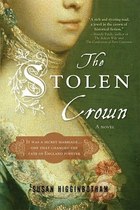 When her sister Elizabeth Woodville secretly marries the King of England, Katherine Woodville’s future changes irrevocably. In the rush to marry off the many Woodville siblings, Kate becomes a duchess when Henry Stafford, duke of Buckingham, is chosen for her. Kate and Harry are children when they marry, but as they grow together they fall in love easily. But always in the way is Richard, duke of Gloucester, Harry’s idol from childhood. When Richard’s ambition leads him to sanction unspeakable deeds, Harry must choose whether to maintain his blind loyalty or strike out against his closest friend. When her sister Elizabeth Woodville secretly marries the King of England, Katherine Woodville’s future changes irrevocably. In the rush to marry off the many Woodville siblings, Kate becomes a duchess when Henry Stafford, duke of Buckingham, is chosen for her. Kate and Harry are children when they marry, but as they grow together they fall in love easily. But always in the way is Richard, duke of Gloucester, Harry’s idol from childhood. When Richard’s ambition leads him to sanction unspeakable deeds, Harry must choose whether to maintain his blind loyalty or strike out against his closest friend.
I’ve enjoyed both of Susan Higginbotham’s previous works and I’m happy to say that I enjoyed this one, too. I will admit that I found the beginning slightly tedious; a lot of it is recounting of history I already knew, so it might be perfectly fine for a reader who isn’t quite so familiar with late fifteenth century England. Once Kate and Henry start to grow, however, the book becomes really enjoyable. Their love story and affection for one another are often sweet and I liked watching them grow up together and move into maturity.
I also liked that Higginbotham actually made me like the duke of Buckingham. I might have thought that impossible, but she does it successfully. I even liked her version of Richard III here; he does horrendous things, but he never seems like an evil villain. Just an ambitious, somewhat foolish, man, happy to bend the course of history in his direction when he can. The author also blends facts in liberally. I recognized so much from my own research and I have to admit that I smiled whenever I found a particular tidbit that only someone who had done some digging would know. I read her blog, so I also know that she seeks out original sources whenever possible, which I always appreciate. She includes a bibliography in the back for anyone who has a desire to read yet more about the Wars of the Roses, as well as a detailed author’s note for those who want to know what is fact and what is fiction. If you like historical accuracy in with your fiction, look no further than Ms. Higginbotham.
The Stolen Crown is a great addition to the many works of fiction about the Wars of the Roses in England. It’s refreshing to read about characters who tread the middle ground – there are no villains or saints here, just people. I really liked it.
I am an Amazon Associate. I received this book for free from the publisher for review.
 Laura thought she was destined for spinsterhood until Henry McAllan chose to make her his wife. What she didn’t bargain on was his desire to own land, and their move to a cotton farm a few years later with two small girls. Laura hates the farm, which she and her daughters christen Mudbound, and hates her father-in-law, who has no place to live but with them. When World War II ends, Henry’s brother Jamie comes to stay with the family, and so does Ronsel Jackson, the son of the sharecroppers nearby. Sharing the common bond of fighting men, Ronsel and Jamie become friends of a sort, in a way that no one in the South will tolerate for very long. Laura thought she was destined for spinsterhood until Henry McAllan chose to make her his wife. What she didn’t bargain on was his desire to own land, and their move to a cotton farm a few years later with two small girls. Laura hates the farm, which she and her daughters christen Mudbound, and hates her father-in-law, who has no place to live but with them. When World War II ends, Henry’s brother Jamie comes to stay with the family, and so does Ronsel Jackson, the son of the sharecroppers nearby. Sharing the common bond of fighting men, Ronsel and Jamie become friends of a sort, in a way that no one in the South will tolerate for very long.
It’s hard to say I liked this book, but it was compelling and completely horrifying in parts. This is particularly so because most of the characters in the book are very racist. I know people genuinely thought like this when and where this book is set, but it bothers me and I can’t understand it (which, I suppose, is a good thing). I wanted all the characters to stop being close-minded, to think more like Jamie, who sees Ronsel as a person despite the color of his skin and respects the military achievements that he made.
The book rotates between viewpoints, giving us insight into all of the characters’ heads. We can witness Laura’s unhappiness, Henry’s land-lust, Jamie’s jitters and bad memories. Ronsel’s memories of war in Europe were for me the most affecting. He describes the difference it made in Europe when he was defined as a man, not as a black man; the wonder of having a white woman fall in love with him and everyone make him feel like he was valued. He had to be my favorite character and my heart broke for him over and over again, stuck in a racist town working on a farm where he’d never be appreciated the way he should have been.
Mudbound is a powerful and affecting book, but it won’t leave you happy. It will leave you unsettled and anxious to change the world, correct anyone who might still feel this way. It’s an evocative and moving picture of the American South, but I hope it has changed very much.
I am an Amazon Associate. I purchased this book.
 As a young girl, Jane Maxwell was in love with Thomas Fraser, and they go so far as to declare their engagement. But Thomas goes to war and is reported dead, to Jane’s dismay and her mother’s glee. In his absence, encouraged by family and friends, she marries Alexander, Duke of Gordon, and goes on to become a famous patroness of the arts and a political activist. Thomas, however, is not dead, and Jane spends her life torn between the man she has always loved and the man with whom she has a family. As a young girl, Jane Maxwell was in love with Thomas Fraser, and they go so far as to declare their engagement. But Thomas goes to war and is reported dead, to Jane’s dismay and her mother’s glee. In his absence, encouraged by family and friends, she marries Alexander, Duke of Gordon, and goes on to become a famous patroness of the arts and a political activist. Thomas, however, is not dead, and Jane spends her life torn between the man she has always loved and the man with whom she has a family.
This is quite an ambitious work of historical fiction. I so appreciated the depth and complexity of it and the historical picture that Ciji Ware creates here. Jane travels between England and Scotland and I really got a feel for both of them in the late eighteenth century. Jane herself is a powerful woman and I really liked her. For all that she had trouble choosing between men, she was a figure to be reckoned with in politics and consistently knew her own mind in many respects. The book is long, but I was sucked in after fifty pages and really enjoyed it. It has a nice sweeping, epic feel to it, like these characters are important and usually doing important things.
I similarly appreciated the author’s research. I liked knowing that she’d read Jane’s letters and tried to find the mysterious man that she references as her childhood love. She filled in the missing pieces, but it’s nice to know that the real life Jane struggled with the same issues that the fictional Jane did. I also appreciated the variety of historical characters that poke their heads into the story, like Georgiana, the Duchess of Devonshire and Robert Burns, the Scottish poet.
It’s not a perfect read, though. It is very bawdy; it seems like all the characters are featured in at least one sex scene with a variety of different people. Some of it furthers the plot, but a lot of it feels unnecessary, and leaves me wondering if this sort of explicit writing was in favor in historical fiction when the book was originally published. I was often frustrated with the misunderstandings that the characters had, but I could recognize where their difficulties came from even if I wanted Alex to open up and Jane to stop mooning constantly over Thomas.
In the end, I really enjoyed Island of the Swans. It has its faults, but there is a great story here with well-developed characters and dilemmas. I would definitely recommend it to other historical fiction lovers.
I am an Amazon Associate. I received this book for free from the publisher for review.
 Lady Penelope Staines is the subject of Eloise’s research this time. Penelope and her husband Frederick, unwillingly married due to a compromising situation, head to India where the political situation is very unsteady. On their way to Frederick’s posting, the couple meet Captain Alex Reid, a British man born and raised in India, convinced that these inexperienced aristocrats are going to be ineffectual. In Penelope, however, Alex finds a courageous woman who has been damaged by years of criticism, far from his expectations. Lady Penelope Staines is the subject of Eloise’s research this time. Penelope and her husband Frederick, unwillingly married due to a compromising situation, head to India where the political situation is very unsteady. On their way to Frederick’s posting, the couple meet Captain Alex Reid, a British man born and raised in India, convinced that these inexperienced aristocrats are going to be ineffectual. In Penelope, however, Alex finds a courageous woman who has been damaged by years of criticism, far from his expectations.
I really enjoy this series and The Betrayal of the Blood Lily was no exception. The series’s change of location, even if temporary, is totally refreshing and brings in a new political atmosphere. I’ve read a few books set in India lately and this was a different time period, so I appreciated more history. I also felt like, even though this one restores the sex scene to the romance, this is more historical fiction than romance. The romance is certainly present, and very sweet, but there is also quite a bit of intrigue in the Indian court as well as Penelope’s painful relationship with her reluctant husband. It takes a little bit to get used to the different setting, but it’s worth it.
As usual, the modern day storyline with Eloise and Colin is somewhat less interesting. Not much happens, except that they’re still together. It’s hard not to feel for Eloise because she’s a charming character, and I too can imagine very little better than having the ability to delve through historical letters and documents for a day. She finds out some disturbing facts about Colin’s family but not much changes in her own personal or academic life.
I’m left wondering when this series is going to end, but as long as Willig keeps producing stories that are alternately fun and emotional, I’m going to keep reading them.
I am an Amazon Associate. I purchased this book.
 Daniel Rooke’s childhood is miserable; as a smart boy born to poor parents in eighteenth century England, doors eventually open for him but he constantly struggles to fit in. In 1788 he seizes the chance to go on a mission to New South Wales as an astronomer, hoping to finally break out of his position in the lowly marines and become a scientist. That doesn’t quite happen; instead, in his solitary makeshift observatory, Rooke forges a friendship with the Aborigines, one in particular, that has an astonishing effect on his worldview and brings into sharp focus the issues with British imperialism. Daniel Rooke’s childhood is miserable; as a smart boy born to poor parents in eighteenth century England, doors eventually open for him but he constantly struggles to fit in. In 1788 he seizes the chance to go on a mission to New South Wales as an astronomer, hoping to finally break out of his position in the lowly marines and become a scientist. That doesn’t quite happen; instead, in his solitary makeshift observatory, Rooke forges a friendship with the Aborigines, one in particular, that has an astonishing effect on his worldview and brings into sharp focus the issues with British imperialism.
The Lieutenant is a short, quick read, but no less affecting for all that. The book is written in third person and the beginning went very quickly, which made me feel somewhat detached and a bit frustrated, but as soon as Rooke is in the war, I was immensely wrapped up in his story. His journey to Australia was outright fascinating. More than anything, it showed the arrogance of the British soldiers, convinced that the natives would immediately like what they had to bring, want to hang around them, and be grateful for their company even after they were forcibly captured! I was astonished. I knew this sort of thing happened in the Americas but it still made me so angry.
Luckily, Rooke shared my feelings, and I loved the friendship he shared with the native girl and his diligent attempts to learn their language for the sake of speaking to them, not to become famous like one of the other crew members. I really felt that he was trying to understand them and he treated them like the people that they were. He was just a really admirable, clever man, and even though I couldn’t entirely get inside his head, I got enough of his intentions to really like him, and his actions were above reproach as long as he knew what he was doing.
I did think the beginning and the end were brief and sort of disappointing and detached, but in my opinion the entire book was worth it for that great middle section when Rooke tries to learn about another culture without imposing his own Britishness on it. He’s clearly rebuked when he does. I was happy to learn that it was based on a true story and a soldier did attempt to learn the language from a young native girl, although the author says clearly it’s fiction and should not be taken as history. Even so, knowing that at least one man attempted to understand, rather than oppress and change, makes for a great story and reminds us that some people do buck the trend of history.
I am an Amazon Associate. I received this book for free from the publishers for review.
 Two boys, Julian Cain and Tom Wellwood, are wandering around a half-completed museum in London when they come across a third boy, Philip Warren, drawing the museum’s sculptures. He has fled from his family and his life in the horrible pottery factories, and the Wellwood family takes him in and finds him a place with Benedict Fludd, a strange and temperamental sculptor. At first glance, all of these families appear happy, particularly the large Wellwood family with successful children’s book author Olive Wellwood and her banker husband Humphry at its head. As the years go by, however, and the children grow up and learn the realities of the world, they understand that their childhood was an illusion as paper thin as Olive’s fairy tales. Two boys, Julian Cain and Tom Wellwood, are wandering around a half-completed museum in London when they come across a third boy, Philip Warren, drawing the museum’s sculptures. He has fled from his family and his life in the horrible pottery factories, and the Wellwood family takes him in and finds him a place with Benedict Fludd, a strange and temperamental sculptor. At first glance, all of these families appear happy, particularly the large Wellwood family with successful children’s book author Olive Wellwood and her banker husband Humphry at its head. As the years go by, however, and the children grow up and learn the realities of the world, they understand that their childhood was an illusion as paper thin as Olive’s fairy tales.
I loved this book. I don’t think everyone will love it; it’s a long, dense book, more a portrait of family and art than anything with a plot. Although, to be honest, I didn’t think the descriptions of pots were as boring as everyone says, and there weren’t as many as I’d expected, either. I loved the intricate detail and the thought that went into this book. I felt it was such a gorgeous picture of late Victorian England, and Edwardian England, and even, heartbreakingly, World War I era England. It was a full picture of a society both different from our own and becoming our own. Honestly, I could live in this book’s atmosphere, even if I wouldn’t particularly want to live in a time where options for women were so limited.
I adored the children in each of their various ways and was fascinated by their coming-of-ages. There are so many different strands with each of them in the novel and their fates are all bound up together. I was riveted by Dorothy’s determination to become a doctor, for example, and I completely admired her ambition and devotion to science. I cheered on her success. I longed for the happiness of Elsie and Philip, two children seriously disadvantaged by their upbringing. I was torn by Tom’s story, and didn’t understand why his mother didn’t understand. In short, each of the characters has their own plot arcs, and some are heartbreaking, while some are joyful.
Closing the book with the effects of World War I makes the entire rest of the book feel idyllic. I felt as though I was feeling what the British must have felt as they sent their sons off to die, each with their own life story as these character possess, and I found the entire last section absolutely heartbreaking. Here is a book that depicts the horrors of war, how each life is cut off abruptly with no preparation and no ending. It’s easy to see how this changed England and this book brought it home to me.
I’m not sure I loved The Children’s Book as much as I loved Possession, but the more I think about it, the more I think that might be possible. It has made this review hard to write because I can’t pin down exactly why. But I’ve tried, and if you have the patience for this, I believe it will reward you immensely.
I am an Amazon Associate. I received this book from the Amazon Vine program for review.
|
|



Recent Comments