|
|
 Mary Toliver DuMont knows she is dying. When she looks back on her life and reflects on all the mistakes she’s made, she chooses to sell her family’s huge farm rather than leave it to her great-niece as Rachel is expecting. In this multi-generational saga, the characters take us back through their lives to the beginning of many of their problems so that the conclusion becomes understandable. This family has experienced it all, and their mistakes may prevent the happiness of the newest generation. Mary Toliver DuMont knows she is dying. When she looks back on her life and reflects on all the mistakes she’s made, she chooses to sell her family’s huge farm rather than leave it to her great-niece as Rachel is expecting. In this multi-generational saga, the characters take us back through their lives to the beginning of many of their problems so that the conclusion becomes understandable. This family has experienced it all, and their mistakes may prevent the happiness of the newest generation.
I often love sagas of this variety and Roses was not really an exception. There’s little better than investing yourself in several hundred pages of a fictional family’s complicated and generally tragic life. Here the central tragedy is that Mary Toliver and Percy Warwick don’t marry, even though they are clearly the loves of each other’s lives, due to misunderstandings and mistakes. Those resonate throughout the book and influence decisions made by all the characters throughout.
These families are descended through Lancastrian and Yorkist immigrants to the United States and as a result use a system of roses to signal forgiveness (and unforgiveness) to one another. I have to admit I rolled my eyes a little at this, as it just seems way too sentimental for real life, but it works really well as a device within the story, so I got used to it very quickly and appreciated how the author wove it in, making the title perfectly appropriate for the book. I also really liked the characters for the most part, especially Percy; Mary and Rachel were slightly too abrasive for me to love them, but I still liked them.
Despite the fact that I was swept up in the story and really enjoyed it, I have to say I had an issue with the central reason for frustration. Everyone blames everything on Somerset, and it seemed to me what really happened was that the characters made bad decisions. Getting rid of the land would not have solved their problems, talking would. I could definitely understand the issue an early twentieth century southern magnate would have had with his wife out in the fields all day, but I do think there’s such a thing as compromise. Mary and Percy are just too stubborn to have things their own way.
Roses is a saga in a great tradition, but it’s not a perfect one. Still, if you enjoy reading about strong characters and don’t mind a little bit of tragedy and suspending belief, this would be a wonderful choice. I’d also suggest it to people who enjoyed Dallas on TV – the Texas feel is so similar here.
I am an Amazon Associate, so if you purchase books through my links I will earn a tiny percentage of the profit at no cost to you. Thanks! I received this book for free from the publisher.
 The Morland family has survived the Wars of the Roses to see the Tudors take the throne of England. French Paul, the great grandson of the founders of the dynasty, now runs the Morland properties, but struggles with jealousy of his half-siblings and dislike of his wife. Only his mistress in the city of York brings him happiness, but she also brings strife within his family. Meanwhile, Paul’s niece Nanette becomes a beloved maid to Anne Boleyn, witnessing first hand the conflict and drama inherent in the Tudor court. The Morland family has survived the Wars of the Roses to see the Tudors take the throne of England. French Paul, the great grandson of the founders of the dynasty, now runs the Morland properties, but struggles with jealousy of his half-siblings and dislike of his wife. Only his mistress in the city of York brings him happiness, but she also brings strife within his family. Meanwhile, Paul’s niece Nanette becomes a beloved maid to Anne Boleyn, witnessing first hand the conflict and drama inherent in the Tudor court.
This second volume in the Morland dynasty may mark my abrupt end of reading the series. This is just far too romanticized a version of history for me. Most historical fiction does it to some extent, but this goes a little too far. It’s like a story you would tell a small child, rather than an attempt to actually imagine history as it might have been, at least as far as I’m concerned. When Nanette has witnessed the many murders of Henry VIII, including that of her friend Anne Boleyn, and still manages to see these murders as something that just had to happen and doesn’t fault him at all for it, I just have to take exception to that. Yet the characters that don’t appear are purely villainized, like Henry’s next wife Jane Seymour, who is called something like the honey scorpion.
The author clearly attempts to have characters with multiple sides to them. Paul’s bastard son is one such, as the author makes him a love-starved boy that finally seeks vengeance on the father who never gave him what he needed. Despite that, everything just feels painted with a rosy brush. Of course Adrian would have been a good man if he’d been given love. Of course the council would never do anything evil, even though clearly the king would never do anything evil either. There is incest in here that made me distinctly uncomfortable, but no one seems to mind when an uncle marries his niece, even though the characters mention the difficulty they might have with it.
The entire series has a nice dynastic feel that I like, but overall I feel like I’m reading a fairy tale that has little to do with actual history. For that reason, I’m unsure if I’ll continue. The Dark Rose was entertaining, but I think I’d rather spend my time reading something with a historical feel instead of a rosy “oh-wasn’t-the-past-great” one.
I am an Amazon Associate. I borrowed this book from my local library.
 Born right in the midst of the Renaissance, Michelangelo is a brilliant artist living through turbulent times in Italy. Though he impresses his first painting master, Michelangelo longs to be a sculpter, only feeling at home with a hammer and chisel in his hand as he brings to life the being inside the stone. Intertwining his life with the influential first family of Florence, the Medicis, Michelangelo does learn to sculpt, but that is only the beginning of the life of one of Italy’s greatest artists. Born right in the midst of the Renaissance, Michelangelo is a brilliant artist living through turbulent times in Italy. Though he impresses his first painting master, Michelangelo longs to be a sculpter, only feeling at home with a hammer and chisel in his hand as he brings to life the being inside the stone. Intertwining his life with the influential first family of Florence, the Medicis, Michelangelo does learn to sculpt, but that is only the beginning of the life of one of Italy’s greatest artists.
This massive book is subtitled “a biographical novel of Michelangelo” and it certainly attempts that feat. From his teenage years, before which I’m assuming very little is known, right up to his death, Irving Stone does his very best to cover it all in detail. I learned more about sculpting, painting, and the many other things that Michelangelo gets up to than I’d ever really expected to. We even hear about the particular types of stone in Italy and how they are quarried. I was astounded by the sheer amount of information Stone appears to have gathered on his subject. He has a more extensive bibliography in the back than I’ve seen in some popular non-fiction books.
As for the book itself, I will admit that sometimes its prose drags. Stone is a bit of an old-fashioned writer, as the book is from 1961, and it takes a little adjusting to his style. It doesn’t help that he includes every detail about everything you could possibly imagine. I think, however, that its epic scope and immersion in Michelangelo’s life are totally worth it. I spent days with this book and I really enjoyed those days. I know a little about Renaissance Italy, and it was fascinating to see it from his perspective, particularly because his family wasn’t hugely wealthy. I felt like I was experiencing both the life of the rich and the life of the ordinary, even though Michelangelo himself was truly extraordinary.
More so, this book somehow made me long to actually see Michelangelo’s sculptures for myself. I’m glad I live in the UK now, because I can plan a trip to Italy and see all of his existing sculptures and paintings. The Agony and the Ecstasy has made me appreciate just what it took to produce such art, and as a result I expect my admiration of it will be far greater. This is a wonderful book, and I do recommend it.
I am an Amazon Associate. I purchased this book.
 One summer shortly after the end of the war, Dr. Faraday is called to Hundreds, the Ayres family mansion, to tend the family’s maid. Hundreds has faded drastically from when he knew it as a boy. Land is being sold off to pay debts, the house is falling apart, and the family have become largely recluses. Dr. Faraday somehow finds himself entwined with this peculiar family despite their differences in status, and shortly realizes that something more is going on than what he had imagined. One summer shortly after the end of the war, Dr. Faraday is called to Hundreds, the Ayres family mansion, to tend the family’s maid. Hundreds has faded drastically from when he knew it as a boy. Land is being sold off to pay debts, the house is falling apart, and the family have become largely recluses. Dr. Faraday somehow finds himself entwined with this peculiar family despite their differences in status, and shortly realizes that something more is going on than what he had imagined.
I love Sarah Waters, and went into this book with a great deal of expectations. It proved to be very different from her previous books but no less fascinating. Even without the jacket cover telling me so, I could tell this was a post-war Britain. It feels very much like a society in flux, and there’s always the mention of the forthcoming National Health Service to give a hint. Dr. Faraday is a product of this changing culture, having fairly low origins in Warwickshire but having attended some of the best colleges to attain his profession. Yet he still hides his Warwickshire accent because it’s low class. (Yes, this still happens, my own husband consciously changed his accent because it was “low class” and he was attending schools where he was looked down on for it. In some respects Britain hasn’t changed at all.) The Ayres family is completely unable to keep up their house and their land, and they even sell some of it to the county council for housing nearly on their doorstep. This is a period of change, and that change resonates throughout the book.
Beyond that, this book is absolutely creepy. I know we’re meant to wonder if the family is actually insane or if it’s a ghost story, but it totally felt like a ghost story to me. It creeped me out like one, and as I was reading it and it got dark I almost had to stop because I was sure something was going to start tapping in the wall. I was convinced that Dr. Faraday was just being rational because he had to be as a doctor, not because the family were actually insane, but it’s certainly notable that most of the ghost incidents are told through the Ayres family, and the narrator doesn’t witness them himself. Waters completely pulls off the atmosphere of suspense and even though I was getting steadily more freaked out by the book, I didn’t want to put it down. I read it in just one day.
The Little Stranger has definitely not marred my love for Sarah Waters’ work and now I am more determined than ever to get to the last two books of hers that I have to read. Highly recommended.
I am an Amazon Associate. I borrowed this book from my local library.
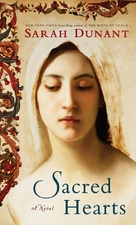 When young novice Serafina enters the convent at Santa Caterina, she is desperately unhappy and makes sure all the other nuns and novices know about it. Dowry prices for Italian aristocrats have risen so high that families with more than one daughter were forced to send the others to a convent. The convents were not as strict as they could be and girls were allowed to see their families, receive gifts, and make their lives easier, but there was no question that they were wed to God, and Serafina wants to be wed to someone else. Madonna Chiara sends the dispensary sister, Suora Zuana, to Serafina to calm her with her medical skills. The women form a friendship, but Serafina’s determination and zeal will not be quenched. When young novice Serafina enters the convent at Santa Caterina, she is desperately unhappy and makes sure all the other nuns and novices know about it. Dowry prices for Italian aristocrats have risen so high that families with more than one daughter were forced to send the others to a convent. The convents were not as strict as they could be and girls were allowed to see their families, receive gifts, and make their lives easier, but there was no question that they were wed to God, and Serafina wants to be wed to someone else. Madonna Chiara sends the dispensary sister, Suora Zuana, to Serafina to calm her with her medical skills. The women form a friendship, but Serafina’s determination and zeal will not be quenched.
I enjoyed this book a surprisingly large amount. I loved the detailed peek into Italian convent life in particular. The pace of the book is occasionally slow, but it seems to match perfectly the pace of convent life, with the hours specifically devoted to work and prayer and not much in between. I was never bored, but actually spellbound by the entire book. The politics in the convent were fascinating; some sisters are in favor of new reforms that threaten to close off all convent life from the outside, even though this violates the understanding by which most women entered the convent in the first place. Others can’t imagine losing close contact with families, friends, and occasional luxuries, much less the prospect of losing the ability to hold concerts and plays. The drama and the manipulation that goes on to swing the convent one way or the other was fascinating to me, and these elements form the basis for part of the plot.
The characters were very interesting too. I’d never wondered much about women who were forced to take the veil. Serafina, however, proves just how frustrating this must be. Her determination and ingenuity make her very attractive as a character even as she complains that she’s been separated from the man she wanted to marry. I found her whole story to be uplifting and very moving. Moreover, Zuana’s interaction with Serafina makes her think about everything that she accepts, and her life is similarly fascinating and saddening. These women are at very different stages in life and as a result Zuana reflects on how she wound up in the convent and what she suffered. It isn’t romance, but these two women combined give a very interesting picture of Italian life.
In the end, I loved Sacred Hearts. I think it’s my favorite novel by Sarah Dunant, and I wasn’t expecting that at all. Highly recommended.
I am an Amazon Associate. I received this book from the publisher for review here.
 Raised to a rigorous Norman standard, Judith, niece to the new Norman king of England, William the Conquerer, is alarmed at her unexpected attraction to an English lord, Waltheof of Huntingdon. The attraction is more than mutual, and Waltheof immediately petitions for her hand in marriage. Witnessing their peculiar attraction is young Simon de Senlis, son of the king’s chamberlain, who is injured by Judith’s boldness in choosing a horse she can’t handle. While Judith and Waltheof are undeniably attracted to one another, setting aside their differences for the sake of their marriage is perhaps more than this couple can bear. Raised to a rigorous Norman standard, Judith, niece to the new Norman king of England, William the Conquerer, is alarmed at her unexpected attraction to an English lord, Waltheof of Huntingdon. The attraction is more than mutual, and Waltheof immediately petitions for her hand in marriage. Witnessing their peculiar attraction is young Simon de Senlis, son of the king’s chamberlain, who is injured by Judith’s boldness in choosing a horse she can’t handle. While Judith and Waltheof are undeniably attracted to one another, setting aside their differences for the sake of their marriage is perhaps more than this couple can bear.
I love Elizabeth Chadwick’s books. Her medieval settings are rich with color and life, while her characters could stroll off the page remarkably easily. Even with this detail, however, which I know she meticulously researches, all of her novels are driven by their characters and their complex relationships with one another. I thought this book was a simple romance, but it turns out to be a multi-generational story of forgiveness for all of the characters. They are for the most part historical characters and Chadwick fleshes out the bare bones of their recorded lives to give us a living, breathing story that is a pleasure to read.
It’s hard to pick out what I appreciate the most here. Despite its five hundred pages, the story simply flew by, and a great deal happens over the course of the narrative. The book is never boring or slow despite the length and I was in fact eager to see what happened next, because things did not go at all as I’d predicted. I wondered how she was going to fill 500 pages with one romance, but of course there is more than that; two romances and even a crusade. Chadwick slips in little historical details over the course of the book, like the way the Normans cut their hair as opposed to the English, or the metal bands that Waltheof wears around his wrists from his Viking ancestors.
The characters are real and as frustrating sometimes as they are lovable. I wanted to shake both Judith and Waltheof as they struggled so much over their differences, but they truly came from different cultures. Simple attraction couldn’t overcome the vast difference in what they wanted from their lives and what they thought was appropriate, and this could be as true of any twenty-first century couple as it is of this eleventh century one. Their descendants are very charismatic and in fact more appealing than Judith and Waltheof, which brought the story to a very enjoyable conclusion.
I’ve really enjoyed all of Elizabeth Chadwick’s books so far, and The Winter Mantle is no exception. I highly recommend any of her books for engrossing historical fiction.
I am an Amazon Associate. I purchased this book.
 Thomas Cromwell’s star is ascending. From the docks of Putney, where his father beats him, to the grandest palaces in England, Cromwell’s rise is nothing short of amazing. A clever politician, hardened by years abroad, Cromwell knows when to leave Wolsey’s sinking ship and head to the king’s side, where he is the one who most helps him divorce his wife so that he can marry Anne Boleyn. Through both personal tragedy and public glory, Cromwell is an enigmatic character, and Hilary Mantel has given him the story he deserves. Thomas Cromwell’s star is ascending. From the docks of Putney, where his father beats him, to the grandest palaces in England, Cromwell’s rise is nothing short of amazing. A clever politician, hardened by years abroad, Cromwell knows when to leave Wolsey’s sinking ship and head to the king’s side, where he is the one who most helps him divorce his wife so that he can marry Anne Boleyn. Through both personal tragedy and public glory, Cromwell is an enigmatic character, and Hilary Mantel has given him the story he deserves.
I’m not sure how I feel about this Booker Prize winner. It has both its good and its bad points. I do think it was written well. I was forewarned about the excessive use of “he” and whenever I couldn’t track the direct reference, I assumed that the author was talking about Cromwell, so that didn’t bother me. I didn’t like that it was written in present tense, though, because it kept jumping out at me and reminding me how much I dislike present tense. Moreover, the book was often boring, and dragged on excessively, especially for someone who knows the Tudor period far too well. It follows the history, but that doesn’t always make for a particularly exciting story.
On the other hand, this is possibly the best picture of Tudor England I have ever read. For some reason, Mantel could transport me there better than anyone has before. I loved that she focused on Cromwell, someone who is often in the background or villainized, and made him into a genuine person. He had such a varied background that Mantel could write about the poor as well as the rich. She could write about the middle class, which Cromwell occupies for a while. She gives us a picture of all levels of society, and we can greater see the contrast of the elegant man in the king’s glittering court to the poor boy with his beaten face pressed into the mud. The detail in this book is astounding, and admittedly is part of the reason it dragged, but creates a whole picture of a world that could easily be foreign.
I also really liked Cromwell, surprisingly. His character was well-rounded and I felt like he was a person I could relate to in a world that I couldn’t. He’s a very clever man, but he also experiences grief and joy just like the rest of us. I think many people could see themselves in his character because he feels like a human being, not a character on the page. Cromwell’s character is, in my opinion, what makes this book great, despite the fact that the plot is so very meandering.
So I’m unsure as to whether or not I can recommend Wolf Hall. If you’re in the mood for a fast read, stay away. I suggest instead taking it slowly and appreciating the world that Mantel creates. I hear Mantel is writing a sequel and I know I still want to read it.
I am an Amazon Associate. I received this book from the publisher for review.
 The Duke of Sale, a fragile child, has never known his parents. Instead, his life had mostly been run by his well-meaning uncle and servants, who are convinced that if he deviates from their instructions, disastrous consequences will ensue. Tired of being managed and determined to find out if he’s a man or a mouse, Sale ventures off to prove himself. Conveniently, two young people emerge as needing his protection, and after a variety of hijinks, Sale begins to discover who he is and what he values in his life. The Duke of Sale, a fragile child, has never known his parents. Instead, his life had mostly been run by his well-meaning uncle and servants, who are convinced that if he deviates from their instructions, disastrous consequences will ensue. Tired of being managed and determined to find out if he’s a man or a mouse, Sale ventures off to prove himself. Conveniently, two young people emerge as needing his protection, and after a variety of hijinks, Sale begins to discover who he is and what he values in his life.
I love Georgette Heyer’s books. This one was, as I expected, just delightful. It is primarily a journey of discovery for the Duke of Sale, who is a charming character. His relatives ignore his wishes and mollycoddle him, annoying him just as much as they annoy us. As a reader, I was thrilled for him when he broke their bonds and went out into the world to see what it was like.
I love how funny Heyer is, too. She’s renowned for writing romances, but this is so much more than that. Sale’s adventures are genuinely entertaining and I read this book with a smile on my face. Tom, a young boy he somewhat rescues, is such a character. He acts just like a boy of that age and even though he annoys everyone around him, he’s so true to life. Belinda, as a contrast, is too silly for words, but even as she is unrealistic, she is also absolutely hilarious. She’s neatly countered by Sale’s fiancee, Harriet, a charming and sensible woman that I wanted Sale to fall in love with as soon as possible. Sale and Harriet are engaged due to an arrangement between their families, but I immediately wanted it to be something more as soon as they encountered one another in the book.
Heyer’s language would probably give someone new to her pause, because it’s quite old-fashioned, but I find it charming. Once I’m reading, I almost don’t want to go back to modern language. After a few pages, I’m sure anyone would get past their qualms and settle in to enjoy the story and characters for themselves.
I definitely recommend The Foundling. This is such an enchanting book. I really can’t wait to read more by Georgette Heyer.
I am an Amazon Associate. I received this book from the publisher for review.
 Despite an assumed match between herself and her cousin Sir James Martin, Miss Susan Martin chose to marry Sir Frederick Vernon, and was very happy for her choice. Though she was courted by Sir Frederick’s younger brother, Mr. Charles Vernon, Lady Vernon disregarded this as soon as she was married. Her union was blessed with a daughter, Frederica, and all three lived happily until a hunting accident laid Sir Frederick low with a life-threatening illness. Frederica had seen her uncle very near her father at the time of his accident, Mr. Vernon seemingly inactive until he spotted her. Worse, her father died in the understanding that his brother would provide for his wife and daughter as he’d stipulated, but Mr. Vernon had no such scruples, and Lady Vernon and her daughter are left to make their own way in society. Despite an assumed match between herself and her cousin Sir James Martin, Miss Susan Martin chose to marry Sir Frederick Vernon, and was very happy for her choice. Though she was courted by Sir Frederick’s younger brother, Mr. Charles Vernon, Lady Vernon disregarded this as soon as she was married. Her union was blessed with a daughter, Frederica, and all three lived happily until a hunting accident laid Sir Frederick low with a life-threatening illness. Frederica had seen her uncle very near her father at the time of his accident, Mr. Vernon seemingly inactive until he spotted her. Worse, her father died in the understanding that his brother would provide for his wife and daughter as he’d stipulated, but Mr. Vernon had no such scruples, and Lady Vernon and her daughter are left to make their own way in society.
I have never read the Jane Austen novella on which this novel was based and I think that helped me enjoy it more. I did in fact very much like it. It deals in very typical Austen themes but it doesn’t quite match the feel of her work. Since I hadn’t read the original novella to compare it against, my expectations weren’t very high, and I ended up genuinely liking the characters and looking forward to seeing what happened and how it all wound up.
My favorite part of the novel was all the misunderstandings that arose based on gossip. At first the gossip was harmful, and I wasn’t fond of that, but soon enough I realized in what direction the story was going and it became very funny. It’s easy to see how such things could arise when the only communication long distance was letters, and anyone could say anything they liked in a letter with no other contact for contradiction in the country. There is also the gap of time, and anything could happen between receipt of a letter and the next. In any case, I thought this was all demonstrated very well, and I got quite a kick out of it.
I also felt that the novel kept very much to a Austen-like propriety. In modern sequels, there is often an over-emphasis on romance, which I like in modern novels, but which I don’t really feel is appropriate for anyone imitating Austen. I enjoy the way Austen’s characters express their feelings for one another, and I think these authors pull off a very credible, discrete imitation, which gives the impression of full feelings with nothing beyond words.
So, when not compared to Jane Austen herself, Lady Vernon and Her Daughter is a wonderful diversion. It was short and pleasant and I enjoyed my time with it. I would definitely recommend it to fans of historical fiction.
I am an Amazon Associate. I received this book from the Amazon Vine program for review.
 Living in seventeenth-century China, Peony has never left her family’s home. Her mother has kept her inside to maintain her virtue and modesty as she prepares to marry out to a stranger. Peony is nearly sixteen, and on her birthday, her father has planned a performance of her favorite play, The Peony Pavilion. As the only child, Peony has been educated beyond what her mother deems appropriate, and as a result has a great appreciation for literature. On the night of the play, Peony accidentally meets a handsome young poet, immediately falling in love with him. In despair over her approaching marriage to a stranger and consumed by obsession for the play and her poet, Peony’s life spirals into a haunting struggle through the nebulous underworld and culminates with her quest to give Chinese women a voice. Living in seventeenth-century China, Peony has never left her family’s home. Her mother has kept her inside to maintain her virtue and modesty as she prepares to marry out to a stranger. Peony is nearly sixteen, and on her birthday, her father has planned a performance of her favorite play, The Peony Pavilion. As the only child, Peony has been educated beyond what her mother deems appropriate, and as a result has a great appreciation for literature. On the night of the play, Peony accidentally meets a handsome young poet, immediately falling in love with him. In despair over her approaching marriage to a stranger and consumed by obsession for the play and her poet, Peony’s life spirals into a haunting struggle through the nebulous underworld and culminates with her quest to give Chinese women a voice.
I’ve been looking forward to this novel since it came out and was pleased to finally have the opportunity to read it. Lisa See didn’t let me down; while not as masterful as Snow Flower and the Secret Fan, which I read before blogging, Peony in Love* is a romantic story about the struggles of women in China with an abundance of fascinating historical detail and a healthy dose of fantasy. Peony dies in the first third of the novel (this is revealed on the back cover, so I don’t consider it a spoiler) and enters a world of Chinese mythology, where Lisa See uses her research on those beliefs to elaborate on how Peony can still communicate and influence those she loves. We know her ending cannot be totally happy, but her story is still compelling and absorbing.
My favorite aspect of the book was how it mirrored The Peony Pavilion in many ways but also reflected real historical events. I have never read the play, but enough is described in this novel to make it clear that Peony is essentially trying to become Liniang and get her Mengmei to bring her back to life. It was fascinating and maddening to realize that many young women did actually die of “lovesickness” in this way. Basically, it’s believed that they became anorexic, which is horrifying, to both gain control over their lives and because they supposedly believed that true love would save them. Even though this sounds a little far-fetched, it’s easy to relate to Peony and sympathize with her. She’s fallen in love and believes that now she is forced to marry a stranger. I loved the details of her preparations for marriage (except the repeat footbinding!) and the ceremonies enacted before and after her death. This is a part of the world and a period in history I just don’t read enough about.
Better yet, I liked how the novel emphasized the role of women in China and how it has been eroded throughout the centuries. The Three Wives’ Commentary on the play actually exists, as did the writing groups and female poets in the novel, and I’m incredibly intrigued by them and want to learn more about the movement. This is why I love historical fiction! Not only did I get a great story, but I also got a peek into unfamiliar history and a strong desire to learn what’s true and what’s fiction. Peony in Love is definitely recommended.
*I am an Amazon Associate. I purchased all books mentioned in this post.
|
|



Recent Comments