|
|
 I know what you’re thinking – this book is a completely out-of-the-ordinary read for me. And it is, I’ve read very few books like this in my life. But I became curious about wheat when my mother was advised to eat much less of it by her doctor because of the sugar content, even in whole wheat bread, and when I saw this book on Netgalley I decided I had to know more. I know what you’re thinking – this book is a completely out-of-the-ordinary read for me. And it is, I’ve read very few books like this in my life. But I became curious about wheat when my mother was advised to eat much less of it by her doctor because of the sugar content, even in whole wheat bread, and when I saw this book on Netgalley I decided I had to know more.
Dr. Davis believes that genetically modified wheat is the scourge of modern society. He has seen hundreds of patients whose health has improved and weight has dropped simply by reducing or, better, completely eliminating wheat from their diets. It’s not the only solution, and he doesn’t say so; some people aren’t actually sensitive to wheat. But for those whom medicine has ultimately failed, whose health problems are unexplained, eliminating wheat may help. Not in all cases, but in many.
This is an intriguing book, although I’m ever wary of faulty science, but a lot of it seems logical to me. Bread, these days, is not really bread, something that other food writers have mentioned countless times. Look at the ingredients – there’s all sorts of stuff in there to produce it quickly and to prevent it from going moldy. No one can afford to buy bread daily, and no one really eats enough bread to justify it, so we’re in a new situation which has uncertain effects on health. Knowing in particular that wheat products contain a ton of sugar that shoots up blood sugar and creates lows can’t really be a good thing. Most notably, as in the title, Dr. Davis tries to connect the prevalence of genetically modified wheat to the size of American bellies – in that people who have never had beer now sport “beer bellies”.
It helps that Davis includes references to medical studies, so he does have some justification for what he’s saying beyond personal experience. He also includes a helpful week of a wheat-free diet plan, because that’s about how long it will take for someone to end the cravings and enjoy the benefits he says he feels – less hunger, fewer mood swings, and so on. While I think at times the author goes a little bit too far in his comparisons of wheat as evil, overall I really appreciated the message, and his plan is to change your lifestyle rather than force you into a diet you’ll never accomplish. I’ve even thought about trying his plan myself, but I love bread (I’m unquestionably one of his wheat addicts), so I doubt I’d stick to it!
More than anything, I appreciated that Davis made me think about what I’m eating and what’s in the packaged foods I buy, and renew my commitment to make more fresh food rather than relying on something a machine has processed. Wheat Belly
an interesting read for anyone who, like me, has been curious about the effects of wheat, or thinks a wheat-free diet may help improve their health.
All book links to external sites are affiliate links. I downloaded this book for free from Netgalley.
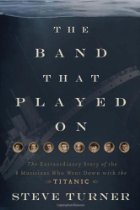 Everyone who has heard about the tragedy of the Titanic, or watched the film, probably remembers that the band kept on playing even as the ship sank into the ocean. They gave their lives so that people would remain calm and get on the boats in an orderly fashion. Nearly everyone who survived remembered the band, and we know that none of them survived, so the story certainly seems plausible. In this book, Turner looks at the men in the band – W. Hartley, C. Krins, R. Bricoux, W.T. Brailey, J. Woodward, J.F. Clarke, J.L. Hume, and P.C. Taylor – and considers both their lives before the disaster and the role they may have played in the final moments of the ship’s sinking. Everyone who has heard about the tragedy of the Titanic, or watched the film, probably remembers that the band kept on playing even as the ship sank into the ocean. They gave their lives so that people would remain calm and get on the boats in an orderly fashion. Nearly everyone who survived remembered the band, and we know that none of them survived, so the story certainly seems plausible. In this book, Turner looks at the men in the band – W. Hartley, C. Krins, R. Bricoux, W.T. Brailey, J. Woodward, J.F. Clarke, J.L. Hume, and P.C. Taylor – and considers both their lives before the disaster and the role they may have played in the final moments of the ship’s sinking.
I’ve never heard anything much about the musicians on the Titanic beyond the fact that they died playing. Like everyone else of my age, I’ve seen the film (twice in theaters) and their story is certainly a sad and noble one. Turner takes us behind the scenes with this book and looks at how exactly each man got on the Titanic. Who was waiting for them when they returned from the ship? How did each man become a musician? Were they career musicians or were they just building experience for greater things? These are all questions he seeks to answer.
He also considers the day of the sinking itself, thinking about what songs the men played, how two bands fit together into one for the final moments, and why they might have chosen to play. They could have been ordered to by the bandmaster, or they might have decided to carry on as one, knowing that they were unlikely to have a priority place on the available lifeboats anyway.
Lastly, Turner also looks at the aftermath of the disaster, and how these particular men’s deaths affected their families. The White Star Line, who owned the ship, did have to pay money out to the employees’ families, but who it went to was a matter up for debate in many of the men’s families.
Overall, The Band that Played On was a worthy, deeper look at these eight men, and a very good choice of read for people who are interested in further information about the Titanic and the people who actually ran the boat.
All book links to external sites are affiliate links. I received this book for free for review.
 For as long as men have been writing history, important women have been lost from its pages. Restoring all of them would be an impossible, lifetimes-consuming feat, but that doesn’t mean some historians can’t try. Building on the success of Philippa Gregory’s novels set during the Wars of the Roses (which she calls “The Cousins’ War”), she and two historians have written a book spotlighting three of the most important women during the war – The Duchess, Jacquetta, her daughter Elizabeth Woodville, the Queen, and Henry VII’s mother, Margaret Beaufort, The Queen’s Mother. For as long as men have been writing history, important women have been lost from its pages. Restoring all of them would be an impossible, lifetimes-consuming feat, but that doesn’t mean some historians can’t try. Building on the success of Philippa Gregory’s novels set during the Wars of the Roses (which she calls “The Cousins’ War”), she and two historians have written a book spotlighting three of the most important women during the war – The Duchess, Jacquetta, her daughter Elizabeth Woodville, the Queen, and Henry VII’s mother, Margaret Beaufort, The Queen’s Mother.
While reading this review, it’s probably worth keeping in mind that I know a lot about the Wars of the Roses, even counting what I’ve forgotten since I actually finished studying it intensively, and have read many many books and articles on the subject, both popular and academic history. I have also been trained to write history myself. My experience may not match yours.
I love the idea of The Women of the Cousins’ War in theory, but I’m ever so wary of it in actual historical practice. Unfortunately, this book actually justified my wariness. The introduction, written by Gregory, is very appealing. Starting off first with the difference, in her mind, between history and historical fiction, and followed up by why she chooses to write fiction, was actually a fascinating glimpse into her head. I didn’t agree with everything she said about the writing of history itself, but I appreciated such a bold introduction that really argued her case. It had me looking forward to the book.
At that point, unfortunately, I began to be disappointed. None of the essays use footnotes OR endnotes, which left me wondering where on earth they’d actually got their information from. There is a list of sources and a messy list of acknowledgements and quotes at the end of each, but this is frustrating to wade through when looking for the source of any quote. Without knowing where each got information from, I hesitated to trust anything I was reading.
It didn’t help that it started off with Gregory’s essay about Jacquetta, the Duchess of Bedford who married a lower-class Woodville seemingly out of love and gave birth to the future queen of England, Elizabeth Woodville. To be perfectly fair to Gregory, she has very, very little to work with, but this is one of the fundamental flaws in this sort of “restoration” of some historical women. There just isn’t much there. It’s incredibly difficult to prise out anything about Jacquetta herself besides speculation. Gregory does a decent job of that speculating, but since I didn’t know where any particular bit of information came from, whether it was an original source or not, I had no way to judge for myself what I thought about what she was saying. This particular bit reads, as you would imagine, as a factual tale about the more recorded people in Jacquetta’s life without much genuine insight into who she actually was.
I also was frustrated by the fact that there is no engagement with the sources, particularly the primary sources. Instead of hearing “some say”, I want to know who said it and what their motivation was. I wanted this book to further historical study, to make some sort of impact, not to just flatly tell me what happened. Gregory says she consulted the original sources, but aside from a few notes in the end, they don’t feature.
The second essay didn’t improve much on the situation. Enough is known about Elizabeth Woodville to actually make for an interesting biography, and some biographies have been already written about her, including one by this particular author. She also features heavily in other books about this subject, naturally. The essay was fair, and does include more information about the sources, and would be appropriate for someone who knows almost nothing about the subject. For me, it didn’t help that this essay was the least well-written and I found it very difficult to keep my attention on the page, which is probably why I have little to say either way about it.
The last essay, however, was excellent. Michael Jones very obviously knows his subject, knows his sources, and is a wonderful writer. He rescues the whole book by actually backing up his speculation, thinking about where his information comes from, and considering Margaret’s family history as well as the present. There still aren’t any actual notes, but he amazingly separates the primary sources from the books in his source list (which neither of the others do) and makes it relatively easy to figure out what came from where, particularly since he’s actually engaging with the historical record.
In fact, I feel like the third essay justifies my criticisms of the other two, because it did a whole lot more of everything I wanted without unnecessary length and certainly without becoming as dry as academic history can be. Yes, the book is intended to familiarize readers with these women, not as an academic study for other historians, but certainly they can do so while also writing worthy history. He provided a much fuller, more comprehensive picture of Margaret herself, backed up by everything he knows, and had me eager to read his full-length book on the subject.
I don’t think I would recommend this book for anyone who has some knowledge of the period, as they’ll know most of what’s in it, but for newcomers and those who are looking for more information and a “popular” history this would suit. If you see it in your library and enjoy Philippa Gregory’s books, I’d certainly recommend you read at least the introduction, as I feel it’s really added to my understanding of the way she writes and considers historical fiction.
All book links to external sites are affiliate links. I received this book for free for review from the publisher.
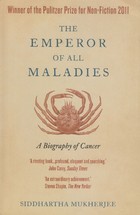 The struggle to understand and to cure cancer has consumed medical researchers throughout the twentieth and beginning of the twenty-first centuries. Mukherjee takes a thorough in-depth look at cancer throughout history in this biography of an illness, where the disease is often visualized as a crab scurrying and burrowing away from all reach of therapy. The author adds his own experience to a years-long study of cancer to provide a definitive, insightful book on the way this illness has gripped our modern day lives. The struggle to understand and to cure cancer has consumed medical researchers throughout the twentieth and beginning of the twenty-first centuries. Mukherjee takes a thorough in-depth look at cancer throughout history in this biography of an illness, where the disease is often visualized as a crab scurrying and burrowing away from all reach of therapy. The author adds his own experience to a years-long study of cancer to provide a definitive, insightful book on the way this illness has gripped our modern day lives.
I think almost everyone I know has lost someone near and dear to them to cancer. I have; my brother died at only eighteen from non-Hodgkin’s lymphoma. If anything, the fact that we’ve all been touched by this horrible illness in its many incarnations makes a book like The Emperor of All Maladies an even more important read. Reading this book was always going to be difficult, but it is on a subject I wanted to understand. After it won the Pulitzer Prize, and unending praise from many of my favorite bloggers, I simply had to read it, no matter how uncomfortable the subject matter.
I’m really glad I made that choice, because this book was excellent in so many ways. Mukherjee skilfully weaves together his own years treating cancer patients, ensuring that we get an up close and personal view of what it’s like to fight cancer today, with a thorough history of the illness, including its ancient manifestations, early treatments, and continuing right up to the medicines and techniques used to treat various kinds of cancer today. I learned so much from this book, certainly things I never even thought about, like how the War on Cancer got started in the first place, what the Jimmy Fund is, and so on.
I’d also never really understood anything about the biology of cancer. I knew the disease was basically uncontrollable cell division, but Mukherjee goes into depth without becoming confusing or using any jargon that an ordinary reader can’t understand.
While doing all this, he also succeeds in matching the struggle against cancer alongside current events, explaining how certain developments happened and why. I felt like I was getting the full story from all possible angles, which I so appreciated, and so thorough a look that I don’t think I really need to read another book. Adding in the perspectives of his modern patients just demonstrated the strength of the human spirit and the difficulties of treatment.
This truly is a biography; in many ways Mukherjee makes cancer itself a visible part of the book. Cancer is our normal body functions turned inside out and made virulent – and immortal. It’s a surprisingly fascinating read which has really enhanced my understanding of everything to do with cancer. I’d highly recommend The Emperor of All Maladies to almost anyone.
All book links to external sites are affiliate links. I received this book for free for review from Amazon Vine.
 Mario is one of the enduring characters of my childhood, an instantly recognizable face and voice, and a character that still features in video games which can be just as fun as they were when I was six years old. There’s no way that nostalgia won’t creep its way into my review, and I’m not sure that it shouldn’t. I could not resist this book by Jeff Ryan, which delves into the history of Nintendo in America, just how Nintendo caught on with the masses at one of the worst times to release video games in history, and how they continue to captivate us as competition ramps up from a series of new competitors. Mario is one of the enduring characters of my childhood, an instantly recognizable face and voice, and a character that still features in video games which can be just as fun as they were when I was six years old. There’s no way that nostalgia won’t creep its way into my review, and I’m not sure that it shouldn’t. I could not resist this book by Jeff Ryan, which delves into the history of Nintendo in America, just how Nintendo caught on with the masses at one of the worst times to release video games in history, and how they continue to captivate us as competition ramps up from a series of new competitors.
I was particularly entranced by the early sections of the book where Ryan looks at Nintendo’s history. I knew they started out in the nineteenth century as a card company, but the intervening years until the NES was released in North America were mostly lost to me. Ryan fills in the gaps and does quite a bit towards explaining just why Mario was so successful when other characters failed. He suggests that Mario’s very lack of personality, beyond the simple facts of his life, make him appealing because he is an everyman. There is a reason Mario doesn’t speak beyond “Woohoo!” because the less we know about him, the more we can put ourselves in his shoes. It’s an intriguing concept, and it’s true that Mario games the few for me which don’t actually need a story to succeed.
Ryan is clearly a Nintendo fan, which comes through in his writing, and is instantly appealing to another person who has had a Nintendo console nearby for the past twenty-five years. We didn’t get our NES until I was four, but that means I can’t remember a time when I didn’t have the ability to play a Mario game more or less whenever I wished. This book definitely succeeds in tapping into those memories and covering all aspects of Nintendo, not just Mario games.
Perhaps the only thing the book is lacking is actual hands-on interviews conducted by the author himself. A lot of it is research gleaned from a huge variety of sources, but we don’t get much insight into the personalities of the people behind Nintendo. Shigeru Miyamoto is of course the posterchild for cool Nintendo games; I loved hearing more about the older games that he created before Mario and how Mario changed as time went on, but would have loved even more insight from the mind of a man who can create gaming addictions at will.
I did quite like the rotating history of Nintendo’s competitors and how Nintendo has managed to innovate and remain on top for years. After the slow sales of the GameCube, many people thought Nintendo was going to be like Sega and sell only software because of the difficulties they were having. But Nintendo fought back with the Wii, which has been ridiculously successful and found a home with everyone from small children to elderly disabled.
There is every indication that the company will continue to fight back in the future, providing pure fun for all to enjoy, and in the end Super Mario was a lovely tribute to both the company and the great character of Mario himself. If you’re a Nintendo fan, you can’t go wrong with this book.
All book links to external sites are affiliate links. I received this book for free for review via Netgalley.
 The insect kingdom is an incredible place, and many of us humans hardly think about them unless they’re annoying us, in which case we promptly squash them and forget about it. But insects are unbelievably diverse; new species are being uncovered virtually every day. Since they are so different from us, insects provide us the unique opportunity to study genetics without reading human traits into them. We simply can’t ascribe an ant human emotions, certainly not as easily as we can with monkeys or dogs or lions. Zuk uses this perspective to explore the sexual and familial relationships of insects and apply her conclusions to help us examine the human condition and what really is special about us – and them. The insect kingdom is an incredible place, and many of us humans hardly think about them unless they’re annoying us, in which case we promptly squash them and forget about it. But insects are unbelievably diverse; new species are being uncovered virtually every day. Since they are so different from us, insects provide us the unique opportunity to study genetics without reading human traits into them. We simply can’t ascribe an ant human emotions, certainly not as easily as we can with monkeys or dogs or lions. Zuk uses this perspective to explore the sexual and familial relationships of insects and apply her conclusions to help us examine the human condition and what really is special about us – and them.
The non-fiction bug has bitten me hard, so I thought it was only appropriate to read non-fiction about insects! Stupid jokes aside, this was a genuinely fascinating book in ways I never suspected it would be. Marlene Zuk makes biology incredibly interesting, using examples from a variety of insect species to demonstrate interesting facts about genetics that I’d never really have thought about. One of my favorite chapters was on insect parenting, where she goes into depth on the vastly different aspects of insect parenting, including how some insects are more attentive to their young than some cuddlier creatures. She does pull from many other species when comparing with insects, which I think helps the book fit in nicely with a lot of things that casual readers already know.
I also loved that she used insects as a means of questioning what precisely it means to be human. Outside of consciousness, which is impossible to really define as we have no idea what causes or even if everyone’s is the same, much of human behavior is replicated elsewhere. For example, bees communicate with each other in what is for all intents and purposes a language, and if we narrow the definition of language enough to exclude them it becomes pretty clear that we’re doing it solely to make ourselves look special. Bees confer on decisions, like when moving to a new hive, do waggle dances to show each other where food is, and can fly in large groups to unfamiliar destinations without losing stragglers. It’s very sophisticated behavior for such tiny insects.
Zuk also spends some time on gender roles and how our assumptions of insect genders throughout the years have reflected on our own biases. Even now, many of her students find it impossible to believe that certain insects, like many of the bees you see flying around or army ants, are female. The queen bee was for years assumed to be a male bee – of course, no one even postulated that it could be female until one was dissected for evidence. She shows how ingrained gender roles still are in our society, an unfortunate reality that was excellently illustrated in this case.
She also spends quite a bit of time explaining evolution and how insects may have turned out to be this way. I really appreciated this – I haven’t read much about evolution and I don’t feel I learned much in school, so having such a fantastic explanation alongside interesting traits that seem improbable was incredibly helpful. Among other things, she helps to explain how different “personalities” can have their own advantages – meaning both work from a selection standpoint – and she also goes into some experiments done on artificial selection and the advantages some really peculiar aspects of insect life might have, especially in light of their extremely short lifespans. It felt quite comprehensive and detailed to me, but I was never at a loss for understanding. I felt like I’d learned something once I’d finished.
Even if you’ve never looked at a bug and wondered whether it was male or female, Sex on Six Legs is a genuinely fascinating book. Its title is provocative, which I hope gets it the attention it deserves, but the content is so much more than a look at insect sex. Zuk uses insects to help define our own world, imparting a great deal of biological knowledge and wisdom along the way. I can’t recommend this book highly enough.
I am an Amazon Associate. I received this book for free for review from Netgalley.
 Google employee number 59, Douglas Edwards got a job when the company was still very small, had no financial model, but for some reason appealed to him. A veteran marketer for newspapers, Edwards took a pay cut to satisfy his desire to work at a start-up after turning down a job at Yahoo!. Though the story is through Edwards’ eyes, it’s really a tale of Google from start-up to corporation, a truly tumultuous ride and a whirlwind expansion as the company that now seems determined to plant itself all over the internet first found its footing as a successful search engine. Google employee number 59, Douglas Edwards got a job when the company was still very small, had no financial model, but for some reason appealed to him. A veteran marketer for newspapers, Edwards took a pay cut to satisfy his desire to work at a start-up after turning down a job at Yahoo!. Though the story is through Edwards’ eyes, it’s really a tale of Google from start-up to corporation, a truly tumultuous ride and a whirlwind expansion as the company that now seems determined to plant itself all over the internet first found its footing as a successful search engine.
I still remember the first time I was taught to use a search engine at school. It was AltaVista, which according to my teachers was the best at the time. I no longer remember when I switched to Google, but it certainly wasn’t long afterwards, and I’ve been a fan ever since; I now have an Android, couldn’t live without Google Reader, and use Google Chrome, Gmail, Google Calendar, and many other Googley products. You can look at a timeline displaying how Google used to look here. I now work directly with things that relate to Google and Matt Cutts is a name bandied about at work on a daily basis. So an insight into the beginning of Google was instantly appealing to me, and the book lived up to its promise in many ways.
Douglas Edwards was the first director of consumer marketing and brand management at Google for six years during its start-up phase. It was his voice that represented Google to us on the internet up until 2005. Really the only problem with the book is that it doesn’t take us up to the present day! Edwards talks about the origin of products that are now very familiar to us, the insider struggles over new products, and the way Google rushed to scale as more and more opportunities were tossed their way.
I had no idea that Google used to update its index once a month, if that – the index is updated constantly these days. I never knew anything about server farms or the way Gmail actually developed. And I’d only had a small idea of the competition Google faced in search, which was widely regarded as a full playing field, and how it finally developed the monetization model which is so successful. Some of the other options are truly atrocious and I found it very easy to see why AdWords was and is so very successful.
What was most interesting to me, and probably will be to others, was Google’s start-up culture and merge into corporate culture. We’ve all heard about the amazing food and perks offered to Googlers, seemingly in an attempt to make sure they never left the office. And indeed they rarely did; Edwards discusses emails sent at 3 am as the company took on employees with advanced degrees but little to no actual life outside of Google. It always sounds appealing to have every meal for free and to have 20% time devoted to whatever one would like, but it’s easy to forget that those are in exchange for hours of overtime and devotion to Google above most other things in life. Edwards left when the company’s flat start-up hierarchy had turned into a true company’s hierarchy. I did feel at times that the book struggled to decide whether it was a history of Google or a history of Edwards within Google, but I appreciated all of the information.
I really enjoyed this insight into Google and even the character of the author himself, who does come through the pages clearly. As a meld of business history and memoir, I’m Feeling Lucky is a worthwhile read for anyone who is at all interested in Google.
All book links to external sites are affiliate links. I received this book for free for review from the publisher.
 Blood Work is a multi-pronged look at the history of blood transfusion during the Scientific Revolution in both England and France. Tucker mainly tells the story of Jean-Baptiste Denis, a physician outside the cult of Paris-educated noblemen, who in what could have been a world-changing experiment transfused calf’s blood into a madman in Paris. The madman died and Denis wound up framed for murder as a result. Tucker also looks at the race between the English and the French to transfuse faster, and their struggles to publish first and occasional glossing over of facts as they did so. The book is also a deeper look at the ethics behind blood transfusion; the many ways people questioned what they didn’t understand, tried to stop it happening, and eventually wound up slowing progress for hundreds of years. Blood Work is a multi-pronged look at the history of blood transfusion during the Scientific Revolution in both England and France. Tucker mainly tells the story of Jean-Baptiste Denis, a physician outside the cult of Paris-educated noblemen, who in what could have been a world-changing experiment transfused calf’s blood into a madman in Paris. The madman died and Denis wound up framed for murder as a result. Tucker also looks at the race between the English and the French to transfuse faster, and their struggles to publish first and occasional glossing over of facts as they did so. The book is also a deeper look at the ethics behind blood transfusion; the many ways people questioned what they didn’t understand, tried to stop it happening, and eventually wound up slowing progress for hundreds of years.
Blood Work has been on my wishlist since well before it was published. I bought it almost immediately afterwards, but for some reason took a while to actually get around to reading it. I think my expectations were slightly too high. I needn’t have worried, as this is truly a riveting account of a story I’d heard little about. Blood transfusion is an essential for our modern day doctors. It saves lives every day. As a result, it’s somewhat shocking to read about the origins of it and the many crazy things people thought would happen. Would cow’s blood turn a man into a bovine? Would he start to baa like a sheep? If you transfused blood from people of different colours, what happened? These questions made people very nervous, some so much so that they would do anything in their power to stop the process.
I have to admit one of the questions foremost in my mind as I was reading this book was just how people and animals weren’t dying left and right from the transfusions. There was no idea of blood types then. These scientists thought they were transferring blood from all different species, including at the final experiment, and most patients seemed to have only mild symptoms. Tucker thankfully reveals the answer to this; there probably wasn’t actually that much blood being transferred. The technology wasn’t really advanced enough until the 20th century, when luckily blood typing was also discovered.
The philosophical issues surrounding transfusion were also fascinating. Tucker explains in the book that she was inspired by George W. Bush’s statements against stem cell research. Many of the same arguments we hear now against stem cell research were employed in the battle against blood transfusions. That treatment saves lives every single day. I’ll let you draw your own conclusions, but it certainly provides much food for thought.
I haven’t even touched on the historical mystery that Tucker explores within the book, but it also works quite well and the threads of the book fit perfectly together. My only reservation is that parts of the book made me a bit queasy – I’m not even good with this sort of thing written in words! For someone who isn’t particularly bothered by descriptive language about transfusions, this wouldn’t be a problem.
Blood Work is a very engaging, fast paced narrative work of history that will appeal to any curious about the Scientific Revolution, how blood transfusions began, or even the issues surrounding experimentation on human beings. Recommended.
All book links to external sites are affiliate links. I purchased this book.
 In Moonwalking with Einstein, Joshua Foer digs deep into the concept of memorisation and how our lack of it as a society has affected us. He goes so far as to compete in a memory championships, sharing his tips along the way, as we learn just what it takes to be a memory professional. He doesn’t memorise just the shopping list or the US Presidents; he memorises poems, playing cards, and people, with easy tips for us to learn how to memorise as well. In Moonwalking with Einstein, Joshua Foer digs deep into the concept of memorisation and how our lack of it as a society has affected us. He goes so far as to compete in a memory championships, sharing his tips along the way, as we learn just what it takes to be a memory professional. He doesn’t memorise just the shopping list or the US Presidents; he memorises poems, playing cards, and people, with easy tips for us to learn how to memorise as well.
I have a memory that is simultaneously atrocious and very efficient, so I was incredibly curious about recognised memory techniques. Foer mainly describes the memory palace idea that I’d seen used previously, although I can’t remember where. It’s surprisingly effective; I managed to do his little exercise and actually found it very successful, to the point where I can still remember it a few weeks later. There are a couple of other hints and tricks throughout as he goes through the process of learning to be a memory champion.
That wasn’t the most interesting part for me, though, as I was much more interested in the history of memory and his investigation into the top minds in the world, including those with mental illnesses whose memories are somehow naturally more effective than the rest of us. He goes in two directions with the latter, interviewing a man who has no memory and a man who has unnatural memory abilities. It’s absolutely fascinating to see how the mind is affected at different stages of memory recall. Foer also talks to memory professionals – people who help you remember – and gets a wide range of perspectives on the subject. All of it was quite interesting.
I’m sure it helped that I am firmly in Foer’s camp in that I believe memory is very important. I am partially blessed with a good memory; I can stick things in my memory with relative ease when I try, and sometimes I find random dates and facts stuck in my head without real effort (my new mobile number popped into my head one day and hasn’t left yet!). But if I’m not paying attention, I forget very easily, and I’ve never been good at using memory devices to remember things like the planets. I usually just remember the sentence and forget which planet is which word!
But I do believe memory is important, largely for the reasons Foer mentions; we need to have a lodestone to attach future knowledge on. As a practical example, I know a lot more history than the average person who has never really cared for it, like my husband. When we go to a museum, I love it partly because I can usually relate what I’m seeing to the store of memory in my head (partly because I love history). He loses interest pretty quickly and forgets what he’s seen because nothing has meaning to him, but when he sees something he can relate to, he’s much more interested. We need to have some firm grounding of facts in our heads to relate to the world around us – this is why a lot of older literature is harder to read, because we’ve lost the intimate knowledge of things like classical literature and the Bible to attach allusions to.
Although I enjoyed parts of this book more than others, I would still highly recommend it to anyone who is at all interested in memory, whether you’d like to remember better or are simply curious about the history of memorisation.
All book links to external sites are affiliate links. I received this book for free from Amazon Vine.
 Museums that focus on the antiquities have to get art from somewhere, and for much of history, it’s been done through regrettable looting. Starting with imperialism and carrying right on down to the present day, many astonishingly renowned museums have continued to populate their collections with looted art, stolen in particular from Italy and Greece. This hasn’t stopped despite a number of laws and international sanctions passed against the destruction of archaeological sites and the theft of priceless art. The Getty Museum is one such offender; a museum that sped to fame largely on the basis of looted art, but which then positioned itself against the practice, led by curator Marion True. When the scandal was exposed, the Getty’s reputation fell with it. This is the expose of the museum, the result of years of investigative reporting, and a true insight into the practice of purchasing looted art in the United States. Museums that focus on the antiquities have to get art from somewhere, and for much of history, it’s been done through regrettable looting. Starting with imperialism and carrying right on down to the present day, many astonishingly renowned museums have continued to populate their collections with looted art, stolen in particular from Italy and Greece. This hasn’t stopped despite a number of laws and international sanctions passed against the destruction of archaeological sites and the theft of priceless art. The Getty Museum is one such offender; a museum that sped to fame largely on the basis of looted art, but which then positioned itself against the practice, led by curator Marion True. When the scandal was exposed, the Getty’s reputation fell with it. This is the expose of the museum, the result of years of investigative reporting, and a true insight into the practice of purchasing looted art in the United States.
I love museums and history, but I thought that looting was a practice that had ceased long ago. About the only thing I’d heard about recently was Greece’s requests for the Elgin Marbles from the British Museum, and even that doesn’t seem to be an urgent matter. I have been appalled at the carelessness with which archaeological artifacts were treated, but largely in the context of the past – mainly the Victorians destroying archaeology in search of the good stuff, most of which I’ve probably seen in the British Museum. I had no idea that this still happened, and worse that it was happening in Italy and Greece, probably the most archaeologically rich countries in Europe. This book really laid that all out for me, not only what damage the looters were doing with descriptions of art dirty, in pieces, and broken, but also how much history is lost. We have no idea why so many statues existed simply because they were wrenched from their context with no way of returning them.
The trade in stolen art had significant consequences for the Getty, which appears to have considered itself free of any laws virtually from its founding. The original curator regularly helped “donors” cheat on their tax returns, getting back millions for art that was often worth just a few thousands. He, of course, willingly acquired stolen objects. Through the ensuing years we can see pretty clearly the difficulties that museums were in. If they weren’t acquiring new and exciting antiquities, they fell from the limelight – but all the new and exciting antiquities were obviously stolen. Curators regularly had to choose between their morals and their career, if they even considered their morals at all. The curator who finally did, Marion True, still couldn’t resist purchasing looted art when it called to her, which ultimately led to the destruction of her career and positioned the Getty as a hypocritical institution.
What I liked was that even though the Getty is at the center of the book, the conclusions drawn clearly apply to other museums as well. This book deals solely with American museums, so it depicts which other museums caused scandals in their time and which ones ended up returning stolen items just like the Getty. It was a widespread crime, and we can imagine similar discussions happening in other institutions as happened in the Getty. The book also shows how attitudes in America changed; the top museums do now have policies against looted art and have begun returning stolen artifacts to Italy and Greece, starting off partnerships that will enrich museums across all the countries. The Getty is the focus, with documented conversations and interviews, but its fate was pivotal in the role of all such institutions in the country.
If you’re at all interested in museums and their history in the US, Chasing Aphrodite is definitely a book for you. I found it utterly fascinating; I thought about it while I wasn’t reading about it and even went so far as to tell others about it (even though they were clearly uninterested). I was appalled by what happened, but I feel I now have a better idea about the workings of museums and I’m much more confident that they’re moving in the right direction. We’ll never know quite how much knowledge is lost, but we can hope that more is left to discover in the future.
I am an Amazon Associate. I received this book for free from Netgalley for review.
|
|


Recent Comments