|
|
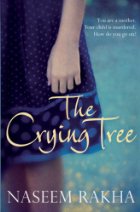 Irene and Nate Stanley move to Oregon in search of a better life for themselves and their family. Irene is reluctant to leave her extended family, but believes in the hope that her husband gives her. Instead, what they get is a seemingly random housebreaking and the death of their son, Shep. The murderer Daniel Robbin is caught, but the death of a child is something that neither can really cope with – driving away their daughter, Bliss, and launching life-changing consequences for the family. Irene and Nate Stanley move to Oregon in search of a better life for themselves and their family. Irene is reluctant to leave her extended family, but believes in the hope that her husband gives her. Instead, what they get is a seemingly random housebreaking and the death of their son, Shep. The murderer Daniel Robbin is caught, but the death of a child is something that neither can really cope with – driving away their daughter, Bliss, and launching life-changing consequences for the family.
This was one of the first books I bought for my Kindle nearly a year ago, and all this time it’s simply sat there unread – a book that, like so many, loses its luster once acquired. Luckily, I was travelling and had nothing on me but the Kindle, so when everything else ALSO seemed to lose appeal (don’t we all hate it when that happens?) I finally opened this title and started to read. I’m glad I did – this was a powerful book with a surprise twist at the end that I hardly expected, but which really added to the strength of the entire book.
The novel is told through alternating viewpoints. Most of the book is from Irene’s perspective as she loses her son, with the occasional chapter from Bliss, and the rest of the book is told by Tab Mason, the man who has been ordered to kill Daniel Robbin. Robbin has been on death row for years and Tab has never been the one to actually kill a man, nor is he comfortable with it. This perspective provides a really fascinating and heartbreaking look into the toll the death penalty takes on the people who are actually required to follow through with it.
The main thrust of the storyline, though, is Irene’s personal struggle with the murder of her son and the incredibly difficult pain she has to go through as a mother. She essentially dies inside – at first, she lives for the fact that her son’s murderer is going to be killed, until she decides to forgive him on what would have been Shep’s 25th birthday. She writes him a letter and, surprisingly and secretly, she and Daniel begin corresponding. This leads to the biggest twist in the book, which I obviously won’t spoil for you. It’s a fascinating meditation on the power of forgiveness, though, and the strength of a mother’s love.
For a book I wasn’t actually sure I’d like after I bought it, The Crying Tree was a powerful surprise, and certainly one I’d recommend to those who aren’t afraid of tackling more difficult issues in their reading.
All book links to external sites are affiliate links. I purchased this book.
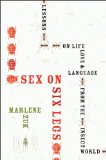 The insect kingdom is an incredible place, and many of us humans hardly think about them unless they’re annoying us, in which case we promptly squash them and forget about it. But insects are unbelievably diverse; new species are being uncovered virtually every day. Since they are so different from us, insects provide us the unique opportunity to study genetics without reading human traits into them. We simply can’t ascribe an ant human emotions, certainly not as easily as we can with monkeys or dogs or lions. Zuk uses this perspective to explore the sexual and familial relationships of insects and apply her conclusions to help us examine the human condition and what really is special about us – and them. The insect kingdom is an incredible place, and many of us humans hardly think about them unless they’re annoying us, in which case we promptly squash them and forget about it. But insects are unbelievably diverse; new species are being uncovered virtually every day. Since they are so different from us, insects provide us the unique opportunity to study genetics without reading human traits into them. We simply can’t ascribe an ant human emotions, certainly not as easily as we can with monkeys or dogs or lions. Zuk uses this perspective to explore the sexual and familial relationships of insects and apply her conclusions to help us examine the human condition and what really is special about us – and them.
The non-fiction bug has bitten me hard, so I thought it was only appropriate to read non-fiction about insects! Stupid jokes aside, this was a genuinely fascinating book in ways I never suspected it would be. Marlene Zuk makes biology incredibly interesting, using examples from a variety of insect species to demonstrate interesting facts about genetics that I’d never really have thought about. One of my favorite chapters was on insect parenting, where she goes into depth on the vastly different aspects of insect parenting, including how some insects are more attentive to their young than some cuddlier creatures. She does pull from many other species when comparing with insects, which I think helps the book fit in nicely with a lot of things that casual readers already know.
I also loved that she used insects as a means of questioning what precisely it means to be human. Outside of consciousness, which is impossible to really define as we have no idea what causes or even if everyone’s is the same, much of human behavior is replicated elsewhere. For example, bees communicate with each other in what is for all intents and purposes a language, and if we narrow the definition of language enough to exclude them it becomes pretty clear that we’re doing it solely to make ourselves look special. Bees confer on decisions, like when moving to a new hive, do waggle dances to show each other where food is, and can fly in large groups to unfamiliar destinations without losing stragglers. It’s very sophisticated behavior for such tiny insects.
Zuk also spends some time on gender roles and how our assumptions of insect genders throughout the years have reflected on our own biases. Even now, many of her students find it impossible to believe that certain insects, like many of the bees you see flying around or army ants, are female. The queen bee was for years assumed to be a male bee – of course, no one even postulated that it could be female until one was dissected for evidence. She shows how ingrained gender roles still are in our society, an unfortunate reality that was excellently illustrated in this case.
She also spends quite a bit of time explaining evolution and how insects may have turned out to be this way. I really appreciated this – I haven’t read much about evolution and I don’t feel I learned much in school, so having such a fantastic explanation alongside interesting traits that seem improbable was incredibly helpful. Among other things, she helps to explain how different “personalities” can have their own advantages – meaning both work from a selection standpoint – and she also goes into some experiments done on artificial selection and the advantages some really peculiar aspects of insect life might have, especially in light of their extremely short lifespans. It felt quite comprehensive and detailed to me, but I was never at a loss for understanding. I felt like I’d learned something once I’d finished.
Even if you’ve never looked at a bug and wondered whether it was male or female, Sex on Six Legs is a genuinely fascinating book. Its title is provocative, which I hope gets it the attention it deserves, but the content is so much more than a look at insect sex. Zuk uses insects to help define our own world, imparting a great deal of biological knowledge and wisdom along the way. I can’t recommend this book highly enough.
I am an Amazon Associate. I received this book for free for review from Netgalley.
 Cora Cash, one of America’s greatest heiresses in the late Victorian era, naturally has a scheming mama. And that scheming mama wants her incredibly wealthy daughter married to a British peer. She’d like a prince, but she’ll settle for a duke, regardless of what Cora really wants – which is her American friend Teddy. But when Cora meets the Duke, Ivo, by complete accident, she begins to fall for him and finds herself married to him in very short order. But British society is further from home than just the ocean crossing and Cora soon finds herself in over her head between her mother-in-law, the Prince Regent, and the many preferences and proprieties that encapsulate her new husband’s every day life. Cora Cash, one of America’s greatest heiresses in the late Victorian era, naturally has a scheming mama. And that scheming mama wants her incredibly wealthy daughter married to a British peer. She’d like a prince, but she’ll settle for a duke, regardless of what Cora really wants – which is her American friend Teddy. But when Cora meets the Duke, Ivo, by complete accident, she begins to fall for him and finds herself married to him in very short order. But British society is further from home than just the ocean crossing and Cora soon finds herself in over her head between her mother-in-law, the Prince Regent, and the many preferences and proprieties that encapsulate her new husband’s every day life.
This book is sold as similar to Jane Austen and Edith Wharton, as a book that is reminiscent of Downton Abbey, a television series I recently watched and fell in love with. It had huge shoes to fill, so perhaps it’s not a surprise that it came up short. It was an enjoyable read, but much shallower than all three comparisons. In reality, I came across someone else saying it was like The Luxe series for adults, and I think that’s probably the most apt description I’ve seen yet.
Part of the problem with the book is that much of it is told and little of it is shown to us. Cora is meant to be a stubborn, plucky heroine, determined to escape the shadows of her mother’s influence, but in reality she is a girl who reacts, not a girl who acts. She seems much more comfortable letting her money and comfort slide her along through life without really fighting for anything she cares about. Even towards the end of the book, most of her ‘growth’ consists of ordering the butler to do things to spite her mother-in-law.
The one aspect I really enjoyed was the story of Cora’s colored maid Bertha. Bertha has her own difficulties as a colored lady’s maid, particularly in her native US. Things begins to change for her as she moves to England with Cora and the stigma fades away to some extent, offering her the first chance of an independent life she has really ever had. But her loyalty to Cora often gets in the way. This was actually a really fascinating aspect of the story and had me wondering what ladies’ maids really thought – were they loyal to the women who had fashioned their entire careers? I wished others servants were equally fleshed out because I’m sure the more fleshed out dynamics of an American versus British ‘downstairs’ would have been fascinating. As it is, Bertha ignores most of the other servants, completely isolating herself.
The American Heiress was certainly an enjoyable read that I managed to zip through in just one day. But I think the many comparisons it’s received have done it a disservice, and the book is best treated as a lighter historical read than classic material. Historical beach reading at its best.
All book links to external sites are affiliate links. I received this book for free for review.
|
|


Recent Comments