|
|
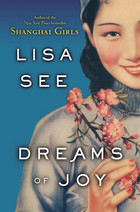 This review contains spoilers for Shanghai Girls. This is the sequel to that book. This review contains spoilers for Shanghai Girls. This is the sequel to that book.
Joy has just learned that her entire life is a lie. Her parents aren’t really her birth parents and she believe she’s caused her father’s suicide. Unable to bear the consequences and taught the ideals of Mao’s China, Joy flees to Shanghai, convinced she’ll find the life she’s always wanted in the arms of Communism. Pearl, her mother in love if not in body, immediately goes after her daughter. She knows how bad China is, while Joy has no idea. Getting into China is easy; getting out of China is very difficult. As Pearl searches for Joy and Joy searches for meaning, both women end up learning more about who they are and what they treasure most in their lives.
Lisa See’s books have always been great reads, full of the detail and culture of the times they portray and rich with realistic characters. This book is no exception. While we saw the collapse of Shanghai in the last book, in this one we’re witness to how it has changed. I went through a minor obsession with books about China a while ago and this book was a return to a culture that still fascinates me even as it is horrifying. In this book, we’re in the midst of the ‘Great Leap Forward’. American teenager Joy has to accept that the ideals she’d been taught about life in China were wrong, and that life could be immensely harder for her than it had ever been previously. She also has to learn – the hard way – that she isn’t always right, and that stubbornness can lead to huge mistakes.
Meanwhile, it’s Pearl who can see how much the China of her youth has changed, how some things are the same but others are incredibly different. I found all of this fascinating and particularly well done, evoking memories from reading Shanghai Girls a while ago while providing a new, refreshing storyline that breathed different life into characters I already knew. Only May is on the edge of this book; it’s about mother and daughter, here, not about sisters, and the difficulty of parenthood on both sides of the equation.
If you’ve enjoyed other books by Lisa See, you will definitely enjoy this one too. I wouldn’t recommend reading it prior to Shanghai Girls, but it does fill in the gaps reasonably well so I don’t think a newcomer would be lost. Dreams of Joy definitely earns its spot next to her others as a moving story with well-developed characters and thoughtful questions set in a fascinating country.
All book links to external sites are affiliate links. I received this book for free for review from LibraryThing Early Reviewers.
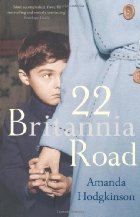 World War II had a massive effect on lives across the world; Silvana and Janusz, living in war zones, have been affected more than most. Separated at the very beginning of the war as a young married couple with a small son, Janusz immediately joins the army while Silvana is left in Warsaw with their son Aurek. Soon forced to flee the city, Silvana and Aurek hide in the woods, while Janusz eventually finds himself in England as a veteran. Six years after their separation, they’re reunited and start family life in a small house in Ipswich, but both have changed, and both have damaging secrets they’re determined to keep. World War II had a massive effect on lives across the world; Silvana and Janusz, living in war zones, have been affected more than most. Separated at the very beginning of the war as a young married couple with a small son, Janusz immediately joins the army while Silvana is left in Warsaw with their son Aurek. Soon forced to flee the city, Silvana and Aurek hide in the woods, while Janusz eventually finds himself in England as a veteran. Six years after their separation, they’re reunited and start family life in a small house in Ipswich, but both have changed, and both have damaging secrets they’re determined to keep.
22 Britannia Road has received a great deal of acclaim on its release, so I was expecting quite a lot from this novel. World War II stories are everywhere these days, so it does take something special or a different perspective to help a book stand out from the crowd. With its post-war story told simultaneously with the immediate history leading up to the war and afterwards, along with its Polish characters, the book easily accomplishes that much, providing a new family perspective on the hardships endured during the war.
Silvana and Janusz’s reunion is uneasy; they barely remember what one another look like. Everything in their lives has changed. For Aurek, things are even more difficult and confusing, as he simply doesn’t remember his father and just wants to go live with his mother in the woods again. He has no concept of society, much less that required by the strict British school system and, partly, his father, who wants a son to be proud of.
One of the most interesting aspects of the book was actually Aurek’s reaction to other children, school, his father, and so on; it demonstrates the adaptability of children as much as it shows how much adults struggle to accept the same tasks. Oddly, in this way it reminded me of Room by Emma Donoghue, even though the subject matters diverge wildly.
And then, of course, there are the secrets, which have the potential to destroy the family’s newly forged life. Complicating things are people who thrust themselves into the Nowaks’ newly forged lives, like Aurek’s first friend Peter and his elegant father. Silvana is a character that is difficult to understand, with her complicated past, while I think Janusz longs for the life that will be familiar to most readers; a promotion, a son to be proud of, a wife who loves him, a shiny new car. The opening scenes of the book, when he paints his house worrying what his stranger wife and child will appreciate, while reminiscing about the woman he’s fallen in love with in France, were actually some of the most poignant for me in the entire book.
While, for me, 22 Britannia Road wasn’t earth shattering, it was a book that certainly shed another light on life during and after World War II, particularly for immigrants. And it’s a worthy look into the minds of both adults and children who have to deal with the nearly unimaginable happening thanks to the horrors of war. Recommended.
All book links to external sites are affiliate links. I received this book for free from Amazon Vine.
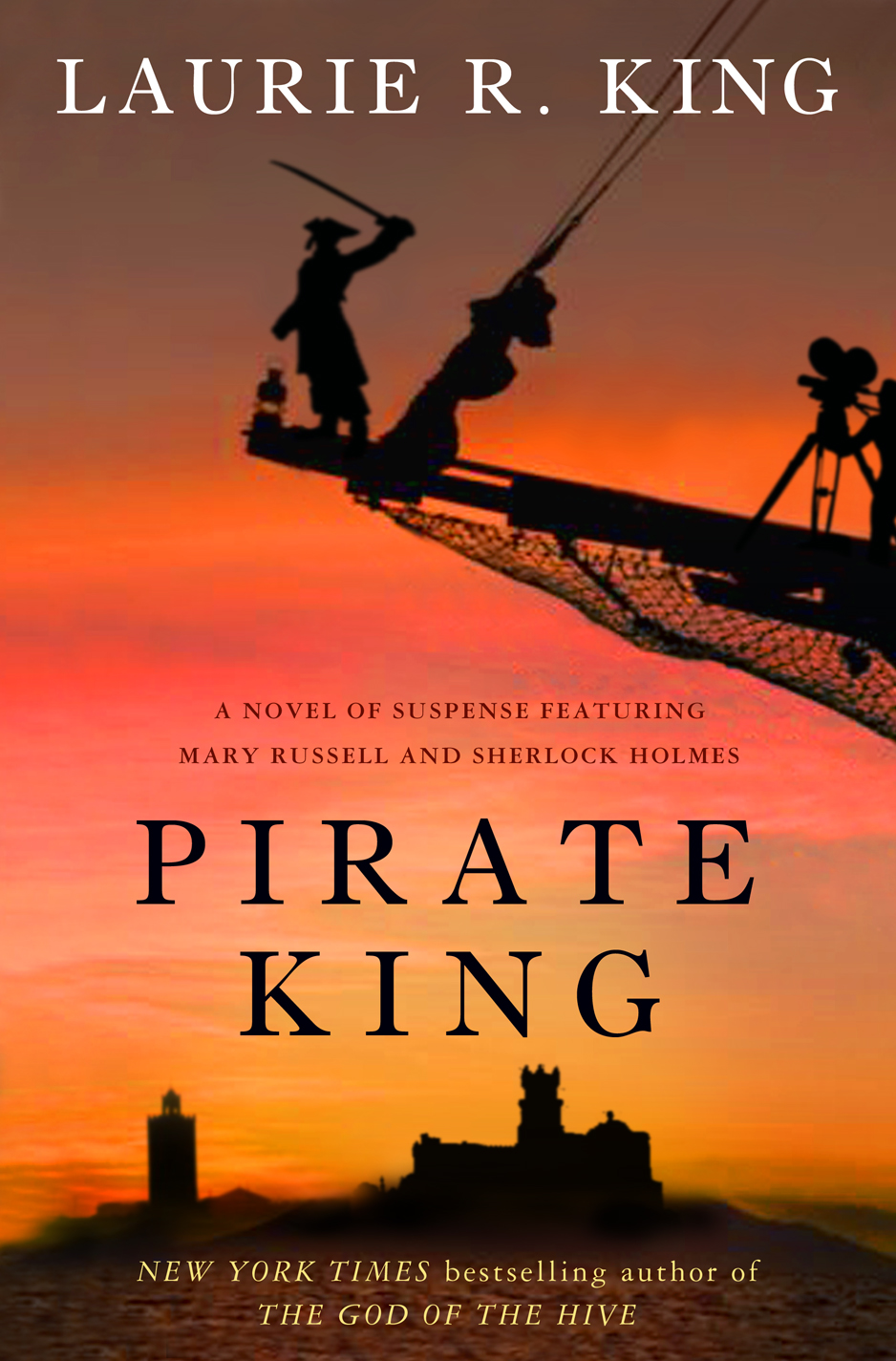
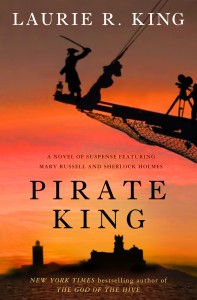 I’m delighted to welcome Laurie R. King to Medieval Bookworm today! Laurie is the author of 21 bestselling crime novels, including the historical series featuring Mary Russell and Sherlock Holmes. I reviewed the first in the series on Wednesday. King’s upcoming novel Pirate King is set in 1924 Lisbon, London, and Morocco. I’m delighted to welcome Laurie R. King to Medieval Bookworm today! Laurie is the author of 21 bestselling crime novels, including the historical series featuring Mary Russell and Sherlock Holmes. I reviewed the first in the series on Wednesday. King’s upcoming novel Pirate King is set in 1924 Lisbon, London, and Morocco.
I met Sherlock Holmes one September morning in 1987, when I sat down with a pad of paper and gave birth to his apprentice.
Strictly speaking, of course, I had encountered Holmes before that. The PBS series with Jeremy Brett was broadcasting, and no doubt I’d read one of the stories in high school, Hound of the Baskervilles, maybe, or The Speckled Band. However, I didn’t really meet the detective until the week both my kids were off at school for the first time, and I wrote the line, “I was fifteen when I first met Sherlock Holmes, fifteen years old with my nose in a book as I walked the Sussex Downs, and nearly stepped on him.”
That’s when I realized I had no clue who Sherlock Holmes was.
The next day I got my hands on a two-volume paperback of the four Holmes novels and fifty-six short stories (with small print!) Reading the Conan Doyle stories was a revelation. Sherlock Holmes is a thinking machine, right? And he’s filed in the Young Adult section of the library, because those are boy’s adventure stories, right?
 What I didn’t expect were the humor and passion the stories contain. What I didn’t expect were the humor and passion the stories contain.
Not that both qualities aren’t tucked securely behind the adventure. When Holmes looks at a client (The Red-Headed League) and says, “Beyond the obvious facts that he has at some time done manual labour, that he takes snuff, that he is a Freemason, that he has been in China, and that he has done a considerable amount of writing lately, I can deduce nothing,” the surface meaning at first seems to be that Holmes is demanding a great deal more of himself than normal human beings do. That his list may also be a gentle pulling of Watson’s leg tends to be set aside. But when Watson comes into their shared rooms (in Hound of the Baskervilles) and protests at the quantity of tobacco smoke in the air, Holmes’ reply is definitely snort-worthy: “It is a singular thing, but I find that a concentrated atmosphere helps a concentration of thought. I have not pushed it to the length of getting into a box to think, but that is the logical outcome of my convictions.”
Holmes passion was in the stories I read, too. Not so much a passion for women—as Watson says, “all emotions, and that one particularly, were abhorrent to his cold, precise but admirably balanced [sic] mind.” And Holmes himself clearly states (Devil’s Foot) “I have never loved, Watson.”
However, the rest of his statement is where a reader begins to doubt this passionless exterior: “…but if I did and if the woman I loved had met such an end, I might act as our lawless lion-hunter had done.” Similarly (Three Garridebs) when Watson is shot, Holmes’ “face set like flint as he glared at our prisoner…’By the Lord, it is as well for you. If you had killed Watson, you would not have got out of this room alive.’”
A person who admits that he would be capable of murder is no passionless thinking machine.
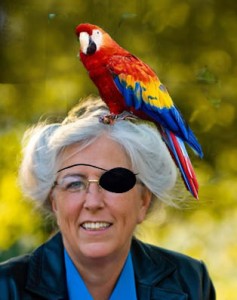 As later generations were to find with the Star Trek character Mr. Spock, passion under iron control (be it anger or eroticism) is far more fascinating than passion freely expressed. Reading the Conan Doyle stories knowing that the man at their center is a man seething with clamped-down passion makes for a very different vision of Sherlock Holmes. As later generations were to find with the Star Trek character Mr. Spock, passion under iron control (be it anger or eroticism) is far more fascinating than passion freely expressed. Reading the Conan Doyle stories knowing that the man at their center is a man seething with clamped-down passion makes for a very different vision of Sherlock Holmes.
It also opens all kinds of doors when it comes to writing about Holmes’ married life. But perhaps that is a blog post for a different day.
Laurie’s thoughts on Sherlock Holmes, including a chronology of his age, can be found on her web site.
To order a signed copy of the upcoming Pirate King, visit the Poisoned Pen.
 Mary Russell stumbles upon the great Sherlock Holmes while rambling in the countryside. He’s retired – supposedly – to take up beekeeping, but her young mind is agile and ready to be challenged. After she proves herself, he takes her on as an apprentice, and the two begin to solve crimes together. Mary Russell stumbles upon the great Sherlock Holmes while rambling in the countryside. He’s retired – supposedly – to take up beekeeping, but her young mind is agile and ready to be challenged. After she proves herself, he takes her on as an apprentice, and the two begin to solve crimes together.
The central premise of this book is the idea that Sherlock Holmes was a real person, and the books and stories featuring him were elaborate fictionalizations of his real-life crime-solving. In his older years, Holmes still solves crimes, but does his best to stay out of the public eye. Still, Mary knows who he is, and as the central narrator, is determined to keep him within her sites. Soon we discover that her intellect is quite up to his as her own skills develop over the course of the novel.
Roughly the first half of this book is set out in episodes. Mary and Holmes set out to solve a couple of crimes together as he begins to train her. After she’s accepted as a fully fledged apprentice, the book gains more speed as the crimes get somewhat more desperate. Naturally, our two central characters also begin to develop a relationship with one another, both a respect for each other’s minds and a whole-hearted affection for each other’s character.
I was surprised by how much I genuinely enjoyed this book. Mysteries in the style of Sherlock Holmes frustrate me more often than not; because so much of the conclusions are derived from information that is never presented to the reader, it can be easy to get annoyed that it’s impossible to guess the conclusion. With this, though, I seem to have developed the ability to ignore that and simply follow the two characters along their journey. I suspect this is because the mysteries, while important to the plot, are not all that holds the book together. The narrative is very well done and the relationships between the characters develop naturally and realistically. About halfway through, I realized I just didn’t want to put the book down; I wanted to continue and find out what happened next.
I’m a bit late to this series, and now there are a number of installments that I’ll need to catch up on. I’ve known of it for quite some time, but never really had the impulse to begin until I was offered the latest book for review. So I’ll be skipping ahead to the last book, but believe me when I say I’ll also catch up on the ones I’ve missed. The Beekeeper’s Apprentice is a great start to a series I’m very happy to have finally discovered.
All book links to external sites are affiliate links. I purchased this book.
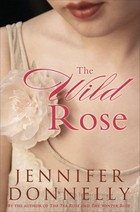 This book follows directly on from The Tea Rose and The Winter Rose. As a result, this review will have spoilers for both. This book follows directly on from The Tea Rose and The Winter Rose. As a result, this review will have spoilers for both.
Though Seamie Finnegan and Willa Alden love each other, they were driven apart by an accident resulting in the loss of Willa’s leg. Now, unable to satisfy her greatest passion of climbing, Willa spends most of her time finding other ways to endanger herself and live on the edge. She spends her time photographing mountains in Tibet, following wars, and getting captured. Seamie, meanwhile, can’t forget Willa or cease worrying about her, no matter how hard he tries; even burying his sorrows in the pursuit of other women can’t seem to erase his memory of her.
Surrounding the couple are a cast familiar to anyone who has read any of the Rose trilogy – Fiona and Joe, who are getting older now, their brigade of children, India and Sid, and other more minor characters from the earlier books. It’s always nice to see familiar characters again; Seamie himself has been in all of the books, while Willa featured prominently in the last one. Part of the appeal of such a series is definitely getting stuck in with characters to care about.
Unfortunately, that was one of the flaws in this book for me; I couldn’t like the characters that Willa and Seamie became. Willa is driven to do truly ridiculous deeds simply to escape the fact that she’s lost her leg, to defy death just because she can – and because she doesn’t care if it takes her. Despite her seemingly courageous behavior, she complained. Often. Seamie, meanwhile, treats one character in particular very badly, and makes promises that he simply can’t keep. I couldn’t like characters that could act like this, no matter how strong their love is supposed to be.
As with all of the books, there are several other plots going on. We are deep in the midst of World War I for much of the book, with an associated German espionage plot taking up a lot of the book’s time. That had an unexpected ending, one which actually made me consider reading the book over again to see if I could pick up the pieces. Fiona and Joe’s children are growing up, with their oldest girl taking on a political mind of her own and one of their sons off to fight in the war. And India does what she does best, doctoring the soldiers who return even as she worries about the ones that she herself loves.
The book held my attention, though, and does deal with some more complicated issues. The effect of front line warfare on a person’s mind, for instance, is one that is surprisingly hard hitting towards the end of the book. Infidelity plagues several characters, as does blackmail and the difficult circumstances people find themselves in during wartime.
Personally, though, I felt like this particular installment suffered more from the same flaws as the first one, with characters that are simply too large for life and are difficult to believe in. Too many famous people in one family, too many lucky escapes; even the share of tragedy the book has doesn’t quite outweigh this for me. It’s a good read, but this series for me just doesn’t match Donnelly’s standalone works. Still, I’d recommend the entire trilogy to those who seek out well-written historical family sagas. The Wild Rose is a good read – just don’t expect it to be A Northern Light.
All book links to external sites are affiliate links. I received this book for free for review from Netgalley.
 Hello everyone! It has been a very long two weeks away from regular internet access, and I’m thrilled to say that those two weeks are over. I have felt so out of the loop; I know I lurk far too often on others’ blogs, but I love to read what’s going on even if I can’t think of anything intelligent to respond. Missing out on that has been tough, although you may have spotted me trying to comment on my lunch breaks at work. I have a lot of catching up to do this week, as next week I’m off to Amsterdam and Bruges. Hello everyone! It has been a very long two weeks away from regular internet access, and I’m thrilled to say that those two weeks are over. I have felt so out of the loop; I know I lurk far too often on others’ blogs, but I love to read what’s going on even if I can’t think of anything intelligent to respond. Missing out on that has been tough, although you may have spotted me trying to comment on my lunch breaks at work. I have a lot of catching up to do this week, as next week I’m off to Amsterdam and Bruges.
Our move is now pretty much complete; boxes as usual still have to be unpacked and everything put away, but we’ve made some progress and we’ll get there eventually. I’ve now been in my new job for a month and it’s going well. Mostly I love having an hour lunch break – an hour feels so long! I can actually manage to write a review in that amount of time if I already have my thoughts together, as I did twice over the past couple of weeks. I have a feeling that hour is going to be filled with blogging quite frequently even with the internet available at home.
While I was busy not having the ability to blog, I spent a lot of time thinking about my reading and the way it’s going. Namely, that I really have almost no interest in historical fiction at all. It’s strange, because I’ve enjoyed a number of historical fiction novels over the past couple of months, but when I head to a bookstore I have no interest in perusing new ones. Covers that once would have made me drool with anticipation are now avoided. I’ve gone completely away from any fiction that has anything to do with medieval history, for instance; I’d just so much rather read non-fiction that I lose interest very quickly.
I suppose what it comes down to is the same subjects recycled over and over. Tudor fiction, for instance, really has nothing left to offer at this point. Medieval history usually is about the Wars of the Roses, which I do adore, but not in fiction any longer, or Eleanor of Aquitaine, who really I already know enough about at this point. Authors I love write these books, and I’m sure they’re wonderful, and yet I have little to no interest about them.
What does interest me? Different time periods, different locations, imaginative storylines; I read The Beekeeper’s Apprentice by Laurie R. King last week and it was fantastic. Rules of Civility was similarly amazing. So maybe it’s just that I can’t look in the well-worn grooves of my past favorites for new ones. That wouldn’t surprise me, as I’ve always read widely, and I’ve been reading a majority of historical fiction for a long time now.
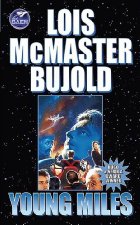 I’m definitely swinging back towards speculative fiction. I am absolutely adoring the Vorkosigan saga, which I never expected to like. I cannot wait to tell you about Young Miles, a book which had a surprising number of layers and which I could not put down. It also managed to prove that long books don’t scare me away when I can’t tell how long they actually are (thank you, Kindle), as its apparent 824 pages sped by in a couple of days. I’m now deep in Cordelia’s Honor and wishing I could just read the whole series with no regard to any of the many books I have for review. I’m definitely swinging back towards speculative fiction. I am absolutely adoring the Vorkosigan saga, which I never expected to like. I cannot wait to tell you about Young Miles, a book which had a surprising number of layers and which I could not put down. It also managed to prove that long books don’t scare me away when I can’t tell how long they actually are (thank you, Kindle), as its apparent 824 pages sped by in a couple of days. I’m now deep in Cordelia’s Honor and wishing I could just read the whole series with no regard to any of the many books I have for review.
I also read The Last Unicorn by Peter S. Beagle, which you can imagine was incredibly beautiful and another classic I can’t believe I missed. I’ll read them all, someday, but in the meantime I’d best get on with telling you about these.
In any case, I’ll just roll with what’s been catching my interest, and I hope you’ll roll along with me, even if this blog is now far from what its title promises.
Have a great Sunday, and a fantastic week.
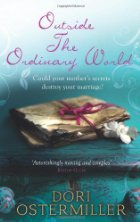 As a child, Sylvia idolizes her beautiful, poised mother, who presents precisely the perfect image to the world – a stereotypically ideal wife and mother. But inside, Sylvia’s mother is anything but, as she’s been carrying on an adulterous affair and involving her children for years. As an adult, Sylvia has a husband and family of her own. She’s grown frustrated with her life and family, trapped in a seeming prison of her own making, until she meets Tai, the father of one of her art students. She’s irresistibly drawn to him. Can she avoid repeating her mother’s mistakes? As a child, Sylvia idolizes her beautiful, poised mother, who presents precisely the perfect image to the world – a stereotypically ideal wife and mother. But inside, Sylvia’s mother is anything but, as she’s been carrying on an adulterous affair and involving her children for years. As an adult, Sylvia has a husband and family of her own. She’s grown frustrated with her life and family, trapped in a seeming prison of her own making, until she meets Tai, the father of one of her art students. She’s irresistibly drawn to him. Can she avoid repeating her mother’s mistakes?
This book is told through two different time periods, both through Sylvia’s eyes; her childhood while she watches her mother slowly unravel her family’s life, and her adulthood where she is finally tempted by a man who isn’t her husband. This was an effective technique for telling the story, as each timeline has its own secrets that aren’t revealed until later in the novel. Both the narrative voices are (obviously) similar but never presented any problems in differentiating themselves to me.
What Sylvia slowly begins to realize is that her adult life has begun to parallel her mother’s, although it takes her a lot longer than it does for the reader. She hasn’t defined herself quite enough for her tastes. She’s an art teacher, but she feels as though she’s lost her own art. Her husband has buried himself in their new house, a project that’s been ongoing for years. Her younger child still needs her, but her older daughter is starting to grow apart from her, and her responsibilities are overwhelming her. She’s not sure where she is in her life, and in steps Tai, a chance to define herself apart from her family, a man who wants to give her attention just as she is. Even as she does that, she’s still not defining herself, merely repeating her mother’s footsteps.
In this sense, the novel is really about the quest of a woman reaching middle age to create her own identity. As readers we can see precisely why she is captivated by Tai, although he remains a more mysterious character. She needs to feel loved again, just for who she is without any of the trappings of her ordinary life.
The novel also carefully explores the damage that infidelity can wreak on a marriage and family, the slow but inexorable ways that couples who love one another deeply are led into adultery, and the difficulties of trying to keep together a marriage despite those faults. Would you stay with someone who had cheated so on you? Even Tai’s son is a victim, though neither Sylvia nor Tai appear to consider those consequences until it’s too late.
This thoughtful novel is an excellent choice for anyone who enjoys fiction about the inner workings of women’s lives and the difficulties wrought on relationships by infidelity. Outside the Ordinary World is a read that will linger in your mind long after you’ve turned the final page.
All book links to external sites are affiliate links. I received this book for free for review.
 In 2044, the US has all but collapsed. Most people, including an impoverished boy called Wade Watts, spend almost all of their time in OASIS, a virtual reality game created by James Halliday. When Halliday dies, he doesn’t create a will, but leaves everything he owns to the finder of an Easter egg (a secret within a game) he’s cleverly hidden within OASIS. The secret is hidden within 80’s references and challenges. Naturally, this gives rise instantly to hunters called “gunters” seeking the Egg. Wade, under his pseudonym Parzival, is the first to find one of the key components of the secret, but finds his life and those of his fellow questers are in very real danger from the “Sixers”, a corporate group determined to seize OASIS for themselves. In 2044, the US has all but collapsed. Most people, including an impoverished boy called Wade Watts, spend almost all of their time in OASIS, a virtual reality game created by James Halliday. When Halliday dies, he doesn’t create a will, but leaves everything he owns to the finder of an Easter egg (a secret within a game) he’s cleverly hidden within OASIS. The secret is hidden within 80’s references and challenges. Naturally, this gives rise instantly to hunters called “gunters” seeking the Egg. Wade, under his pseudonym Parzival, is the first to find one of the key components of the secret, but finds his life and those of his fellow questers are in very real danger from the “Sixers”, a corporate group determined to seize OASIS for themselves.
I loved this book. Absolutely loved every minute of it. Cline does not miss a beat in this phenomenal dystopia, not from the storyline to the characters to the writing itself. It’s the perfect book for gamers, in particular those who remember the old days fondly, and for those who adore adventure, a touch of romance, and thinking about that essential question – “What if?” What if the recession continues? What if virtual worlds take on the real one? What is reality?
I’m not quite old enough to have witnessed 80’s gaming in person, but I’ve been a gamer since I was only 4 and have been surrounded by the same references Cline uses throughout my life. The book is littered with gaming trivia, but I don’t think it would be difficult for a non-gamer to understand, as Wade is an excellent narrator and elucidates every small point, somehow without detracting from the narrative, as the book continues.
And what a narrative it is as Wade takes us on his own personal adventure. It may be a mix of real and virtual, but this is a story to be swept up in. The narrative follows Wade’s journey to find the three keys and gates in hopes that either he or one of the more honest gunters will find the Easter egg before the corporations or the government can do so. OASIS is free and an essential resource for the poor, who use it for easy access to education and an escape from their generally dim, impoverished lives. Wade’s journey is a true adventure in the best sense of the world as he conquers challenges he could barely have imagined, stretching brain and virtual limits to attain his objective. He grows not only physically and mentally but personally, stretching into the persona of Parzival and escaping his past.
Also, as a medievalist, can I tell you how awesome the name choice of “Parzival” is for this character? Arthurian legends mixed with video games! Parzival was a knight who went on a quest for the Holy Grail. How fitting – the Easter Egg is very much a modern Holy Grail.
The supporting characters are equally wonderful, and it’s hard to describe them without spoiling the story. Given that all the characters sport avatars that do not have to match their physical appearances, you can guess what might happen – I was absolutely delighted with the way that Cline handled this aspect of the story and found it completely fitting for our world, subverting expectations in the best ways. Imperfections can be beautiful, too.
As you can probably tell, I adored this book to pieces. It’s the perfect read for anyone who loves gaming, anyone who loves adventure, and anyone who simply loves an exceptionally good story. It’s thoughtful, with a lot to say about our culture, without ever losing its narrative appeal. This is unquestionably a top read of the year for me and I can’t recommend Ready Player One enough.
As such, I’m delighted to say I have one copy to give away to a reader in the US. Just leave a comment to be entered to win – the competition will close one week from today, on August 23rd at 12 noon EST.
All book links to external sites are affiliate links. I received this book for free for review.
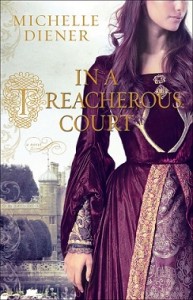 Susanna Horenbout, a young painter with a famous father, is sent to Henry VIII’s court in order to serve as the king’s personal illuminator. Before she even approaches the presence of the king, she’s the focus of an attempted murder, and is placed under the protection of courtier John Parker. As she and Parker develop intense feelings for one another, they’re also forced to contend with plots against the king by some of his closest advisors. Can their careers – and indeed their lives – survive the best efforts of their foes? Susanna Horenbout, a young painter with a famous father, is sent to Henry VIII’s court in order to serve as the king’s personal illuminator. Before she even approaches the presence of the king, she’s the focus of an attempted murder, and is placed under the protection of courtier John Parker. As she and Parker develop intense feelings for one another, they’re also forced to contend with plots against the king by some of his closest advisors. Can their careers – and indeed their lives – survive the best efforts of their foes?
The subject of this book is very intriguing; there is little new in Tudor England fiction these days, but a female painter and a mystery surrounding her seemed like it had potential to be quite the read. While this was overall an enjoyable book, it did have some flaws that marred what could have been an exceptional and unusual debut in the over-saturated Tudor-obsessed historical fiction world.
The primary flaw was the speed of the narrative. This is a short book and actions throughout feel rushed. It’s hard to get attached to characters who are constantly going, without much rest for pages. It seems as though every time the two main characters get an interlude to develop their relationship, they’re interrupted by something related to the general mystery / intrigue plot, and personally I always prefer character development to a racing plot. The plot itself is a good intrigue plot, and perfectly suited for those who are after that sort of thing – it’s just rushed along without much chance for a break.
Overall, it’s a real shame, because Diener has a beautiful way with words and I could tell that there were moments in this book that I could have happily luxuriated in her turns of phrase. I will certainly be eagerly looking for any books she writes in the future, because I think she could become quite good if she lets the historic world and her characters take on a bit more prominence. I believe this book is the first in a series, so I’ll be looking forward to advance reviews of the next.
While In a Treacherous Court does have its flaws, it also has its perks, and it’s worth a read for anyone seeking a fast, different historical fiction read set in the Tudor world.
All book links to external sites are affiliate links. I received this book for free for review.
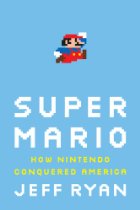 Mario is one of the enduring characters of my childhood, an instantly recognizable face and voice, and a character that still features in video games which can be just as fun as they were when I was six years old. There’s no way that nostalgia won’t creep its way into my review, and I’m not sure that it shouldn’t. I could not resist this book by Jeff Ryan, which delves into the history of Nintendo in America, just how Nintendo caught on with the masses at one of the worst times to release video games in history, and how they continue to captivate us as competition ramps up from a series of new competitors. Mario is one of the enduring characters of my childhood, an instantly recognizable face and voice, and a character that still features in video games which can be just as fun as they were when I was six years old. There’s no way that nostalgia won’t creep its way into my review, and I’m not sure that it shouldn’t. I could not resist this book by Jeff Ryan, which delves into the history of Nintendo in America, just how Nintendo caught on with the masses at one of the worst times to release video games in history, and how they continue to captivate us as competition ramps up from a series of new competitors.
I was particularly entranced by the early sections of the book where Ryan looks at Nintendo’s history. I knew they started out in the nineteenth century as a card company, but the intervening years until the NES was released in North America were mostly lost to me. Ryan fills in the gaps and does quite a bit towards explaining just why Mario was so successful when other characters failed. He suggests that Mario’s very lack of personality, beyond the simple facts of his life, make him appealing because he is an everyman. There is a reason Mario doesn’t speak beyond “Woohoo!” because the less we know about him, the more we can put ourselves in his shoes. It’s an intriguing concept, and it’s true that Mario games the few for me which don’t actually need a story to succeed.
Ryan is clearly a Nintendo fan, which comes through in his writing, and is instantly appealing to another person who has had a Nintendo console nearby for the past twenty-five years. We didn’t get our NES until I was four, but that means I can’t remember a time when I didn’t have the ability to play a Mario game more or less whenever I wished. This book definitely succeeds in tapping into those memories and covering all aspects of Nintendo, not just Mario games.
Perhaps the only thing the book is lacking is actual hands-on interviews conducted by the author himself. A lot of it is research gleaned from a huge variety of sources, but we don’t get much insight into the personalities of the people behind Nintendo. Shigeru Miyamoto is of course the posterchild for cool Nintendo games; I loved hearing more about the older games that he created before Mario and how Mario changed as time went on, but would have loved even more insight from the mind of a man who can create gaming addictions at will.
I did quite like the rotating history of Nintendo’s competitors and how Nintendo has managed to innovate and remain on top for years. After the slow sales of the GameCube, many people thought Nintendo was going to be like Sega and sell only software because of the difficulties they were having. But Nintendo fought back with the Wii, which has been ridiculously successful and found a home with everyone from small children to elderly disabled.
There is every indication that the company will continue to fight back in the future, providing pure fun for all to enjoy, and in the end Super Mario was a lovely tribute to both the company and the great character of Mario himself. If you’re a Nintendo fan, you can’t go wrong with this book.
All book links to external sites are affiliate links. I received this book for free for review via Netgalley.
|
|





Recent Comments