

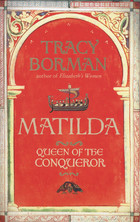
 William the Conqueror is one of the most well-known figures in English history, and for good reason; with a single battle, he ended the Anglo-Saxon rule of England and changed many aspects of governance, aristocracy, and even language. That’s simplifying things just a bit, but the impact of the Norman invasion on England can’t be overstated. Left behind in the traditional story of great-men-doing-great-things is Queen Matilda, William’s wife and a power in her own right. What influence did she have on William? On the conquest of England? On her children, who went on to rule the country themselves? That is the story Borman aspires to tell in this biography.
I’m not unfamiliar with Matilda; not only have I read about her in fiction, I learned quite a bit about the actual history of her life, too. This book regardless had a lot new to offer and a lot of fodder for thought, especially when it comes to the role of the woman in the medieval world. Borman posits that Matilda’s strong leadership role was preceded and followed by women who expected the same, and that truly there was more of a step backwards after her reign.
For instance, one of Matilda’s namesakes, “Empress” Matilda or Maude, is the prime example. Henry I made her his heir and asked his people to swear loyalty to her – so while he clearly had worries about it, he didn’t pass over her to choose a male heir. Was this the influence of his mother? It’s a fascinating question, and makes the social dynamics that followed Henry I’s death even more intriguing.
Borman also takes a relatively in-depth look at the myths surrounding Matilda and the motivations behind what other people said about her. This is always fascinating stuff for me – I love thinking about how various chroniclers and historians have twisted and portrayed things in ways that suit them best. Matilda suffers this quite a bit and it’s interesting to see Borman’s perspective on which bits are more or less correct. She puts to bed some of the more outlandish tales, like William beating Matilda to a pulp for her to agree to marry him – the world was different then, but probably not THAT different, and Borman’s logic is reasonable.
I also loved that Borman asserted Matilda’s power and influence as both duchess and queen. She witnessed a large number of charters and was personally responsible for ruling in her husband’s absence, something most of us don’t really associate with the Middle Ages. For a piece of chattel, she made and helped with many decisions, and it’s a mark of her influence that she was deeply mourned upon her death. Borman does the usual speculation, pondering what effects Matilda’s “softening” influence may have had while she was alive, as she vividly contrasts William’s rule after her death with those years before.
Overall, Matilda: Queen of the Conqueror is a truly fascinating book for anyone who is interested in female power just before the High Middle Ages. Matilda presents a thoughtful contrast to those who came after; this book would actually fit in wonderfully with Helen Castor’s She-Wolves. Highly recommended.


Recent Comments