|
|
 Today is my very first Classics Circuit tour review. I’m loving all these posts, and have been very excited to host Elizabeth Gaskell on my blog today. I’ve read and enjoyed three books by her, and today I’m featuring Ruth, a book to which I had a very different reaction. Today is my very first Classics Circuit tour review. I’m loving all these posts, and have been very excited to host Elizabeth Gaskell on my blog today. I’ve read and enjoyed three books by her, and today I’m featuring Ruth, a book to which I had a very different reaction.
When Ruth Hilton’s parents died, she was left one of many apprentices to a seamstress by her guardian, a man she only ever saw once. Ruth, who is beautiful and kind, cannot help remembering and missing her parents, not to mention her country rambles and freedom. When she gets to attend a ball as an amateur maid, she meets Mr Bellingham, a gentleman who is compelled by her beauty and asks her to call him friend. Ruth’s inexperience with the world means that she accepts his friendship and somehow finds herself becoming his mistress. His mother disapproves, and when Mr Bellingham falls ill, she seizes her opportunity and Ruth is left alone and pregnant in a Victorian world that is almost unbearably harsh on fallen women.
I am of two minds on Ruth. The first is that I admire Gaskell’s plan for her novel. She sets out to in a sense rescue the virtuous, repenting fallen woman from her sin. The double standard in nineteenth century England was far more damaging and prevalent than it is today, when it seems impossible that anyone could really hate a woman simply because she was with a man before they were married, let alone torment the poor illegitimate child based on something that was not his or her fault. I enjoyed the social commentary that this novel certainly was, and I went into it knowing that in its time Ruth had had a surprisingly strong welcome. I knew it was exposing a crack in a changing society and in that way it was very interesting for me.
As a story, however, it wasn’t the most compelling book I’ve ever read, and I actually hope it will become increasingly less relevant as the double standard for men and women in terms of sexual activity fades away. Most of the book really seems centered on the idea that Ruth is a perfect, virtuous woman and mother. Had her parents lived longer and educated her on the dangers of men, it’s implied that she might have suspected what was coming when she went to London with Mr Bellingham, but as it was she’s completely blameless, not even realizing what she’s done until she is mocked on the street in Wales after she’d been living in sin for a while. This also seems strange because her son, much younger than she was at the time of her folly, cannot have experienced the same level of education yet but is fully cognizant of Ruth’s mistake and what it means for him. Things don’t add up. I think the book would have been vastly more interesting had Ruth been fully aware of what she was doing, rather than seeming just a victim of a harsh society and an opportunist gentleman.
In other words, Ruth is just too perfect, and perfect in a very Victorian way, for a modern reader to sympathize with. I even wound up liking Jemima Bradshaw better, despite the fact that she’s rich, sulky, and is jealous of a poor woman, simply because she has more layers as a character and actually believably repents of her negative emotions by the end of the novel, albeit after she is in a position of security. I admire the fact that Gaskell was showing how a woman could make a mistake and still remain the woman she was before, that premarital sex didn’t make a woman into a despicable immoral creature, but Ruth did little else for me.
For a classic, however, this is a very easy read, and my edition was under 400 pages. Things seem to move along at a brisk pace for the most part and it’s an interesting look at a society that has gone but still leaves its mark on our lives. Regardless, I think I’d recommend North and South or Cranford above Ruth, if one is trying out Gaskell for the first time.
I am an Amazon Associate. I borrowed this book from my local library.
 Born right in the midst of the Renaissance, Michelangelo is a brilliant artist living through turbulent times in Italy. Though he impresses his first painting master, Michelangelo longs to be a sculpter, only feeling at home with a hammer and chisel in his hand as he brings to life the being inside the stone. Intertwining his life with the influential first family of Florence, the Medicis, Michelangelo does learn to sculpt, but that is only the beginning of the life of one of Italy’s greatest artists. Born right in the midst of the Renaissance, Michelangelo is a brilliant artist living through turbulent times in Italy. Though he impresses his first painting master, Michelangelo longs to be a sculpter, only feeling at home with a hammer and chisel in his hand as he brings to life the being inside the stone. Intertwining his life with the influential first family of Florence, the Medicis, Michelangelo does learn to sculpt, but that is only the beginning of the life of one of Italy’s greatest artists.
This massive book is subtitled “a biographical novel of Michelangelo” and it certainly attempts that feat. From his teenage years, before which I’m assuming very little is known, right up to his death, Irving Stone does his very best to cover it all in detail. I learned more about sculpting, painting, and the many other things that Michelangelo gets up to than I’d ever really expected to. We even hear about the particular types of stone in Italy and how they are quarried. I was astounded by the sheer amount of information Stone appears to have gathered on his subject. He has a more extensive bibliography in the back than I’ve seen in some popular non-fiction books.
As for the book itself, I will admit that sometimes its prose drags. Stone is a bit of an old-fashioned writer, as the book is from 1961, and it takes a little adjusting to his style. It doesn’t help that he includes every detail about everything you could possibly imagine. I think, however, that its epic scope and immersion in Michelangelo’s life are totally worth it. I spent days with this book and I really enjoyed those days. I know a little about Renaissance Italy, and it was fascinating to see it from his perspective, particularly because his family wasn’t hugely wealthy. I felt like I was experiencing both the life of the rich and the life of the ordinary, even though Michelangelo himself was truly extraordinary.
More so, this book somehow made me long to actually see Michelangelo’s sculptures for myself. I’m glad I live in the UK now, because I can plan a trip to Italy and see all of his existing sculptures and paintings. The Agony and the Ecstasy has made me appreciate just what it took to produce such art, and as a result I expect my admiration of it will be far greater. This is a wonderful book, and I do recommend it.
I am an Amazon Associate. I purchased this book.
 Even though he lives in a world where happiness – and mindlessness – is the central focus, Bernard Marx is unhappy. Because he was born an intelligent alpha, but has the physical stature of a much lower-classed citizen, he has never been the focus for women, has often been mocked, and finds himself discontented with everything around him. He decides to go to New Mexico, where he can meet savages, people who exist as they did before the World Controllers took over. Perhaps the people he discovers there will teach him to be happy and cure him of his mindless existence. Even though he lives in a world where happiness – and mindlessness – is the central focus, Bernard Marx is unhappy. Because he was born an intelligent alpha, but has the physical stature of a much lower-classed citizen, he has never been the focus for women, has often been mocked, and finds himself discontented with everything around him. He decides to go to New Mexico, where he can meet savages, people who exist as they did before the World Controllers took over. Perhaps the people he discovers there will teach him to be happy and cure him of his mindless existence.
I’m a big fan of dystopias like this. I loved The Handmaid’s Tale by Margaret Atwood and 1984 by George Orwell, among others. I didn’t have the exact same reaction to this book, and I found my answer in the introduction.
This world is eerily creepy; genetic engineering is certainly better than it was when Huxley was writing, and so his opening sequence, where guests are taken through a child-making factory as the embryos are divided and conformed to certain expectations, then brainwashed to love their status in life, is extraordinarily effective. I had a lot of hope for the rest of the book as I was reading it, but almost as soon as we were introduced to the characters, my hopes virtually fizzled.
For one thing, Huxley hasn’t decided whether or not it’s capitalism or communism that is horrible, and this is what the introduction clarified for me. Neither of the two theories portrayed in the book is highlighted as more prominent or more satisfying. Both existences are virtually meaningless, and so rather than making me worried about the future of the world, I just ended up conflicted and dissatisfied with what has been created here.
Worse, I didn’t have anyone to root for. The characters wind up unhappy wherever they are. The worst part is when Bernard comes back from the reservation and becomes totally content; in other words, he’s just shallow. He doesn’t have any real dispute with his world except that a mistake meant he didn’t fit in properly. So there is no real focal point for the reader to target, no one to sympathize with and hope for their escape. As a result, the world, which could have been so affecting, falls totally flat.
As a result, I definitely didn’t like Brave New World as much as I’d hoped. I’m glad I borrowed it from the library and didn’t spend money on it. I am an Amazon Associate.
 One snowy night, a small girl named Norah appears outside Margaret Quinn’s door. Margaret’s daughter Erica ran away ten years ago to join a cult with her boyfriend, and in the meantime Margaret has lost her husband to illness and now lives alone. Unwilling to lose the girl that God seems to have given to her in response to her prayers, Margaret decides to pass Norah off as her granddaughter. A mysterious and magical child, Norah tells people that she is an angel, and that her mission is about to begin. One snowy night, a small girl named Norah appears outside Margaret Quinn’s door. Margaret’s daughter Erica ran away ten years ago to join a cult with her boyfriend, and in the meantime Margaret has lost her husband to illness and now lives alone. Unwilling to lose the girl that God seems to have given to her in response to her prayers, Margaret decides to pass Norah off as her granddaughter. A mysterious and magical child, Norah tells people that she is an angel, and that her mission is about to begin.
Angels of Destruction is not a book that is immediately appealing. The first third or so focuses on Norah, who is very difficult to tack down and label. The following third goes back in time to witness Erica’s viewpoint when she left her parents, and the end constitutes an interweaving of these two narratives, seemingly brought about by Norah’s actions. This is a book that could epitomize winter; whenever I think of it I imagine that cold snowy night when Norah entered Margaret’s life, and the grief that pervades the book easily adds to its slightly melancholy feel.
While I enjoyed the way the book was plotted and I liked its final message of hope, I have to conclude that this isn’t really a book for me. It’s woven through with this concept of angels and faith, but it’s hard to tell whether or not Norah actually is one, or if she’s just a crazy little girl. I’d like to think that it was a message of faith, but I wish the author had been a little more concrete with what she was, rather than having her just up and vanish. I feel like it could have been more powerful that way, if the knowledge was there rather than just the wondering. As it was, however, I was left wanting.
Overall, I’d have to say that Angels of Destruction was mostly fine. I enjoyed reading it, particularly the section about Erica, I wanted to find out what happened at the end, and I was occasionally touched by its beautiful prose and family connections. I was left with questions, though, and I never felt that I really was loving it or was compelled to go back to it. It’s hard to describe why I feel so lukewarm about this book, but unfortunately the fact remains.
I am an Amazon Associate. I received this book for free from the publisher for review.
 Bob Arctor is a spy for the government. In his daily life, he does Substance D with his friends. In his working life, he is called Fred, wears a scramble suit to protect his identity, and reports on those friends, specifically seeking to identify those who are dealers and use them to work up the chain and get higher dealers. Even though he sees the effect of Substance D on his friends and others who need treatment, he has to keep doing it to maintain his cover, and becomes an addict. Eventually he winds up spying on himself at the precise time that the drug starts to destroy his mind. So goes the life of the main character in this introspective look at drug culture and its frightening possibilities. Bob Arctor is a spy for the government. In his daily life, he does Substance D with his friends. In his working life, he is called Fred, wears a scramble suit to protect his identity, and reports on those friends, specifically seeking to identify those who are dealers and use them to work up the chain and get higher dealers. Even though he sees the effect of Substance D on his friends and others who need treatment, he has to keep doing it to maintain his cover, and becomes an addict. Eventually he winds up spying on himself at the precise time that the drug starts to destroy his mind. So goes the life of the main character in this introspective look at drug culture and its frightening possibilities.
I have to admit that I was bored by this book. In my defense, I’d already seen the film while it was still in the preview stage at college, and my friends and I spent a good amount of time discussing it and picking it apart. So I already knew everything that was coming, including the ending which I think is very appropriate and somewhat haunting, and as a result I don’t think I liked the book as much as I might have otherwise. As most of us do, though, whenever a movie is based on a book it’s like a compulsion. I just had to read it and finish it and see how it measured up.
Overall, I found that there was far too much rambling done by the addicts. I know that this is probably true-to-life, as this book is dedicated to many of Dick’s friends who were either permanently damaged or killed as a result of their drug abuse, and he includes himself on the list of the damaged. Even so, is it wrong to admit that I found it boring and hard to follow? Perhaps it’s a perspective I needed, but I have no plan to do drugs, and so their ramblings were unfamiliar to me. It’s a rare 200 page book that takes me more than a day to read, but this one did, and I fell asleep twice in the day with it still open.
Perhaps Dick’s greatest accomplishment is that he manages not to condemn any of them for what they do. As he writes in the prologue, they only meant to have fun, and then continued even as they started to suffer the effects. They were addicted, of course, and so are the characters in the book, unable to do anything for themselves and eventually reduced to mindless, forgetful drones. He adds the twist in the end that is really what makes the reader think about society.
A Scanner Darkly is a clever dystopia, but I think I would have appreciated it more without knowing the story beforehand.
I am an Amazon Associate. I purchased this book.
 One summer shortly after the end of the war, Dr. Faraday is called to Hundreds, the Ayres family mansion, to tend the family’s maid. Hundreds has faded drastically from when he knew it as a boy. Land is being sold off to pay debts, the house is falling apart, and the family have become largely recluses. Dr. Faraday somehow finds himself entwined with this peculiar family despite their differences in status, and shortly realizes that something more is going on than what he had imagined. One summer shortly after the end of the war, Dr. Faraday is called to Hundreds, the Ayres family mansion, to tend the family’s maid. Hundreds has faded drastically from when he knew it as a boy. Land is being sold off to pay debts, the house is falling apart, and the family have become largely recluses. Dr. Faraday somehow finds himself entwined with this peculiar family despite their differences in status, and shortly realizes that something more is going on than what he had imagined.
I love Sarah Waters, and went into this book with a great deal of expectations. It proved to be very different from her previous books but no less fascinating. Even without the jacket cover telling me so, I could tell this was a post-war Britain. It feels very much like a society in flux, and there’s always the mention of the forthcoming National Health Service to give a hint. Dr. Faraday is a product of this changing culture, having fairly low origins in Warwickshire but having attended some of the best colleges to attain his profession. Yet he still hides his Warwickshire accent because it’s low class. (Yes, this still happens, my own husband consciously changed his accent because it was “low class” and he was attending schools where he was looked down on for it. In some respects Britain hasn’t changed at all.) The Ayres family is completely unable to keep up their house and their land, and they even sell some of it to the county council for housing nearly on their doorstep. This is a period of change, and that change resonates throughout the book.
Beyond that, this book is absolutely creepy. I know we’re meant to wonder if the family is actually insane or if it’s a ghost story, but it totally felt like a ghost story to me. It creeped me out like one, and as I was reading it and it got dark I almost had to stop because I was sure something was going to start tapping in the wall. I was convinced that Dr. Faraday was just being rational because he had to be as a doctor, not because the family were actually insane, but it’s certainly notable that most of the ghost incidents are told through the Ayres family, and the narrator doesn’t witness them himself. Waters completely pulls off the atmosphere of suspense and even though I was getting steadily more freaked out by the book, I didn’t want to put it down. I read it in just one day.
The Little Stranger has definitely not marred my love for Sarah Waters’ work and now I am more determined than ever to get to the last two books of hers that I have to read. Highly recommended.
I am an Amazon Associate. I borrowed this book from my local library.
 Jung Chang’s grandmother, Yu-fang, was a member of the last generation of Chinese women to have her feet bound. Her feet were bound so late, in fact, that her younger sister didn’t have to endure the painful process at all. Moreover, she was beautiful, and her father decided that for her to be a concubine to a rich man was better than for her to be a wife to a poor man, and as a result she hardly knew her first “husband” even though she gave him a daughter. That daughter, born Bao Qin but later named De-hong by Yu-fang’s second husband Dr. Xia, was Jung’s mother, and one of the first to become a communist. Jung herself lived through both the idealization of Chairman Mao and was intelligent enough to eventually realize that Communist China was not the paradise that she had been promised her entire life, and used her study of English to finally leave the country. Jung Chang’s grandmother, Yu-fang, was a member of the last generation of Chinese women to have her feet bound. Her feet were bound so late, in fact, that her younger sister didn’t have to endure the painful process at all. Moreover, she was beautiful, and her father decided that for her to be a concubine to a rich man was better than for her to be a wife to a poor man, and as a result she hardly knew her first “husband” even though she gave him a daughter. That daughter, born Bao Qin but later named De-hong by Yu-fang’s second husband Dr. Xia, was Jung’s mother, and one of the first to become a communist. Jung herself lived through both the idealization of Chairman Mao and was intelligent enough to eventually realize that Communist China was not the paradise that she had been promised her entire life, and used her study of English to finally leave the country.
This book was absolutely fascinating. I was completely spellbound by it. Chinese society changed so much over this period of years. Just considering the difference between the early life of Jung’s grandmother and her own youth was immeasurably vast. I had never learned about any of this before, and I found the history fascinating. I really want to learn more now and I am definitely planning on seeking out some history on 20th century China.
This is a memoir, though, and it was the story of these women that really cemented my love for the entire book. I was incredibly impressed by how intelligent and strong they all were. From Yu-fang’s ingenuity in kidnapping her daughter away from her first husband’s vindictive wife to Jung’s mother’s struggles with a husband that put communism before his family, these women took the abuse and rolled with it, keeping their integrity and honor and love for one another intact through almost insurmountable hardships. Moreover, Jung’s parents must have been complicit in some of the horrid things that the communist regime supported – we know her father executed people, she says so – yet they too realize what they’ve done is wrong. The second half of the book is mainly Jung’s own memoir, and I found it fascinating that despite all the hardships communism had dealt her family that she still was completely in the thrall of Chairman Mao. She didn’t know about them, of course, but it seems inconceivable to me that anyone could believe his lies. It’s hard to realize that these were the only words she ever heard, and thus she had no choice. It’s amazing that she eventually realized that she wanted to get out of China, let alone that she accomplished it.
This book is long, but I found the entire thing completely enthralling. The writing is plain and there is a lot of history info-dumping, but it’s such a compelling story that I managed to read half of it (350 pages) in a single day. I can’t recommend Wild Swans enough. I highly recommend this, and it would be a great choice for the Women Unbound challenge, which is what I read it for. I also have to thank Eva, because without her recommendation I might never have discovered it!
I am an Amazon Associate. I borrowed this book from my local library.
 This is book eight in the Sookie Stackhouse series. I am reading these books in part for the challenge hosted over at Beth Fish Reads. This is book eight in the Sookie Stackhouse series. I am reading these books in part for the challenge hosted over at Beth Fish Reads.
After the explosive disaster that was the vampire summit, Sookie needs some time to recover. But she’s still worried about her missing boyfriend, Quinn, and fretting over the many changes in the vampire world. Now that Sophie-Anne is seriously injured and has lost her closest bodyguard, the vampire state of Louisiana is virtually up for grabs. The were world isn’t easy, either, with someone pitting the two factions against one another. Sookie’s going to be dealing with a lot of changes and very soon.
This installment of the Sookie series possibly has the least amount of cohesive plot ever. A lot of things are happening, but there isn’t necessarily one overarching point to it all. A lot of this book is Sookie going about her life and coping with what’s happened. I didn’t mind as much, but it was definitely a slower read than previous Sookie books because I wasn’t necessarily racing to find out what happened next. The end, however, has made me really want to pick up the current last book in the series, the ninth one, to see what happens there.
My favorite part of this one was definitely the relationship between Sookie and Eric. Like most people who read these books, I have a huge soft spot for Eric. Ever since he and Sookie were together in the fourth book, I have decided that I want him and Sookie to give it a shot, even if it wouldn’t work. I liked that he had something of a presence here and that he’s remembering what happened between them. I also thought their blood bond was interesting, and I am wondering if Sookie’s new-found ability to feel his emotions will have repercussions for the rest of the series.
Even though From Dead to Worse was somewhat lacking in the solid plot department, it still had a lot of action and was a fun read. So far, I can still recommend the series all the way.
I am an Amazon Associate. I borrowed this book from my local library.
 This is book seven in the Sookie Stackhouse series. I’m reading these in part for the challenge hosted over at Beth Fish Reads. This is book seven in the Sookie Stackhouse series. I’m reading these in part for the challenge hosted over at Beth Fish Reads.
Sookie’s telepathic skills are about to come in handy for the Queen of Louisiana, Sophie-Anne. The vampires are having a summit and Sophie-Anne wants to know what the humans are thinking. Sookie mostly wants time to get over her traitorous ex, Bill, and get used to her new relationship with were-tiger Quinn, but she accepts Sophie-Anne’s offer. She’ll be generously paid and she’s curious. Vampire politics are complicated, though, and soon Sookie finds herself in a far bigger mess than she’d ever expected.
I’m still very much enjoying this series. Quite a bit happens in All Together Dead, keeping my attention very effectively. At the beginning, there is quite a bit of happening in Sookie’s normal life – her brother gets married to were-panther Crystal, for example, and Sookie has a new roommate in Amelia Broadway, witch. Her former friend Arlene bonds with the Fellowship of the Sun and Sookie finally gets a little closer to Quinn and develops some hope for their relationship. Her world is certainly never boring, but the vampire summit is clearly the high point of this book. As it should be, because this is really what develops the events in the entire supernatural world.
I really liked Sookie’s developing relationships. In the last book I thought I was fond of Quinn, but I’m not sure here. He’s been hiding things from Sookie and I’m not sure I like that. I am really enjoying the way her relationship is going with Eric though. It’s always interesting to see where each book goes. As always, Sookie herself is definitely the attraction for this series. She’s a sweet, honest, and genuinely interesting character and it’s nice to have a main character that feels so familiar over the course of the series.
As I’ve said in possibly every review so far, I’m recommending this series and looking forward to reading more.
I am an Amazon Associate. I borrowed this book from my local library.
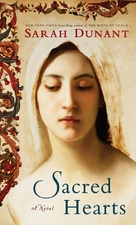 When young novice Serafina enters the convent at Santa Caterina, she is desperately unhappy and makes sure all the other nuns and novices know about it. Dowry prices for Italian aristocrats have risen so high that families with more than one daughter were forced to send the others to a convent. The convents were not as strict as they could be and girls were allowed to see their families, receive gifts, and make their lives easier, but there was no question that they were wed to God, and Serafina wants to be wed to someone else. Madonna Chiara sends the dispensary sister, Suora Zuana, to Serafina to calm her with her medical skills. The women form a friendship, but Serafina’s determination and zeal will not be quenched. When young novice Serafina enters the convent at Santa Caterina, she is desperately unhappy and makes sure all the other nuns and novices know about it. Dowry prices for Italian aristocrats have risen so high that families with more than one daughter were forced to send the others to a convent. The convents were not as strict as they could be and girls were allowed to see their families, receive gifts, and make their lives easier, but there was no question that they were wed to God, and Serafina wants to be wed to someone else. Madonna Chiara sends the dispensary sister, Suora Zuana, to Serafina to calm her with her medical skills. The women form a friendship, but Serafina’s determination and zeal will not be quenched.
I enjoyed this book a surprisingly large amount. I loved the detailed peek into Italian convent life in particular. The pace of the book is occasionally slow, but it seems to match perfectly the pace of convent life, with the hours specifically devoted to work and prayer and not much in between. I was never bored, but actually spellbound by the entire book. The politics in the convent were fascinating; some sisters are in favor of new reforms that threaten to close off all convent life from the outside, even though this violates the understanding by which most women entered the convent in the first place. Others can’t imagine losing close contact with families, friends, and occasional luxuries, much less the prospect of losing the ability to hold concerts and plays. The drama and the manipulation that goes on to swing the convent one way or the other was fascinating to me, and these elements form the basis for part of the plot.
The characters were very interesting too. I’d never wondered much about women who were forced to take the veil. Serafina, however, proves just how frustrating this must be. Her determination and ingenuity make her very attractive as a character even as she complains that she’s been separated from the man she wanted to marry. I found her whole story to be uplifting and very moving. Moreover, Zuana’s interaction with Serafina makes her think about everything that she accepts, and her life is similarly fascinating and saddening. These women are at very different stages in life and as a result Zuana reflects on how she wound up in the convent and what she suffered. It isn’t romance, but these two women combined give a very interesting picture of Italian life.
In the end, I loved Sacred Hearts. I think it’s my favorite novel by Sarah Dunant, and I wasn’t expecting that at all. Highly recommended.
I am an Amazon Associate. I received this book from the publisher for review here.
|
|


Recent Comments