

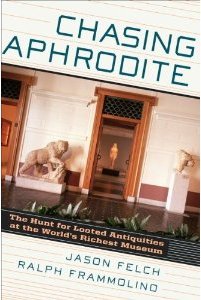
 Museums that focus on the antiquities have to get art from somewhere, and for much of history, it’s been done through regrettable looting. Starting with imperialism and carrying right on down to the present day, many astonishingly renowned museums have continued to populate their collections with looted art, stolen in particular from Italy and Greece. This hasn’t stopped despite a number of laws and international sanctions passed against the destruction of archaeological sites and the theft of priceless art. The Getty Museum is one such offender; a museum that sped to fame largely on the basis of looted art, but which then positioned itself against the practice, led by curator Marion True. When the scandal was exposed, the Getty’s reputation fell with it. This is the expose of the museum, the result of years of investigative reporting, and a true insight into the practice of purchasing looted art in the United States.
I love museums and history, but I thought that looting was a practice that had ceased long ago. About the only thing I’d heard about recently was Greece’s requests for the Elgin Marbles from the British Museum, and even that doesn’t seem to be an urgent matter. I have been appalled at the carelessness with which archaeological artifacts were treated, but largely in the context of the past – mainly the Victorians destroying archaeology in search of the good stuff, most of which I’ve probably seen in the British Museum. I had no idea that this still happened, and worse that it was happening in Italy and Greece, probably the most archaeologically rich countries in Europe. This book really laid that all out for me, not only what damage the looters were doing with descriptions of art dirty, in pieces, and broken, but also how much history is lost. We have no idea why so many statues existed simply because they were wrenched from their context with no way of returning them.
The trade in stolen art had significant consequences for the Getty, which appears to have considered itself free of any laws virtually from its founding. The original curator regularly helped “donors” cheat on their tax returns, getting back millions for art that was often worth just a few thousands. He, of course, willingly acquired stolen objects. Through the ensuing years we can see pretty clearly the difficulties that museums were in. If they weren’t acquiring new and exciting antiquities, they fell from the limelight – but all the new and exciting antiquities were obviously stolen. Curators regularly had to choose between their morals and their career, if they even considered their morals at all. The curator who finally did, Marion True, still couldn’t resist purchasing looted art when it called to her, which ultimately led to the destruction of her career and positioned the Getty as a hypocritical institution.
What I liked was that even though the Getty is at the center of the book, the conclusions drawn clearly apply to other museums as well. This book deals solely with American museums, so it depicts which other museums caused scandals in their time and which ones ended up returning stolen items just like the Getty. It was a widespread crime, and we can imagine similar discussions happening in other institutions as happened in the Getty. The book also shows how attitudes in America changed; the top museums do now have policies against looted art and have begun returning stolen artifacts to Italy and Greece, starting off partnerships that will enrich museums across all the countries. The Getty is the focus, with documented conversations and interviews, but its fate was pivotal in the role of all such institutions in the country.
If you’re at all interested in museums and their history in the US, Chasing Aphrodite is definitely a book for you. I found it utterly fascinating; I thought about it while I wasn’t reading about it and even went so far as to tell others about it (even though they were clearly uninterested). I was appalled by what happened, but I feel I now have a better idea about the workings of museums and I’m much more confident that they’re moving in the right direction. We’ll never know quite how much knowledge is lost, but we can hope that more is left to discover in the future.
I am an Amazon Associate. I received this book for free from Netgalley for review.



Recent Comments