|
|
 Late as usual, I meant to write this post last weekend, but we had house guests and unfortunately I had no time for blogging at all, something that seems to happen a bit too often these days for various reasons. It’s especially annoying when I actually feel more keen on blogging than I have in months; I’m not entirely sure why, but it’s a very good feeling. Late as usual, I meant to write this post last weekend, but we had house guests and unfortunately I had no time for blogging at all, something that seems to happen a bit too often these days for various reasons. It’s especially annoying when I actually feel more keen on blogging than I have in months; I’m not entirely sure why, but it’s a very good feeling.
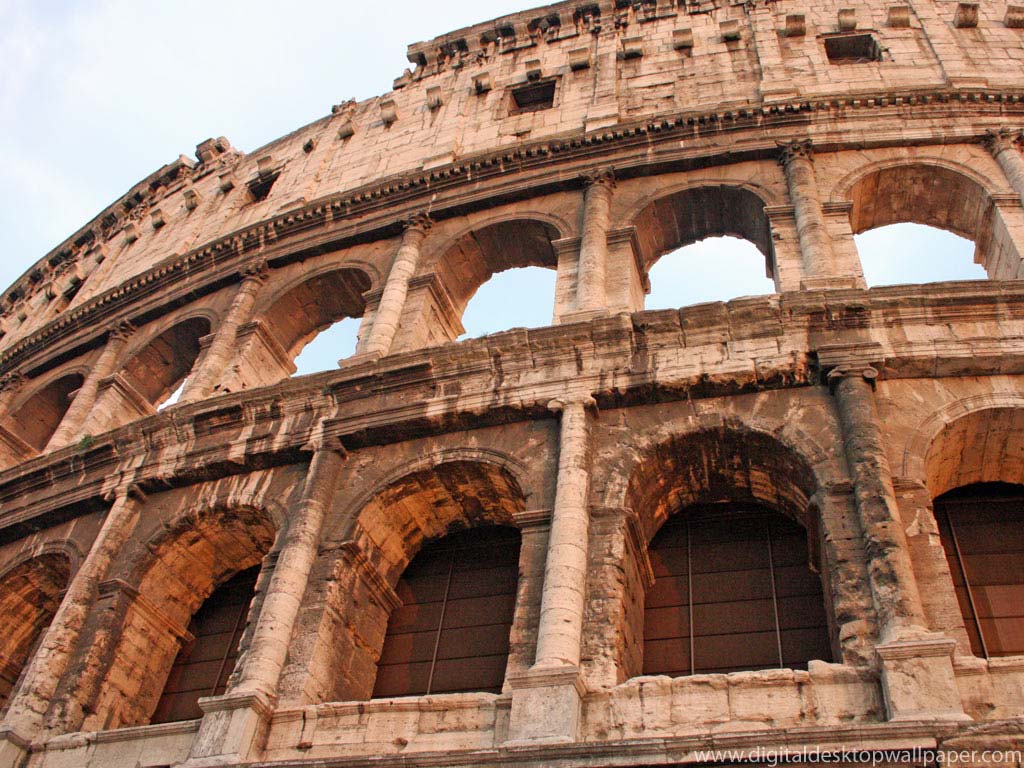
This weekend, I’m focusing on accomplishing everything I need to take a week off starting on Wednesday for my trip to see this in real life:

As you can probably imagine, I am very excited to visit Rome! Food, history, romance, I can’t wait. I look forward to sharing my own pictures with you when I return. We’ll be celebrating our second wedding anniversary while there, so it will be an extra special holiday.
Anyway, on to September! I finished 16 books in the end over a nice variety of genres, and I even managed to get some non-fiction read. I’m very pleased about that.
Fiction
- You Are My Only, Beth Kephart
- Miles, Mystery, and Mayhem, Lois McMaster Bujold
- Next to Love, Ellen Feldman
- Becoming Marie Antoinette, Juliet Grey
- The Maid, Kimberly Cutter
- Maine, J. Courtney Sullivan
- The Reinvention of Love, Helen Humphreys
- Unveiled, Courtney Milan
- One Salt Sea, Seanan McGuire
- Death of Kings, Bernard Cornwell
Non-fiction
Books of the Month
 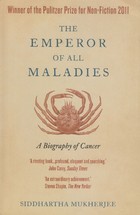
Honestly, those choices were actually surprisingly easy ones. The Emperor of All Maladies was a fantastic, stand-out book, even as it made me worry. And Next to Love has really stuck with me, so it deserves a mention here too.
October has been with us for more than a week now, so I already know quite a bit of what will be appearing. I’m shockingly on top of things, in that I only have a few books to get reviewed from those above, so the ones without links will soon appear here. I’ve already read a couple of fantastic romance novels, for those who read this blog and enjoy them as well, and I’m currently working on The Glitter and the Gold, Consuelo Vanderbilt Balsan’s life in her own words.
As I may have mentioned to some of you, I’m pondering trying to actually write a historical novel myself (especially with all this newfound verve for writing I’ve acquired since I changed jobs), and I think she would make an excellent first subject. Stories about American heiresses who married English lords are very popular these days – except that Consuelo was unhappy, and fought for the right to her happiness against societal dictates. She was an utterly fascinating woman.
For the rest of October, I’ve already begun selecting books I might try to read for the Read-a-thon – it’ll be a tight squeeze to actually fit it in with the amount of catching up I’ll be doing after my trip, but I’m determined to participate. I’m also hoping that I can read:
- The Night Circus, Erin Morgenstern
- Storm Front, Jim Butcher
- The Plantagenets, Derek Wilson
- The Art of Fielding, Chad Harbach
And we’ll see where whim takes me aside from those!
What do you have planned for October?
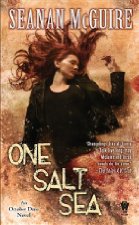 This is the fifth book in the series. Rosemary and Rue is the first book. This is the fifth book in the series. Rosemary and Rue is the first book.
The sons of the Duchess of Saltmist have been kidnapped, and usual it’s October Daye who is called upon to rescue them. The stakes are very high; if Toby doesn’t find the boys, her country is going to go to war with those under the sea. To make the situation even more complicated, she’s finally gotten together with Connor, a Selkie, and they may be forever separated if she doesn’t succeed in her mission. With her many allies by her side, Toby sets out to find the kidnapper, even when those she holds most dear are threatened.
This particular book is a turning point for Toby – she is not the same woman at the end of the book as she was at the start of it. Several storylines that have been building over the course of the last few books – if not since the start of the series – actually see a resolution, and with devastating effect. Some of the things that happen to her are gut-wrenching, and the world really isn’t going to be the same. She isn’t even the same herself; thanks to the changes which took effect in the last book, Toby is still getting to grips with her own changed identity and magic.
The mythology and backstory of all of the characters continues to grow and change in this book. I loved learning more about the Luidaeg in particular, who finally starts to be revealed in this book, and who is becoming much more than an all-powerful sea witch. We also get bits and pieces about the other characters.
I think my only problem with the book really was that I don’t like Connor very much. The entire time, I was busy rooting for Toby to finally realize that it’s actually Tybalt she loves, which as you can imagine lessened the impact of parts of the book for me. I’ve heard some say this is a Peeta and Gale situation, but I don’t think it is; there just isn’t any chemistry at all between Toby and Connor, and I’ve actually yet to find anyone saying they prefer the latter. Nor does Toby really think about it; she loved Connor when she was young so she must love him now. Since Tybalt is by far the better, more complex character, I just couldn’t get behind those bits of the story.
Regardless of personal preference though, One Salt Sea was a fantastic addition to the universe and one that has really, genuinely changed everything. I’m not sure how I’m going to wait until next year to get the sixth book, but I know I’ll have it preordered as soon as I see it available. In the meantime, I’m going to read Feed, as Mira Grant is actually a pen name for Seanan McGuire, and hope for some more magic there.
All book links to external sites are affiliate links. I bought this book.
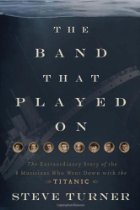 Everyone who has heard about the tragedy of the Titanic, or watched the film, probably remembers that the band kept on playing even as the ship sank into the ocean. They gave their lives so that people would remain calm and get on the boats in an orderly fashion. Nearly everyone who survived remembered the band, and we know that none of them survived, so the story certainly seems plausible. In this book, Turner looks at the men in the band – W. Hartley, C. Krins, R. Bricoux, W.T. Brailey, J. Woodward, J.F. Clarke, J.L. Hume, and P.C. Taylor – and considers both their lives before the disaster and the role they may have played in the final moments of the ship’s sinking. Everyone who has heard about the tragedy of the Titanic, or watched the film, probably remembers that the band kept on playing even as the ship sank into the ocean. They gave their lives so that people would remain calm and get on the boats in an orderly fashion. Nearly everyone who survived remembered the band, and we know that none of them survived, so the story certainly seems plausible. In this book, Turner looks at the men in the band – W. Hartley, C. Krins, R. Bricoux, W.T. Brailey, J. Woodward, J.F. Clarke, J.L. Hume, and P.C. Taylor – and considers both their lives before the disaster and the role they may have played in the final moments of the ship’s sinking.
I’ve never heard anything much about the musicians on the Titanic beyond the fact that they died playing. Like everyone else of my age, I’ve seen the film (twice in theaters) and their story is certainly a sad and noble one. Turner takes us behind the scenes with this book and looks at how exactly each man got on the Titanic. Who was waiting for them when they returned from the ship? How did each man become a musician? Were they career musicians or were they just building experience for greater things? These are all questions he seeks to answer.
He also considers the day of the sinking itself, thinking about what songs the men played, how two bands fit together into one for the final moments, and why they might have chosen to play. They could have been ordered to by the bandmaster, or they might have decided to carry on as one, knowing that they were unlikely to have a priority place on the available lifeboats anyway.
Lastly, Turner also looks at the aftermath of the disaster, and how these particular men’s deaths affected their families. The White Star Line, who owned the ship, did have to pay money out to the employees’ families, but who it went to was a matter up for debate in many of the men’s families.
Overall, The Band that Played On was a worthy, deeper look at these eight men, and a very good choice of read for people who are interested in further information about the Titanic and the people who actually ran the boat.
All book links to external sites are affiliate links. I received this book for free for review.
 As with the other volumes, this is an omnibus composed of three separate stories – two books and a novella. I won’t avoid spoilers for Young Miles or Cordelia’s Honor, so read those reviews before starting this book! As with the other volumes, this is an omnibus composed of three separate stories – two books and a novella. I won’t avoid spoilers for Young Miles or Cordelia’s Honor, so read those reviews before starting this book!
All of the stories in this particular omnibus deal with genetics and the manipulation of them.
In the first of the two books, Cetaganda, Miles and his cousin Ivan find themselves amongst the Cetagandans when a murder mystery sets off – with him and Ivan at the center of it. Miles was passed a mysterious object and set up so the Cetangandans will think he stole it. He needs to use his famous mind to get the Barrayaran embassy out of trouble, and if he meets a few of the gorgeous Haut class, who ride around in opaque bubbles, along the way then he certainly isn’t going to protest. This particular planet, Tau Ceti, separates genetically the higher class from the public face, the ghem lords, leading to some very interesting politics. While I don’t think this was actually my favorite story of them all, I still enjoyed watching Miles dig himself out of trouble.
Ethan of Athos, the next story, doesn’t feature Miles at all, but it’s set in the same time period. The title character is from Athos, a planet where only men are allowed to live. They create children using a limited number of female ovaries donated in the distant past – the babies are then placed in the uterine receptors, developed on Beta, and selected to be male. As you can imagine, this leads to an absolutely fascinating society of men who simply have never seen women and don’t know what they’re like. When a new batch of ovaries arrived and is found to be contaminated, it is Ethan, who has made his life’s work creating babies, who is sent to Jackson’s Hole to investigate the problem. While there, he meets Elli Quinn (who was introduced in Young Miles), one of the Dendarii Mercenaries, and has his expectations of women flipped upside down as they team up to try and get to the root of the problem.
Even though this particular book didn’t feature Miles, it still manages to give us a wider view of the universe Bujold has established, show Ethan how women are actually independent and different beings just like men (I loved this), and also shows us how Miles is regarded by an outsider like Elli. She has a lot of hero worship for him, especially given he made her life liveable again, but it was nice to revisit the character and see what Ethan gathered of him just from Elli’s recollections. It’s also a bit lighter than the other stories in the series, and Ethan’s behavior towards women before he learns is absolutely comical. I loved seeing his expectations completely subverted by the women he meets.
The last story, “Labyrinth”, finds Miles in a desperate battle to rescue a genetically modified woman from the basement. Because she’s considered a “monster”, she’s about to be killed, but he is persuaded to save her. Miles may not be genetically mutated himself, but he always has a soft spot for people who simply look different. A sweet story, but again not my favorite, and lacking the power of “The Mountains of Mourning”.
Still, even if this wasn’t the best volume, I loved reading every virtual page of it, and I can’t wait to carry on with the series.
All book links to external sites are affiliate links. I downloaded this book from the Baen Free Library.
 In her early twenties, Soo-Ja makes a decision that many young women make; she decides which man she will marry. Bound by her family’s traditional values in Korea after the war, she finds herself with no choice but marriage. Her family will not countenance her becoming a diplomat, so when a young man who appears wealthy and influential makes her promises, she chooses him, even though she is in love with another. Once she realizes her mistake, it is too late, and Soo-Ja must come to terms with her life and make the best of what she has left. In her early twenties, Soo-Ja makes a decision that many young women make; she decides which man she will marry. Bound by her family’s traditional values in Korea after the war, she finds herself with no choice but marriage. Her family will not countenance her becoming a diplomat, so when a young man who appears wealthy and influential makes her promises, she chooses him, even though she is in love with another. Once she realizes her mistake, it is too late, and Soo-Ja must come to terms with her life and make the best of what she has left.
This novel made a big impact on me when I read it. Soo-Ja’s despair at her choice, the lies that pile up around her, and her lost ambition all made me feel for her even as I recognized (as many readers will I think) that she makes the wrong choice before she knows why it’s wrong. She loves Yul, a young doctor, but by the time she knows she is wrong, she’s already sinned with Min, and her marriage to him goes forward. It’s only years later when Soo-Ja is run down from paying the bills, caring for her daughter, and pandering to guests that she meets Yul again and longs for him.
But if Soo-Ja were to simply feel sorry for herself, this wouldn’t be the book it is. Instead, she makes the best of everything. She handles the fact that her new family is poor, that her husband won’t work, and that her dreams are gone as best she can and soldiers on. She works to give her daughter a better life, even as she knows that her efforts mean that the young girl favors Min, who spoils her rotten. She takes everything and simply becomes a better person, rather than turning to the bitterness that would have been much easier in that situation. After all, her dreams have been lost to her, and she will probably never get them back.
Park’s writing also does the book a lot of credit. It’s well-done and moves smoothly, and it’s so easy to understand the complexities of the characters while still enjoying the setting, which was new to me. His deft characterizations had me a big fan of Soo-Ja and Yul before I would have thought; after they met again I was firmly behind them getting together again, even as I wondered how it would ever happen with both characters married.
This Burns My Heart is a beautiful love story tinged with sadness and hope, peopled with fantastic characters and underpinned by pitch-perfect writing. Highly recommended.
All book links to external sites are affiliate links. I received this book as a gift from Kathy.
 For as long as men have been writing history, important women have been lost from its pages. Restoring all of them would be an impossible, lifetimes-consuming feat, but that doesn’t mean some historians can’t try. Building on the success of Philippa Gregory’s novels set during the Wars of the Roses (which she calls “The Cousins’ War”), she and two historians have written a book spotlighting three of the most important women during the war – The Duchess, Jacquetta, her daughter Elizabeth Woodville, the Queen, and Henry VII’s mother, Margaret Beaufort, The Queen’s Mother. For as long as men have been writing history, important women have been lost from its pages. Restoring all of them would be an impossible, lifetimes-consuming feat, but that doesn’t mean some historians can’t try. Building on the success of Philippa Gregory’s novels set during the Wars of the Roses (which she calls “The Cousins’ War”), she and two historians have written a book spotlighting three of the most important women during the war – The Duchess, Jacquetta, her daughter Elizabeth Woodville, the Queen, and Henry VII’s mother, Margaret Beaufort, The Queen’s Mother.
While reading this review, it’s probably worth keeping in mind that I know a lot about the Wars of the Roses, even counting what I’ve forgotten since I actually finished studying it intensively, and have read many many books and articles on the subject, both popular and academic history. I have also been trained to write history myself. My experience may not match yours.
I love the idea of The Women of the Cousins’ War in theory, but I’m ever so wary of it in actual historical practice. Unfortunately, this book actually justified my wariness. The introduction, written by Gregory, is very appealing. Starting off first with the difference, in her mind, between history and historical fiction, and followed up by why she chooses to write fiction, was actually a fascinating glimpse into her head. I didn’t agree with everything she said about the writing of history itself, but I appreciated such a bold introduction that really argued her case. It had me looking forward to the book.
At that point, unfortunately, I began to be disappointed. None of the essays use footnotes OR endnotes, which left me wondering where on earth they’d actually got their information from. There is a list of sources and a messy list of acknowledgements and quotes at the end of each, but this is frustrating to wade through when looking for the source of any quote. Without knowing where each got information from, I hesitated to trust anything I was reading.
It didn’t help that it started off with Gregory’s essay about Jacquetta, the Duchess of Bedford who married a lower-class Woodville seemingly out of love and gave birth to the future queen of England, Elizabeth Woodville. To be perfectly fair to Gregory, she has very, very little to work with, but this is one of the fundamental flaws in this sort of “restoration” of some historical women. There just isn’t much there. It’s incredibly difficult to prise out anything about Jacquetta herself besides speculation. Gregory does a decent job of that speculating, but since I didn’t know where any particular bit of information came from, whether it was an original source or not, I had no way to judge for myself what I thought about what she was saying. This particular bit reads, as you would imagine, as a factual tale about the more recorded people in Jacquetta’s life without much genuine insight into who she actually was.
I also was frustrated by the fact that there is no engagement with the sources, particularly the primary sources. Instead of hearing “some say”, I want to know who said it and what their motivation was. I wanted this book to further historical study, to make some sort of impact, not to just flatly tell me what happened. Gregory says she consulted the original sources, but aside from a few notes in the end, they don’t feature.
The second essay didn’t improve much on the situation. Enough is known about Elizabeth Woodville to actually make for an interesting biography, and some biographies have been already written about her, including one by this particular author. She also features heavily in other books about this subject, naturally. The essay was fair, and does include more information about the sources, and would be appropriate for someone who knows almost nothing about the subject. For me, it didn’t help that this essay was the least well-written and I found it very difficult to keep my attention on the page, which is probably why I have little to say either way about it.
The last essay, however, was excellent. Michael Jones very obviously knows his subject, knows his sources, and is a wonderful writer. He rescues the whole book by actually backing up his speculation, thinking about where his information comes from, and considering Margaret’s family history as well as the present. There still aren’t any actual notes, but he amazingly separates the primary sources from the books in his source list (which neither of the others do) and makes it relatively easy to figure out what came from where, particularly since he’s actually engaging with the historical record.
In fact, I feel like the third essay justifies my criticisms of the other two, because it did a whole lot more of everything I wanted without unnecessary length and certainly without becoming as dry as academic history can be. Yes, the book is intended to familiarize readers with these women, not as an academic study for other historians, but certainly they can do so while also writing worthy history. He provided a much fuller, more comprehensive picture of Margaret herself, backed up by everything he knows, and had me eager to read his full-length book on the subject.
I don’t think I would recommend this book for anyone who has some knowledge of the period, as they’ll know most of what’s in it, but for newcomers and those who are looking for more information and a “popular” history this would suit. If you see it in your library and enjoy Philippa Gregory’s books, I’d certainly recommend you read at least the introduction, as I feel it’s really added to my understanding of the way she writes and considers historical fiction.
All book links to external sites are affiliate links. I received this book for free for review from the publisher.
Whitby Abbey, in Whitby, is probably most famous for its prominent role in Dracula and the 199 steps that lead up to the abbey from the town.

I like this shot for some reason. It gets across the desolation of the abbey, even though you can see the town in the background to the left.
To view more Saturday Snapshots, visit At Home with Books.
|
|




Recent Comments