|
|
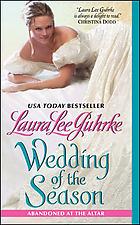 Beatrix’s fiance, Will, skipped out just days before their wedding to become an archaeologist. While he was digging for King Tut, convinced Beatrix didn’t love him enough to go to Egypt with him, she was nursing a broken heart and trying to recover a sense of normalcy. Six years on, she’s finally managed it. She’s engaged to another man, she’s spent a delightful last summer as a single woman, and she finally thinks she’s moved on. Then Will comes back, in search of money for his dig, but winds up sidetracked by the fact that he still hasn’t gotten over Beatrix. As he slowly begins to destroy the facade of a life she’s built for herself, she has to wonder whether she’ll have anything left when Will chases his dreams back to Egypt again. Beatrix’s fiance, Will, skipped out just days before their wedding to become an archaeologist. While he was digging for King Tut, convinced Beatrix didn’t love him enough to go to Egypt with him, she was nursing a broken heart and trying to recover a sense of normalcy. Six years on, she’s finally managed it. She’s engaged to another man, she’s spent a delightful last summer as a single woman, and she finally thinks she’s moved on. Then Will comes back, in search of money for his dig, but winds up sidetracked by the fact that he still hasn’t gotten over Beatrix. As he slowly begins to destroy the facade of a life she’s built for herself, she has to wonder whether she’ll have anything left when Will chases his dreams back to Egypt again.
This was such a sweet book. I’d never read a romance by Laura Lee Guhrke before, but I was sure I’d heard she was good, and whoever said so was clearly correct. This was a light, easy read that still managed to tug on my heartstrings as I followed the unexpected second romance that blossomed between Will and Beatrix. I seem to like these romances that focus on old loves; I think it’s easier to feel a couple’s relationship is likely when you know they have a lot of history together. Guhrke does a great job of showing it here, mixing a lifetime of memories in with the present to make a fully rounded love story.
Beatrix’s true problem is that she’s been raised to be slightly too cautious. Her father was extremely overprotective, but because she loved him, she followed his rules without complaint. Her fear has held her back from getting much of what she wanted. Her struggle to overcome those barriers, to take risks and seize what she wants, was I thought a surprisingly inspiring theme. It’s not just her desire for Will that motivates her, it’s everything she’s dreamed about in life that she never thought she could have. It’s such a different theme than the prevailing trend of sweeping passion and dangerous boys – which isn’t exclusive to novels labeled with “romance”. There’s passion, yep, but also more.
I also liked the setting, which seemed unusual in the current world of historical romances. I mostly stick with Regency England, although admittedly I don’t read very much romance these days. This is set at the beginning of the twentieth century, before World War I and the death of the aristocracy. Beatrix has a car and goes “motoring”; parts where her fiance warned her about going 40 miles an hour made me laugh out loud. It’s those little touches that brought the world to life for me. Even though there are balls and princesses and fancy dresses, the world is changing, and it’s rare to find that sort of feel in a romance, at least it has been for me.
Wedding of the Season was a surprisingly satisfying romance novel, and I’d eagerly recommend it to any other romance reader, especially if they’re looking for something a little out of the ordinary.
I am an Amazon Associate. I downloaded this book for free from Netgalley for review.
 Siri and Vivenna, princesses of Idris, have lived in wary fear of nearby kingdom Hallandren for their entire lives. Their line originally ruled in Hallandren and now mainly exist on the larger kingdom’s sufference. Vivenna has been betrothed to the God-king of Hallandren, Susebron, since birth in an attempt to stave off war. At the last second, the princesses’ father sends Siri, his younger daughter, instead, knowing that war is coming and making the difficult decision of saving his elder daughter over his younger. Siri has been raised in a relatively colorless world and is shocked – and intrigued – by vivid Hallandren, with its strong use of magic, and her life as queen, or “Vessel”, as her sole duty is to bear an heir to the throne. Her sister Vivenna goes after her, determined to save her, but finds herself wrapped up in intrigue after intrigue instead, particularly with a mysterious swordsman whose seems to stalk her every step. Siri and Vivenna, princesses of Idris, have lived in wary fear of nearby kingdom Hallandren for their entire lives. Their line originally ruled in Hallandren and now mainly exist on the larger kingdom’s sufference. Vivenna has been betrothed to the God-king of Hallandren, Susebron, since birth in an attempt to stave off war. At the last second, the princesses’ father sends Siri, his younger daughter, instead, knowing that war is coming and making the difficult decision of saving his elder daughter over his younger. Siri has been raised in a relatively colorless world and is shocked – and intrigued – by vivid Hallandren, with its strong use of magic, and her life as queen, or “Vessel”, as her sole duty is to bear an heir to the throne. Her sister Vivenna goes after her, determined to save her, but finds herself wrapped up in intrigue after intrigue instead, particularly with a mysterious swordsman whose seems to stalk her every step.
Warbreaker was the first of my list of books I must get read in 2010, and as I expect with pretty much all of them, I found myself wondering why I hadn’t started it sooner. It is long, but it’s a satisfying lengthy read, with excellent world-building and magic systems. This is precisely what I’ve come to expect from Sanderson; he creates fantasy that is out of the ordinary, not just a rehash of the apprentice’s quest with elves and wizards. While breaking out of the mold, he manages to retain a certain sense of wonder in his characters, a certain ability that makes it easy for us to relate to them even though their worlds are completely foreign. It’s never hard to slip into his books; there is no adjustment period, even when the world is completely new. Enough is always still familiar.
In this novel, magic is invested in objects through Breath. Each person is born with a single Breath. They can acquire more from others and, once they have enough, can bring certain things to life with commands or simply store their Breaths in inanimate objects. Gods in Hallendren are those who are mystically revived after death with a special kind of Breath. They need one each week to survive; those who give their sole breath to a God are rewarded though their lives are guaranteed to be drab afterwards. This sort of magic is blasphemous to the Idrians.
Sanderson doesn’t shy away from the tough questions in his books – another thing I really enjoy about him. In this particular book there is a God who just isn’t certain about his Godhood. He doesn’t feel special. He doesn’t think he acts special. In fact, he’s not sure any of his fellow Gods are actually anything but fortunate schemers, except of course for Susebron, who is so godlike that no one is even allowed to speak of him. He asks difficult questions of himself throughout the narrative and, I think, winds up proving himself in ways that we could learn from in our own world.
There was something about this book, though, that didn’t quite match up to Elantris or the Mistborn trilogy for me. Strange as it is, I think that in the end it just didn’t feel epic. I can’t really put a value on it, but it’s that certain extra that makes me fall truly in love with a fantasy novel, where it really, genuinely feels that the world is at stake and the characters are truly desperate. The plot, of course, does actually ramp up quite a bit towards the end, but it just failed to give me that breathless, must-read-more feeling. It was enjoyable and I had a great time reading it, but it remains in the “like” camp rather than the “love” camp.
Regardless, Warbreaker is a well-written fantasy novel with an intriguing, well-developed world. If you enjoy fantasy, Sanderson is an author you should definitely be reading. Now that I’ve finished off this one, I can go purchase The Way of Kings – and I don’t intend for this one to sit on the shelf for a year and a half.
I am an Amazon Associate. I purchased this book.
 The written word is a powerful thing, and every once in a while, a book comes along that hits the mood of the times perfectly and influences history. Because there are very many of these books, Bragg limits his selection to books published by British authors, and includes a single fiction title in his list. His aim is to present the measurable affects of these books – and while fiction touches us deeply, it’s nearly impossible to gauge reactions to fiction titles in the same way. His list consists of: The written word is a powerful thing, and every once in a while, a book comes along that hits the mood of the times perfectly and influences history. Because there are very many of these books, Bragg limits his selection to books published by British authors, and includes a single fiction title in his list. His aim is to present the measurable affects of these books – and while fiction touches us deeply, it’s nearly impossible to gauge reactions to fiction titles in the same way. His list consists of:
- Principia Mathematica (1687) by Isaac Newton
- Married Love (1918) by Marie Stopes
- Magna Carta (1215) by members of the English ruling classes
- Book of Rules of Association Football (1863) by a group of former English public-school men
- On the Origin of Species (1859) by Charles Darwin
- On the Abolition of the Slave Trade (1789) by William Wilberforce in Parliament, immediately printed in several versions
- A Vindication of the Rights of Woman (1792) by Mary Wollstonecraft
- Experimental Researches in Electricity (three volumes, 1839, 1844, 1855) by Michael Faraday
- Patent Specification for Arkwright’s Spinning Machine (1769) by Richard Arkwright
- The King James Bible (1611) by William Tyndale and 54 scholars appointed by the king
- An Inquiry into the Nature and Causes of the Wealth of Nations (1776) by Adam Smith
- The First Folio (1623) by William Shakespeare
While I thought this book was very interesting for what it covered, there was a lot it didn’t cover, and sometimes I didn’t agree with his choices. For one thing, a couple of the choices aren’t actually books. One is a patent and one is a speech later made into a pamphlet. Bragg argues that because they were so influential, they should still count, but I wasn’t sure I agreed with him. The book is also quite Anglo-focused, but he explains that clearly in the introduction so it’s not really a fault – it’s just something I didn’t consider when initially browsing in the library and picking up the book.
The books are described in much the way they’re ordered and I thought Bragg did a great job of explaining the period of the times and how, in many cases, the book more or less guided public consciousness along the way it was prepared to go. The same book wouldn’t have had such an effect 50 years earlier or 50 years after – the world might in fact have been an entirely different place by that point. He doesn’t dig deeply into any of the books, but when he has so many books to get through in so few pages, what’s there is still very interesting and, I thought, makes a good cause for it being there.
The exception, for me, was football. Personally, I’m not the world’s biggest fan of football. I have a difficult time understanding why anyone really cares and particularly why fans get so militant about their teams. My philosophy is, generally, you go ahead and watch it as long as you don’t make me watch it, too, so I was never going to really like that section. Plus, Bragg explains that football is a game that had been played in some form or another for centuries, and which has continued to evolve since then. Even if football has an effect on nations, for once I wasn’t convinced that the book itself had actually influenced anything besides rules. The game would have continued.
Again unsurprisingly, my favorite chapter was the final one on Shakespeare. It’s pretty clear that Bragg loves literature himself, and I felt Shakespeare was the perfect person to end the book with. It may be difficult to pinpoint what effect other novels have had on the public consciousness, but it’s easy enough with Shakespeare, and this is one section Bragg excels in.
So, if you’re interested in a very Anglo-centred vision of world-changing books, 12 Books That Changed the World might be a good choice. But it’s not quite what it says on the cover and I wouldn’t have minded the inclusion of more fiction and a more solid definition of “book”. It was interesting, but had quite a bit of missed potential.
I am an Amazon Associate. I borrowed this book from my local library.
 The Mabinogion, a collection of medieval stories about Arthurian legend and a few other bits and pieces, is a landmark in Welsh literature. Most Welsh literature isn’t particularly well known, as the country has been dominated by English rule for centuries; as a result, these stories take on a special significance. In honor of them, the publisher Seren has commissioned new stories that weave the legend together with contemporary life. The Dreams of Max and Ronnie is the third novel in the series and, with its poetic prose and simultaneously gritty realism, is a fitting tribute to the original stories. The Mabinogion, a collection of medieval stories about Arthurian legend and a few other bits and pieces, is a landmark in Welsh literature. Most Welsh literature isn’t particularly well known, as the country has been dominated by English rule for centuries; as a result, these stories take on a special significance. In honor of them, the publisher Seren has commissioned new stories that weave the legend together with contemporary life. The Dreams of Max and Ronnie is the third novel in the series and, with its poetic prose and simultaneously gritty realism, is a fitting tribute to the original stories.
The book is comprised of two novellas. We start off with Ronnie’s dream. Ronnie and two of his friends, we quickly learn, are about to set off for to fight for their country in Iraq. I say for their country, but the book is in reality a protest against the war as well as a statement against many of the things that have come to have a disproportionate amount of meaning in our lives. Ronnie and his friends visit a woman called Red Helen in search of a hit before their tour. Said hit is so powerful that it knocks Ronnie out for three days, during which he has a strange dream. That dream is the closest remnant of the original tale; it’s interspersed with reflections on the modern day situation. Griffiths protests the lack of meaning in modern day British life; chapels are turned into holiday homes, people fight in wars without knowing or caring about them, traditional community standbys are overwhelmed by consumerism and celebrity imitations.
One of the parts I noted as particularly striking about this story was a section about tattoos. Essentially, whenever someone famous gets a tattoo that others think is cool or individual or unique, everyone else feels compelled to copy them – therefore making very little cool or individual or unique. I found this quite disturbing actually; it’s hard to express and develop your own identity when much about the world is the same. I’ve never understood the cult of celebrity, but people very close to me always seem interested in the goings-on of these people who have no real relevance to their lives. This is just one of the things about modern society that Griffiths appears to be against. I wouldn’t say my own views are quite so firm.
As a result, this isn’t an easy novella to read. It not only illustrates how terrified and unwilling Ronnie and his friends are about the war, it also is a very powerful expression of one particular viewpoint. If you don’t agree with what Griffiths has to say, I’m not sure you’ll be able to get past that and enjoy the book because it’s simply so overpowering and angry.
The second novella, comprising Max’s dream, was not nearly so clear in terms of theme for me. In this one, gangster Max has a dream about a beautiful woman, and decides he needs a companion. He proceeds to send out his cronies on a search for the perfect woman while he languishes in his dreams, becoming steadily more disgusting and less likely to be appealing to said dream woman. When they do find his ideal woman, she turns out to be completely different from his expectations, which naturally leads to issues.
For me, it was difficult to tease out precisely what this story was about. It is definitely not as powerful as Ronnie’s dream, which in some ways makes it easier to read. It also means that it doesn’t work as well in the many ways that Ronnie’s dream does; I found it quite crude at times, although I was pleased with how the story ended.
I think I would recommend The Dreams of Max and Ronnie as a whole, especially to British readers. Reading The Mabinogion and then branching out into these stories would be an excellent way to compare the Britain of the past with the Britain of today. I also think they won’t work as well for someone who isn’t as aware of British culture, current events, and celebrities in general. I suspect Griffiths’ views will also dovetail with general public opinion, so it’s well worth reading the book now while it’s all fresh in our minds and we can relate to it.
I am an Amazon Associate. I received this book for free for review.
 William Wolf hasn’t had an easy life. As a changeling, he’s been an outcast from birth. His parents both abandoned him and he grew up in a strict school where he learned to be nothing but a warrior. He sees things partly through a wolf’s eyes and much about his perception is black and white. When he meets Cerise, she’s dressed as a hobo and he’s not sure what to make of her. He doesn’t expect a world-weary girl from the Mire, trying desperately to find her vanished parents before they’re killed. In the Edge, almost anything goes, and as William and Cerise find themselves a common enemy, so do they find they have a few more romantic feelings in common as well. William Wolf hasn’t had an easy life. As a changeling, he’s been an outcast from birth. His parents both abandoned him and he grew up in a strict school where he learned to be nothing but a warrior. He sees things partly through a wolf’s eyes and much about his perception is black and white. When he meets Cerise, she’s dressed as a hobo and he’s not sure what to make of her. He doesn’t expect a world-weary girl from the Mire, trying desperately to find her vanished parents before they’re killed. In the Edge, almost anything goes, and as William and Cerise find themselves a common enemy, so do they find they have a few more romantic feelings in common as well.
While I still couldn’t say I’m as in love with this series as I am with the Kate Daniels series, Bayou Moon was a satisfying, well-written and plotted paranormal romance that had quite a bit to it. It’s hard at first to get to grips with William and Cerise; they are both very strong, almost polarizing characters, and while they’re immediately attracted to each other (well, once Cerise cleans up), they’re also immediately at odds. When they realize they are after the same person, they team up, and the true attraction begins to reveal itself. I was very eager to read more about William after encountering him in the first book of this series, On the Edge. Cerise isn’t mentioned in that book, so we have a little more to learn about her character and how she interacts with those around her.
Overall this book was quite a bit darker than On the Edge. The Mire, where Cerise lives, seems to be a harsher place than the rest of the Edge. Her family has been in a feud for her entire life. Overall, we get the impression that the Mire is dirty, muddy, and deadly, which perfectly suits the grimmer nature of the storyline itself. A book about a changeling raised without love and a fierce woman that scares those around her was never going to be a cheerful one. What matters is what Cerise and William can do to salvage their lives and eradicate the world from one particular deadly presence – and if they fall in love along the way, I’m certainly not going to complain.
With a gripping, atmospheric story and a sweet romance, Bayou Moon was a very good paranormal romance. It’s not quite set apart as brilliantly as the Kate Daniels series is just yet, but I’ll happily continue reading future installments (and anything else the husband and wife writing team of Ilona Andrews comes up with!).
I am an Amazon Associate. I purchased this book.
 At only nine years old, Liesel Meminger witnesses the death of her brother and is sent away by her mother to live with another family. Liesel doesn’t really understand what’s going on or why she has to leave her mother. Hitler’s domination of Germany increases as Liesel grows up, comforted by her adoptive father and loved but scolded in ways by her adopted mother. Narrated by Death himself, a character with a completely different and novel perspective, Liesel’s story is a powerful one about love, war, and childhood. At only nine years old, Liesel Meminger witnesses the death of her brother and is sent away by her mother to live with another family. Liesel doesn’t really understand what’s going on or why she has to leave her mother. Hitler’s domination of Germany increases as Liesel grows up, comforted by her adoptive father and loved but scolded in ways by her adopted mother. Narrated by Death himself, a character with a completely different and novel perspective, Liesel’s story is a powerful one about love, war, and childhood.
I don’t give many books a five star rating on LibraryThing (I don’t rate books at all here on the blog, but I still do there). It’s incredibly rare that I find a book which works for me on all levels – that touches me, that makes me think, that gives me a new perspective on life. The Book Thief is one such book, and somehow I waited nearly two full years to actually open it for the first time. What a mistake – I hope it’s one you won’t make, if you do have this one waiting on your TBR shelf.
It’s difficult to pinpoint precisely what makes this book so special. There are vast numbers of books written in or about World War II that are very good; there is plenty of fiction in particular and it’s a number that seems to rise regularly. It’s one of those books that makes things you’ve always known somehow become real, even through fiction. Liesel’s feelings towards Max, the Jew that her family hides in their basement, do precisely this. Their relationship, so tenuous to start, expressed through books and words, becomes magical and real as the novel progresses.
The entire book revolves around the power of words. Liesel is the titular book thief; she adores books, but they’re hard to come by for a poor family in Nazi Germany. Censorship means millions of books are burned or changed, so Liesel’s treasures become fewer and far between. Simultaneously, it is words that allow Hitler and his party to take power, to persuade people that those who believe in other religions are not people, to cause the deaths of millions around the globe. This power of words is demonstrated in so many ways throughout the book; as a reader and a writer, I found so much to connect with and a vast amount of truth in this particular theme.
The book also demonstrates the merciless nature of war. It’s a hard thing to take, especially when you become so very attached to certain characters, but it makes me think of real life as well. More than anything, strangely, this part of the book reminded me of The Children’s Book by A.S. Byatt, because it is another that demonstrates how war can take away people we desperately love. Like many of my generation, I’ve never had anyone I loved taken from me due to a war, despite the fact that we are fighting one and I know a number of soldiers, and I think this faint shadow of that grief is entirely necessary to remind all of us who are not involved ourselves how evil a thing these wars actually are.
I would highly recommend The Book Thief to almost anyone at all; it’s a book that is beautifully written with a number of powerful themes, yet still surprisingly different from many of the books about World War II out there. If you already own it, don’t let it sit on your shelf any longer.
I am an Amazon Associate. I received this book as a gift.
 The time has come for Tiffany Aching to become a witch. She leaves behind her beloved Chalk to help another witch, Miss Level, becoming an apprentice of sorts as she attempts to learn her new craft. Tiffany is frequently frustrated by her attempts to learn magic, especially her inability to ride a broomstick without being ill and her complete failure at making a shamble. But what she can do is step in and out of her body at will, which she does from time to time. She doesn’t realize, however, that leaving her body unoccupied is dangerous, especially when there’s something just around the corner waiting to seize it. The time has come for Tiffany Aching to become a witch. She leaves behind her beloved Chalk to help another witch, Miss Level, becoming an apprentice of sorts as she attempts to learn her new craft. Tiffany is frequently frustrated by her attempts to learn magic, especially her inability to ride a broomstick without being ill and her complete failure at making a shamble. But what she can do is step in and out of her body at will, which she does from time to time. She doesn’t realize, however, that leaving her body unoccupied is dangerous, especially when there’s something just around the corner waiting to seize it.
Following up on my earlier gushing over The Wee Free Men, I’m prepared to gush again about this book. If anything, this was actually better, which, I know, I sort of didn’t think could happen either. Tiffany’s out into the wider world of witches now, which threw a few more wrenches into this tale. She meets a number of other apprentice witches her own age, so we have all the rivalry and jealousy of the early teenage years to contend with, including one nasty witch who is convinced of her own importance and is happiest bullying everyone else around. It was a heartbreaking moment when Tiffany talked about her hat, which Granny Weatherwax gave to her in the previous volume, and no one believed her. I was so hopeful that she’d prove herself in the end and show off what she really could do.
As in the last, there were plenty of moments that were both funny and wise. Pratchett’s brand of humor can almost always coax a smirk out of me if nothing else. In this book the Nac Mac Feegle get a new kelda, but that also means that they lose sight of Tiffany for a short while – typically, just long enough for her to get possessed, at which point they must race to save her, if even they can do so.
What I think I actually preferred about this book was the fact that the plot was much tighter and seemed to have more purpose. There are still sidetracks, and I wouldn’t want it any other way, but there was certainly more tension here, more sense of progression. Tiffany is indeed growing as a witch. It’s incredibly difficult to resist completely falling in love with her and the entire book – and truly there is no point in doing so. I was reminded again and again that, like in many of my favorite stories, Tiffany is an ordinary girl whom extraordinary things happen to. She deals with them as she has to, but she feels like a real person in a variety of charming, human ways that truly seal this book’s appeal for me. I would definitely recommend A Hat Full of Sky to all fantasy fans – but make sure you read The Wee Free Men first.
I am an Amazon Associate. I purchased this book.
 Cleopatra is a legend. Her name is synonymous with sex appeal, with beauty, with Egyptian history. But we know so little about who she was and what she was like – the only verifiable image we have of her is on coins. So much of Egyptian history has been overlaid with Roman interpretations, with medieval interpretations, and even with Victorian and twentieth century interpretations that it’s nearly impossible to tell how things might actually have happened. With her new biography of this historical icon, Stacy Schiff attempts to peel back the layers – not to pass judgement or say decisively how things may have been, but to give us an idea of what Cleopatra’s world was like without our many different lenses of bias. Cleopatra is a legend. Her name is synonymous with sex appeal, with beauty, with Egyptian history. But we know so little about who she was and what she was like – the only verifiable image we have of her is on coins. So much of Egyptian history has been overlaid with Roman interpretations, with medieval interpretations, and even with Victorian and twentieth century interpretations that it’s nearly impossible to tell how things might actually have happened. With her new biography of this historical icon, Stacy Schiff attempts to peel back the layers – not to pass judgement or say decisively how things may have been, but to give us an idea of what Cleopatra’s world was like without our many different lenses of bias.
Like many people, I’ve known for my entire life it seems who Cleopatra was and who she slept with. I’ve read books about her, about Julius Caesar, and even one about her children, who never attained her level of incredible fame and renown. But Schiff is right in that all of those have layers upon layers of bias stacked on top of them. It is nearly an impossible task for a modern person to separate out who Cleopatra genuinely was from who we believe her to be. There are so many alternate stories and, as with all history, nothing is set in stone anyway. Schiff uses contemporary sources to tease out the truth in many cases and to explain where we don’t actually know the truth (quite a frequent occurrence) in others. We don’t know what she looks like. We have virtually nothing she wrote. As a person, Cleopatra is all smoke and mirrors, especially when you consider that many of the people who wrote about her were judgemental Romans.
What I’d have to say I most liked was that Schiff confidently dispelled the notion that Cleopatra got all of her power, wealth, and fame from pure sex appeal. It’s common to dismiss Cleopatra; we are far too quick to assume that she was simply a phenomenal lover, to ignore her own deeds in favor of those of the men she associated with. It’s true that she seems to have been charismatic and people were drawn to her; Julius Caesar and Mark Antony are only the two most famous examples. But she was powerful and she did rule over a largely peaceful kingdom. She may well have had feminine appeal, but just because she used that to her advantage in many cases didn’t mean she cold-heartedly seduced men. She killed her brothers, but virtually all of the Egyptian pharaohs before her killed parents, siblings, and even children. Why is it different for a woman, particularly such a famous one?
I also genuinely loved the historical background that Schiff included. In order to elucidate parts of Cleopatra’s life that are undocumented, she inserts historical facts to provide incredibly descriptive pictures that brought Rome, Egypt, and particularly Alexandria to vivid, brilliant life. I’ve never been the world’s biggest fan of ancient history, but Schiff made me doubt myself and wonder why I didn’t like it before. More than anything I was amazed by how much was the same then as now; we tend to think that people in history lacked so much that we presently have but this book proves that it just isn’t true.
For those who aren’t quite as excited by history as I am, I think this book may move quite slowly. I read it for an online book club and I don’t think many of the other members were loving it as much as I was while I was reading it (we haven’t discussed it yet, so I may be wrong). Since Cleopatra has left so few remnants of herself, it’s hard to empathize with her and feel for the woman she was, which may make this a difficult choice for those who are used to biographies full of quotes and intimate details. However, as someone who simply can’t get enough of history, I can say that Cleopatra was a wonderful book and I devoured it. If you’re at all interested in Cleopatra, I highly recommend this book to you.
I am an Amazon Associate. I received this book for free to review from Amazon Vine.
 After the showdown with the Master, in which they failed to kill him, Ephraim Goodweather and Abraham Setrakian are left clutching at straws in their attempt to vanquish the vampires and save the human race. Worse, Eph is now discredited from his organization and must hide at all times, his ex-wife has now been turned and is trying to capture his son, and in all respects it’s clear that the good guys are running out of time. Abraham is left racing to get his hands on a book that will help them, a book that the Master wants, and must use all of the abilities he has left to get it before the vampires do. After the showdown with the Master, in which they failed to kill him, Ephraim Goodweather and Abraham Setrakian are left clutching at straws in their attempt to vanquish the vampires and save the human race. Worse, Eph is now discredited from his organization and must hide at all times, his ex-wife has now been turned and is trying to capture his son, and in all respects it’s clear that the good guys are running out of time. Abraham is left racing to get his hands on a book that will help them, a book that the Master wants, and must use all of the abilities he has left to get it before the vampires do.
This is going to be a difficult review to write, simply because I did not like this book. I did like The Strain, which I think set me up for disappointment here. Like many second books in trilogies, this one just falls flat, limp with a total lack of plot, too many unnecessary plot strands, and for me at least, a complete and total lack of suspense and fear. Mainly, I read my way through the book feeling bored, disgusted, and uncaring, which means that I at least will not be reading the third installment of this trilogy, even if it lands on my doorstep for free.
If I found any part of the book interesting, it had to be Abraham Setrakian’s backstory. I quite enjoyed reading about his past, horrific as it was, because I felt it cast some much-needed light on the main story. In fact, I could quite easily have stripped out everything else and solely had a book about how the vampires rose from World War II to the present; unfortunately, that isn’t what I got. Perhaps it’s just personal preference talking, but I have no real desire for a book that seems solely about killing, without a plot to hang on, that relies on disgust for its shock factor and leaves character relationships and development to the wayside as a result. And no, it’s not just because I like my vampires sparkly, because I don’t. I just grow tired of fight after fight with gushy white blood for what felt, to me, no purpose. It read more like a horror movie than a book exploring the takeover of vampires.
I’m not sure I can still recommend this series. I know quite a few other people enjoyed The Fall, my own husband among them. For me, however, I’m drawing the line here, and will not be reading the next book.
If your opinion differs, I’d love to hear about it.
I am an Amazon Associate. I received this book for review through Amazon Vine.
 Tiffany Aching is a girl who lives on the Chalk. She’s good at making cheese, she misses and loved her Granny Aching, and she’s also a witch. When her brother – who is a sticky, whiny baby – is stolen by the queen of another world, Tiffany takes it upon herself to go and save him. Armed with only a frying pan and a group of tiny men with Scottish accents, the Nac Mac Feegle, Tiffany sets off to save her brother and to embrace her newly discovered witchy heritage. Tiffany Aching is a girl who lives on the Chalk. She’s good at making cheese, she misses and loved her Granny Aching, and she’s also a witch. When her brother – who is a sticky, whiny baby – is stolen by the queen of another world, Tiffany takes it upon herself to go and save him. Armed with only a frying pan and a group of tiny men with Scottish accents, the Nac Mac Feegle, Tiffany sets off to save her brother and to embrace her newly discovered witchy heritage.
I’ve never been the world’s biggest fan of Terry Pratchett. There, I’ve said it; I have set out no less than three times before this to read the Discworld books and never quite caught on. I started at the beginning first, which I was assured was a mistake, though I thought the first two books were okay. Then a lovely friend, intent on correcting my error, sent me Mort which I liked well enough but which didn’t inspire me to read more. A couple of years later another generous friend sent me the Susan books, which again I enjoyed but didn’t inspire me to keep reading. As ever a glutton for punishment, I decided to give Discworld one last try; this time I was inspired by Nymeth who mentioned I Shall Wear Midnight with enough enthusiasm that I chose to give this last arc a chance. I was further encouraged by a number of others’ reviews, so I bought all three paperback Tiffany Aching books in one go and sat down to read this a couple of weeks ago. And, finally, on the fourth try, I was enchanted.
It’s hard to pin down just why this particular book was different. I recognized Pratchett’s sense of humor, which is always mildly amusing but never laugh-out-loud funny, so it wasn’t like this book was a vast step outside of the others. It could simply be that I’m older, that I’ve got a better handle on British culture after living here for over two years. Or, as I’m leaning towards, it’s Tiffany herself, a wonderful female character if I’ve ever encountered one. She’s clever, gutsy, strong, wise, but still human, still a little girl, still prone to confusion. She’s annoyed by her little brother, doesn’t want to take care of him, but she loves him and recognizes his importance all the same.
So much of this book struck a chord with me and I found I couldn’t stop reading. Tiffany’s feelings about her grandmother, the amusing Wee Free Men, the little ways in which Tiffany knows she’s a witch; I loved the series of thoughts in particular on this. She has thoughts about her thoughts, and then thoughts about those thoughts, which apparently only witches can do, and which somehow Pratchett manages to make not at all confusing but rather humorous. Tiffany is a heroine I think everyone girl could embrace; I kind of want to give them this instead of books like Twilight and the vampire romances that are so popular these days. All I know is, when I finished this book, the first thing I wanted to do was read A Hat Full of Sky, which I promptly did, and the only reason I’m writing this review instead of reading Wintersmith is because I didn’t want the stories to run out. I haven’t felt this way in a long time, and I missed it.
So anyway, now that I’ve gushed away, if you like fantasy or young adult literature at all, I highly recommend you read The Wee Free Men.
I am an Amazon Associate. I purchased this book.
|
|


Recent Comments