|
|
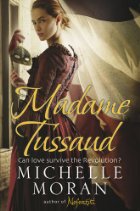 On the eve of the French Revolution in Paris, Marie Grosholtz runs the Salon de Cire with her uncle Curtius, sculpting wax figures of prominent public figures and placing them in realistic settings for public viewings. Their wax figures are so famous that even the royal family come to pay a visit and many nobles request sculptures of themselves. But revolutionary talk is set to change everything and Marie, as new tutor to the king’s sister at Versailles, is in a position to hear everything and witness the fall of the monarchy from the inside. When the revolution begins to threaten her life, Marie must decide between staying in Paris with her family or fleeing to England with her lover, Henri. On the eve of the French Revolution in Paris, Marie Grosholtz runs the Salon de Cire with her uncle Curtius, sculpting wax figures of prominent public figures and placing them in realistic settings for public viewings. Their wax figures are so famous that even the royal family come to pay a visit and many nobles request sculptures of themselves. But revolutionary talk is set to change everything and Marie, as new tutor to the king’s sister at Versailles, is in a position to hear everything and witness the fall of the monarchy from the inside. When the revolution begins to threaten her life, Marie must decide between staying in Paris with her family or fleeing to England with her lover, Henri.
I have been really looking forward to this book for months. I’ve loved all of Michelle Moran’s books set in Egypt and Rome and was thrilled that she’d chosen a time period more to my overall tastes this time. I’ve always been curious about Madame Tussaud and this just seemed like the perfect way to learn a little bit more about her. It would have been easy to be disappointed given the high level of my expectations, but I loved this book just as much as Moran’s previous books. It was immensely satisfying in every way. In fact, the only thing I didn’t like was the cover quote, ‘Can Love Survive the Revolution?’, which just didn’t convey what the book was about at all to me.
I loved the atmosphere in this book in particular. There is a constant sense of danger and suspense around Marie, even at the beginning, particularly due to the talk that occurs in her family’s salon. She can feel what’s going to happen, and as a reader, I know enough of the history of the French Revolution to sense that things aren’t going to go well. As she gets close to members of the royal family, Marie’s outlook on events starts to shift, and she starts to understand the depth of difference between the actual lives of royalty and the people’s perception of them. I particularly enjoyed the scenes set in Versailles – both because I’ve been there and because I recently learned how disgusting the palace used to be from watching a recent TV show, Filthy Cities on the BBC. These added a very welcome extra dimension to my reading and Marie’s Paris.
I also, predictably, loved Marie’s character. As you’ll undoubtedly have noticed, I am a very character-driven reader, and I was thrilled to have one I could really appreciate in Marie. She’s practical, with a keen eye for money and a determination to do her best, but she also has a romantic, sympathetic heart that does emerge on occasion. Her mission in life isn’t to get married and have babies, although she wouldn’t mind doing that as well as her job; she’s about as career oriented as an eighteenth century woman could get. And, we know from the beginning, she succeeded hugely and her name now graces wax museums the world over. I think she would have been pleased.
If you’re a historical fiction fan, I think you’ll love Madame Tussaud. It has the perfect mix of historical detail, atmosphere, story, and great characters. Highly recommended.
All book links to external sites are affiliate links. I purchased this book.
 Good afternoon Saloners! Today finds me thinking about my two trips into Europe later this year. I’m going to Amsterdam and Bruges with my friend at the end of August and then (hopefully) Rome with my husband in October. As these are creeping up on me, I’m already thinking about the books I want to read before I go there. I haven’t made up lists yet, but I already have two I know I want to read – Amsterdam: The Brief Life of a City by Geert Mak and I, Claudius by Robert Graves. I have the second one out from the library and I’m waiting for the first. Do you have any suggestions for great books set in Amsterdam, Bruges, or Rome? History or fiction? Good afternoon Saloners! Today finds me thinking about my two trips into Europe later this year. I’m going to Amsterdam and Bruges with my friend at the end of August and then (hopefully) Rome with my husband in October. As these are creeping up on me, I’m already thinking about the books I want to read before I go there. I haven’t made up lists yet, but I already have two I know I want to read – Amsterdam: The Brief Life of a City by Geert Mak and I, Claudius by Robert Graves. I have the second one out from the library and I’m waiting for the first. Do you have any suggestions for great books set in Amsterdam, Bruges, or Rome? History or fiction?
Which brings me to my second decision of this weekend – I am not going to buy any books until after my travels for the year are over. That would be towards the end of October. I need that money more for experiences, and with 450+ books sitting around waiting for me to read them, it’s not like I’m going to suffer from having nothing to read. (Even if I did, I have enough books that I plan to reread to keep me going for years). As ever, though, I have some exceptions, so I don’t chafe too much about this new rule.
- I’m still allowed to buy anything I’ve already preordered, though these run out in July.
- I’m also still allowed to buy the next Wheel of Time books should I get that far in the series reread before the end of October, A Dance with Dragons by George R.R. Martin, and The Wise Man’s Fear by Patrick Rothfuss when I reread the first in that series.
- I’m allowed to buy books on my travels as souvenirs.
- I can still take in any book that’s free, either from the library, review copies, or programs like Amazon Vine.
What I’d really like to do is get my TBR pile below 400 this year, but I don’t really think my resistance is going to last that long. I’d rather just think about saving money towards my trips!
As a bit of a recap for those who weren’t around this week, I reflected on my reread of Anne of the Island, reviewed Chasing Aphrodite and a number of great romance novels, and wrapped it up with a few tips about SEO for book bloggers. This week I’ll be hosting an interview with Elizabeth Chadwick for the release of her newest book, Lady of the English, and reviewing hopefully quite a few books to catch up on my backlog. I have tomorrow off, so plenty of time to actually do so.
Wishing all of you a fantastic week!
 As a few of you may know, I do SEO in my day job and have had a bit of fun toying around with my own blog. For today’s post in Armchair BEA, I thought I’d share a few pro SEO tips to help you rank better, should you be interested in doing so! For those who aren’t aware, SEO is short for search engine optimisation and is the process of improving your site’s quality and authority to rank better in search engines. There are people who go about this very badly, called black hat SEOs (the spammers of the internet who leave annoying comments on your blogs with names like ‘play poker online’), but if your reviews and posts are genuinely good and will help others to decide what to read, there’s no reason you can’t use a few tweaks to take advantage of the stuff you’re already writing. As a few of you may know, I do SEO in my day job and have had a bit of fun toying around with my own blog. For today’s post in Armchair BEA, I thought I’d share a few pro SEO tips to help you rank better, should you be interested in doing so! For those who aren’t aware, SEO is short for search engine optimisation and is the process of improving your site’s quality and authority to rank better in search engines. There are people who go about this very badly, called black hat SEOs (the spammers of the internet who leave annoying comments on your blogs with names like ‘play poker online’), but if your reviews and posts are genuinely good and will help others to decide what to read, there’s no reason you can’t use a few tweaks to take advantage of the stuff you’re already writing.
1. Keywords
Before you worry about your search engine rankings, you should put some thought into what exactly you want to rank for. What do you think others will be happy to find if they land on your blog from a search engine? A particular book review? A book review blog? A historical fiction blog? Choose a few terms that you think you’d like to rank higher for and make sure you actually use them somewhere in your blog’s copy. Perhaps an intro sidebar or on your ‘about me’ page.
It’s easiest to rank for what you already do on your blog. For example, I put ‘review’ in the title of all of my book review posts because it gives potential people clicking through a better idea of what they’ll get when they land here. Plus it’s easier to rank for something like ‘The White Queen review’ than it is for just ‘The White Queen’.
2. Title Tags
A title tag is the text that shows up in the tab on your browser. This post’s reads ‘Blogging about Blogging: SEO | Medieval Bookworm’. If I were serious about ranking for, say, ‘Historical Fiction Blog’, I’d stick that in there on the home page, so it would say ‘Historical Fiction Blog | Medieval Bookworm’. This is one of the more important aspects of on-site SEO, surprisingly enough, and can really make a big difference with a simple change. I am actually on the first page for ‘Historical Fiction Blog’, so I haven’t invested much in this personally, however if you all take my advice I may start. 
Title tags are easily modified through a variety of SEO plug-ins. All in One SEO Pack is a good one.
3. Duplicate Content
Duplicate content is when you can find the same page on two different URLs. So when someone scrapes your site, they’ve made duplicate content out there; it’s not only theft it’s also hurting your site’s rankings. If your site is pulled using the RSS feed and published online, you’re also creating duplicate content, a real problem for those of us who have full RSS feeds.
You can also get duplicate content on your own site. If you can access the same post with two different URLs, then you have a problem. WordPress can do this if you put a post in two different categories (I actually have one here: http://medievalbookworm.com/guest-blog/guest-review-the-trinity-six-charles-cumming/ is also http://medievalbookworm.com/reviews/guest-review-the-trinity-six-charles-cumming/).
To solve this problem, keep your posts to one category wherever possible and use tags more extensively. Alternatively you can change your URL structure to remove any category parameters, but changing the URL structure on an already established blog can be difficult since you’ll have to redirect all of your own links. It’s easiest just to stick with a single category for WordPress blog if you do have it in your URL.
Please let me know if these tips were at all helpful for you and whether you’re interested in hearing more!
 Love in the Afternoon, Lisa Kleypas Love in the Afternoon, Lisa Kleypas
Beatrix Hathaway has always been the oddest member of her family. More at home with the animals in the stable than with other people, she’s content to be out of society and has always assumed that she’ll remain unmarried forever. All that changes, however, when she discovers that her friend Prudence has been completely neglecting one of her beaus, Christopher Phelan, even though he’s at war. Beatrix takes it upon herself to write letters in Pru’s name, with her permission, because she knows a soldier needs that kind of comfort. But what she doesn’t expect is to fall in love with her correspondent, who has never liked her, or for her reaction to his return to England.
This book won me over from the first few pages. I can’t resist a love letter and the first pages of this book are precisely that, Christopher and Beatrix’s exchange. I could genuinely feel the love between them and I was immediately won over, somehow – it was a perfect pairing from that moment on.
While the rest of the book didn’t quite match those letters, they still set up this love story very well. A few of the pieces didn’t fit – it’s impossible to believe Beatrix and Prudence actually ever made friends – but the strength of the main couple carried the book through very well.
This was a lovely ending to the Hathaway series and I’m sorry to see them go!
 When Beauty Tamed the Beast, Eloisa James When Beauty Tamed the Beast, Eloisa James
Piers Yelverton, the Earl of Marchant, is a doctor in Wales. Despite having a temper, hating his father, and a leg wound that has never healed, Piers is a brilliant doctor; that won’t get him married, like his father wants. Linnet, meanwhile, has been ruined completely by accident, but lucky for her she can charm a rock, and is thus sent to become Piers’s bride. Despite the fact that he’ll have nothing to do with her, she’s determined to become his wife and persuade him to love her – but when she falls in love with him, she has to face the fact that he may never feel the same.
Eloisa James is one of my auto-buy romance authors. If a new book with her name on it is coming out, you can guarantee I will have preordered it somewhere (in the case, the handy Book Depository). I’m loving her latest romances based on fairy tales – this is the second one and doesn’t disappoint in the slightest. Beauty, naturally, is Linnet, who is not only gorgeous but charming and perfect in every way. Beast is Yelverton, who is not unattractive physically but has a bad leg and a temper to match. The author freely admits that she was inspired for his character by the TV doctor House which in my eyes (and I imagine in many others’) only made him a more appealing character.
What I loved about this book is the way that the author turned around the stereotypes by forcing Beauty to deal with unattractiveness and by showing Beast that he really isn’t horrible after all. It was very clever and well done – I am already looking forward to the next book by Eloisa James.
 Archangel’s Consort, Nalini Singh Archangel’s Consort, Nalini Singh
The third book in the ongoing paranormal romance / urban fantasy series about archangel Raphael and his consort Elena, this novel focuses on the growing threat to angelkind from the awakening of an older, mentally unstable archangel – Raphael’s mother, Caliane.
This novel is very much a continuation of previous novels in the series – I wouldn’t dream of reading it on its own. Relationships continue to develop and the backstory of both characters is fleshed out more. I have to admit that so far, I am preferring Singh’s Psy-Changeling series, simply because I prefer getting to know two different characters. I like these two, but they’re already in love – they’ve lost a bit of that glow for me. Regardless, I enjoyed reading this one, and fully intend to pick up the next in the series, which in any case will be focusing on another character.
All external links are affiliate links. I purchased these books.
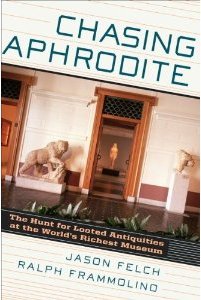 Museums that focus on the antiquities have to get art from somewhere, and for much of history, it’s been done through regrettable looting. Starting with imperialism and carrying right on down to the present day, many astonishingly renowned museums have continued to populate their collections with looted art, stolen in particular from Italy and Greece. This hasn’t stopped despite a number of laws and international sanctions passed against the destruction of archaeological sites and the theft of priceless art. The Getty Museum is one such offender; a museum that sped to fame largely on the basis of looted art, but which then positioned itself against the practice, led by curator Marion True. When the scandal was exposed, the Getty’s reputation fell with it. This is the expose of the museum, the result of years of investigative reporting, and a true insight into the practice of purchasing looted art in the United States. Museums that focus on the antiquities have to get art from somewhere, and for much of history, it’s been done through regrettable looting. Starting with imperialism and carrying right on down to the present day, many astonishingly renowned museums have continued to populate their collections with looted art, stolen in particular from Italy and Greece. This hasn’t stopped despite a number of laws and international sanctions passed against the destruction of archaeological sites and the theft of priceless art. The Getty Museum is one such offender; a museum that sped to fame largely on the basis of looted art, but which then positioned itself against the practice, led by curator Marion True. When the scandal was exposed, the Getty’s reputation fell with it. This is the expose of the museum, the result of years of investigative reporting, and a true insight into the practice of purchasing looted art in the United States.
I love museums and history, but I thought that looting was a practice that had ceased long ago. About the only thing I’d heard about recently was Greece’s requests for the Elgin Marbles from the British Museum, and even that doesn’t seem to be an urgent matter. I have been appalled at the carelessness with which archaeological artifacts were treated, but largely in the context of the past – mainly the Victorians destroying archaeology in search of the good stuff, most of which I’ve probably seen in the British Museum. I had no idea that this still happened, and worse that it was happening in Italy and Greece, probably the most archaeologically rich countries in Europe. This book really laid that all out for me, not only what damage the looters were doing with descriptions of art dirty, in pieces, and broken, but also how much history is lost. We have no idea why so many statues existed simply because they were wrenched from their context with no way of returning them.
The trade in stolen art had significant consequences for the Getty, which appears to have considered itself free of any laws virtually from its founding. The original curator regularly helped “donors” cheat on their tax returns, getting back millions for art that was often worth just a few thousands. He, of course, willingly acquired stolen objects. Through the ensuing years we can see pretty clearly the difficulties that museums were in. If they weren’t acquiring new and exciting antiquities, they fell from the limelight – but all the new and exciting antiquities were obviously stolen. Curators regularly had to choose between their morals and their career, if they even considered their morals at all. The curator who finally did, Marion True, still couldn’t resist purchasing looted art when it called to her, which ultimately led to the destruction of her career and positioned the Getty as a hypocritical institution.
What I liked was that even though the Getty is at the center of the book, the conclusions drawn clearly apply to other museums as well. This book deals solely with American museums, so it depicts which other museums caused scandals in their time and which ones ended up returning stolen items just like the Getty. It was a widespread crime, and we can imagine similar discussions happening in other institutions as happened in the Getty. The book also shows how attitudes in America changed; the top museums do now have policies against looted art and have begun returning stolen artifacts to Italy and Greece, starting off partnerships that will enrich museums across all the countries. The Getty is the focus, with documented conversations and interviews, but its fate was pivotal in the role of all such institutions in the country.
If you’re at all interested in museums and their history in the US, Chasing Aphrodite is definitely a book for you. I found it utterly fascinating; I thought about it while I wasn’t reading about it and even went so far as to tell others about it (even though they were clearly uninterested). I was appalled by what happened, but I feel I now have a better idea about the workings of museums and I’m much more confident that they’re moving in the right direction. We’ll never know quite how much knowledge is lost, but we can hope that more is left to discover in the future.
I am an Amazon Associate. I received this book for free from Netgalley for review.
To those of you who are new to my blog, welcome! I’m Meghan, a 25 year old American living in the UK, married to a wonderful British husband and navigating the intriguing world of marketing for my career. In my spare time, I am and always have been a bookworm and a history nut, hence the title of my blog. In 2009 I got my MA in Medieval Studies and am currently dreaming of a PhD in Medieval History, but not quite yet.
I’ve been blogging about books since 2007, but I’ve been reading since I was five. Blogging has been and continues to be a delightful outlet to share that love of literature with other people, since very few people in my day-to-day life actually enjoy reading.
A few other random facts about me:
- My two favourite books are Jane Eyre by Charlotte Bronte and The Age of Innocence by Edith Wharton.
- I will happily read most genres but my very favourites are historical fiction and epic fantasy. I also love non-fiction, particularly history (obviously enough) and will usually be happy with an enormous tome that someone else would consider dry and boring.
- I adore the Middle Ages and have specialised in the Wars of the Roses; I will now refuse to read this period in fiction because I know too much. I do like nearly every period in history, though, and have loved books set in Cleopatra’s Egypt alongside books set in Victorian England – both fiction and non-fiction.
- I dream of having a cat and a full room devoted to my library one day.
I’d love to be at BEA meeting awesome book bloggers and publishing industry contacts this week, but it wasn’t in the financial cards. I’m hoping for next year and meanwhile looking forward to this week’s Armchair BEA festivities!
If you drop by, leave me a comment and let me know you were here – I’ll do my best to visit your blog over the next week and say hi in return!
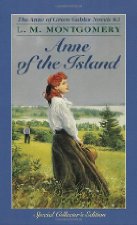 Anne is growing up further; this novel finds her attending Redmond College to get her BA after her short early teaching career. She has dreamed of getting her BA since Anne of Green Gables and so her education is top priority. While there, however, she experiences her first love affairs, including proposals from several men and an embarrassing first proposal, and meets new friends as well as retaining old ones like Gilbert Blythe. Though Anne retains her dreamy nature, it’s clear that she is grown and ready to face the real world after her education. Anne is growing up further; this novel finds her attending Redmond College to get her BA after her short early teaching career. She has dreamed of getting her BA since Anne of Green Gables and so her education is top priority. While there, however, she experiences her first love affairs, including proposals from several men and an embarrassing first proposal, and meets new friends as well as retaining old ones like Gilbert Blythe. Though Anne retains her dreamy nature, it’s clear that she is grown and ready to face the real world after her education.
I first read these books as a young girl and I found my enjoyment of them diminishing as they went on. I enjoyed this one more than I remembered, but at the same time I could see why I started to lose interest in the series as a kid. They turn more to romance than adventurous escapades, and while Anne is just as endearing as ever, her refusal to admit her love for Gilbert among other things obviously frustrated me when I was younger.
Saying that, though, I felt Anne really matured in this book and started to set aside her youthful foibles to become a proper young lady, somehow without losing the spirit at the core of her. I loved the addition of Phil, a completely lively new friend of Anne’s, and it was a delight to remember just who she falls in love with for all of her beauty and vivacity. Similarly, reading about all of the Avonlea folk getting settled and moving along in life is simply a delight for someone like me who would quite happily live in this world for a long, long time. Billy Andrews’ proposal to Anne through his sister was hilarious, as was Anne’s mortification over her story’s publication.
Reading Anne of the Island was a lovely trip through familiar and new experiences alike in Anne’s world. As always I was eager to read the next once I’d finished and I’m enjoying my reread very much!
All book links to external sites are affiliate links. I downloaded this book for free through Project Gutenberg.
Sundays seem to come around ever faster these days! They are even more frequent when I’m as busy as I have been these last few weeks, with work, visits, holiday plans, and a variety of different new activities like exercise crowding out my blogging. I found myself without a book review to write on Wednesday – the first time in three years of blogging – and so it’s been a bit quiet this week. I only have two reviews to write this week as well, so as I’ve said, things may not actually pick up for a while.
Despite reading slower, or perhaps because of it, I’m very much enjoying the books I am reading. At times I feel I speed much too quickly through books. I’ve set goals at various times to try and read less, but this is the first time it’s ever actually happened. While I’m not sure I’ve really reflected much more on the books I’m reading because my brain is constantly going on other things, I have actually enjoyed spending a bit more time in the worlds of the books I’ve read. I’m noticeably enjoying Nalini Singh’s work more now that I just can’t race through it, for example, and I absolutely loved spending more time with Madame Tussaud by Michelle Moran, another candidate for my normal fast pace. I am a speedy reader normally, but I forget that it’s also nice to savor books, too.
Since this week is BEA, I am going to just let the lack of reviews slide and enjoy my new issue of BBC History Magazine in my free time. Subscribing to it is such fun; not only do I feel like I’m getting a variety of historical viewpoints and keeping up more with the academic world than I was before, there are also features on books and TV shows that fill up even more of my time with history goodness.
I’ll keep this one short as I know many of you are off to New York City this week. If you’re attending BEA, I hope you have an incredible time. I hope to see you there next year!

St Peter’s Church, Barton-on-Humber
More Wordless Wednesdays
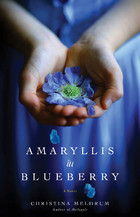 The Slepy family story begins with Christina ‘Seena’ Slepy on trial for her husband’s murder in Africa. The portion of the story leading up to the day is slowly revealed through flashbacks interposed with Seena’s thoughts on just how she and her family got to this point. Dick’s obsession with Catholicism, Seena’s affair, Amaryllis – so dark and different from her sisters – questions her parentage, and Mary Grace, Mary Tessa, and Mary Catherine all grapple with their own problems related to growing up and becoming women. Arrival in Africa merely exacerbates the tensions between the family members, each a world unto themselves, until the novel’s explosive conclusion. The Slepy family story begins with Christina ‘Seena’ Slepy on trial for her husband’s murder in Africa. The portion of the story leading up to the day is slowly revealed through flashbacks interposed with Seena’s thoughts on just how she and her family got to this point. Dick’s obsession with Catholicism, Seena’s affair, Amaryllis – so dark and different from her sisters – questions her parentage, and Mary Grace, Mary Tessa, and Mary Catherine all grapple with their own problems related to growing up and becoming women. Arrival in Africa merely exacerbates the tensions between the family members, each a world unto themselves, until the novel’s explosive conclusion.
I struggled with Amaryllis in Blueberry for a number of reasons, primary among them the fact that it reads like a shallower imitation of The Poisonwood Bible. I loved that book when I read it in high school and I have even managed to read it again since, a rarity for books I read in those days. It has stuck with me over the years in a big way, enough that the parallels between these books, with the divided family of daughters, one vain, one religious, the super-religious father, all heading to Africa on said father’s initiative, struck me at once. In that book, I was swept away by how the characters grew and developed, how Africa changed them in ways both good and bad.
Christina Meldrum appears to be trying for the same effect here, and while I enjoyed the book as I was reading it, just a day away from it has made me question it. It certainly did not have a similar effect on me, and I’m sure that’s in part because I didn’t care for the characters. They all seemed very self-absorbed, not unrealistic, but people I couldn’t relate to. Even Amaryllis, the title character, is a vague and shadowy girl.
One thing I did very much appreciate, though, was the characters’ efforts to break free of boxes, particularly Grace. She knows that because she is beautiful and blonde that she doesn’t have to be smart and that people in fact expect her to be dumb and make mistakes. So, even though she was clever as a child, she begins to rely on her beauty and becomes the stereotype that others expect. Some of the events in Africa help her to realize that she doesn’t have to be that way, that she shouldn’t put others in the boxes she hates herself, and that she can be both smart and beautiful.
I also think part of the problem is that the book is too short for what it’s trying to do. The narrative skips around between a huge number of characters, a real problem when their chapters are only a couple of pages long, and it’s difficult to get to know any of them particularly well. Some of the storylines seemed unnecessary, like Clara’s, and at times I felt irritated that the book led me to think in one direction just to provide an ‘a-ha!’ moment at the end. It felt cheap to me because the book wasn’t powerful enough to deliver an ‘a-ha!’ moment on its own. The writing was lovely, but in the end I just didn’t connect with it.
A few other reviews to give you a different perspective …
All book links to external sites are affiliate links. I purchased this book.
|
|


Recent Comments